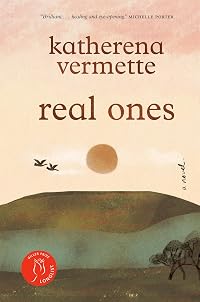
Real Ones
by Katherena Vermette
On This Page
Description
"From the nationally bestselling author of the Strangers saga comes a heartrending story of two Métis sisters who must face their past trauma when their mother is called out as a pretendian. Lyn and her sister, June, are NDNs--real ones. Lyn is still suffering after a break-up, but has her pottery artwork and her bubbly kid, Willow, to keep her mind, heart, and hands busy. Happily married June, a Métis Studies professor, yearns to uproot from Vancouver and move. With her husband, Sigh, and show more their faithful pup, June decides to buy a house in the last place on earth she'd imagine she'd end up: back home in Winnipeg. Close to Lyn, her dad, little sister Yoyo, Grandma Genie--close to family. But then into Lyn and June's busy lives a bomb drops: their estranged and very white mother, Renee, is called out as a "pretendian." Under the name (get this) Raven Bearclaw, Renee had recently begun to top the charts in the Canadian painting scene for having a wholly new take on the Woodlands tradition, winning awards and recognition for her fraudulent work. The news is quickly picked up by the media and sparks an enraged online backlash. As the sisters are pulled into the painful tangle of lies their mother has told and the hurt she has caused, searing memories from their unresolved childhood trauma, which still manages to spill into their well curated adult worlds, come rippling to the surface. With the same signature wit and heart on display in The Break, The Strangers, and The Circle, and in prose so powerful it could strike a match, real ones offers us a heartbreaking and ultimately hopeful story that runs parallel with the long-fought, hard-won battles of Métis people to regain ownership of their identity and the right to say who is and isn't Métis."-- show lessTags
Recommendations






















Member Reviews
This is a quiet book that doesn't hit you on the head with the issues it discusses; the author lets the impact of the "pretendian" sneak up on you and build strength.
I've read all of Katherena Vermette's novels and believe her strength is in writing about relationships. That is so evident in this novel, especially in the relationship between sisters lyn and June. They argue a bit and support each other a lot. They are very real people.
The sisters' relationship with their mother, Renee, and her false claims of Metis heritage are different. lyn's issues are long-standing and deal with abandonment. Yet she is the most like Renee in having an artistic temperament. June's concerns are more immediate relating to her status as a professor of show more Native Studies. She is the only daughter still in touch with her mother, albeit infrequently, and is not like her at all in terms of choosing one career path, and one husband, and seeing it through.
I liked Ms. Vermette's commentary on racial identity, which are not polemic but come through the words and thoughts of the characters. Her messages are that racial identity is about community; stealing identity is violence; the burden falls on indigenous people to prove their identifies -- ironically, some of those identities were imposed on them by colonizers.
Renee not only steals the Metis identity, she dishonours her own as a Mennonite and a French Canadian by ignoring them. I would have liked to hear more about Renee. There is a whole story there about why she did what she did in her professional life and as a mother. Since The Break became a trilogy, maybe this story will have a sequel? I hope so! show less
I've read all of Katherena Vermette's novels and believe her strength is in writing about relationships. That is so evident in this novel, especially in the relationship between sisters lyn and June. They argue a bit and support each other a lot. They are very real people.
The sisters' relationship with their mother, Renee, and her false claims of Metis heritage are different. lyn's issues are long-standing and deal with abandonment. Yet she is the most like Renee in having an artistic temperament. June's concerns are more immediate relating to her status as a professor of show more Native Studies. She is the only daughter still in touch with her mother, albeit infrequently, and is not like her at all in terms of choosing one career path, and one husband, and seeing it through.
I liked Ms. Vermette's commentary on racial identity, which are not polemic but come through the words and thoughts of the characters. Her messages are that racial identity is about community; stealing identity is violence; the burden falls on indigenous people to prove their identifies -- ironically, some of those identities were imposed on them by colonizers.
Renee not only steals the Metis identity, she dishonours her own as a Mennonite and a French Canadian by ignoring them. I would have liked to hear more about Renee. There is a whole story there about why she did what she did in her professional life and as a mother. Since The Break became a trilogy, maybe this story will have a sequel? I hope so! show less
This book, which focuses on two Métis sisters, June and Lyn, examines what happens when their estranged white mother Renee is called out as a pretendian. An artist, going by the name Raven Bearclaw, she has enjoyed considerable success copying the Indigenous Woodland Art style. When the story is made public, the sisters read enraged online commentary. As they consider what effects Renee’s false representation will have on them and what to do about her lies, painful memories of their relationships with their mother resurface.
The two siblings have reacted differently to their childhood experiences involving their mother. Lyn, a potter and single mother, has anger that has never gone away and has abandonment issues because of Renee’s show more actions in the past. June is a respected Métis Studies professor who fears her reputation will suffer because of her mother’s falsehoods.
What the novel emphasizes is that it is Indigenous people, who already carry the weight of identity issues, who are re-traumatized when people falsely claim Indigenous identity; it is people like Lyn and June who have to prove that they are actually Métis. June discusses “the problems with Redface or the taking on of any face. How when those with a power take from those who do not, it is not just taking up space, it’s actually violence.” The book also emphasizes that self-identification is insufficient: “’Racial identity isn’t only about you, it’s about community . . . Who you claim but also who claims you.’”
It is obvious that the author is very proud of her Métis heritage: “’Métis actually means a whole people with a history, language, culture and years and years of struggle. These fakers don’t get to have all that.’” And she emphasizes that others should take pride in their heritage as well. Renee, for instance, is part Mennonite and June says, “It’s a rich, colourful, surprising, exceptional culture in its own right. By taking our stories she is effectively discrediting her own, and those of her actual ancestors. That’s sad to me. That’s a missed opportunity.’”
I loved the portrayal of the relationship between the two sisters. It’s obvious that the two love each other, though there are inevitable tensions. And as I know from personal experience, siblings experience childhood events differently and will remember them differently.
Renee is a character who did not arouse much empathy in me. Not only does she take advantage of grants intended for Indigenous artists and accept awards as if she qualified for them, she even uses her ex-husband’s story of growing up Métis as her own. I agree with June that this last is a “particularly sharp violation.” However, her ex-husband, the girls’ father, explains Renee’s anger by saying that “’some people get like that when they’re hurting, always mad at someone.’” He also suggests that she may have a border personality disorder: “’it means you can’t control what you do or your emotions or something. Extreme, that’s it. Those people are extreme in how they deal with things.’” Clearly, we are not to see her as totally evil.
The subject of forgiveness is discussed. When the sisters discuss how to forgive their mother, “’someone who doesn’t think they did anything wrong,” it is suggested that “’You don’t forgive people for them, you forgive them for you . . . so you can stop harping on it. Stop letting it all affect you.’”
This novel is very timely because there have been a number of instances of pretendianism in the news recently, including the controversy surrounding Buffy Sainte-Marie’s dubious claims of Indigeneity. I recommend this look at the dehumanizing effects of pretendianism.
Note: I received an eARC from the publisher via NetGalley.
Please check out my reader's blog (https://schatjesshelves.blogspot.com/) or substack (https://doreenyakabuski.substack.com/) to see over 1,100 of my book reviews. show less
The two siblings have reacted differently to their childhood experiences involving their mother. Lyn, a potter and single mother, has anger that has never gone away and has abandonment issues because of Renee’s show more actions in the past. June is a respected Métis Studies professor who fears her reputation will suffer because of her mother’s falsehoods.
What the novel emphasizes is that it is Indigenous people, who already carry the weight of identity issues, who are re-traumatized when people falsely claim Indigenous identity; it is people like Lyn and June who have to prove that they are actually Métis. June discusses “the problems with Redface or the taking on of any face. How when those with a power take from those who do not, it is not just taking up space, it’s actually violence.” The book also emphasizes that self-identification is insufficient: “’Racial identity isn’t only about you, it’s about community . . . Who you claim but also who claims you.’”
It is obvious that the author is very proud of her Métis heritage: “’Métis actually means a whole people with a history, language, culture and years and years of struggle. These fakers don’t get to have all that.’” And she emphasizes that others should take pride in their heritage as well. Renee, for instance, is part Mennonite and June says, “It’s a rich, colourful, surprising, exceptional culture in its own right. By taking our stories she is effectively discrediting her own, and those of her actual ancestors. That’s sad to me. That’s a missed opportunity.’”
I loved the portrayal of the relationship between the two sisters. It’s obvious that the two love each other, though there are inevitable tensions. And as I know from personal experience, siblings experience childhood events differently and will remember them differently.
Renee is a character who did not arouse much empathy in me. Not only does she take advantage of grants intended for Indigenous artists and accept awards as if she qualified for them, she even uses her ex-husband’s story of growing up Métis as her own. I agree with June that this last is a “particularly sharp violation.” However, her ex-husband, the girls’ father, explains Renee’s anger by saying that “’some people get like that when they’re hurting, always mad at someone.’” He also suggests that she may have a border personality disorder: “’it means you can’t control what you do or your emotions or something. Extreme, that’s it. Those people are extreme in how they deal with things.’” Clearly, we are not to see her as totally evil.
The subject of forgiveness is discussed. When the sisters discuss how to forgive their mother, “’someone who doesn’t think they did anything wrong,” it is suggested that “’You don’t forgive people for them, you forgive them for you . . . so you can stop harping on it. Stop letting it all affect you.’”
This novel is very timely because there have been a number of instances of pretendianism in the news recently, including the controversy surrounding Buffy Sainte-Marie’s dubious claims of Indigeneity. I recommend this look at the dehumanizing effects of pretendianism.
Note: I received an eARC from the publisher via NetGalley.
Please check out my reader's blog (https://schatjesshelves.blogspot.com/) or substack (https://doreenyakabuski.substack.com/) to see over 1,100 of my book reviews. show less
I struggled with this one for a couple of reasons. Ultimately, I decided on a 3.5 rounded up to four.
The first struggle was, despite the triggering incident for the book being the mother's claim of being Indigenous being found to be false, that storyline actually takes up very little of this short novel. There's times when Renee seems all but forgotten from the plot.
Which leads to the second struggle. I understand that the trigger was for the two sisters to examine their lives, their pasts and where they're headed. So, that was the focus of the novel, which is fine. However, there was a largely unresolved plot point between June, Sigh, and the Other Guy, and there was a bit too much information on pottery in lyn's storyline for my show more taste.
This felt like it was more of a very long short story that got padded out a bit. I did appreciate the payoff with June and Renee toward the end, but overall, it seemed to take a long time to get there. show less
The first struggle was, despite the triggering incident for the book being the mother's claim of being Indigenous being found to be false, that storyline actually takes up very little of this short novel. There's times when Renee seems all but forgotten from the plot.
Which leads to the second struggle. I understand that the trigger was for the two sisters to examine their lives, their pasts and where they're headed. So, that was the focus of the novel, which is fine. However, there was a largely unresolved plot point between June, Sigh, and the Other Guy, and there was a bit too much information on pottery in lyn's storyline for my show more taste.
This felt like it was more of a very long short story that got padded out a bit. I did appreciate the payoff with June and Renee toward the end, but overall, it seemed to take a long time to get there. show less
Boring.
Ratings
Members
- Recently Added By
Lists

Globe and Mail | Canadian Fiction: September 14, 2024
10 works; 1 member
Globe and Mail | Canadian Fiction: September 21, 2024
10 works; 1 member

Globe and Mail | Canadian Fiction: September 28, 2024
10 works; 1 member
Globe and Mail | Canadian Fiction: October 5, 2024
10 works; 1 member
Author Information

32+ Works 1,985 Members
Awards and Honors
Awards
Distinctions
Common Knowledge
- Canonical title
- Real Ones
- People/Characters
- lyn; June; Renee; Sigh; Willow; Shannon (show all 8); Yoyo; Aunt Adele
- Epigraph
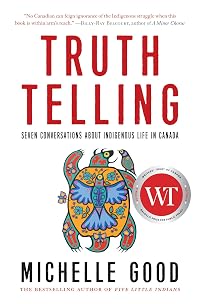
- Truth is like water -- it finds a way. Michelle Good, author of Five Little Indians and Truth Telling
- Dedication
- for all my sisters -- Ceremony, street, soul, spirit -- you've kept me up. I love you. Chi Maarsii
- First words
- There are many ways to make a clay vessel.
- Last words
- (Click to show. Warning: May contain spoilers.)Maybe they are.
- Blurbers
- Porter, Michelle; Good, Michelle; Chariandy, David; Thien, Madeleine; Maracle, Lee; Robinson, Eden
Classifications
Statistics
- Members
- 61
- Popularity
- 507,307
- Reviews
- 4
- Rating
- (3.96)
- Languages
- English
- Media
- Paper, Audiobook, Ebook
- ISBNs
- 4
- ASINs
- 1