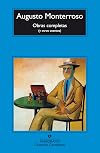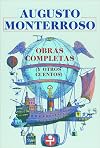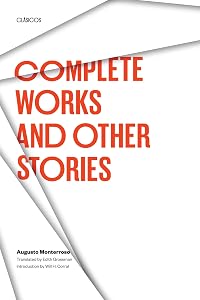
Complete Works and Other Stories
by Augusto Monterroso
On This Page
Description
"Monterroso's microcuentos defy social and literary categories in this collection of brilliant satires that combine the first English-language versions of Obras completas y otros cuentos (1959) and Movimiento perpetuo (1972). Corral's 'Before and After Augusto Monterroso' and Grossman's competent translations make this volume an excellent introduction to one of Latin America's greatest living writers. Highly recommended for classroom and general use"--Handbook of Latin American Studies, v. 58.Tags
Recommendations









Member Reviews
Augusto Monterroso (1921-2013) - Short story writer from Honduras known for his satire and wit
Tongue-in-cheek dark humor, subtle irony and offbeat satire, anyone? Here’s a book of tall-tall tales and short-short stories from a Latin American ‘boom’ generation author large in literary stature but short in physical stature (he was 5’3”) – Honduras’s Augusto Monterroso. And before I say anything else, “Complete Works and Other Stories’ contains perhaps the shortest story ever written. Here it is: THE DINOSAUR – “When he awoke, the dinosaur was still there.” And also a close second: FECUNDITY – “Today, I feel well, like a Balzac; I am finishing this line." Also a close third: THE WORLD – “God has not yet show more created the world; he is only imagining it, as if he were half asleep. That is why the world is perfect, but confused.” But, please, don’t be thrown off; there are longer pieces – 1 and 2 pages, 3 and 4 pages and, occasionally, even up to 15 and 20 pages. Observations on several of my favorites:
MISTER TAYLOR
One of the most memorable short stories you will ever read, while you’re still alive and not turned into a shrunken head, that is. Anyway, an American anthropologist travels to Central American and lives with a forest tribe. He sends the tribe's shrunken heads back to the US and makes a fortune. The demand for shrunken heads skyrockets but the tribe runs out. Well, when the government realizes a huge fortune can be made via exported shrunken heads, a strategy is developed in concert with the anthropologist’s field work to maximally cash in on shrunken heads. How? Let’s just say that if you are poor and living in that country, you had better watch out!
I DON’T WANT TO DECEIVE YOU
Once upon a time at a move theater in Central America, the director, the actors and actresses who star in the movie arrive from France (quite the sacrifice, traveling to Central America) and, after being introduced by a bald, frenetic master-of-ceremonies, take turns at a mic to express a few words of thanks to the locals who’ve turned out to watch their movie. All goes smoothly until one actress, the director’s wife, a beautiful blonde covered in jewels, comes to the mic and starts rambling on endlessly about her fears, phobias, self-consciousness, abysmal lack of talent as well as the details of her childhood schooling and personal habits -- exactly what the good townspeople do not want to hear. The bald, frenetic master-of-ceremonies attempts to save the evening’s event but the crowd flares-up: hooting, hissing, jeering, foot-stomping and where is a rotten tomato when you need one? Once I started laughing, with every additional sentence, I laughed even harder. Thanks for this one, Augusto!
THE CONCERT
A bitter-sweet tale about an influential businessman who faithfully attends his daughter’s classical piano concerts. But, there is a serious problem: he loves handling money and controlling world financial markets. Ah, the soul of a businessman! And what does this father/businessman really hate? What bores him to tears? Why, of course – classical music. Ever sentence of his narrative builds and builds like a scherzo or toccata until his hatred of his daughter and her Bach, Mozart and Beethoven reaches both a touching and comical crescendo. Bravo, maestro author.
HOW TO STOP BEING A MONKEY
“In the United States and in Europe they have recently discovered a species of Latin American monkey capable of expressing itself in writing, identical perhaps, to that diligent monkey who, by hitting the keys of a typewriter at random, eventually reproduces the sonnets of Shakespeare.” Augusto has his tongue deep in his cheek as he explains how Latin American writers can serve as evidence that the peoples south of the Rio Grande are capable, amazing though it may seem, of actually producing something that looks remarkably similar to high quality literature.
HOW I GOT RID OF FIVE HUNDRED BOOKS
A topic all readers here can relate to: the inevitable purging of one’s personal library. In the process of picking and choosing which books to box up, the narrator observes, “What an incredible amount of poetry, of novels, of sociological solutions to the ills of the world! One supposes that poetry is written to enrich the spirit, that novels have been conceived, at the very least, to entertain us; and even, optimistically, that sociological solutions are a guide to solving something. Viewing the situation calmly, I realized that the first (poetry) was capable of impoverishing the richest spirit, the second (novels) of boring the most joyful, and the third (sociology) of confusing the most lucid.” Ironic, perhaps, but I suspect many of us have entertained such reflections at one time or another. This little tale is chock-full of bibliophilic gems.
HEIGHT AND POETRY
A laugh-out-loud autobiographical piece where Augusto expatiates on how authors in general and poets in particular tend to be short. “Without standing on tiptoe, I easily measure five feet, three inches. I have been little since I was little. . . . I realized at the age of fifteen that I was growing into a very short man.” He also alludes to one poetry contest where, on the contest’s application, poets were required to indicate their height in inches! And, in case you were wondering about my noting the shortness of Augusto (he’s 5’3”) in my opening paragraph, it’s a nod to the humor of this piece. In fact, I might be on the all-time short-list of reviewers noting the shortness of the short author under review. And, on the topic of height, shortness and stiffness, although I’m a 6’0” gringo, I’m sure Augusto wouldn’t mind my taking a short amount of space to share my own short short shorty:
THE STIFFS
A cartoonist starts a new comic strip about dead people, called “The Stiffs.” The humor is strictly deadpan, the action dead serious and the Stiff family a bunch of real stiffs – stiff enough, that is, for all the readers to die laughing.
-------------------------------------------------
Will H. Corral writes a splendid 12 page introduction. At one point he states, “Monterroso fascinates and confuses us, he shakes us out of our complacency and neat little mental boxes.” And at another, “Monterroso’s work is, in the final analysis, a testimony for love of literature and the condition of Latin American culture.” On both counts, a short-story writer worth anybody’s time. show less
Augusto Monterroso (1921-2013) - Short story writer from Honduras known for his satire and wit
Tongue-in-cheek dark humor, subtle irony and offbeat satire, anyone? Here’s a book of tall-tall tales and short-short stories from a Latin American ‘boom’ generation author large in literary stature but short in physical stature (he was 5’3”) – Honduras’s Augusto Monterroso. And before I say anything else, “Complete Works and Other Stories’ contains perhaps the shortest story ever written. Here it is: THE DINOSAUR – “When he awoke, the dinosaur was still there.” And also a close second: FECUNDITY – “Today, I feel well, like a Balzac; I am finishing this line." Also a close third: THE WORLD – “God has not yet show more created the world; he is only imagining it, as if he were half asleep. That is why the world is perfect, but confused.” But, please, don’t be thrown off; there are longer pieces – 1 and 2 pages, 3 and 4 pages and, occasionally, even up to 15 and 20 pages. Observations on several of my favorites:
MISTER TAYLOR
One of the most memorable short stories you will ever read, while you’re still alive and not turned into a shrunken head, that is. Anyway, an American anthropologist travels to Central American and lives with a forest tribe. He sends the tribe's shrunken heads back to the US and makes a fortune. The demand for shrunken heads skyrockets but the tribe runs out. Well, when the government realizes a huge fortune can be made via exported shrunken heads, a strategy is developed in concert with the anthropologist’s field work to maximally cash in on shrunken heads. How? Let’s just say that if you are poor and living in that country, you had better watch out!
I DON’T WANT TO DECEIVE YOU
Once upon a time at a move theater in Central America, the director, the actors and actresses who star in the movie arrive from France (quite the sacrifice, traveling to Central America) and, after being introduced by a bald, frenetic master-of-ceremonies, take turns at a mic to express a few words of thanks to the locals who’ve turned out to watch their movie. All goes smoothly until one actress, the director’s wife, a beautiful blonde covered in jewels, comes to the mic and starts rambling on endlessly about her fears, phobias, self-consciousness, abysmal lack of talent as well as the details of her childhood schooling and personal habits -- exactly what the good townspeople do not want to hear. The bald, frenetic master-of-ceremonies attempts to save the evening’s event but the crowd flares-up: hooting, hissing, jeering, foot-stomping and where is a rotten tomato when you need one? Once I started laughing, with every additional sentence, I laughed even harder. Thanks for this one, Augusto!
THE CONCERT
A bitter-sweet tale about an influential businessman who faithfully attends his daughter’s classical piano concerts. But, there is a serious problem: he loves handling money and controlling world financial markets. Ah, the soul of a businessman! And what does this father/businessman really hate? What bores him to tears? Why, of course – classical music. Ever sentence of his narrative builds and builds like a scherzo or toccata until his hatred of his daughter and her Bach, Mozart and Beethoven reaches both a touching and comical crescendo. Bravo, maestro author.
HOW TO STOP BEING A MONKEY
“In the United States and in Europe they have recently discovered a species of Latin American monkey capable of expressing itself in writing, identical perhaps, to that diligent monkey who, by hitting the keys of a typewriter at random, eventually reproduces the sonnets of Shakespeare.” Augusto has his tongue deep in his cheek as he explains how Latin American writers can serve as evidence that the peoples south of the Rio Grande are capable, amazing though it may seem, of actually producing something that looks remarkably similar to high quality literature.
HOW I GOT RID OF FIVE HUNDRED BOOKS
A topic all readers here can relate to: the inevitable purging of one’s personal library. In the process of picking and choosing which books to box up, the narrator observes, “What an incredible amount of poetry, of novels, of sociological solutions to the ills of the world! One supposes that poetry is written to enrich the spirit, that novels have been conceived, at the very least, to entertain us; and even, optimistically, that sociological solutions are a guide to solving something. Viewing the situation calmly, I realized that the first (poetry) was capable of impoverishing the richest spirit, the second (novels) of boring the most joyful, and the third (sociology) of confusing the most lucid.” Ironic, perhaps, but I suspect many of us have entertained such reflections at one time or another. This little tale is chock-full of bibliophilic gems.
HEIGHT AND POETRY
A laugh-out-loud autobiographical piece where Augusto expatiates on how authors in general and poets in particular tend to be short. “Without standing on tiptoe, I easily measure five feet, three inches. I have been little since I was little. . . . I realized at the age of fifteen that I was growing into a very short man.” He also alludes to one poetry contest where, on the contest’s application, poets were required to indicate their height in inches! And, in case you were wondering about my noting the shortness of Augusto (he’s 5’3”) in my opening paragraph, it’s a nod to the humor of this piece. In fact, I might be on the all-time short-list of reviewers noting the shortness of the short author under review. And, on the topic of height, shortness and stiffness, although I’m a 6’0” gringo, I’m sure Augusto wouldn’t mind my taking a short amount of space to share my own short short shorty:
THE STIFFS
A cartoonist starts a new comic strip about dead people, called “The Stiffs.” The humor is strictly deadpan, the action dead serious and the Stiff family a bunch of real stiffs – stiff enough, that is, for all the readers to die laughing.
-------------------------------------------------
Will H. Corral writes a splendid 12 page introduction. At one point he states, “Monterroso fascinates and confuses us, he shakes us out of our complacency and neat little mental boxes.” And at another, “Monterroso’s work is, in the final analysis, a testimony for love of literature and the condition of Latin American culture.” On both counts, a short-story writer worth anybody’s time. show less
Wonderful stories, like a Guatemalan Coover or Barthelme. There's an introduction by an academic, Will H. Corral, which must be one of the worst pieces of writing I've ever read. It's the sort of thing that makes you want to remove funding from every English Literature university department.
My master plan for this summer was to devote every spare reading moment to a progression of big, challenging novels: 2666, José Lezama Lima's Paradiso, Augusto Roa Bastos's Yo, el Supremo and Ulysses. I'm on Paradiso now, and I've really been enjoying it. It's a special book, with each chapter granting the reader access to different moments in the history of a Cuban family, utilizing vivid, extraordinary and remarkably inventive language. I've read few books like it. However, after spending my fifteen minute break at work dumbly reading and re-reading the same five pages of Paradiso, barely understanding a thing, I decided that it's a book that must be read (in my case, at least) in moments of extended leisure, when I have at least an show more hour or so to slowly penetrate into Lezama Lima's overwhelmingly rich text-world.
So I needed something to read at work and in spare moments at home. Over the past few months I'd checked out a handful of books by some renowned 20th century Latin American short story writers, and I decided it'd be best to work my way through them, rather than turn to other novels that required less attention. I started with a book of Felisberto Hernández stories, then moved on to the Guatemalan Augusto Monterroso's Obras completas y otros cuentos. The title (Complete Works) amused me, because I pulled it from the shelf of a library where I might very well find an edition of Augusto Monterroso's complete works alongside his book of short stories entitled Complete Works. He mentions characters reading or publishing complete works a couple of times throughout the book, almost like a running joke, before ending his series of short stories with the title story. This recurring theme was handled with humor, and indeed, humor, smart humor, was a constant in these stories.
There is a story about a Guatemalan music buff who finds the lost two final movements of a Schubert symphony, and travels the world trying to convince people that a) they really are the lost movements, and they really were discovered by him in Guatemala, and b) that these lost symphonies should be published, that the world is ready for them. There's a story about Mister Taylor, living in poverty in Guatemala, who is one day handed a shrunken head and goes into the shrunken head business, to great financial benefit. There's a story about a man who watches his daughter perform a piano concert, disgusting himself at the idea that she's not really that talented, she only gets good reviews in the papers because the critics know who daddy is, and why did he encourage her in her pursuit of such a frivolous career in music? One story is often cited as being the shortest short story in the world. There's a story about a religious man captured by cannibals who devises a plan to guarantee his escape. There's a story about the tallest man in the world. And the title story is about the relationship between a respected, admired professor and an aspiring young poet. The professor guides the poet down a road that may or may not be a happy one, and the professor has second thoughts as he drops pearls of wisdom in the young writer's path.
This was a fun book, and I found myself reading it during every spare moment, choosing shorter stories when I had just a few minutes, and longer ones during breaks at work. They were refreshing: clever, thoughtful and entertaining looks at moments in life, some more realistic than others, varying in tone and seriousness, but all sharing a conversational, friendly style that made me want to keep reading. Reading them did not feel like work at all (reading Paradiso feels like work; rewarding, satisfying work, but work nonetheless). Maybe I just haven't been reading enough short stories, or enough books by authors known for their straightforward, humorous interaction with their readers. As I was looking for some background information on the author, I came across the following quote by Carlos Fuentes, referring to a later volume of short fiction by Monterroso:
"Imagine Borges' fantastical bestiary having tea with Alice. Imagine Jonathan Swift and James Thurber exchanging notes. Imagine a frog from Calaveras County who has seriously read Mark Twain. Meet Monterroso."
I agree with this characterization of the author, except that I assume the part about the bestiary of Borges relates more to his later fables than to these stories. Maybe I should give Carlos Fuentes another chance. He seems so boring, and I've tried multiple times to read La muerte de Artemio Cruz but can never finish it (and I don't tend to leave books unfinished). Maybe, since he's at least familiar with my childhood hero James Thurber, I should go ahead and pull that book back off the shelf.
One other thing I noticed about this book: I got it from the library and it had a sticker on the inside of the back cover that stated: "Deacidified using the Bookkeeper process. Neutralizing agent: Magnesium Oxide. Treatment Date: June 2002." I thought the way the pages of this book felt in my hands was quite unpleasant, but I was surprised how new it looked, despite being published more than thirty years ago. show less
So I needed something to read at work and in spare moments at home. Over the past few months I'd checked out a handful of books by some renowned 20th century Latin American short story writers, and I decided it'd be best to work my way through them, rather than turn to other novels that required less attention. I started with a book of Felisberto Hernández stories, then moved on to the Guatemalan Augusto Monterroso's Obras completas y otros cuentos. The title (Complete Works) amused me, because I pulled it from the shelf of a library where I might very well find an edition of Augusto Monterroso's complete works alongside his book of short stories entitled Complete Works. He mentions characters reading or publishing complete works a couple of times throughout the book, almost like a running joke, before ending his series of short stories with the title story. This recurring theme was handled with humor, and indeed, humor, smart humor, was a constant in these stories.
There is a story about a Guatemalan music buff who finds the lost two final movements of a Schubert symphony, and travels the world trying to convince people that a) they really are the lost movements, and they really were discovered by him in Guatemala, and b) that these lost symphonies should be published, that the world is ready for them. There's a story about Mister Taylor, living in poverty in Guatemala, who is one day handed a shrunken head and goes into the shrunken head business, to great financial benefit. There's a story about a man who watches his daughter perform a piano concert, disgusting himself at the idea that she's not really that talented, she only gets good reviews in the papers because the critics know who daddy is, and why did he encourage her in her pursuit of such a frivolous career in music? One story is often cited as being the shortest short story in the world. There's a story about a religious man captured by cannibals who devises a plan to guarantee his escape. There's a story about the tallest man in the world. And the title story is about the relationship between a respected, admired professor and an aspiring young poet. The professor guides the poet down a road that may or may not be a happy one, and the professor has second thoughts as he drops pearls of wisdom in the young writer's path.
This was a fun book, and I found myself reading it during every spare moment, choosing shorter stories when I had just a few minutes, and longer ones during breaks at work. They were refreshing: clever, thoughtful and entertaining looks at moments in life, some more realistic than others, varying in tone and seriousness, but all sharing a conversational, friendly style that made me want to keep reading. Reading them did not feel like work at all (reading Paradiso feels like work; rewarding, satisfying work, but work nonetheless). Maybe I just haven't been reading enough short stories, or enough books by authors known for their straightforward, humorous interaction with their readers. As I was looking for some background information on the author, I came across the following quote by Carlos Fuentes, referring to a later volume of short fiction by Monterroso:
"Imagine Borges' fantastical bestiary having tea with Alice. Imagine Jonathan Swift and James Thurber exchanging notes. Imagine a frog from Calaveras County who has seriously read Mark Twain. Meet Monterroso."
I agree with this characterization of the author, except that I assume the part about the bestiary of Borges relates more to his later fables than to these stories. Maybe I should give Carlos Fuentes another chance. He seems so boring, and I've tried multiple times to read La muerte de Artemio Cruz but can never finish it (and I don't tend to leave books unfinished). Maybe, since he's at least familiar with my childhood hero James Thurber, I should go ahead and pull that book back off the shelf.
One other thing I noticed about this book: I got it from the library and it had a sticker on the inside of the back cover that stated: "Deacidified using the Bookkeeper process. Neutralizing agent: Magnesium Oxide. Treatment Date: June 2002." I thought the way the pages of this book felt in my hands was quite unpleasant, but I was surprised how new it looked, despite being published more than thirty years ago. show less
Cuentos breves de Monterroso, incluyendo su famoso Dinosaurio. Relatos breves con personajes memorables a los que el autor es capaz de caracterizar con unas pocas frases. Brillante.
I really enjoyed this collection. Short story collections often leave me yawning, but the majority of stories here were really worthwhile. Monterroso is clearly a master of wit but he knows how to handle serious topics, too.
YO QUISIERA PREPARAR UNA COLECCIÓN DE CUENTOS DE UNA SOLA FRASE, O DE UNA SOLA LÍNEA, SI FUERA POSIBLE. PERO HASTA AHORA NO ENCONTRÉ NINGUNO QUE SUPERE EL DEL ESCRITOR GUATEMALTECO AUGUSTO MONTERROSO: "CUANDO DESPERTÓ , EL DINOSAURIO TODAVÍA ESTABA AHÍ". ITALO CALVINO
AUGUSTO MONTERROSO ES UN ESCRITOR FUNDAMENTA, FORMIDABLEMENTE INTELIGENTE, MISERICORDIOSAMENTE BREVE. CARLOS MONSIVÁIS
AUGUSTO MONTERROSO ES UN ESCRITOR FUNDAMENTA, FORMIDABLEMENTE INTELIGENTE, MISERICORDIOSAMENTE BREVE. CARLOS MONSIVÁIS
Oct 13, 2020Spanish
Members
- Recently Added By
Lists

Very short stories
39 works; 2 members
Author Information

62+ Works 1,185 Members
Some Editions
Series
Belongs to Publisher Series
Common Knowledge
- Canonical title
- Complete Works and Other Stories
- Original title
- Obras completas (y otros cuentos) (y otros cuentos)
- Original publication date
- 1959
- Original language
- Spanish
Classifications
Statistics
- Members
- 216
- Popularity
- 151,493
- Reviews
- 9
- Rating
- (4.00)
- Languages
- 7 — English, Finnish, French, German, Italian, Spanish, Swedish
- Media
- Paper, Ebook
- ISBNs
- 21
- ASINs
- 4