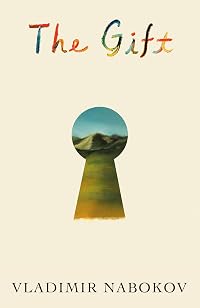
The Gift
by Vladimir Nabokov
On This Page
Description
The Gift is the last of the novels Nabokov wrote in his native Russian and the crowning achievement of that period in his literary career. It is also his ode to Russian literature, evoking the works of Pushkin, Gogol, and others in the course of its narrative: the story of Fyodor Godunov-Cherdyntsev, an impoverished m?igr ?poet living in Berlin, who dreams of the book he will someday write--a book very much like The Gift itself.Tags
Recommendations

Member Reviews
My goodness-gracious, this book is one hell of a monster.
It is the ultimate Russian nesting doll of and about art, memory, satire, and "Art". If I wasn't already a huge fan of Nabokov, I probably would have thrown this book across the room.
Nabokov wrote this novel as a tribute to his native language and is the last, and undeniably brilliant, of that period. It is a prime example of a supremely self-satisfied intellectual engorgement. Beautiful turns of phrase, rich and belligerent in its knowledge of the Russian Greats, it waves itself under the noses of anyone who might dare to understand it.
Look. I know my fair share of the greats of Russian Literature, but aside from my Dostoyevski, I'm like a babe in the woods against my Pushkin show more and Gogol. Coming up against The Gift makes me flail like a flensed man hung from a gibbet. Or like the remaining skin of a man. In Siberia. If I wasn't a dedicated fan of the writer and his gorgeous prose, the brilliant structure, the way he nested his prose within prose within prose and went ALL META on me in a way that made my head spin, I probably would have cut off his self-satisfied intellectual engorgement and thrown it out the window of a moving car.
I both loved and hated this book. I wanted to DNF it because I couldn't follow so much of it. I didn't know enough of any of the poets of the period, let alone a sufficient number of the greats, to know whether Nabokov was MAKING THEM UP OUT OF WHOLE CLOTH a-la [b:Possession|41219|Possession|A.S. Byatt|https://images.gr-assets.com/books/1391124124s/41219.jpg|2246190]. I guess I could look it up, but frankly, I'm happy I'm done and I want to move on. :)
It's definitely going to be right up your alley if you A: love Russian literature, B: love to hear about writers crafting their magnum opuses, C: are tolerant of monstrous egotists. :) show less
It is the ultimate Russian nesting doll of and about art, memory, satire, and "Art". If I wasn't already a huge fan of Nabokov, I probably would have thrown this book across the room.
Nabokov wrote this novel as a tribute to his native language and is the last, and undeniably brilliant, of that period. It is a prime example of a supremely self-satisfied intellectual engorgement. Beautiful turns of phrase, rich and belligerent in its knowledge of the Russian Greats, it waves itself under the noses of anyone who might dare to understand it.
Look. I know my fair share of the greats of Russian Literature, but aside from my Dostoyevski, I'm like a babe in the woods against my Pushkin show more and Gogol. Coming up against The Gift makes me flail like a flensed man hung from a gibbet. Or like the remaining skin of a man. In Siberia. If I wasn't a dedicated fan of the writer and his gorgeous prose, the brilliant structure, the way he nested his prose within prose within prose and went ALL META on me in a way that made my head spin, I probably would have cut off his self-satisfied intellectual engorgement and thrown it out the window of a moving car.
I both loved and hated this book. I wanted to DNF it because I couldn't follow so much of it. I didn't know enough of any of the poets of the period, let alone a sufficient number of the greats, to know whether Nabokov was MAKING THEM UP OUT OF WHOLE CLOTH a-la [b:Possession|41219|Possession|A.S. Byatt|https://images.gr-assets.com/books/1391124124s/41219.jpg|2246190]. I guess I could look it up, but frankly, I'm happy I'm done and I want to move on. :)
It's definitely going to be right up your alley if you A: love Russian literature, B: love to hear about writers crafting their magnum opuses, C: are tolerant of monstrous egotists. :) show less
62. The Gift by Vladimir Nabokov
Translation: from Russian, by Michael Scammell, with the author, 1963
published: 1937
format: 391-page paperback
acquired: June
read: Nov 25 – Dec 23
time reading: 17 hr 45 min, 2.9 min/page
rating: 4½
locations: Berlin
about the author: 1899 – 1977. Russia born, educated at Trinity College in Cambridge, 1922. Lived in Berlin (1922-1937), Paris, the US (1941-1961) and Montreux, Switzerland (1961-1977).
This is slow, but good stuff. As I work through Nabokov‘s novels, this was easily the weighty-est so far. There is a lot in here, like everything - poetry, Pushkin, Gogol, a complete biography of Chernyshevsky (!), literary commentary, critics, death, love, language, commentary on Nazi Germany - all here. It show more was also his last Russian language novel.
The novel is about a young Russian émigré author who just published his first book in Germany, a book of Russian poetry that sells a few dozen copies. He works as a language tutor, mostly for Germans learning English, which gives him just enough money, when he's responsible, to rent a room. As our book progresses, he interacts with literary émigrés in Berlin, meets a girl, Zina, who loves his book of poetry and falls for him and helps him write a biography Nikolay Gavrilovich Chernyshevsky. What? You haven't heard of Chernyshevsky? He was part of the Russia intellectual community in the 1860's, an era of reform in Russian, and when all that great Russian literature was appearing. Chernyshevsky was a proto-Communist, noted by Marx, and highly regarded by Lenin. Despite his caution, he was arrested, given a mock execution and sent to life-long exile in different parts of Siberia. Our protagonist is maybe less than reverential of his subject, making for some curious reading (the entire biography of Chernyshevsky is contained within), and ruffling many features throughout the fictional émigré community. His sales go up.
But this is just the surface. This book itself becomes an introspective look at misunderstood poetry, and at language, a love letter to certain era and mentality in a lost Russia, and a love story - all this with parallels to Nabokov's own life, even if he strongly denies the resemblance in his introduction. The opening chapter, a long musing on poetry, is some work for the reader to hack through. But then he switches to the narrator's lost father, a disconnected obsessive butterfly collector. This is also slow, but beautifully written and rewarding as his admiration pores out. Later the love story makes for simply great reading. Nabokov, in his translation introduction, claims a heavy influence from the Russian greats. He calls one chapter "a surge toward Pushkin", another a "shift to Gogol", and he claims the book's "heroine is not Zina, but Russian Literature." (with a capital 'L').
When one his favorite older émigré acquaintances dies, Nabokov goes uncharacteristically almost spiritual talking about death and life. On death:
"Fear gives birth to sacred awe, sacred awe erects a sacrificial altar, its smoke ascends to the sky, there assumes the shape of wings, and bowing fear addresses a prayer to it. Religion has the same relationship to man‘s heavenly condition that mathematics has to his earthly one: both the one and the other are merely the rules of the game."
And on life:
"...the unfortunate image of a “road” to which the human mind has become accustomed (life is a kind of journey) is a stupid allusion: we are not going anywhere, we are sitting at home. The other world surrounds us always and is not at all at the end of some pilgrimage. In our earthly house, windows are replaced by mirrors; the door, until a given time, is closed; but air comes through the cracks."
This book mostly closes the chapter on Nabokov's Russian literary output, and it seems to know that, as it practically seems to take everything he neglected to put into his previous novels and collect it all in place here, a document of writer's life to this point (if not his protagonist's). Highly recommended for Nabokov enthusiasts, but for others I can only recommend this to the brave and those willing to hack through the slow stuff to find the beauty within. But it really does reward. I enjoyed this.
2020
https://www.librarything.com/topic/322920#7356522 show less
Translation: from Russian, by Michael Scammell, with the author, 1963
published: 1937
format: 391-page paperback
acquired: June
read: Nov 25 – Dec 23
time reading: 17 hr 45 min, 2.9 min/page
rating: 4½
locations: Berlin
about the author: 1899 – 1977. Russia born, educated at Trinity College in Cambridge, 1922. Lived in Berlin (1922-1937), Paris, the US (1941-1961) and Montreux, Switzerland (1961-1977).
This is slow, but good stuff. As I work through Nabokov‘s novels, this was easily the weighty-est so far. There is a lot in here, like everything - poetry, Pushkin, Gogol, a complete biography of Chernyshevsky (!), literary commentary, critics, death, love, language, commentary on Nazi Germany - all here. It show more was also his last Russian language novel.
The novel is about a young Russian émigré author who just published his first book in Germany, a book of Russian poetry that sells a few dozen copies. He works as a language tutor, mostly for Germans learning English, which gives him just enough money, when he's responsible, to rent a room. As our book progresses, he interacts with literary émigrés in Berlin, meets a girl, Zina, who loves his book of poetry and falls for him and helps him write a biography Nikolay Gavrilovich Chernyshevsky. What? You haven't heard of Chernyshevsky? He was part of the Russia intellectual community in the 1860's, an era of reform in Russian, and when all that great Russian literature was appearing. Chernyshevsky was a proto-Communist, noted by Marx, and highly regarded by Lenin. Despite his caution, he was arrested, given a mock execution and sent to life-long exile in different parts of Siberia. Our protagonist is maybe less than reverential of his subject, making for some curious reading (the entire biography of Chernyshevsky is contained within), and ruffling many features throughout the fictional émigré community. His sales go up.
But this is just the surface. This book itself becomes an introspective look at misunderstood poetry, and at language, a love letter to certain era and mentality in a lost Russia, and a love story - all this with parallels to Nabokov's own life, even if he strongly denies the resemblance in his introduction. The opening chapter, a long musing on poetry, is some work for the reader to hack through. But then he switches to the narrator's lost father, a disconnected obsessive butterfly collector. This is also slow, but beautifully written and rewarding as his admiration pores out. Later the love story makes for simply great reading. Nabokov, in his translation introduction, claims a heavy influence from the Russian greats. He calls one chapter "a surge toward Pushkin", another a "shift to Gogol", and he claims the book's "heroine is not Zina, but Russian Literature." (with a capital 'L').
When one his favorite older émigré acquaintances dies, Nabokov goes uncharacteristically almost spiritual talking about death and life. On death:
"Fear gives birth to sacred awe, sacred awe erects a sacrificial altar, its smoke ascends to the sky, there assumes the shape of wings, and bowing fear addresses a prayer to it. Religion has the same relationship to man‘s heavenly condition that mathematics has to his earthly one: both the one and the other are merely the rules of the game."
And on life:
"...the unfortunate image of a “road” to which the human mind has become accustomed (life is a kind of journey) is a stupid allusion: we are not going anywhere, we are sitting at home. The other world surrounds us always and is not at all at the end of some pilgrimage. In our earthly house, windows are replaced by mirrors; the door, until a given time, is closed; but air comes through the cracks."
This book mostly closes the chapter on Nabokov's Russian literary output, and it seems to know that, as it practically seems to take everything he neglected to put into his previous novels and collect it all in place here, a document of writer's life to this point (if not his protagonist's). Highly recommended for Nabokov enthusiasts, but for others I can only recommend this to the brave and those willing to hack through the slow stuff to find the beauty within. But it really does reward. I enjoyed this.
2020
https://www.librarything.com/topic/322920#7356522 show less
Looking at the cover of the Popular Library (1963) paperback edition of "The Gift" by Vladimir Nabokov, it is difficult to imagine how that cover came to be, in fact it is difficult to imagine that this book could be considered a 'popular'--in the sense of appreciated by the general population--book. The front cover is reminiscent of a "From Here to Eternity" romance, and the quotes on the book are nothing if not cryptic: "a bizarre and special romp", "a powerful kick", "an occasion of delight". What is this book about? If I had to sum it up, I would say it is about creativity, nostalgia, writing.
Is this book worth reading? Absolutely! Is it accessible? I can only tell you my experience. More than 30 years ago I was beginning graduate show more school in Slavic literature and languages. Before flying to Poland for a summer school program, I spent a few days at a high school friend's garret in New York City. She was renting a room on the top floor of a 6 floor walkup which in actuality was an attic with a working bathtub in the middle of the room (she shared a toilet down the hall with the rest of the tenants on that floor). On one side of the attic were piles and piles of paperback books which the owner of the attic (a writer of some sort) stored there. These books looked like they hadn't been touched in decades, and among them I found this very edition of "the Gift". Thinking I would read it during my stay in Poland, and return it on my way homeward, I filched it from the attic. Throughout that summer I would read snatches of it whenever I had a few free moments. I don't remember whether I finished the novel or not, I just remember not being able to recall anything that happened or anything about the main character--even as I was reading it.
A few weeks ago I glimpsed this same edition in the Library resale book store and it called to me. Oh what a difference 30 years make! What I realize now is that, first of all, this is a novel that demands attention and leisure--no quick sips every now and again, no! it needs to be savored with no interruptions for a minimum of a couple hours at a time. Secondly, I was a complete ignoramus back then--I thought I knew Russian literature and culture, but in actuality I had just barely brushed the surface, and this novel is front and foremost a love poem to and about Russian literary culture as well as a critique of some of Russia's most beloved cultural figures.
The main character is a Russian emigre poet/writer living in Berlin during the 20s. He lives among the squalor and pettiness of the Russian literary refugees. He writes about the lost world of his childhood, he writes about his father--an explorer and searcher of butterflies who never returned from his last expedition, and in a chapter that was excised until the 1950s edition, he writes a biography/evisceration of the literary and social critic/martyr Nikolai Chernyshevsky. In a strange twist of life imitating art, the Russian emigre publishing world was outraged by this biography, as were the emigres in the novel itself. Why was this chapter left out of the original Russian version? Was it salacious? Was it obscene? It was because Nabokov depicted an icon of Russian 19th century social/progressive thought as an untalented, awkward, and frankly, ridiculous figure.
I didn't even mention the language, his analysis of various authors' styles, use of poetic meter, even particular words, are mesmerizing. Oh there is a love story too. The writer falls for a girl in the boarding house where he lives, and this story is the novel that will come into being as you read the book.
If ever a book needed an annotated edition, then this is the one...and it turns out someone has done just that. I found "Keys to the Gift" through interlibrary loan. I can't wait to discover what I've missed. show less
Is this book worth reading? Absolutely! Is it accessible? I can only tell you my experience. More than 30 years ago I was beginning graduate show more school in Slavic literature and languages. Before flying to Poland for a summer school program, I spent a few days at a high school friend's garret in New York City. She was renting a room on the top floor of a 6 floor walkup which in actuality was an attic with a working bathtub in the middle of the room (she shared a toilet down the hall with the rest of the tenants on that floor). On one side of the attic were piles and piles of paperback books which the owner of the attic (a writer of some sort) stored there. These books looked like they hadn't been touched in decades, and among them I found this very edition of "the Gift". Thinking I would read it during my stay in Poland, and return it on my way homeward, I filched it from the attic. Throughout that summer I would read snatches of it whenever I had a few free moments. I don't remember whether I finished the novel or not, I just remember not being able to recall anything that happened or anything about the main character--even as I was reading it.
A few weeks ago I glimpsed this same edition in the Library resale book store and it called to me. Oh what a difference 30 years make! What I realize now is that, first of all, this is a novel that demands attention and leisure--no quick sips every now and again, no! it needs to be savored with no interruptions for a minimum of a couple hours at a time. Secondly, I was a complete ignoramus back then--I thought I knew Russian literature and culture, but in actuality I had just barely brushed the surface, and this novel is front and foremost a love poem to and about Russian literary culture as well as a critique of some of Russia's most beloved cultural figures.
The main character is a Russian emigre poet/writer living in Berlin during the 20s. He lives among the squalor and pettiness of the Russian literary refugees. He writes about the lost world of his childhood, he writes about his father--an explorer and searcher of butterflies who never returned from his last expedition, and in a chapter that was excised until the 1950s edition, he writes a biography/evisceration of the literary and social critic/martyr Nikolai Chernyshevsky. In a strange twist of life imitating art, the Russian emigre publishing world was outraged by this biography, as were the emigres in the novel itself. Why was this chapter left out of the original Russian version? Was it salacious? Was it obscene? It was because Nabokov depicted an icon of Russian 19th century social/progressive thought as an untalented, awkward, and frankly, ridiculous figure.
I didn't even mention the language, his analysis of various authors' styles, use of poetic meter, even particular words, are mesmerizing. Oh there is a love story too. The writer falls for a girl in the boarding house where he lives, and this story is the novel that will come into being as you read the book.
If ever a book needed an annotated edition, then this is the one...and it turns out someone has done just that. I found "Keys to the Gift" through interlibrary loan. I can't wait to discover what I've missed. show less
Difficult to grapple with if you start reading Nabokov with this novel, as I have done. Reading "THE GIFT" caused me to realise how ignorant I am about Russian literature.
After looking at some criticisms of the novel, I found I could adopt a viewpoint from which some better understanding of it might be reached. The idea of the quiddity of things has been suggested as one possible source from which we might attempt a better appreciation of what Nabokov has undertaken in writing this novel.
The Gift is vaguely autobiographical, about Fyodor (gift from God), a Russian emigré in Berlin and his developing talent as a writer. There are five chapters; each one takes a different point-of-view to create a multiplicity of aspects and so, a unique show more story.
Chapter One starts with the publication of Fyodor's first volume of poems; they generate barely any interest. He bides his time about what to do and does so rather unproductively except for an awakening to Russian literature.
Chapter Two is a wonderful reminiscence of his father, a renowned lepidopterist who disappeared on an expedition in Central Asia. This was elegiac, a fabulous interlude full of admiration for nature.
Chapter Three is centred on the decision to write a critical biography of Nikolai Gavrilovich Chernyshevski, the 19th Century materialist social critic, lionised by the early communists. Fyodor (Nabokov) debunks him in Chapter Four and thus the chapter becomes a book within a book.
Chapter Five describes the success of the biography, more due to the scandal it raises. Fyodor is at last freed from sharing his living space with his landlords and can concentrate his love affair with like-minded Zina. She has encouraged his writing, and so Fyodor sets about planning a novel about his passions and his life. This proposed novel will be similar to the one we are just finishing. And so it goes
Bewildering at times, overwhelming me with my ignorance of so many things, but riveting in its inventiveness. show less
After looking at some criticisms of the novel, I found I could adopt a viewpoint from which some better understanding of it might be reached. The idea of the quiddity of things has been suggested as one possible source from which we might attempt a better appreciation of what Nabokov has undertaken in writing this novel.
The Gift is vaguely autobiographical, about Fyodor (gift from God), a Russian emigré in Berlin and his developing talent as a writer. There are five chapters; each one takes a different point-of-view to create a multiplicity of aspects and so, a unique show more story.
Chapter One starts with the publication of Fyodor's first volume of poems; they generate barely any interest. He bides his time about what to do and does so rather unproductively except for an awakening to Russian literature.
Chapter Two is a wonderful reminiscence of his father, a renowned lepidopterist who disappeared on an expedition in Central Asia. This was elegiac, a fabulous interlude full of admiration for nature.
Chapter Three is centred on the decision to write a critical biography of Nikolai Gavrilovich Chernyshevski, the 19th Century materialist social critic, lionised by the early communists. Fyodor (Nabokov) debunks him in Chapter Four and thus the chapter becomes a book within a book.
Chapter Five describes the success of the biography, more due to the scandal it raises. Fyodor is at last freed from sharing his living space with his landlords and can concentrate his love affair with like-minded Zina. She has encouraged his writing, and so Fyodor sets about planning a novel about his passions and his life. This proposed novel will be similar to the one we are just finishing. And so it goes
Bewildering at times, overwhelming me with my ignorance of so many things, but riveting in its inventiveness. show less
The Gift, Nabokov's last novel written in Russian (in the 1930's), translated into English in 1963, is another lovely example of Nabokov's eye for detail, as well as his deft use of sound. Although Nabokov likes to write about people who are perhaps not normal, he does so with such clarity that one sympathizes even with the obsessed, the bigoted, and the self-centered, even while disliking them.
The main character tutors someone in the English language, while the author manipulates the metaphor of communication as message-passing:
"The bus rolled on--and presently he arrived at his destination--the place of a lone and lonesome young woman, very attractive in spite of her freckles, always wearing a black dress opened at the neck and with show more lips like sealing-wax on a letter in which there was nothing. She continually looked at Fyodor with pensive curiosity, not only taking no interest int he remarkable novel by Stevenson which he had been reading with her for the past three months (and before that they had read Kipling at the same rate), but also not understanding a single sentence, and noting down words as you would note down the address of someone you knew you would never visit."
The book touches also on nature, romance, poetics, and, in chapter 4, a kind of modernist half-biography that is meant to be more true than the truth. The book does not have a fast-paced plot, but rather lovingly builds up the details of surprisingly quiet lives in unquiet times. Thus, instead of being a page-turner, it is a book to take your time over.
Highly recommended. show less
The main character tutors someone in the English language, while the author manipulates the metaphor of communication as message-passing:
"The bus rolled on--and presently he arrived at his destination--the place of a lone and lonesome young woman, very attractive in spite of her freckles, always wearing a black dress opened at the neck and with show more lips like sealing-wax on a letter in which there was nothing. She continually looked at Fyodor with pensive curiosity, not only taking no interest int he remarkable novel by Stevenson which he had been reading with her for the past three months (and before that they had read Kipling at the same rate), but also not understanding a single sentence, and noting down words as you would note down the address of someone you knew you would never visit."
The book touches also on nature, romance, poetics, and, in chapter 4, a kind of modernist half-biography that is meant to be more true than the truth. The book does not have a fast-paced plot, but rather lovingly builds up the details of surprisingly quiet lives in unquiet times. Thus, instead of being a page-turner, it is a book to take your time over.
Highly recommended. show less
For the first time I've skimmed and skipped Nabokov's prose. The audience he had in mind for this novel must have been exceedingly small, the couple thousand people among the 3 million Russian refugees, perhaps, who made up the self-identified audience of a Russian emigre writer in Germany as stated in an imagined conversation herein. Or perhaps he wrote it thinking only of his own amusement, as the last of his nine novels written in Russian and published in the Russian emigre press while he lived in Germany, giving a last farewell to that by now well trod provincial world. From here on out it was to America, and the English language, opening his work to a far wider audience, and the development of a theme introduced here - about an show more older man desiring an adolescent girl...
For me this novel gets a star a chapter for the first three, and a shake of the head for the last two. There first was enough scaffolding present for this particular 21st century American (unread in Pushkin and Gogol, alas, though at least he's familiar with those names) to proceed willingly along with Nabokov's twisting densities of language and mess of narrative, but the fourth chapter was far too unsteady to hold him up (him to whom the name Nikolai Chernyshevsky meant nothing, denying support - may any other wandering readers stumbling this way be more fortunate), and having tired by the time of reaching the fifth, he lacked the stamina required to do much more than cling to scattered footholds, unappreciative of the thick scenery. show less
For me this novel gets a star a chapter for the first three, and a shake of the head for the last two. There first was enough scaffolding present for this particular 21st century American (unread in Pushkin and Gogol, alas, though at least he's familiar with those names) to proceed willingly along with Nabokov's twisting densities of language and mess of narrative, but the fourth chapter was far too unsteady to hold him up (him to whom the name Nikolai Chernyshevsky meant nothing, denying support - may any other wandering readers stumbling this way be more fortunate), and having tired by the time of reaching the fifth, he lacked the stamina required to do much more than cling to scattered footholds, unappreciative of the thick scenery. show less
La figura di N. in letteratura mi ricorda assai quella di Brian Eno in musica; non per le collaborazioni - infinite per il conte e non conosciute per l'entomologo - quanto per il genio misto a pesantezza mista a visione celestiale in lunghissimi periodi, mista a maniacale cura del dettaglio e frapposta ad intuizioni lessicali onomatopeiche inudite, e poi esperimenti, e poi troppo avanti, sempre su un livello *oltre* quello del normale lettore distratto dalle immagini e dall'epoca internettiana. Poi c'e' la storia, ci sono 5 capitoli sganciabili - il 4^ era davvero *troppo* noioso, tanto che l'ho saltato e la lettura del 5^ non ne ha punto risentito.
C'e' una storia russa raccontata con sensibilità planetaria, con immagini e descrizioni show more di personaggi davvero incredibili - quelle del popolino tedesco sono pagine a sè. Ci sono dialoghi e descrizioni infinitamente lente, tanto che lo sbadiglio e lo stropiccìo (con accento sulla i) degli occhi sono compagni necessari per procedere per queste 454 pagine che a volte sembra non debbano finire mai, a volte si spera non finiscano mai.
[Poi si arriva alla postfazione e, grazie alla cortesia della traduttrice, ci si accorge di quanta letteratura non ci si era accorti; di quanti rimandi e citazioni è intessuto questo romanzo; di quanto in realta' di quest'opera, pur apprezzandola, se ne è colto solo il minimo necessario per proseguire nella lettura, tralasciando tutto quello che di fatto ne costituisce l'ossatura - ossa di cui in larga parte era poi costituito il capitolo 4^, quello appunto saltato per noia]. show less
C'e' una storia russa raccontata con sensibilità planetaria, con immagini e descrizioni show more di personaggi davvero incredibili - quelle del popolino tedesco sono pagine a sè. Ci sono dialoghi e descrizioni infinitamente lente, tanto che lo sbadiglio e lo stropiccìo (con accento sulla i) degli occhi sono compagni necessari per procedere per queste 454 pagine che a volte sembra non debbano finire mai, a volte si spera non finiscano mai.
[Poi si arriva alla postfazione e, grazie alla cortesia della traduttrice, ci si accorge di quanta letteratura non ci si era accorti; di quanti rimandi e citazioni è intessuto questo romanzo; di quanto in realta' di quest'opera, pur apprezzandola, se ne è colto solo il minimo necessario per proseguire nella lettura, tralasciando tutto quello che di fatto ne costituisce l'ossatura - ossa di cui in larga parte era poi costituito il capitolo 4^, quello appunto saltato per noia]. show less
Members
- Recently Added By
Lists

Favorite Long Books
330 works; 42 members

Russian Literature
184 works; 32 members

In or About the 1930s
198 works; 26 members

20th Century Literature
1,161 works; 54 members

Backlisted
109 works; 9 members

Top Five Books of 2019
387 works; 111 members

1960s
281 works; 16 members

Books set in Berlin
46 works; 4 members

1930s
262 works; 5 members

2015 Reading challenge
18 works; 1 member
Backlisted Podcast
65 works; 2 members

Books Read in 2019
4,052 works; 108 members
Author Information

431+ Works 96,085 Members
Vladimir Vladimirovich Nobokov was born April 22, 1899 in St. Petersburg, Russia to a wealthy family. He attended Trinity College, Cambridge. When he left Russia, he moved to Paris and eventually to the United States in 1940. He taught at Wellesley College and Cornell University. Nobokov is revered as one of the great American novelists of the show more 20th Century. Before he moved to the United States, he wrote under the pseudonym Vladimir Serin. Among those titles, were Mashenka, his first novel and Invitation to a Beheading. The first book he wrote in English was The Real Life of Sebastian Knight. He is best know for his work Lolita which was made into a movie in 1962. In addition to novels, he also wrote poetry and short stories. He was a finalist for the National Book Award for Fiction seven times, but never won it. Nabokov died July 2, 1977. show less
Some Editions
Awards and Honors
Distinctions
Series
Belongs to Publisher Series
Work Relationships
Is contained in
Common Knowledge
- Canonical title*
- Die Gabe
- Original title
- Дар
- Original publication date
- 1952
- People/Characters
- Fyodor Godunov-Cherdyntsev; Nikolay Chernyshevsky
- Important places
- Berlin, Germany
- Epigraph
- An oak is a tree. A rose is a flower. A deer is an animal. A sparrow is a bird. Russia is our fatherland. Death is inevitable. — P. Smirnovski, A Textbook of Russian Grammar
- Dedication
- To Véra
- First words
- One cloudy but luminous day, towards four in the afternoon on April the first, 192- (a foreign critic once remarked that while many novels, most German ones for example, begin with a date, it is only Russian authors who, in k... (show all)eeping with the honesty peculiar to our literature, omit the final digit) a moving van, very long and very yellow, hitched to a tractor that was also yellow, with hypertrophied rear wheels and a shamelessly exposed anatomy, pulled up in front of Number Seven Tannenberg Street, in the west part of Berlin.
- Last words
- (Click to show. Warning: May contain spoilers.)And yet the ear cannot right now part with the music and allow the tale to fade; the chords of fate itself continue to vibrate; and no obstruction for the sage exists where I have put The End; the shadows of my world extend beyond the skyline of the page, blue as tomorrow's morning haze - nor does this terminate the phrase.
- Original language
- Russian
*Some information comes from Common Knowledge in other languages. Click "Edit" for more information.
Classifications
- Genres
- General Fiction, Fiction and Literature
- DDC/MDS
- 891.7342 — Literature & rhetoric Literatures of other languages East Indo-European and Celtic literatures Russian and East Slavic languages Russian fiction USSR 1917–1991 Early 20th century 1917–1945
- LCC
- PG3476 .N3 .D313 — Language and Literature Slavic languages and literatures. Baltic languages. Albanian language Slavic. Baltic. Albanian Russian literature Individual authors and works 1917-1960
- BISAC
Statistics
- Members
- 1,422
- Popularity
- 16,582
- Reviews
- 13
- Rating
- (3.87)
- Languages
- 17 — Czech, Dutch, English, Finnish, French, German, Hungarian, Italian, Japanese, Polish, Portuguese, Romanian, Russian, Serbian, Spanish, Swedish, Ukrainian
- Media
- Paper, Audiobook, Ebook
- ISBNs
- 64
- ASINs
- 18