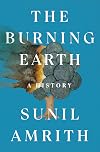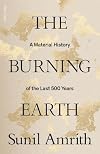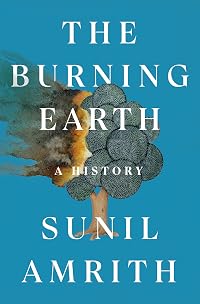
The Burning Earth: An Environmental History of the Last 500 Years
by Sunil Amrith
On This Page
Description
One of Literary Hub's Most Anticipated Books of 2024 In this magisterial book, historian Sunil Amrith twins the stories of environment and Empire, of genocide and eco-cide, of an extraordinary expansion of human freedom and its planetary costs. Drawing on an extraordinarily rich diversity of primary sources, he reckons with the ruins of Portuguese silver mining in Peru, British gold mining in South Africa, and oil extraction in Central Asia. He explores the railroads and highways that show more brought humans to new terrains of battle against each other and against stubborn nature. Amrith's account of the ways in which the First and Second World Wars involved the massive mobilization not only of men, but of other natural resources from around the globe, provides an essential new way of understanding war as an irreversible reshaping of the planet. So too does this book reveal the reality of migration as consequence of environmental harm. The imperial, globe-spanning pursuit of profit, joined with new forms of energy and new possibilities of freedom from hunger and discomfort, freedom to move and explore, has brought change to every inch of the Earth. Amrith relates in gorgeous prose, and on the largest canvas, a mind-altering epic in which humanity might find the collective wisdom to save itself. show lessTags
Recommendations




























Member Reviews
The book traces the evolution of history, the growth of humanity, the rise and fall of empires, and the impact on the environment. The book’s central theme is simple: as humanity has progressed, population has increased, and as wars have become more widespread, humans have exploited the environment for their benefit.
A theme missing in the book, is how people still lived in relative harmony with nature. Listen to the words of any elder, and you will understand their love for the earth. We have become distant from the world we inhabit.
Sunil Amarth traces large movements, and highlights how environmental exploitation has accelerated since the Industrial Revolution. He points out that, since the Industrial Revolution started, our show more attitude shifted to one where we believe we rule nature.
The book is weakest when he discusses our modern times. He does not dive into the impact that war, or AI (for instance) have – or will have – on the environment. The author stays with the old enemies like agriculture, industry, vehicular movement, plastic, etc.
Neither does Sunil Amarth talk about how our modern lifestyles have distanced us from the environment. In fact, many fear contact with nature, and this attitude can accelerate environmental degradation.
On the whole, however, the book provides an excellent, grand sweep of how humans have always had an adverse impact on the environment. show less
A theme missing in the book, is how people still lived in relative harmony with nature. Listen to the words of any elder, and you will understand their love for the earth. We have become distant from the world we inhabit.
Sunil Amarth traces large movements, and highlights how environmental exploitation has accelerated since the Industrial Revolution. He points out that, since the Industrial Revolution started, our show more attitude shifted to one where we believe we rule nature.
The book is weakest when he discusses our modern times. He does not dive into the impact that war, or AI (for instance) have – or will have – on the environment. The author stays with the old enemies like agriculture, industry, vehicular movement, plastic, etc.
Neither does Sunil Amarth talk about how our modern lifestyles have distanced us from the environment. In fact, many fear contact with nature, and this attitude can accelerate environmental degradation.
On the whole, however, the book provides an excellent, grand sweep of how humans have always had an adverse impact on the environment. show less
Ratings
Members
- Recently Added By
Lists

Sandra's Wishlist
57 works; 1 member

The Five Books That Represent Us
391 works; 148 members
Author Information

10 Works 336 Members
Sunil S. Amrith is Senior Lecturer in History at Birkbeck College, University of London. He is the author of Decolonizing International Health: India and Southeast Asia, 1930-65 (2006), and his articles have been published in numerous journals, such as The American Historical Review and Past and Present.
Some Editions
Awards and Honors
Awards
Distinctions
Notable Lists
Common Knowledge
- Canonical title
- The Burning Earth: An Environmental History of the Last 500 Years
- Alternate titles
- The Burning Earth: A History
- First words
- I had the most thoroughly urban of childhoods in an Asian metropolis that grew vertically. My memories are of harbor lights and darkened movie theaters and air-conditioned shopping malls. I paid little attention to the natura... (show all)l world, though nature seeped into my life unnoticed. To this day the rain I love is the rain that thrilled me then: rain that arrives abruptly and falls in sheets from stacks of inky afternoon clouds. -Prologue, Dreams of Escape
Once upon a time all history was Environmental history. Life was governed by the seasons. When the weather gods were fickle, misery followed. Human societies used their ingenuity to wield fire, dam rivers, cut down forests: a... (show all)ll the mitigate the risks of living. They harnessed the power of the animals they shared shelter with. Every culture had its gods of beneficence; every culture had dreams of plenty. A thousand years ago, those dream grew more insistent. The scale of human impact on Earth expanded with the growth in human numbers. The range of possible futures inched wider. But the twinned foes of famine and epidemic never receded for long. -Introduction, Nature and Freedom
In the year 1218, Yelu Chucai (1178-1243), scholar and administrator from the nomadic Khitan people of inner Asia, make a political pilgrimage to the West. He delighted in the varied landscape of steppe and mountain. He expre... (show all)ssed grudging admiration for Mongol military prowess under the leadership of Chinggus (Genghis) Khan. -Chapter One, Horizons of Desire - Canonical DDC/MDS
- 333.709
- Canonical LCC
- GF13.A475
Classifications
- Genres
- Economics, Science & Nature, Anthropology, History, Nonfiction, General Nonfiction
- DDC/MDS
- 333.709 — Society, government, & culture Economics Economics of land and energy Conservation, Alternative Energy Sources
- LCC
- GF13 .A475 — Geography, Anthropology and Recreation Human ecology. Anthropogeography Human ecology. Anthropogeography
- BISAC
Statistics
- Members
- 143
- Popularity
- 228,723
- Reviews
- 1
- Rating
- (4.00)
- Languages
- Dutch, English
- Media
- Paper, Ebook
- ISBNs
- 9
- ASINs
- 2