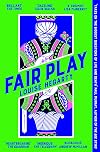
Fair Play
by Louise Hegarty
On This Page
Description
For fans of Anthony Horowitz, Tana French, and Sally Rooney, a wonderfully original, genre-breaking literary debut from Ireland that's an homage to the brilliant detective novels of the early twentieth century, a twisty modern murder mystery, and a searing exploration of grief and loss. A group of friends gather at an Airbnb on New Year's Eve. It is Benjamin's birthday, and his sister Abigail is throwing him a jazz-age Murder Mystery themed party. As the night plays out, champagne is drunk, show more hors d'oeuvres consumed, and relationships forged, consolidated or frayed. Someone kisses the wrong person; someone else's heart is broken. In the morning, all of them wake up, except Benjamin. As Abigail attempts to wrap her mind around her brother's death, an eminent detective arrives determined to find Benjamin's killer. In this mansion, suddenly complete with a butler, gardener and housekeeper, everyone is a suspect, and nothing is quite as it seems. Will the culprit be revealed? And how can Abigail, now alone, piece herself back together in the wake of this loss? Gripping and playful, sharp and profoundly moving, "Fair Play" plumbs the depths of the human heart while subverting one of our most popular genres. show lessTags
Recommendations





Member Reviews
An ingenious puzzle box of a novel, where nothing is solved but everything is discovered. The author plays--often hilariously, always knowlingly--with the forms and conventions of detective fiction.
I watched a YouTube video the other day on BookTokers and the performative phenomenon of being "a great reader [who] has no pleasure in any thing else" (+20 LitPoints, which I shall catchily shorten to "LitPits," if you caught that reference...answers below)(1) and the seemingly paradoxical spread of illiteracy. Turns out that one can amass followers (if one so desires) not only by NOT reading the books one owns but also by not being able to understand them if one does (even better! but -400 LitPits if you do this). If you are part of this illiterate horde, today is your lucky flippin' day (+50 LitPits if you can identify the modified linguistic function of the "flippin'" in this sentence)(2) because I'm going to explain Louise show more Hegarty's Fair Play for you. By the looks of other reviews out there, this service is sorely needed.
Before we proceed, I must warn you, dear Review Reader, that I don't do the special HTML tags to hide spoiler content. If you don't want to know what happens in this not-a-murder-mystery (damn it, I've already revealed too much!), you must summon all your powers of self-control and stop reading now.
Never met a temptation you could resist (+5 LitPits for knowing who said that)(3)? Good! On we go!
Fair Play starts with a tiresomely declarative account of a New Year's Eve cum birthday party. Abigail has rented a spacious Airbnb in the country and invited a bunch of her brother's friends for a murder mystery New Year's Eve party. Her brother's birthday is New Year's day. Despite some lightly awkward moments and uncomfortable situations, the party (complete with a spurious murder) more or less goes swimmingly. Midnight comes. Sing "Auld Lang Syne" (+5 LitPits for knowing who wrote the words)(4). Everyone goes to bed trying to figure out what the lyrics mean (+100 LitPits if you know)(5). New Year's day, however, lacks the guest of honor. Benjamin, Abigail's beloved brother, is found dead in his room.
This is the point where the book is bound to lose the BookTokers of ill-repute.
Part 2 of Fair Play launches into a murder mystery, or so a skimmer BookToker would believe. The Airbnb becomes Abigail and Benjamin's familial estate wherein a famous detective yclept (+25 LitPits for knowing what this is a past participle of)(6) Auguste Bell (but you can think of him as Sherlock Poirot...no LitPits for that, it's just too obvious...) magically appears to solve the case. It quickly becomes clear that THIS IS NOT A MURDER MYSTERY. (I used caps for the BookTokers who are hungrily searching for important content to jump out at them...because I care.)
The appearance of the murder mystery plotline is Abigail's way of trying to make sense of her brother's death, for he has, in fact, committed suicide. In modern parlance, Auguste Bell "provides the narrative" (+3 LitPits if you threw up a little in your mouth reading that) for a blindsided Abigail.
In between Bell's investigations, we do get a glimpse of Abigail trying to get a grip on the situation by asking Benjamin's friends if they saw the tragedy coming. Now, here is where the book gets mildly interesting! After every interview Abigail conducts, Auguste Bell takes a chapter to explain how the most recent interviewee committed Benjamin's murder. All are accused. All, in their own chapters, are unmasked and found guilty. This is, I think, an interesting commentary on how one might deal with a loved one's suicide -- apparently by blaming everyone else. *cough cough* Unhealthy! *cough cough* The completely predictable part of this "'J'accuse!' method" (+175 LitPits for this reference)(7) is to accuse and condemn the very last of Auguste Bell's suspects -- Abigail herself. What else is left then for Abigail to conclude that her brother's suicide is all her fault?(8)
Fine, just fine. No objection to the story of a protagonist trying to make sense of a suicide. Objection to the fact that this book doesn't manage anything particularly profound on the subject but instead dresses the exercise up in a gimmick. Throughout the book Auguste Bell engages in that oh-so-postmodern pastime of delving into the meta-narrative. He alludes to what will come and in what chapter you, dear Reader, will find it, and he's able to thumb back through the very book you're holding in your hot little hands to see what characters have said earlier in the text. He resists the temptation to read ahead to the end. Such integrity. So very clever.
To reiterate: gimmicks are a sin. Good storytelling doesn't need them. However (here comes the sop), Ms. Hegarty's effort is readable and not without its amusing moments. She doesn't use LitPits in her text, but she could have (and might as well have done if she was going the gimmick route anyway). Even if gimmicky, this was an ambitious effort on Ms. Hegarty's part. I hereby award her +300 LitPits for thumbing her nose at the superficial reading style of BookTokers, and +300 LitPits to her publisher for the same.
(1) Chapter 8 of Jane Austen's Pride and Prejudice. Caroline Bingley describes Lizzy Bennet thus to try to despoil her character in front of Mr. Darcy. Clearly Miss Bingley has no prescience when it comes to the BookToker phenomenon either.
(2) "Flippin'", as a euphemism for a vulgar word I shall not type for fear of blushing, is the only infix in the English language. We have prefixes and suffixes, but only one infix. Consider other examples such as "out-flippin'-standing" and "un-flippin'-believable." Look! the infix is paired with a prefix! I feel the vapors coming on!
(3) The inimitable Mae West. Famous for many things, but perhaps less appreciated in her role as a writer. Or not? Patsy Kelly questioned West's written witticisms. Spill the tea, Patsy!
(4) Robert Burns. +1 LitPit if you call him "Robbie" using a Scottish brogue. Unless you really are Scottish.
(5) Trick question! It *is* actually gibberish! I know, I know -- you knew it all along!
(6) Clepe.
(7) Article written by Emile Zola defending Alfred Dreyfus against the anti-semitic attacks made against him by the French government. Dreyfus was wrongly accused of espionage and sent to prison on Devil's Island. This was THE scandal of the late 1890s, drawing a deep divide between the pro- and anti-Dreyfusards. Hannah Arendt would later cite this case as the root of modern anti-semitism in her mammoth The Origins of Totalitarianism. +75 LitPits if you perked up a little when I mentioned Arendt.
(8) Rhetorical question. No LitPits awarded. Unless you're Scottish. +1 LitPit. (There Scotland! I have redressed the balance!) show less
Before we proceed, I must warn you, dear Review Reader, that I don't do the special HTML tags to hide spoiler content. If you don't want to know what happens in this not-a-murder-mystery (damn it, I've already revealed too much!), you must summon all your powers of self-control and stop reading now.
Never met a temptation you could resist (+5 LitPits for knowing who said that)(3)? Good! On we go!
Fair Play starts with a tiresomely declarative account of a New Year's Eve cum birthday party. Abigail has rented a spacious Airbnb in the country and invited a bunch of her brother's friends for a murder mystery New Year's Eve party. Her brother's birthday is New Year's day. Despite some lightly awkward moments and uncomfortable situations, the party (complete with a spurious murder) more or less goes swimmingly. Midnight comes. Sing "Auld Lang Syne" (+5 LitPits for knowing who wrote the words)(4). Everyone goes to bed trying to figure out what the lyrics mean (+100 LitPits if you know)(5). New Year's day, however, lacks the guest of honor. Benjamin, Abigail's beloved brother, is found dead in his room.
This is the point where the book is bound to lose the BookTokers of ill-repute.
Part 2 of Fair Play launches into a murder mystery, or so a skimmer BookToker would believe. The Airbnb becomes Abigail and Benjamin's familial estate wherein a famous detective yclept (+25 LitPits for knowing what this is a past participle of)(6) Auguste Bell (but you can think of him as Sherlock Poirot...no LitPits for that, it's just too obvious...) magically appears to solve the case. It quickly becomes clear that THIS IS NOT A MURDER MYSTERY. (I used caps for the BookTokers who are hungrily searching for important content to jump out at them...because I care.)
The appearance of the murder mystery plotline is Abigail's way of trying to make sense of her brother's death, for he has, in fact, committed suicide. In modern parlance, Auguste Bell "provides the narrative" (+3 LitPits if you threw up a little in your mouth reading that) for a blindsided Abigail.
In between Bell's investigations, we do get a glimpse of Abigail trying to get a grip on the situation by asking Benjamin's friends if they saw the tragedy coming. Now, here is where the book gets mildly interesting! After every interview Abigail conducts, Auguste Bell takes a chapter to explain how the most recent interviewee committed Benjamin's murder. All are accused. All, in their own chapters, are unmasked and found guilty. This is, I think, an interesting commentary on how one might deal with a loved one's suicide -- apparently by blaming everyone else. *cough cough* Unhealthy! *cough cough* The completely predictable part of this "'J'accuse!' method" (+175 LitPits for this reference)(7) is to accuse and condemn the very last of Auguste Bell's suspects -- Abigail herself. What else is left then for Abigail to conclude that her brother's suicide is all her fault?(8)
Fine, just fine. No objection to the story of a protagonist trying to make sense of a suicide. Objection to the fact that this book doesn't manage anything particularly profound on the subject but instead dresses the exercise up in a gimmick. Throughout the book Auguste Bell engages in that oh-so-postmodern pastime of delving into the meta-narrative. He alludes to what will come and in what chapter you, dear Reader, will find it, and he's able to thumb back through the very book you're holding in your hot little hands to see what characters have said earlier in the text. He resists the temptation to read ahead to the end. Such integrity. So very clever.
To reiterate: gimmicks are a sin. Good storytelling doesn't need them. However (here comes the sop), Ms. Hegarty's effort is readable and not without its amusing moments. She doesn't use LitPits in her text, but she could have (and might as well have done if she was going the gimmick route anyway). Even if gimmicky, this was an ambitious effort on Ms. Hegarty's part. I hereby award her +300 LitPits for thumbing her nose at the superficial reading style of BookTokers, and +300 LitPits to her publisher for the same.
(1) Chapter 8 of Jane Austen's Pride and Prejudice. Caroline Bingley describes Lizzy Bennet thus to try to despoil her character in front of Mr. Darcy. Clearly Miss Bingley has no prescience when it comes to the BookToker phenomenon either.
(2) "Flippin'", as a euphemism for a vulgar word I shall not type for fear of blushing, is the only infix in the English language. We have prefixes and suffixes, but only one infix. Consider other examples such as "out-flippin'-standing" and "un-flippin'-believable." Look! the infix is paired with a prefix! I feel the vapors coming on!
(3) The inimitable Mae West. Famous for many things, but perhaps less appreciated in her role as a writer. Or not? Patsy Kelly questioned West's written witticisms. Spill the tea, Patsy!
(4) Robert Burns. +1 LitPit if you call him "Robbie" using a Scottish brogue. Unless you really are Scottish.
(5) Trick question! It *is* actually gibberish! I know, I know -- you knew it all along!
(6) Clepe.
(7) Article written by Emile Zola defending Alfred Dreyfus against the anti-semitic attacks made against him by the French government. Dreyfus was wrongly accused of espionage and sent to prison on Devil's Island. This was THE scandal of the late 1890s, drawing a deep divide between the pro- and anti-Dreyfusards. Hannah Arendt would later cite this case as the root of modern anti-semitism in her mammoth The Origins of Totalitarianism. +75 LitPits if you perked up a little when I mentioned Arendt.
(8) Rhetorical question. No LitPits awarded. Unless you're Scottish. +1 LitPit. (There Scotland! I have redressed the balance!) show less
Well... I can see where the low ratings are coming from here. The golden age mystery bits are great, but they are mixed with some jarring present-day narrative (I know it's all present day, but it's not written to sound like that). Then the last bit of the book is just the end of Clue the Movie, which, what for? After all the fair play of detective stories we went over at the beginning are we just proving there's no real fair play? humph.
Abigail and Benjamin are close siblings and every year Abigail throws a party for Benjamin's New Year's birthday. This year their friendship group meets at an AirBnB to play a murder mystery game but this is one with a twist as Benjamin ends up dead. Now there are parallel storylines set in the modern day and in the Golden Age of Detection, as Abigail struggles to cope with grief, a consulting detective tries to solve the crime.
This is a very strange book and takes some getting used to. On one hand it is a murder mystery steeped in tradition and full of references to the great novelists of the past. On the other hand it is a treatise into grief. I'm not sure if either narrative is fully resolved but it's rather fun along the way!
This is a very strange book and takes some getting used to. On one hand it is a murder mystery steeped in tradition and full of references to the great novelists of the past. On the other hand it is a treatise into grief. I'm not sure if either narrative is fully resolved but it's rather fun along the way!
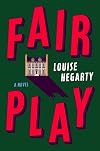
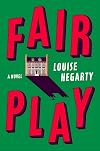
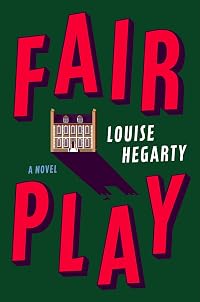
3.5 The cover of Louise Hagerty‘s debut novel, Fair Play, definitely caught my eye with the large letters and bright colours. I always think ‘cosy read when I see a manor on the cover.
And I wasn’t far off. Part one introduces us to a group of friends getting ready to celebrate a birthday and Happy New Year’s with food and drink. A murder mystery game is on the menu as well. We easily and quickly get a handle on who’s who and the relationships amongst them. You can it see it right? Yes indeed, one of them is…
Part two threw me and I loved it! There’s a number of documents detailing what should and shouldn’t be in a mystery book. I’m going to let you discover those - they were fun to read. But getting back to the show more crime…. A very well known detective is brought in to see if he can find the answer to who and why. I loved the style of this part. I’ll let you find out if the detective solves the crime.
And part three is completely different and I wondered why it was written this way. And what was actually written. I had to go back and read that part again and I think I’ve got it. Very unexpected and very clever. show less
And I wasn’t far off. Part one introduces us to a group of friends getting ready to celebrate a birthday and Happy New Year’s with food and drink. A murder mystery game is on the menu as well. We easily and quickly get a handle on who’s who and the relationships amongst them. You can it see it right? Yes indeed, one of them is…
Part two threw me and I loved it! There’s a number of documents detailing what should and shouldn’t be in a mystery book. I’m going to let you discover those - they were fun to read. But getting back to the show more crime…. A very well known detective is brought in to see if he can find the answer to who and why. I loved the style of this part. I’ll let you find out if the detective solves the crime.
And part three is completely different and I wondered why it was written this way. And what was actually written. I had to go back and read that part again and I think I’ve got it. Very unexpected and very clever. show less
Somewhat disappointed in this but maybe because my expectations were incorrect. I thought I was just getting a cozy murder mystery. That was true but only to an extent—the cozy mystery was a story within the story. It took me longer than it should have to realize there was a double narrative going on with the cozy murder being told alongside the “real” murder with real feelings of loss and grief. The heavier themes wasn’t what I had wanted to read, and by the end I was dissatisfied with both the narratives. I did enjoy the winks to the genre.
Not really sure what to make of this book. It has many clever features, although possibly tries to be too clever.
A plethora of characters arrive at a murder mystery / birthday weekend over the New Year, only for one of them to be murdered overnight, and then it converts into a book that tries to follow the conventions of a good crime fiction book.
I really did not take to this book and it was a struggle to get through. It did have some good points and some enjoyable elements, but the multiple endings just seemed repetitive and put simply boring. Then still not sure what the point of part 3 of the book was. Overall I found this book disappointing and felt I wasted my time reading it.
A plethora of characters arrive at a murder mystery / birthday weekend over the New Year, only for one of them to be murdered overnight, and then it converts into a book that tries to follow the conventions of a good crime fiction book.
I really did not take to this book and it was a struggle to get through. It did have some good points and some enjoyable elements, but the multiple endings just seemed repetitive and put simply boring. Then still not sure what the point of part 3 of the book was. Overall I found this book disappointing and felt I wasted my time reading it.
Members
- Recently Added By
Lists

Netgalley Reads
460 works; 3 members

Books Read in 2025
4,091 works; 97 members
Author Information

3 Works 194 Members
Some Editions
Awards and Honors
Awards
Distinctions
Common Knowledge
- Canonical title
- Fair Play
- Original publication date
- 2025
- Original language
- English
Classifications
Statistics
- Members
- 189
- Popularity
- 173,298
- Reviews
- 9
- Rating
- (3.21)
- Languages
- English
- Media
- Paper, Audiobook, Ebook
- ISBNs
- 11
- ASINs
- 3