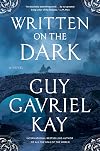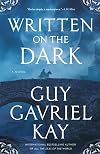
On This Page
Description
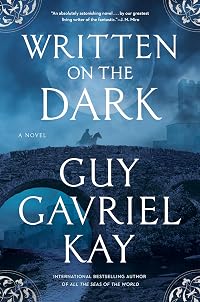
"Both sweeping and intimate, a majestic novel of love and war that brilliantly evokes the drama and turbulence of medieval France. Thierry Villar is a well-known-even notorious- tavern poet, familiar with the rogues and shadows of that world, but not at all with courts and power. He is an unlikely person, despite his quickness, to be caught up in the deadly contests of ambitious royals, assassins, and invading armies. But he is indeed drawn into all these things on a savagely cold night in show more his beloved city of Orane. And so Thierry must use all the intelligence and charm he can muster as political struggles merge with a decades-long war to bring his country to the brink of destruction. As he does, he meets his poetic equal in an aristocratic woman and is drawn to more than one unsettling person with a connection to the world beyond this one. He also crosses paths with an extraordinary young woman driven by voices within to try to heal the ailing king-and help his forces in war. A wide and varied set of people from all walks of life take their places in the rich tapestry of this story. A new masterwork from the internationally bestselling author of All the Seas of the World, A Brightness Long Ago, and Tigana, Written on the Dark is an elegant tour de force about power and ambition playing out amid the intense human need for art and beauty, and memories to be left behind"-- show lessTags
Recommendations







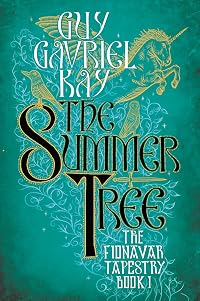
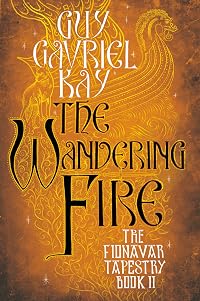
Member Reviews
"I am a man who shaped lines in the dark."
That single sentence, early in Guy Gavriel Kay's Written on the Dark, is the key that unlocks everything. The protagonist says it of himself. But Kay could just as easily have been speaking of the novel in your hands.
What it is:
The deepest part of the night in the most savage winter of the coldest year anyone could remember. In the city of Orane (think Paris, but not quite), a tavern poet named Thierry Villar: clever, indebted, and intimately familiar with rogues and shadows, steps into a snow-choked street to rob a sanctuary. Instead, he stumbles upon a corpse. A duke has been murdered. The king's brother. The man who ruled Ferrieres while the king slipped into madness. And the provost of show more Orane, needing someone who can move unseen through the city's taverns and back alleys, conscripts Thierry to investigate. This is the opening. What follows is not merely a murder mystery, but a sweeping novel of love and war that brilliantly evokes the drama and turbulence of medieval France, the Hundred Years' War, a mad king, a Joan of Arc stand-in, the clash of armies and the collision of ambitions.
The setting is Kay's familiar "history with a quarter-turn to the fantastic": two moons in the sky, a dominant sun-god named Jad, and the continent of Ferrieres standing in for France, Angland for England, Barratin for Burgundy. But Written on the Dark is shorter than Kay's usual doorstoppers, more tightly plotted, with fewer digressions into the stories of minor characters. And that focus is its greatest strength.
Why it works (and why it lingers):
1. The protagonist is one of Kay's finest creations. Thierry Villar is based loosely on the historical French poet François Villon, a man known for his comic bequests, his criminal record (he stabbed a priest, he robbed a church), and his immortal line: "Where are the snows of yesteryear?" Kay's Thierry has the same appetites, the same flaws, the same improbable resilience. But he is also a man who, over the course of the novel, grows into something he was not. "He was still young, of course," Kay writes. "He might grow into something different, someone different. You weren't the same though the whole of your life, were you?" Watching Thierry navigate the treacherous waters of court politics, his tavern instincts colliding with the cold calculations of nobles, is a rare pleasure.
2. The murder mystery is a Trojan horse. The assassination of the Duke de Montereau by the ambitious Duke de Barratin is a brilliant framing device. It pulls Thierry into a world of power and conspiracy. But once the mystery is resolved (and justice, in Kay's world, is never tidy), the novel pivots. The real drama, the invasion of Angland, the emergence of a young girl named Jeanette d'Broche who hears the voice of God and leads an army, the question of what happens to a kingdom when its king is mad and its enemies are at the gate, unfolds with increasing urgency. The murder was the spark. The war is the inferno.
3. The women are extraordinary. Marina di Seressa, a court poet of higher station and sharper tongue, whose poems are "truth superimposed on the absence of knowing what had happened… her invented tale. Not quite the same thing. Not quite. But near enough to make such stories one of the things we use to carry us through the uncertainty of our own days." Jeanette d'Broche, the maiden who bears the weight of a nation's hope. The Queen, who protects her mad husband with a ferocity that breaks the heart. And others: headstrong, intelligent, fiercely loyal, who add depth and texture to every page.
4. The prose is Kay at his most elegant and elegiac. He does not simply describe the winter. He makes you feel the cold: "the deepest part of the night in the most savage winter of the coldest year anyone could remember." He does not simply tell you that life is uncertain. He shows you, in a passage that deserves to be inscribed on a cathedral wall: "Not everyone alive in that winter night, and the following day when chaos erupted, would live to see the flowers return, or the warmth of summer, or enjoy the fruits of the harvest that followed. But that is always so. Men and women live with a heart-deep uncertainty every morning when they wake. It is why they go to war, why they write poems, fall in and out of love, plan thefts on dark nights, or try to forestall them. Why they pray. Or refuse to pray. It is the uncertainty that shapes and defines our lives. The tears of the world, a longing for joy. Or even just safety. Just that."
5. The novel meditates on art, power, and what we leave behind. "Sometimes we retain the quiet moments that come in the midst of chaos, or after it," Kay writes. "The city, my city, in the night. Our lives, written on the dark." The title is not mere poetry. It is the thesis. We are all writing our lives on a dark page: uncertain, temporary, but no less beautiful for it. Thierry's poems, Marina's verses, the songs of the tavern, the declarations of the court: these are the lights we kindle against the vast, indifferent night.
Where it might leave you wanting (and that's a compliment):
1. It is shorter than you want it to be. Kay's novels usually sprawl across 500 pages. Written on the Dark is tighter, leaner, more focused. You will finish it and immediately wish for more. That is not a flaw. It is a sign that the book did its work.
2. The minor characters are less lovingly detailed. Kay acknowledges this, in his author's note, as a conscious choice. The novel concentrates on its core cast. Some readers may miss the rich tapestry of minor lives that populate his longer works. I did not.
3. The historical parallels will delight some readers and pass others by. If you know your Hundred Years' War: Charles VI's madness, the assassination of the Duke of Orléans, the rise of Joan of Arc, the Battle of Agincourt; you will spend happy hours spotting Kay's subtle inversions and outright reversals. If you do not, the book stands perfectly well on its own terms. Kay is not writing a history textbook. He is writing a story.
Who should read this:
Fans of Kay's previous work, especially The Lions of Al-Rassan, A Song for Arbonne, and All the Seas of the World.
Readers who love historical fantasy that feels like literature.
Anyone who has ever wondered about the power of art in the face of power.
Those who believe that even the smallest life can shape great events.
Who might struggle:
If you need a fast-paced, action-driven plot (this is Kay, not Abercrombie).
If you dislike philosophical digressions and lyrical prose.
If you require your fantasy to be heavy on magic (the fantasy here is subtle).
Final verdict:
Written on the Dark is not Kay's most famous book. It will not outsell Tigana or The Lions of Al-Rassan. But it is his most focused, most intimate, and, for my money, one of his very best. It is a novel about a poet who never wanted to be a hero, a kingdom teetering on the edge of chaos, and the small, stubborn, beautiful acts of creation that make us human. The prose is a pleasure. The characters are unforgettable. And the title, which at first seems merely poetic, reveals itself, by the final page, as the novel's beating heart.
Five stars. For the coldest winter. For the two moons rising over Orane. For the poet who shaped lines in the dark, and for the author who shaped this. show less
That single sentence, early in Guy Gavriel Kay's Written on the Dark, is the key that unlocks everything. The protagonist says it of himself. But Kay could just as easily have been speaking of the novel in your hands.
What it is:
The deepest part of the night in the most savage winter of the coldest year anyone could remember. In the city of Orane (think Paris, but not quite), a tavern poet named Thierry Villar: clever, indebted, and intimately familiar with rogues and shadows, steps into a snow-choked street to rob a sanctuary. Instead, he stumbles upon a corpse. A duke has been murdered. The king's brother. The man who ruled Ferrieres while the king slipped into madness. And the provost of show more Orane, needing someone who can move unseen through the city's taverns and back alleys, conscripts Thierry to investigate. This is the opening. What follows is not merely a murder mystery, but a sweeping novel of love and war that brilliantly evokes the drama and turbulence of medieval France, the Hundred Years' War, a mad king, a Joan of Arc stand-in, the clash of armies and the collision of ambitions.
The setting is Kay's familiar "history with a quarter-turn to the fantastic": two moons in the sky, a dominant sun-god named Jad, and the continent of Ferrieres standing in for France, Angland for England, Barratin for Burgundy. But Written on the Dark is shorter than Kay's usual doorstoppers, more tightly plotted, with fewer digressions into the stories of minor characters. And that focus is its greatest strength.
Why it works (and why it lingers):
1. The protagonist is one of Kay's finest creations. Thierry Villar is based loosely on the historical French poet François Villon, a man known for his comic bequests, his criminal record (he stabbed a priest, he robbed a church), and his immortal line: "Where are the snows of yesteryear?" Kay's Thierry has the same appetites, the same flaws, the same improbable resilience. But he is also a man who, over the course of the novel, grows into something he was not. "He was still young, of course," Kay writes. "He might grow into something different, someone different. You weren't the same though the whole of your life, were you?" Watching Thierry navigate the treacherous waters of court politics, his tavern instincts colliding with the cold calculations of nobles, is a rare pleasure.
2. The murder mystery is a Trojan horse. The assassination of the Duke de Montereau by the ambitious Duke de Barratin is a brilliant framing device. It pulls Thierry into a world of power and conspiracy. But once the mystery is resolved (and justice, in Kay's world, is never tidy), the novel pivots. The real drama, the invasion of Angland, the emergence of a young girl named Jeanette d'Broche who hears the voice of God and leads an army, the question of what happens to a kingdom when its king is mad and its enemies are at the gate, unfolds with increasing urgency. The murder was the spark. The war is the inferno.
3. The women are extraordinary. Marina di Seressa, a court poet of higher station and sharper tongue, whose poems are "truth superimposed on the absence of knowing what had happened… her invented tale. Not quite the same thing. Not quite. But near enough to make such stories one of the things we use to carry us through the uncertainty of our own days." Jeanette d'Broche, the maiden who bears the weight of a nation's hope. The Queen, who protects her mad husband with a ferocity that breaks the heart. And others: headstrong, intelligent, fiercely loyal, who add depth and texture to every page.
4. The prose is Kay at his most elegant and elegiac. He does not simply describe the winter. He makes you feel the cold: "the deepest part of the night in the most savage winter of the coldest year anyone could remember." He does not simply tell you that life is uncertain. He shows you, in a passage that deserves to be inscribed on a cathedral wall: "Not everyone alive in that winter night, and the following day when chaos erupted, would live to see the flowers return, or the warmth of summer, or enjoy the fruits of the harvest that followed. But that is always so. Men and women live with a heart-deep uncertainty every morning when they wake. It is why they go to war, why they write poems, fall in and out of love, plan thefts on dark nights, or try to forestall them. Why they pray. Or refuse to pray. It is the uncertainty that shapes and defines our lives. The tears of the world, a longing for joy. Or even just safety. Just that."
5. The novel meditates on art, power, and what we leave behind. "Sometimes we retain the quiet moments that come in the midst of chaos, or after it," Kay writes. "The city, my city, in the night. Our lives, written on the dark." The title is not mere poetry. It is the thesis. We are all writing our lives on a dark page: uncertain, temporary, but no less beautiful for it. Thierry's poems, Marina's verses, the songs of the tavern, the declarations of the court: these are the lights we kindle against the vast, indifferent night.
Where it might leave you wanting (and that's a compliment):
1. It is shorter than you want it to be. Kay's novels usually sprawl across 500 pages. Written on the Dark is tighter, leaner, more focused. You will finish it and immediately wish for more. That is not a flaw. It is a sign that the book did its work.
2. The minor characters are less lovingly detailed. Kay acknowledges this, in his author's note, as a conscious choice. The novel concentrates on its core cast. Some readers may miss the rich tapestry of minor lives that populate his longer works. I did not.
3. The historical parallels will delight some readers and pass others by. If you know your Hundred Years' War: Charles VI's madness, the assassination of the Duke of Orléans, the rise of Joan of Arc, the Battle of Agincourt; you will spend happy hours spotting Kay's subtle inversions and outright reversals. If you do not, the book stands perfectly well on its own terms. Kay is not writing a history textbook. He is writing a story.
Who should read this:
Fans of Kay's previous work, especially The Lions of Al-Rassan, A Song for Arbonne, and All the Seas of the World.
Readers who love historical fantasy that feels like literature.
Anyone who has ever wondered about the power of art in the face of power.
Those who believe that even the smallest life can shape great events.
Who might struggle:
If you need a fast-paced, action-driven plot (this is Kay, not Abercrombie).
If you dislike philosophical digressions and lyrical prose.
If you require your fantasy to be heavy on magic (the fantasy here is subtle).
Final verdict:
Written on the Dark is not Kay's most famous book. It will not outsell Tigana or The Lions of Al-Rassan. But it is his most focused, most intimate, and, for my money, one of his very best. It is a novel about a poet who never wanted to be a hero, a kingdom teetering on the edge of chaos, and the small, stubborn, beautiful acts of creation that make us human. The prose is a pleasure. The characters are unforgettable. And the title, which at first seems merely poetic, reveals itself, by the final page, as the novel's beating heart.
Five stars. For the coldest winter. For the two moons rising over Orane. For the poet who shaped lines in the dark, and for the author who shaped this. show less
Written on the Dark - Guy Gavriel Kay
Audio performance by Simon Vance
4.5 stars
“It seems to me that most moments in a life can be called interludes: following something, preceding something. Carrying us forward, with our needs and nature and desires, as we move through our time. It also seems to me that it is foolish to try to comprehend all that happens to us, let alone understand the world.”
As soon as I heard about this book, I planned for its publication. I knew I could expect wonderful characters, an intricate plot, and beautiful prose. The book met all of my expectations. It was a perfect interlude.
However, I wasn’t expecting a murder mystery. And, that is exactly how this book started.
I’m guessing that some G.G. Kay show more fans will feel that this novel isn’t as good as some of his earlier titles. Hmmm, maybe. I have my favorites among his other books, and this one hasn’t knocked any of them out of the top spot. Kay’s previous publications set a very high bar. That doesn’t change the fact that I didn’t want to leave this story. I listened to it in my car and on my walks. I read and reread the text from a library copy. I purchased the ebook so I could highlight many passages, as I always do with Kay’s books.
The book is set in Kay’s Jaddite universe. The majority of the book takes place in Ferrieres, Kay’s alt-version of medieval France. Again, I’m guessing that history purists won’t care for the way he tweeks key events of the Hundred Years War. I am not a purist or at all knowledgeable about the actual history of the time. It allows me to appreciate the story on its own merits while making me interested in learning more. I enjoyed Thierry Villar, the tavern poet who serves as the main protagonist. Learning from the author’s notes that the character was based on an actual poet, Francois Villon, gives me one more way to expand my internal universe. That is something else that I’ve come to expect from Kay’s books.
“So much uncertainty lies in art, and what endures. Where and when the lightning flash of brilliance will strike. What is valued in a given time, or over time. And what is lost, forgotten.”
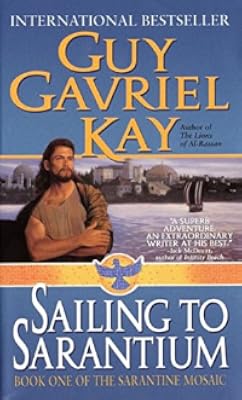
Thierry is not the only poet in this book. Thierry’s interactions with the other poet, Marina di Serressa allows Kay to riff on the creative process. His poets struggle with the muses and the interference of real life problems. The epilogue of the book ties the written art of his poets to the visual arts of the mosaicists in Kay’s earlier books. (The timeline of this book is at least two generations before All the Seas of the World. Sailing to Sarantium is still a possibility for the characters of this novel.) I like the way Kay’s books are historically connected without actually being sequential.
I also like that although this book is technically a fantasy, paranormal activity does not govern the story. As with other books, some characters have access to the ‘half world’, a bit of far seeing, a voice with guidance from somewhere beyond. Some of the most interesting characters have this gift, intermittent and unreliable though it might be. Some of the most interesting characters are also queer. Kay gives most of his characters fairly vigorous sex lives. This book is no different. Speaking from a cis female perspective, I felt Kay treated his queer characters with sensitivity and respect. I appreciated that. show less
Audio performance by Simon Vance
4.5 stars
“It seems to me that most moments in a life can be called interludes: following something, preceding something. Carrying us forward, with our needs and nature and desires, as we move through our time. It also seems to me that it is foolish to try to comprehend all that happens to us, let alone understand the world.”
As soon as I heard about this book, I planned for its publication. I knew I could expect wonderful characters, an intricate plot, and beautiful prose. The book met all of my expectations. It was a perfect interlude.
However, I wasn’t expecting a murder mystery. And, that is exactly how this book started.
I’m guessing that some G.G. Kay show more fans will feel that this novel isn’t as good as some of his earlier titles. Hmmm, maybe. I have my favorites among his other books, and this one hasn’t knocked any of them out of the top spot. Kay’s previous publications set a very high bar. That doesn’t change the fact that I didn’t want to leave this story. I listened to it in my car and on my walks. I read and reread the text from a library copy. I purchased the ebook so I could highlight many passages, as I always do with Kay’s books.
The book is set in Kay’s Jaddite universe. The majority of the book takes place in Ferrieres, Kay’s alt-version of medieval France. Again, I’m guessing that history purists won’t care for the way he tweeks key events of the Hundred Years War. I am not a purist or at all knowledgeable about the actual history of the time. It allows me to appreciate the story on its own merits while making me interested in learning more. I enjoyed Thierry Villar, the tavern poet who serves as the main protagonist. Learning from the author’s notes that the character was based on an actual poet, Francois Villon, gives me one more way to expand my internal universe. That is something else that I’ve come to expect from Kay’s books.
“So much uncertainty lies in art, and what endures. Where and when the lightning flash of brilliance will strike. What is valued in a given time, or over time. And what is lost, forgotten.”
Thierry is not the only poet in this book. Thierry’s interactions with the other poet, Marina di Serressa allows Kay to riff on the creative process. His poets struggle with the muses and the interference of real life problems. The epilogue of the book ties the written art of his poets to the visual arts of the mosaicists in Kay’s earlier books. (The timeline of this book is at least two generations before All the Seas of the World. Sailing to Sarantium is still a possibility for the characters of this novel.) I like the way Kay’s books are historically connected without actually being sequential.
I also like that although this book is technically a fantasy, paranormal activity does not govern the story. As with other books, some characters have access to the ‘half world’, a bit of far seeing, a voice with guidance from somewhere beyond. Some of the most interesting characters have this gift, intermittent and unreliable though it might be. Some of the most interesting characters are also queer. Kay gives most of his characters fairly vigorous sex lives. This book is no different. Speaking from a cis female perspective, I felt Kay treated his queer characters with sensitivity and respect. I appreciated that. show less
A land plagued by endless war. A poet bearing the weight of a broken world. Two women—headstrong, intelligent, fiercely loyal. A maiden leading an army. A god of justice, echoing the spiritual reverence of Christian belief. Guy Gavriel Kay’s new novel is a thing to behold: intimate and epic, brutal and beautiful, in every way.
‘’Sometimes we retain the quiet moments that come in the midst of chaos, or after it. The city, my city, in the night. Our lives, written on the dark.’’
Epic and moving, without the vast scope of places and characters of previous novels, his new book is focused on Orane and a handful of characters, allowing the reader to breathe and concentrate on the themes that form the heart of the story. It explores show more war and its endless, torturous consequences: sorrow, famine, enmity. Poems that speak of valour cannot conceal the scorched earth left behind. Guy Gavriel Kay paints a fascinating imagery of the Dance of Death, perpetually defining the fates of countries and their people. And the endless cycle, the snake eating its tail.
‘’Usually there are no headstones for the dead of a battlefield. Sometimes a mound is raised.
What we know, or decide we know, of the past needs to be judiciously weighed and measured. It rarely is. We have our allegiences, even when centuries have gone by, season after season, year after year after year.’’
The observant, educated reader will notice the parallels between the story of Orane and the Hundred Years War—especially Jeanne d’Arc, the battle of Agincourt, and the fascinating ways in which history has been woven into this work of fiction. At the centre is Thierry, a character who is earthy, relatable, and direct—someone readers can easily connect with and care about. He’s supported by two intriguing, enchanting women, who add further depth to the narrative.
‘’It seems to me that most moments in a life can be called interludes; following something, preceding something. Carrying us forward, with our needs and nature and desires, as we move through our time. It also seems to me that it is foolish to try to comprehend all that happens to us, let alone understand the world.’’
As the two moons—first seen in the mystical A Song for Arbonne—rise once more, the fate of a land unfolds. Men and women struggle for justice, for meaning, for survival, in a brilliant work of literary art from a true master of the craft.
‘’There was still blood on the ancient stones. Rain would wash it away in due course. It had done that before. The moon, rising, shone down upon the arched bridge and the river, and the stars did. In the teachings of that time and place, Jad of the sun was in the darkness below, battling demons to protect his children, as he did every night since the world had been made, and remade, and remade.’’
Many thanks to Hodder & Stoughton and NetGalley for the ARC in exchange for an honest review.
My reviews can also be found on https://theopinionatedreaderblog.wordpress.com/ show less
‘’Sometimes we retain the quiet moments that come in the midst of chaos, or after it. The city, my city, in the night. Our lives, written on the dark.’’
Epic and moving, without the vast scope of places and characters of previous novels, his new book is focused on Orane and a handful of characters, allowing the reader to breathe and concentrate on the themes that form the heart of the story. It explores show more war and its endless, torturous consequences: sorrow, famine, enmity. Poems that speak of valour cannot conceal the scorched earth left behind. Guy Gavriel Kay paints a fascinating imagery of the Dance of Death, perpetually defining the fates of countries and their people. And the endless cycle, the snake eating its tail.
‘’Usually there are no headstones for the dead of a battlefield. Sometimes a mound is raised.
What we know, or decide we know, of the past needs to be judiciously weighed and measured. It rarely is. We have our allegiences, even when centuries have gone by, season after season, year after year after year.’’
The observant, educated reader will notice the parallels between the story of Orane and the Hundred Years War—especially Jeanne d’Arc, the battle of Agincourt, and the fascinating ways in which history has been woven into this work of fiction. At the centre is Thierry, a character who is earthy, relatable, and direct—someone readers can easily connect with and care about. He’s supported by two intriguing, enchanting women, who add further depth to the narrative.
‘’It seems to me that most moments in a life can be called interludes; following something, preceding something. Carrying us forward, with our needs and nature and desires, as we move through our time. It also seems to me that it is foolish to try to comprehend all that happens to us, let alone understand the world.’’
As the two moons—first seen in the mystical A Song for Arbonne—rise once more, the fate of a land unfolds. Men and women struggle for justice, for meaning, for survival, in a brilliant work of literary art from a true master of the craft.
‘’There was still blood on the ancient stones. Rain would wash it away in due course. It had done that before. The moon, rising, shone down upon the arched bridge and the river, and the stars did. In the teachings of that time and place, Jad of the sun was in the darkness below, battling demons to protect his children, as he did every night since the world had been made, and remade, and remade.’’
Many thanks to Hodder & Stoughton and NetGalley for the ARC in exchange for an honest review.
My reviews can also be found on https://theopinionatedreaderblog.wordpress.com/ show less
Every few years, usually in May, we're treated to a new Guy Gavriel Kay novel. He's by far my favorite author, and his unique blend of historical fiction with just a little bit of fantasy and his melancholic, thoughtful prose always resonate with me.
Written on the Dark is an excellent novel, but just a good GGK novel. It doesn't reach the heights of The Lions of Al-Rassan, Tigana, or A Brightness Long Ago, and falls distinctly in the Last Light of the Sun, Children of Earth and Sky tier of his novels. That said, this would be a career-defining work for most authors. It starts small and intimate, gradually expanding the cast and plot until it becomes a sweeping epic. It remains introspective throughout, and feels a bit like Kay show more reflecting on his career as a whole - several characters in the novel are writers and reflect on the nature of their work, and he mentions in the acknowledgements and in interviews how fortunate he is to do this for a career.
I had a few small issues. The average sentence length seems oddly low. Kay has always leaned on repetition and almost-repetition to make his points - thoughts repeated, rhetorical questions asked - and a healthy dose of melodrama that can be a little much. That's no different here. Some of the side characters lack a distinct voice and have personalities that can blend into those of the main cast.
Guy Gavriel Kay has never published a bad novel, and this is no exception. The tone of this novel makes me nervous that Kay knows he's near the end of his career, and I hope that's not true. show less
Written on the Dark is an excellent novel, but just a good GGK novel. It doesn't reach the heights of The Lions of Al-Rassan, Tigana, or A Brightness Long Ago, and falls distinctly in the Last Light of the Sun, Children of Earth and Sky tier of his novels. That said, this would be a career-defining work for most authors. It starts small and intimate, gradually expanding the cast and plot until it becomes a sweeping epic. It remains introspective throughout, and feels a bit like Kay show more reflecting on his career as a whole - several characters in the novel are writers and reflect on the nature of their work, and he mentions in the acknowledgements and in interviews how fortunate he is to do this for a career.
I had a few small issues. The average sentence length seems oddly low. Kay has always leaned on repetition and almost-repetition to make his points - thoughts repeated, rhetorical questions asked - and a healthy dose of melodrama that can be a little much. That's no different here. Some of the side characters lack a distinct voice and have personalities that can blend into those of the main cast.
Guy Gavriel Kay has never published a bad novel, and this is no exception. The tone of this novel makes me nervous that Kay knows he's near the end of his career, and I hope that's not true. show less
A new novel in Guy Gavriel Kay’s shared world, Written on the Dark offers a lush and evocative story set in a France-like setting during the 100 Years War, and often references the stories in Sailing to Sarantium and others.
GGK is a well-known and much-beloved Canadian writer of fantasy fiction, having penned 17 novels, a collection of poetry, and was appointed to the Order of Canada in 2014 for his contributions to the field of speculative fiction as an internationally celebrated author.
The marketing blurb:
Thierry Villar is a well-known—even notorious— tavern poet, familiar with the rogues and shadows of that world, but not at all with courts and power. He is an unlikely person, despite his quickness, to be caught up in the show more deadly contests of ambitious royals, assassins, and invading armies.
But he is indeed drawn into all these things on a savagely cold night in his beloved city of Orane. And so Thierry must use all the intelligence and charm he can muster as political struggles merge with a decades-long war to bring his country to the brink of destruction.
As he does, he meets his poetic equal in an aristocratic woman and is drawn to more than one unsettling person with a connection to the world beyond this one. He also crosses paths with an extraordinary young woman driven by voices within to try to heal the ailing king—and help his forces in war. A wide and varied set of people from all walks of life take their places in the rich tapestry of this story.
Over the years, I’ve read every single novel Kay has written, from the Fionavar Tapestry (my least favourite), what remains my heart-shattering favourite, Tigana, and through all the other remarkable and memorable tales he’s woven.
Written on the Dark offers up an alternate history during the time of the Battle of Agincourt of 1415, and for those who remain inspired by Henry V’s stunning victory on that field of battle, they may find themselves a bit at odds with the direction in which Kay takes that remarkable bit of history.
That aside, the characters with which Kay populates this new story are, as always, very real, very believable, saturated with emotion, purpose, and heroism albeit often reluctant. His ability to evoke all the sensory palette for his readers remains top of the game, a true story-teller’s art, with writing that is lush, precise, and deeply moving, without the blowsy, overblown use of prosetry.
Plot and tension move along extremely well, with nary a moment during which this reader felt compelled to go find something else to do. I wanted to simply sink into this damned good story, utterly enthralled, which for me was a refreshing reprieve from much of what’s occupied me this past six months. And try as I might, I can find no flaw with which to quibble, other than to say you’re going to need to find someplace comfortable to read this mesmerizing new novel from Guy Gavriel Kay. show less
GGK is a well-known and much-beloved Canadian writer of fantasy fiction, having penned 17 novels, a collection of poetry, and was appointed to the Order of Canada in 2014 for his contributions to the field of speculative fiction as an internationally celebrated author.
The marketing blurb:
Thierry Villar is a well-known—even notorious— tavern poet, familiar with the rogues and shadows of that world, but not at all with courts and power. He is an unlikely person, despite his quickness, to be caught up in the show more deadly contests of ambitious royals, assassins, and invading armies.
But he is indeed drawn into all these things on a savagely cold night in his beloved city of Orane. And so Thierry must use all the intelligence and charm he can muster as political struggles merge with a decades-long war to bring his country to the brink of destruction.
As he does, he meets his poetic equal in an aristocratic woman and is drawn to more than one unsettling person with a connection to the world beyond this one. He also crosses paths with an extraordinary young woman driven by voices within to try to heal the ailing king—and help his forces in war. A wide and varied set of people from all walks of life take their places in the rich tapestry of this story.
Over the years, I’ve read every single novel Kay has written, from the Fionavar Tapestry (my least favourite), what remains my heart-shattering favourite, Tigana, and through all the other remarkable and memorable tales he’s woven.
Written on the Dark offers up an alternate history during the time of the Battle of Agincourt of 1415, and for those who remain inspired by Henry V’s stunning victory on that field of battle, they may find themselves a bit at odds with the direction in which Kay takes that remarkable bit of history.
That aside, the characters with which Kay populates this new story are, as always, very real, very believable, saturated with emotion, purpose, and heroism albeit often reluctant. His ability to evoke all the sensory palette for his readers remains top of the game, a true story-teller’s art, with writing that is lush, precise, and deeply moving, without the blowsy, overblown use of prosetry.
Plot and tension move along extremely well, with nary a moment during which this reader felt compelled to go find something else to do. I wanted to simply sink into this damned good story, utterly enthralled, which for me was a refreshing reprieve from much of what’s occupied me this past six months. And try as I might, I can find no flaw with which to quibble, other than to say you’re going to need to find someplace comfortable to read this mesmerizing new novel from Guy Gavriel Kay. show less
A superbly written story about a poet and his friends in Kay's version of France, during his version of the 100 Years War. Thierry Villar is just a tavern poet, getting by day by day, amusing his friends, until he gets dragged into a murder investigation of a major noble. Events swirl around Thierry after that. In Kay's great style, a non-warrior, non-wizard is critical to events, while not actually telling anyone what to do or how to do it. Excellently written, including the poetry. The characters are amazing and significantly current. Really well done.
In my world a new GGK novel is an EVENT - an immediate hardback present request. Luckily for me this came out in May and my birthday is soon after :)
It took me a few pages to get back into his very specific style but then I was racing through. It's very enjoyable as all his novels are but as many reviewers have said, it's not in his top tier. But as I thought he might not write any more books after "Darkness" it was just great to get it anyway. Don't start here with GGK but if you are a fan anyway then just get on with it.
It took me a few pages to get back into his very specific style but then I was racing through. It's very enjoyable as all his novels are but as many reviewers have said, it's not in his top tier. But as I thought he might not write any more books after "Darkness" it was just great to get it anyway. Don't start here with GGK but if you are a fan anyway then just get on with it.
Members
- Recently Added By
Lists

Books Read in 2025
4,128 works; 98 members

Globe and Mail | Canadian Fiction: June 7, 2025
10 works; 1 member
Globe and Mail | Canadian Fiction: June 14, 2025
10 works; 1 member

Top Five Books of 2025
954 works; 303 members

Books Read in 2026
2,044 works; 68 members

Canadian Jurist-Novelists
313 works; 1 member
Author Information

35+ Works 38,793 Members
Guy Gavriel Kay was born on November 7, 1954 in Weyburn, Saskatchewan, Canada. He became interested in fantasy fiction while working as an assistant to Christopher Tolkien. He assisted him with the editing of J. R. R. Tolkien's The Silmarillion. After receiving a law degree from the University of Toronto, he became principal writer and associate show more producer for the CBC radio series, The Scales of Justice. He also wrote several episodes when the series moved to television. He has written social and political commentary for several publications including the National Post, The Globe and Mail, and The Guardian. His first fantasy novels were The Summer Tree, The Wandering Fire, and The Darkest Road, which make up the Fionavar Tapestry Trilogy. His other works include A Song for Arbonne, The Lions of Al-Rassan, Beyond This Dark House, The Last Light of the Sun, and Under Heaven. He has received numerous awards including and the Aurora Award for Tigana and The Wandering Fire, the 2008 World Fantasy Award for Best Novel for Ysabel, and the International Goliardos Award for his work in the fantasy field. (Bowker Author Biography) show less
Some Editions
Awards and Honors
Awards
Distinctions
Series

Common Knowledge
- Original title
- Written on the Dark
- Original publication date
- 2025-05-27
- People/Characters
- Thierry Villar
- Important places
- Orane, Ferrieres
- Epigraph
- Imagined voices, and beloved, too,
of those who died, or of those who are
lost unto us like the dead.
Sometimes in our dreams they speak to us;
sometimes in its thought the mind will hear them.
... (show all)
And with their sound for a moment there return
sounds from the first poetry of our life—
like music, in the night, far off, that fades away.
—Constantine Cavafy
Translated by Daniel Mendelsohn
What will you do,
when it is your turn in the field
with the god?
—Louise Glück - Dedication
- For Laura, Sam, Matthew
With very great love, and an enduring awareness
that what I write, what I can shape in these stories,
is because of them, because it is for them. - First words
- The deepest part of the night in the most savage winter of the coldest year anyone could remember.
- Last words
- (Click to show. Warning: May contain spoilers.)And so, finally, at this leaving and this end, is truth, among all the interwoven tales: I knew love, had true friends, may have done good in the world in a time that threatened war. And I wrote some poems. I did that. I did that.
- Original language
- English
Classifications
- Genres
- Fantasy, Fiction and Literature, Historical Fiction, General Fiction
- DDC/MDS
- 813.54 — Literature & rhetoric American literature in English American fiction in English 1900-1999 1945-1999
- LCC
- PR9199.3 .K39 .W75 — Language and Literature English English Literature English literature: Provincial, local, etc.
- BISAC
Statistics
- Members
- 257
- Popularity
- 126,387
- Reviews
- 15
- Rating
- (3.92)
- Languages
- English
- Media
- Paper, Audiobook, Ebook
- ISBNs
- 10
- ASINs
- 3