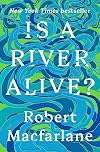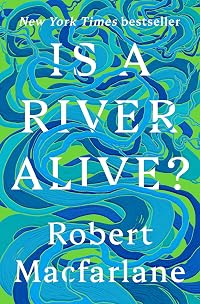
Is a River Alive?
by Robert Macfarlane
On This Page
Description
"Hailed in the New York Times as "a naturalist who can unfurl a sentence with the breathless ease of a master angler," Robert Macfarlane brings his glittering style to a profound work of travel writing, reportage, and natural history. Is a River Alive? is a joyful, mind-expanding exploration of an ancient, urgent idea: that rivers are living beings who should be recognized as such in imagination and law. Macfarlane takes readers on three unforgettable journeys teeming with extraordinary show more people, stories, and places: to the miraculous cloud-forests and mountain streams of Ecuador, to the wounded creeks and lagoons of India, and to the spectacular wild rivers of Canada--imperiled respectively by mining, pollution, and dams. Braiding these journeys is the life story of the fragile chalk stream a mile from Macfarlane's house, a stream who flows through his own years and days. Powered by dazzling prose and lit throughout by other minds and voices, Is a River Alive? will open hearts, challenge perspectives, and remind us that our fate flows with that of rivers--and always has." -- show lessTags
Recommendations

Member Reviews
Summary: A nature writer weighs the question of rivers as living entities with rights as he explores three river systems.
Is a river an “it” or a “who”? When human activity endangers their flourishing, do we defend rivers as living beings with rights? These are the questions in the back of Robert McFarlane’s mind as he embarks on an exploration of three river systems. A dead giveaway is that for McFarlane, rivers are “whos.” Yet when he discusses the question with his son early in the book, it seems still to be an open question. For the son of a naturalist, the answer is “Duh, of course!” But it’s not so easy. How can something represented by people be alive?
He begins with the Rio de los Cedros in Ecuador. The show more Ecuadorian constitution recognizes and protects it as a legal person. His journey is one of discovering what, or who, is this protected river? He describes a wondrous landscape of a river rising in the midst of a cloud forest. One in the expedition studies mushrooms and finds several rare ones. He realizes there are several rivers, one underground in the channels of roots and fungi, the river that runs before them, and an atmospheric river above.
The second journey is to a river system of several rivers running through industrial Chennai, one that begins full of life but dies as it reaches the coast. One area is even erased from the maps, its existence no longer acknowledged. Erasure does not only happen to peoples. The account closes at the coast, and has McFarlane joining a group rescuing sea turtle eggs.
Finally, he journeys 600 miles northeast of Montreal, to explore Mutehekau Shipu, as the indigenous peoples call it. The river descends through a series of rapids to eventually empty into the St. Lawrence. As part of Canada’s hydroelectric boom, planners want to dam parts of it, a move indigenous groups are resisting. Before departing, a wise woman, Rita says, “To you, Robert, I would say this: don’t think too much with your head. Forget your notebooks on the river; leave them behind.” She encourages him to think like the river, to be a river. And over the course of the journey, this happens, even as he is nearly smashed to bits negotiating a set of rapids. Alive? This river throbs with a force all its own.
The trips are punctuated by visits in different seasons to a spring near his home, during a drought when it is nearly dried up, and later, when it has been replenished. The delight in reading McFarlane is how observant both of the familiar and the new and his ability to capture it in words.
Coming back to the question of the book I find myself cautious about the incipient animism of the book. Yet rivers do represent life even in Judeo-Christian scripture. The descriptions in this book portray each of the places as living, dynamic systems, not merely “natural resources.” However, we do not need to confer personhood on rivers to protect and seek their flourishing, which ultimately is our own. I grew up near the juncture of Mill Creek and the Mahoning River in Youngstown. A visionary lawyer protected the former. Our steel industries turned the latter into a dying industrial river. At one time it was the most polluted in the country. This book similarly juxtaposes flourishing and dying rivers and how all are endangered by human enterprise. So which will we choose? show less
Is a river an “it” or a “who”? When human activity endangers their flourishing, do we defend rivers as living beings with rights? These are the questions in the back of Robert McFarlane’s mind as he embarks on an exploration of three river systems. A dead giveaway is that for McFarlane, rivers are “whos.” Yet when he discusses the question with his son early in the book, it seems still to be an open question. For the son of a naturalist, the answer is “Duh, of course!” But it’s not so easy. How can something represented by people be alive?
He begins with the Rio de los Cedros in Ecuador. The show more Ecuadorian constitution recognizes and protects it as a legal person. His journey is one of discovering what, or who, is this protected river? He describes a wondrous landscape of a river rising in the midst of a cloud forest. One in the expedition studies mushrooms and finds several rare ones. He realizes there are several rivers, one underground in the channels of roots and fungi, the river that runs before them, and an atmospheric river above.
The second journey is to a river system of several rivers running through industrial Chennai, one that begins full of life but dies as it reaches the coast. One area is even erased from the maps, its existence no longer acknowledged. Erasure does not only happen to peoples. The account closes at the coast, and has McFarlane joining a group rescuing sea turtle eggs.
Finally, he journeys 600 miles northeast of Montreal, to explore Mutehekau Shipu, as the indigenous peoples call it. The river descends through a series of rapids to eventually empty into the St. Lawrence. As part of Canada’s hydroelectric boom, planners want to dam parts of it, a move indigenous groups are resisting. Before departing, a wise woman, Rita says, “To you, Robert, I would say this: don’t think too much with your head. Forget your notebooks on the river; leave them behind.” She encourages him to think like the river, to be a river. And over the course of the journey, this happens, even as he is nearly smashed to bits negotiating a set of rapids. Alive? This river throbs with a force all its own.
The trips are punctuated by visits in different seasons to a spring near his home, during a drought when it is nearly dried up, and later, when it has been replenished. The delight in reading McFarlane is how observant both of the familiar and the new and his ability to capture it in words.
Coming back to the question of the book I find myself cautious about the incipient animism of the book. Yet rivers do represent life even in Judeo-Christian scripture. The descriptions in this book portray each of the places as living, dynamic systems, not merely “natural resources.” However, we do not need to confer personhood on rivers to protect and seek their flourishing, which ultimately is our own. I grew up near the juncture of Mill Creek and the Mahoning River in Youngstown. A visionary lawyer protected the former. Our steel industries turned the latter into a dying industrial river. At one time it was the most polluted in the country. This book similarly juxtaposes flourishing and dying rivers and how all are endangered by human enterprise. So which will we choose? show less
This book takes on current and developing issues in river conservation via travel to three rivers on three continents. Macfarlane introduces us to ecologists, lawyers, conservationists, and outdoor explorers who see river ecosystems through educated and passionate eyes. At the center is the question of the title and the reader learns about the legal concept of Rights of Nature and the ethics and implications of establishing legal rights for rivers.
Throughout Macfarlane sustains his wonder and optimism. A vivid, thought-provoking read.
Throughout Macfarlane sustains his wonder and optimism. A vivid, thought-provoking read.
I didn’t know a lot about this book when I started other than the title is a question that I find intriguing and I still don’t know much about the author other than what he’s shared between the covers of this book: he’s British, he has children, and he lives near a spring close to a hospital. I read the New York Times review after I finished reading the book and learned he’s written other books and that the Times reviewer doesn’t seem interested in nature nor a language of animacy. Maybe if I read as a job, I would also lose my sense of whimsy and reverence? The sense that the world around us is so much more than capitalist human junk is one that I search for in books, but enough about them, reviewers are not paid to love show more things.
I enjoyed this book, the seasonal interludes at the Springs were lovely, if a little odd. They remind me of the weird parts where the author is becoming a mesquite in a book I’m reading by Gary Nabhan (Mesquite: An Arboreal Love Affair). They also reminded me of my own little spots that bring joy, that change and thrive and wilt and heal.
The author explores the Rights of Nature and attempts to answer the question, Is a River Alive? Three waterways and the people that are trying to keep them alive are visited: the beginning of the Rio Los Cedras in a cloud forest in Ecuador along with naturalist friends and two judges that ruled that the river has rights; sick and dying rivers (Adyar and Cooum) in Chennai, India where he spends time with a man that has dedicated his life to reviving the rivers; and the Mutehekau Ship (Magpie River) with his grieving friend, two river guides and a bear of a man that he met the day before they started kayaking.
I’ve mentioned this before, but I love to read nature writing as I fall asleep. They sooth my nervous system, allowing me to drift off leaving me with good (sometimes weird) dreams (it often takes me a month to finish these books). I’ve also read several books about more-than-human lives, where the idea that a River is alive isn’t crazy and that animals and plants have an intelligence that we are yet to fully apprehend. This book fits right in-line with Robin Wall Kimmerer, Lyanda Lynn Haupt, and many others where nature isn’t just the thing around us, it is a spiritual being in it’s own right. The trees, the animals, the rivers and the lakes (that we’re used to) are Beings bearing witness to all that’s around us. Beings that have existed significantly longer than human existence but selfishly humans are destroying with our short-lived world paradigm. Perhaps if we lived an existence as long as geologic time, in eons, eras, and epochs instead of years, decades, and the occasional century, we would appreciate how connected everything is?
Read if you enjoyed:
Braiding Sweetgrass by Robin Wall Kimmerer
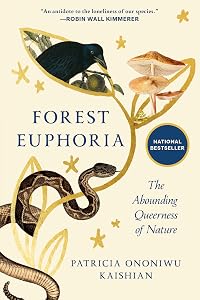
Forest Euphoria by Patrician Ononiwu Kaishian
Rooted by Lyanda Lynn Haupt
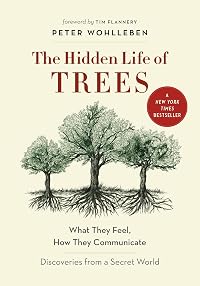
The Hidden Life of Trees by Peter Wohlleben
The Light Eaters by Zoe Schlanger
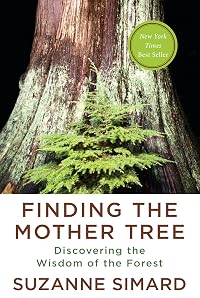
Finding the Mother Tree by Suzanne Simard show less
I enjoyed this book, the seasonal interludes at the Springs were lovely, if a little odd. They remind me of the weird parts where the author is becoming a mesquite in a book I’m reading by Gary Nabhan (Mesquite: An Arboreal Love Affair). They also reminded me of my own little spots that bring joy, that change and thrive and wilt and heal.
The author explores the Rights of Nature and attempts to answer the question, Is a River Alive? Three waterways and the people that are trying to keep them alive are visited: the beginning of the Rio Los Cedras in a cloud forest in Ecuador along with naturalist friends and two judges that ruled that the river has rights; sick and dying rivers (Adyar and Cooum) in Chennai, India where he spends time with a man that has dedicated his life to reviving the rivers; and the Mutehekau Ship (Magpie River) with his grieving friend, two river guides and a bear of a man that he met the day before they started kayaking.
I’ve mentioned this before, but I love to read nature writing as I fall asleep. They sooth my nervous system, allowing me to drift off leaving me with good (sometimes weird) dreams (it often takes me a month to finish these books). I’ve also read several books about more-than-human lives, where the idea that a River is alive isn’t crazy and that animals and plants have an intelligence that we are yet to fully apprehend. This book fits right in-line with Robin Wall Kimmerer, Lyanda Lynn Haupt, and many others where nature isn’t just the thing around us, it is a spiritual being in it’s own right. The trees, the animals, the rivers and the lakes (that we’re used to) are Beings bearing witness to all that’s around us. Beings that have existed significantly longer than human existence but selfishly humans are destroying with our short-lived world paradigm. Perhaps if we lived an existence as long as geologic time, in eons, eras, and epochs instead of years, decades, and the occasional century, we would appreciate how connected everything is?
Read if you enjoyed:
Braiding Sweetgrass by Robin Wall Kimmerer
Forest Euphoria by Patrician Ononiwu Kaishian
Rooted by Lyanda Lynn Haupt
The Hidden Life of Trees by Peter Wohlleben
The Light Eaters by Zoe Schlanger
Finding the Mother Tree by Suzanne Simard show less
This is nonfiction at its most poetic. It’s storytelling with reverence for the natural world, told through the powerful lens of rivers. It is as much about human connection and humility as it is about environmental wonder. Each chapter introduces us to people whose lives are shaped by rivers, and through Robert’s eyes, I fell in love with them, their stories, and the waters they fight for. I didn’t expect to be as moved as I was, crying through the Acknowledgements and Aftermath. This is the kind of book that shifts how you see the world. It weaves in Indigenous perspectives, environmental science, and philosophical inquiries about life itself, especially in his exploration of the Rights of Nature, a concept made so clear and show more urgent. He makes a compelling case that rivers are not just vital to life, but are life, challenging the narrow boundaries we place around what is considered alive. The book is beautifully sourced, complete with a glossary, index, and comprehensive references that had me checking out new books to read and organizations to explore. I am particularly reflective on the impact of hydroelectricity, including Hydro Quebec’s role here, and the costs to river ecosystems we so easily overlook from the city. This is essential reading for anyone open to having their perspective on the natural world expanded. I’m inspired, heartbroken, and motivated to do more. It’s a gorgeous, transformative book I can’t recommend highly enough.
Thanks to NetGalley and Random House Canada for access to this book. show less
Thanks to NetGalley and Random House Canada for access to this book. show less
As others have said, this has beautiful prose. It's a little dense, there's so much here. In it, the author visits three rivers, one each in Ecuador, India, and Canada. They correspond, in my view, to hopefulness, despair, and fearful wonder. The fundamental question, "Is the River Alive" is answered in several ways, but the answer is always, yes. In Ecuador, for example, the legislature passed a law giving the river legal status which, to an American (and, I suspect, many others) might sound a bit silly until you consider Citizens United which gave legal status to a corporation, an entity which has much less "life" than any river. Then the river in India which, to all intents and purposes is dead, killed by corporate green and show more government corruption. And Quebec which is pristine, but for how long?
There's a lot to think about here. show less
There's a lot to think about here. show less
In this sparking, yet sobering book, Robert Macfarlane explores this concept through journeys along three rivers in Ecuador, India and Canada, and connects them to the birth of his local river at a spring near his home in Cambridge. The three rivers are in contrasting locations, but each are threatened in their own way, in Ecuador by gold mining, in India by population and city growth, in Canada by dams. In each location, Macfarlane is guided by local activists who demonstrate that the river is not only water, but how dependent the surrounding countryside is on the health of the river, that to harm one is to harm both, there is a symbiosis between them that has existed for millennia. To this end, in the last 20 years or so, there has show more been a movement across the world to enshrine in law the Rights of Nature to give protection to river systems. His is an enlightening and moving exploration of why this is important as the pollution and destruction of rivers has much more widespread effect on the flora and fauna, but also badly weakens our own links to and appreciation of the natural world. show less
What beautiful prose! I was expecting a scientific/ philosophic treatise on rivers, but I got so much more! I got people's stories, culture, adventure, science, and philosophy wrapped up in the most lovely bow of prose!
Members
- Recently Added By
Author Information

28+ Works 10,113 Members
Robert Macfarlane is the author of Landmarks which made the Samuel Johnson Prize 2015 shortlist. (Bowker Author Biography)
Awards and Honors
Awards
Distinctions
Common Knowledge
- Original title
- Is a River Alive
- Original publication date
- 2025
- Epigraph
- How can I translate - not in words but in belief - that a river is a body, as alive as you or I, that there can be no life without it? -Natalie Diaz (2020)
Dear broken rivers ... -Alexis Wright (2019)
We are searching for the boats we forgot to build. -Barry Lopez (2022)
One way to stop seeing trees or rivers or hills only as 'natural resource' is to class them as fellow beings - kinfolk. I gues I'm trying to subjectify the universe, because look where objectifiying it has gotten us. To subje... (show all)ctify is not necessarily to co-opt, colonize, exploit, Rather it may involve a great reach outward of the mind and imagination. -Ursula K. Le Guin (2017) - Dedication
- For the rivers and their guardians, and Julia
i.m. Josef DeCoux (1951-2024)
Classifications
Statistics
- Members
- 552
- Popularity
- 53,736
- Reviews
- 13
- Rating
- (4.04)
- Languages
- Dutch, English, German
- Media
- Paper, Audiobook, Ebook
- ISBNs
- 15
- ASINs
- 4