On This Page
Description
Purchase of this book includes free trial access to www.million-books.com where you can read more than a million books for free. This is an OCR edition with typos. Excerpt from book: THE VENDETTA Dedicated to Puttinati, Sculptor at Milan. In the year 1800, towards the end of October, a stranger, having with him a woman and a little girl, made his appearance in front of the Tuileries Palace, and stood for some little time close to the ruins of a house, then recently pulled down, on the spot show more where the wing is still unfinished which was intended to join Catherine de' Medici's Palace to the Louvre built by the Valois. There he stood, his arms folded, his head bent, raising it now and again to look at the Consul's Palace, or at his wife, who sat on a stone by his side. Though the stranger seemed to think only of the little girl of nine or ten, whose black hair was a plaything in his fingers, the woman lost none of the glances shot at her by her companion. A common feeling, other than love, united these two beings, and a common thought animated their thoughts and their actions. Misery is perhaps the strongest of all bonds. The man had one of those broad, solemn-looking heads, with a mass of hair, of which so many examples have been perpetuated by the Carracci. Among the thick black locks were many white hairs. His features, though fine and proud, had a set hardness which spoiled them. In spite of his powerful and upright frame, he seemed to be more than sixty years of age. His clothes, which were dilapidated, betrayed his foreign origin. The woman's face, formerly handsome, but now faded, bore a stamp of deep melancholy, though, when her husband looked at her, she forced herself to smile, and affected a calm expression. The little girl was standing, in spite of the fatigue that was written on her small sunburned face. She had Italian features, large black eyes under well-arched eyebrows, a native dignity and genuine grace. More than one passer-by was ... show lessTags
Recommendations






















Member Reviews
[From Ten Novels and Their Authors, Heinemann, 1954, pp. 118-121:]
George Sand rightly said that each of Balzac’s books was in fact a page of one great book, which would be imperfect if he had omitted that page. In 1833 he conceived the idea of combining the whole of his production into one whole under the name of La Comédie Humaine. When it occurred to him, he ran to see his sister: ‘Salute me,’ he cried, ‘because I’m quite plainly (tout simplement) on the way to become a genius.’ He described as follows what he had in mind: ‘The social world of France would be the historian, I should be merely the secretary. In setting forth an inventory of vices and virtues, in assembling the principal facts of the passions, in painting show more characters, in choosing the principal incidents of the social world, in composing types by combining the traits of several homogeneous characters, perhaps I could manage to write the history forgotten by so many historians, the history of manners and customs,’ It was an ambitious scheme. He did not live to carry it to completion. It is evident that some of the pages in the vast work he left, though perhaps necessary, are less interesting than others. In a production of such bulk, that was inevitable. But in almost all Balzac’s novels there are two or three characters which, because they are obsessed by a simple, primitive passion, stand out with extraordinary force. It was in the depiction of just such characters that his strength lay; when he had to deal with a character of any complexity, he was less happy. In almost all his novels there are scenes of great power, and in several an absorbing story.
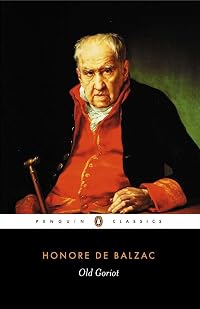
If I were asked by someone who had never read Balzac to recommend the novel which best represented him, which gave the reader pretty well all the author had to give, I should without hesitation advise him to read Le Père Goriot. The story it tells is continuously interesting. In some of his novels, Balzac interrupts his narrative to discourse on all sorts of irrelevant matters, or to give you long accounts of people in whom you cannot take the faintest interest; but from these defects Le Père Goriot is free. He lets his characters explain themselves by their words and actions as objectively as it was in his nature to do. The novel is extremely well constructed; and the two threads, the old man’s self-sacrificing love for his ungrateful daughters, and the ambitious Rastignac’s first steps in the crowded, corrupt Paris of his day, are ingeniously interwoven. It illustrates the principles which in La Comédie Humaine Balzac was concerned to bring to light: “Man is neither good nor bad, he is born with instincts and aptitudes; the world (la société), far from corrupting him, as Rousseau pretended, perfects him, makes him better; but self-interest then enormously develops his evil propensities.”
[...]
Balzac started his novels slowly. A common method with him was to begin with a detailed description of the scene of action. He took so much pleasure in these descriptions that he often tells you more than you need to know. He never learned the art of saying only what has to be said, and not saying what needn’t be said. Then he tells you what his characters look like, what their dispositions are, their origins, habits, ideas and defects; and only after this sets out to tell his story. His characters are seen through his own exuberant temperament and their reality is not quite that of real life; they are painted in primary colours, vivid and sometimes garish, and they are more exciting than ordinary people; but they live and breathe; and you believe in them, I think, because Balzac himself intensely believed in them, so intensely indeed that when he was dying he cried: ‘Send for Bianchon. Bianchon will save me.’ This was the clever, honest doctor who appears in many of the novels. He is one of the very few disinterested characters to be met with in La Comédie Humaine. show less
George Sand rightly said that each of Balzac’s books was in fact a page of one great book, which would be imperfect if he had omitted that page. In 1833 he conceived the idea of combining the whole of his production into one whole under the name of La Comédie Humaine. When it occurred to him, he ran to see his sister: ‘Salute me,’ he cried, ‘because I’m quite plainly (tout simplement) on the way to become a genius.’ He described as follows what he had in mind: ‘The social world of France would be the historian, I should be merely the secretary. In setting forth an inventory of vices and virtues, in assembling the principal facts of the passions, in painting show more characters, in choosing the principal incidents of the social world, in composing types by combining the traits of several homogeneous characters, perhaps I could manage to write the history forgotten by so many historians, the history of manners and customs,’ It was an ambitious scheme. He did not live to carry it to completion. It is evident that some of the pages in the vast work he left, though perhaps necessary, are less interesting than others. In a production of such bulk, that was inevitable. But in almost all Balzac’s novels there are two or three characters which, because they are obsessed by a simple, primitive passion, stand out with extraordinary force. It was in the depiction of just such characters that his strength lay; when he had to deal with a character of any complexity, he was less happy. In almost all his novels there are scenes of great power, and in several an absorbing story.
If I were asked by someone who had never read Balzac to recommend the novel which best represented him, which gave the reader pretty well all the author had to give, I should without hesitation advise him to read Le Père Goriot. The story it tells is continuously interesting. In some of his novels, Balzac interrupts his narrative to discourse on all sorts of irrelevant matters, or to give you long accounts of people in whom you cannot take the faintest interest; but from these defects Le Père Goriot is free. He lets his characters explain themselves by their words and actions as objectively as it was in his nature to do. The novel is extremely well constructed; and the two threads, the old man’s self-sacrificing love for his ungrateful daughters, and the ambitious Rastignac’s first steps in the crowded, corrupt Paris of his day, are ingeniously interwoven. It illustrates the principles which in La Comédie Humaine Balzac was concerned to bring to light: “Man is neither good nor bad, he is born with instincts and aptitudes; the world (la société), far from corrupting him, as Rousseau pretended, perfects him, makes him better; but self-interest then enormously develops his evil propensities.”
[...]
Balzac started his novels slowly. A common method with him was to begin with a detailed description of the scene of action. He took so much pleasure in these descriptions that he often tells you more than you need to know. He never learned the art of saying only what has to be said, and not saying what needn’t be said. Then he tells you what his characters look like, what their dispositions are, their origins, habits, ideas and defects; and only after this sets out to tell his story. His characters are seen through his own exuberant temperament and their reality is not quite that of real life; they are painted in primary colours, vivid and sometimes garish, and they are more exciting than ordinary people; but they live and breathe; and you believe in them, I think, because Balzac himself intensely believed in them, so intensely indeed that when he was dying he cried: ‘Send for Bianchon. Bianchon will save me.’ This was the clever, honest doctor who appears in many of the novels. He is one of the very few disinterested characters to be met with in La Comédie Humaine. show less
Balzac does not need reviews. I have not read the entire Comedie but read "Aunt Betty" Great volume for young adults to read in order to understand women power and seduction
La Comèdia humana (La Comédie humaine) és el títol d'un conjunt de llibres d'Honoré de Balzac (1799–1850) que entrellacen novel·les i històries per descriure la societat francesa en el període de la Restauració francesa (1815-1830) i la Monarquia de Juliol (1830–1848).
Oct 15, 2021Catalan
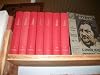
Neufs.Jaquettes.
Nov 24, 2013French
Ratings
Members
- Recently Added By
Lists

The Guardian's 1000 Novels Everyone Must Read
1,005 works; 547 members

Bibliografia essenziale
86 works; 2 members
Author Information

2,337+ Works 44,019 Members
Born on May 20, 1799, Honore de Balzac is considered one of the greatest French writers of all time. Balzac studied in Paris and worked as a law clerk while pursuing an unsuccessful career as an author. He soon accumulated enormous debts that haunted him most of his life. A prolific writer, Balzac would often write for 14 to-16 hours at a time. show more His writing is marked by realistic portrayals of ordinary, but exaggerated characters and intricate detail. In 1834, Balzac began organizing his works into a collection called The Human Comedy, an attempt to group his novels to present a complete social history of France. Characters in this project reappeared throughout various volumes, which ultimately consisted of approximately 90 works. Some of his works include Cesar Birotteau, Le Cousin Pons, Seraphita, and Le Cousine Bette. Balzac wed his lifelong love, Eveline Hanska in March 1850 although he was gravely ill at the time. Balzac died in August of that year. (Bowker Author Biography) show less
Awards and Honors
Notable Lists
Series

Work Relationships
Contains
La Vieille Fille - Le Cabinet des antiques - Illusions perdues I (La Comédie humaine X) by Honoré de Balzac (indirect)
LA COMEDIE HUMAINE tome17 : Illusions perdues - 1 les deux poètes 2 Un grand homme de province à Paris by Honoré de Balzac (indirect)
H. de Balzac. Oeuvres complètes. Scènes de la vie de province. Illusions perdues. Les deux Poètes. Un Grand homme de province à Paris. Tome 1 by Honoré de Balzac (indirect)
Oeuvres complètes - Vol. 20: Illusions perdues, II. Un grand homme de province à Paris (suite). by Honoré de Balzac (indirect)
Die Menschliche Komödie IX : Sittenstudien : Szenen aus dem Pariser Leben, Szenen aus dem politischen Leben, Szenen aus dem Soldatenleben by Honoré de Balzac
Z. Marcas ; The other side of contemporaneous history: first episode. Madame de la Chanterie, second episode, The novice by Honoré de Balzac (indirect)
Has as a student's study guide
Common Knowledge
- Canonical title
- The Human Comedy
- Original title
- La Comédie humaine
- Disambiguation notice
- This is the complete Comédie Humaine. Do not combine with individual novels/volumes in the series.
Classifications
Statistics
- Members
- 97
- Popularity
- 332,281
- Reviews
- 4
- Rating
- (4.20)
- Languages
- 6 — English, Estonian, French, German, Italian, Spanish
- Media
- Paper, Ebook
- ISBNs
- 20
- ASINs
- 8