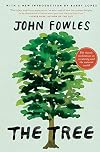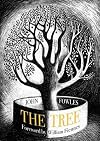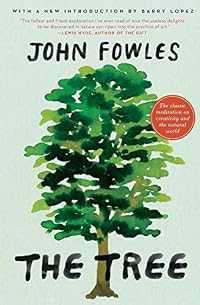
The Tree
by John Fowles
On This Page
Description
The classic meditation on creativity and the natural world "For years I have carried this book. . . with me on travels to reread, ponder, envy. In prose of classic gravity, precision, and delicacy, Fowles addresses matters of final importance." -W. S. Merwin, Los Angeles Times Book Review "The Tree is the fullest and finest exploration I've ever read of how the useless delights to be discovered in nature can ripen into the practice of art." -Lewis Hyde, author of The Gift First published a show more generation ago, The Tree is renowned English novelist John Fowles's provocative meditation on the connection between the natural world and human creativity, and a powerful argument against taming the wild. In it, Fowles recounts his own childhood in England and describes how he rebelled against his Edwardian father's obsession with the "quantifiable yield" of well-pruned fruit trees and came to prize instead the messy, purposeless beauty of nature left to its wildest. The Tree is an inspiring, even life-changing book, one that reaffirms our connection to nature and reminds us of the pleasure of getting lost, the merits of having no plan, and the wisdom of following one's nose wherever it may lead-in life as much as in art. This special 30th anniversary edition includes an introduction by Barry Lopez. show lessTags
Recommendations







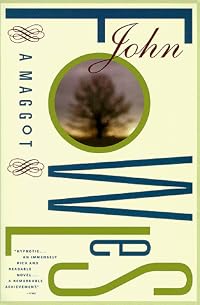





Member Recommendations

Member Reviews
Fowles confounded my expectations: of the 101 pages in my edition, perhaps 12 are given over to a description of woodland and trees, and those twelve provide him with further material to ponder the relationship between people, as individuals and as societies, and nature. Starting with a meditation on the differences between his own and his father's views of nature, Fowles takes in art, science, religion, and the essential ineffability of existence.
This is a collection of some sixty photographs from Frank Horvat's series "Portraits of Trees", accompanied on the facing pages by an essay by Fowles in which he reflects on the ways he and Horvat and other creative artists engage with nature in general and trees in particular, and how impoverished we are when we only see nature in a reductive, scientific, utilitarian way. It's sometimes quite difficult to focus on his quite abstract arguments when you have Horvat's gorgeous images leaping out at you from the opposite page, but it's worth it: there's more to it than holistic seventies tree-hugging.
It is quite amusing the way Fowles insists on the complexity and interelatedness of the forest whilst Horvat is doing everything he can to show more sterilise and isolate his specimens. You sense that his ideal tree is the one standing by itself in a snowy French field where there is no clear distinction to be seen in the background between earth and sky, whereas Fowles imagines himself in the densely wooded dells of the Undercliff at Lyme Regis. Of course, that's an oversimplification, Horvat admits a few groupings of trees and Fowles also talks about his father's immaculately pruned fruit trees, but they don't seem to have a huge amount in common. show less
It is quite amusing the way Fowles insists on the complexity and interelatedness of the forest whilst Horvat is doing everything he can to show more sterilise and isolate his specimens. You sense that his ideal tree is the one standing by itself in a snowy French field where there is no clear distinction to be seen in the background between earth and sky, whereas Fowles imagines himself in the densely wooded dells of the Undercliff at Lyme Regis. Of course, that's an oversimplification, Horvat admits a few groupings of trees and Fowles also talks about his father's immaculately pruned fruit trees, but they don't seem to have a huge amount in common. show less
Had I highlighted the thought-provoking and important passages in this book as I read it, it would be almost fully colored. But in a way, that works against itself: there's too much worth remembering to remember much at all. So this will bear re-reading someday. (Fortunately, it is a slim volume.)
The other thing that makes it so hard to summon up the crystals of philosophy is Fowles prose. It weaves and writhes like a honeysuckle vine. I had to read almost every sentence multiple times, dropping out parenthetical clauses, in order to firmly connect subject to predicate to object. Whether this is a feature or a bug, I am unsure.
The other thing that makes it so hard to summon up the crystals of philosophy is Fowles prose. It weaves and writhes like a honeysuckle vine. I had to read almost every sentence multiple times, dropping out parenthetical clauses, in order to firmly connect subject to predicate to object. Whether this is a feature or a bug, I am unsure.
This book is a wonderful antidote to those who see nature as a "system" or a "machine" that is somehow apart from us. Fowles sees the natural world instead as a community that we're inextricably bound up with. Trees are companions, even friends. A profound meditation:
"The particular cost of understanding the mechanism of nature, of having so successfully itemized and pigeon-holed it, lies most of all in the ordinary person's perception of it, in his or her ability to live with and care for it--and not to see it as challenge, defiance, enemy."
"The particular cost of understanding the mechanism of nature, of having so successfully itemized and pigeon-holed it, lies most of all in the ordinary person's perception of it, in his or her ability to live with and care for it--and not to see it as challenge, defiance, enemy."
This is the 30th anniversary edition of John Fowles legendary essay about trees. Or rather, what trees mean in a greater sense than just the biological. At first, I expected this to be similar to Rachel Carson's Silent Spring-both were written decades ago. However, this slim text is more of a set of questions rather than answers. In fact, despite the title, it could be said that trees are just the smallest portion of his purpose.
"Do we feel that unless we create evidence-photographs, journal entries, picked and pressed flowers, tape recordings, pocketed stones-we haven't actually been intimate with nature?"
Fowles was known for writing The French Lieutenant's Woman as well as other fiction titles. Here, in this book, he discusses via show more anecdotes the relationship between humans and nature, and the juxtaposition between nature on its own and our experience of nature. First, the introduction by Barry Lopez comfortably sets the scene, and hints that this is no simple environmental manifesto. And never does Fowles lecture about how people should view nature; rather, he talks about what nature may or may not mean in a larger sense.
For example, he talks about his childhood home where his father cultivated small garden and fruit trees. Nothing was out of place, and while it was in the city, his father managed to tame anything unruly from the garden. Clearly it was his goal to conquer the plot of land. He was the victor over it. Yet his son, Fowles, purchases property that is larger, but by no means tame. Fowles neither cultivates or cuts back, he sees no point in amending the soil, pruning the trees, and to the horror of his father, the parcel of land is wild. Is it a moral battle over who conquers the natural world? Is it nature if you've directed its every movement? Fowles doesn't presume to answer, he just asks.
In a further irony, which tells a great deal about his father, Fowles recalls how his father could walk for miles in the city, yet would only hike a few hundred meters in the countryside. The untame pastoral scene frightened him or inhibited him, likely because of its chaos. Thus, Fowles discusses chaos in nature, and how the most lovely of scenes is never the most natural. He also makes a valid point that our modern society, with three decades of hindsight added since this was written, has used film and photography to 'show' nature, making the interaction with it less urgent. How often do people seek it out? Is putting a pot of daisies on the patio nature or decor? Do we travel to faraway places to imbibe unique cocktails or are we willing to hike in a forest for no other purpose than to look? Again, he gives no condescending or judgmental answer, he just asks thought provoking questions.
Since the last few years have produced epic and beautiful DVD collections for large screen televisions, like Planet Earth, does nature seem to be something we order up on the Netflix queue or purchase at Costco? It should be noted that this is not a nature 'journal', nor a guide to trees. There are no photos or etchings to illustrate it, and that's appropriate in that Fowles doesn't feel a photograph can replicate nature satisfactorily. I enjoyed this very much, and wish that Fowles would have spent a bit more time discussing his own experiences, as well as suggested ideas for conservation and preservation. show less
"Do we feel that unless we create evidence-photographs, journal entries, picked and pressed flowers, tape recordings, pocketed stones-we haven't actually been intimate with nature?"
Fowles was known for writing The French Lieutenant's Woman as well as other fiction titles. Here, in this book, he discusses via show more anecdotes the relationship between humans and nature, and the juxtaposition between nature on its own and our experience of nature. First, the introduction by Barry Lopez comfortably sets the scene, and hints that this is no simple environmental manifesto. And never does Fowles lecture about how people should view nature; rather, he talks about what nature may or may not mean in a larger sense.
For example, he talks about his childhood home where his father cultivated small garden and fruit trees. Nothing was out of place, and while it was in the city, his father managed to tame anything unruly from the garden. Clearly it was his goal to conquer the plot of land. He was the victor over it. Yet his son, Fowles, purchases property that is larger, but by no means tame. Fowles neither cultivates or cuts back, he sees no point in amending the soil, pruning the trees, and to the horror of his father, the parcel of land is wild. Is it a moral battle over who conquers the natural world? Is it nature if you've directed its every movement? Fowles doesn't presume to answer, he just asks.
In a further irony, which tells a great deal about his father, Fowles recalls how his father could walk for miles in the city, yet would only hike a few hundred meters in the countryside. The untame pastoral scene frightened him or inhibited him, likely because of its chaos. Thus, Fowles discusses chaos in nature, and how the most lovely of scenes is never the most natural. He also makes a valid point that our modern society, with three decades of hindsight added since this was written, has used film and photography to 'show' nature, making the interaction with it less urgent. How often do people seek it out? Is putting a pot of daisies on the patio nature or decor? Do we travel to faraway places to imbibe unique cocktails or are we willing to hike in a forest for no other purpose than to look? Again, he gives no condescending or judgmental answer, he just asks thought provoking questions.
Since the last few years have produced epic and beautiful DVD collections for large screen televisions, like Planet Earth, does nature seem to be something we order up on the Netflix queue or purchase at Costco? It should be noted that this is not a nature 'journal', nor a guide to trees. There are no photos or etchings to illustrate it, and that's appropriate in that Fowles doesn't feel a photograph can replicate nature satisfactorily. I enjoyed this very much, and wish that Fowles would have spent a bit more time discussing his own experiences, as well as suggested ideas for conservation and preservation. show less
This would be the third nature-based book out of the last four I've read. The Tree is a special book in that it is a 2010 reissue of a 1979 essay by the late, great novelist, John Fowles. It's a short work in which Fowles is exploring where nature fits into modern man's life, as well as its role in the inspiration of all manner and form of man's art..
His father had always kept a neat, orderly, heavily-pruned orchard and garden. John's much lighter hand on his own land made a strong impression on him. "I think I truly horrified him only once in my life, which was when, soon after coming into possession, I first took him around my present exceedingly unkempt, unmanaged and unmanageable garden."
His father had always kept a neat, orderly, heavily-pruned orchard and garden. John's much lighter hand on his own land made a strong impression on him. "I think I truly horrified him only once in my life, which was when, soon after coming into possession, I first took him around my present exceedingly unkempt, unmanaged and unmanageable garden."
The Tree defies summary. My attempts to pull out a meaninful passage would eventually result in transcription of the entire work. I did not expect that one of the slimmest books on my shelf would be so enlightening, or so dense. I will keep this book forever, and read it again and again. There is so much I missed, and much more that I can learn from it.
Members
- Recently Added By
Lists

Books Read in 2018
4,360 works; 110 members
Author Information

62+ Works 26,087 Members
John Fowles was born in Essex, England, in 1926. He attended the University of Edinburgh for a short time, left to serve in the Royal Marines, and then returned to school at Oxford University, where he received a B.A. in French in 1950. Fowles taught English in France and Greece, as well as at St. Godric's College in London. Although the main show more theme in all Fowles's fiction is freedom, there are few other similarities in his books. He has deliberately chosen to explore a different style or genre for each novel: The Collector, his first novel, is an intellectual thriller; The Magus is an adolescent learning novel, tracing the emotional development of the central character; Daniel Martin tries, in the modernist style, to depict psychological reality; Mantissa is a comedic allegory that takes place entirely inside the narrator's head; Maggot combines mystery, science fiction, and history; and The Ebony Tower is a collection of short stories. Fowles explored yet another genre, historical fiction, with his best-known novel, The French Lieutenant's Woman, which received the W. H. Smith Literary Award in 1970 and was made into a movie, starring Meryl Streep and Jeremy Irons, in 1981. An intriguing feature of this novel is that it has three different endings. Fowles's nonfiction includes Aristos: A Self Portrait in Ideas; Poems; and Wormholes: Essays and Other Occasional Writings. In addition, he has written the text for several books of photographs, including The Tree, for which Fowles received the Christopher Award in 1982. He died on November 5, 2005 at the age of 79. (Bowker Author Biography) show less
Some Editions
Series
Belongs to Publisher Series
Impedimenta (133)
Common Knowledge
- Original publication date
- 1979
- Important places
- Devon, England, UK; Uppsala, Sweden; Wistman's Wood, Dartmoor
- First words
- The first trees I knew well were the apples and pears in the garden of my childhood home.
- Last words
- (Click to show. Warning: May contain spoilers.)An end to this, dead retting of its living leaves.
- Original language
- English
Classifications
Statistics
- Members
- 377
- Popularity
- 82,426
- Reviews
- 9
- Rating
- (3.78)
- Languages
- 6 — English, French, Romanian, Spanish, Swedish, Turkish
- Media
- Paper, Ebook
- ISBNs
- 19
- ASINs
- 9