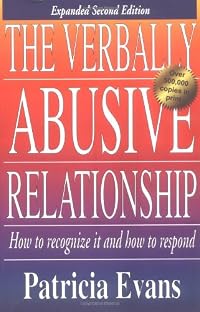
The Verbally Abusive Relationship: How to Recognize It and How to Respond
by Patricia Evans
On This Page
Description
Family & Relationships. Self-Improvement. Nonfiction. HTML:In this fully expanded and updated third edition of the bestselling classic, you learn why verbal abuse is more widespread than ever, and how you can deal with it. You'll get more of the answers you need to recognize abuse when it happens, respond to abusers safely and appropriately, and most important, lead a happier, healthier life.In two all-new chapters, Evans reveals the Outside Stresses driving the rise in verbal abuse - and show more shows you how you can mitigate the devastating effects on your relationships. She also outlines the Levels of Abuse that characterize this kind of behavior - from subtle, insidious put-downs that can erode your self-esteem to full-out tantrums of name-calling, screaming, and threatening that can escalate into physical abuse.
Drawing from hundreds of real situations suffered by real people just like you, Evans offers strategies, sample scripts, and action plans designed to help you deal with the abuse - and the abuser.
This timely new edition of The Verbally Abusive Relationship puts you on the road to recognizing and responding to verbal abuse, one crucial step at a time!. show less
Tags
Recommendations











Member Reviews
I was living alone (except for my cats) when I bought this book. However, I had a verbally abusive supervisor at the time. That man didn't hesitate to shout at me in front of a patient the same morning he was due to be interviewed by my EEOC counselor. After I informed his supervisor, he switched from abusing me aloud to abusing me in electronic mail. Yes, he not only verbally abused me in front of a witness whom he didn't know but who was my former Red Cross volunteer, he abused me in a way I could print out for proof. This book was invaluable for understanding what that supervisor was doing and why. Supervision of my medical library was switched to a different division, but he kept his job. (The documents supporting my four formal show more complaints are public record in my state.)
I reread it to help me deal with two relatives I can't avoid completely. I'd forgotten so much! I had already figured out that one was just projecting her own self-hatred on to me, but I was being driven crazy by the other. How could I explain things so that I didn't get snapped or yelled at? I can't. It has nothing to do with me except that I'm a safe target. When the most recent incident happened, I realized that a visit to the doctor that same day would be bound to make the relative feel powerless, so of course I got snapped at.
I'm no longer torturing myself wondering if it would be a good time to explain what I meant and how to explain. That, in itself, was worth the price of the book.
If you're not sure that you're being verbally abused, read the checklists early in chapter one. (One is for overt verbal abuse. The other is for covert verbal abuse.) If you're being verbally abused, save your sanity and buy this book. If you can't afford it, see if you can borrow it from or through your local library.
If you have children, there's a chapter about children and verbal abuse, including how to support your child if someone verbally abuses him or her.
The chapter about choosing the right therapist should be helpful to victims seeking help. The letter from a woman unfortunate enough to try couples counseling with a psychologist who didn't understand the dynamics of verbally abusive relationship is an example of a 'helper' doing more harm than good.
I am so glad I kept this book! show less
I reread it to help me deal with two relatives I can't avoid completely. I'd forgotten so much! I had already figured out that one was just projecting her own self-hatred on to me, but I was being driven crazy by the other. How could I explain things so that I didn't get snapped or yelled at? I can't. It has nothing to do with me except that I'm a safe target. When the most recent incident happened, I realized that a visit to the doctor that same day would be bound to make the relative feel powerless, so of course I got snapped at.
I'm no longer torturing myself wondering if it would be a good time to explain what I meant and how to explain. That, in itself, was worth the price of the book.
If you're not sure that you're being verbally abused, read the checklists early in chapter one. (One is for overt verbal abuse. The other is for covert verbal abuse.) If you're being verbally abused, save your sanity and buy this book. If you can't afford it, see if you can borrow it from or through your local library.
If you have children, there's a chapter about children and verbal abuse, including how to support your child if someone verbally abuses him or her.
The chapter about choosing the right therapist should be helpful to victims seeking help. The letter from a woman unfortunate enough to try couples counseling with a psychologist who didn't understand the dynamics of verbally abusive relationship is an example of a 'helper' doing more harm than good.
I am so glad I kept this book! show less
Very informative, but disappointing to find the author's only solution is to leave the relationship.
Summary:
If you or someone you know answers "yes" to one or more of the following questions, this book is required reading: a) Does your partner seem irritated or angry at you several times a week? -- b) Does he deny being angry when he clearly is? -- c) Do your attempts to discuss feelings of pain or emotional distress leave you with the feeling that the issue has not been resolved? d) Do you frequently feel perplexed and frustrated by his responses, as though you were each speaking a different language?
In this book, you'll find validation and understanding -- "it not all in your head"--And encouragement for your efforts to change the situation. In this second edition, Patricia explores the damaging effects of verbal abuse on children show more and the family, and offers valuable insight and recommendations to therapists, as well as those who seek therapeutic support.
Contents:
Evaluating your own experience -- Two kinds of power: a broad perspective -- Personal power: a look at reality II -- The abuser and the abusive relationship: a look at reality I -- The consequences of verbal abuse -- The partner's feelings -- Obstacles and indicators -- Characteristics and categories of verbal abuse -- The anger addict -- Conditioning and the partner -- The recognition of verbal abuse and asking for change -- Responding with impact to verbal abuse -- Recovery -- Looking back -- The underlying dynamics: some reasons why -- About therapy -- and for the therapist -- Children and verbal abuse -- Frequently asked questions. show less
If you or someone you know answers "yes" to one or more of the following questions, this book is required reading: a) Does your partner seem irritated or angry at you several times a week? -- b) Does he deny being angry when he clearly is? -- c) Do your attempts to discuss feelings of pain or emotional distress leave you with the feeling that the issue has not been resolved? d) Do you frequently feel perplexed and frustrated by his responses, as though you were each speaking a different language?
In this book, you'll find validation and understanding -- "it not all in your head"--And encouragement for your efforts to change the situation. In this second edition, Patricia explores the damaging effects of verbal abuse on children show more and the family, and offers valuable insight and recommendations to therapists, as well as those who seek therapeutic support.
Contents:
Evaluating your own experience -- Two kinds of power: a broad perspective -- Personal power: a look at reality II -- The abuser and the abusive relationship: a look at reality I -- The consequences of verbal abuse -- The partner's feelings -- Obstacles and indicators -- Characteristics and categories of verbal abuse -- The anger addict -- Conditioning and the partner -- The recognition of verbal abuse and asking for change -- Responding with impact to verbal abuse -- Recovery -- Looking back -- The underlying dynamics: some reasons why -- About therapy -- and for the therapist -- Children and verbal abuse -- Frequently asked questions. show less
Very good book about the nature of verbally abusive relationships. How to recognize signs of dysfunctional relationships and how to get help.
Must-read for those who feel something is wrong with their relationship, and for all those who sometimes feel bad with an otherwise sweet partner.
Ratings
Members
- Recently Added By
Author Information

6 Works 1,180 Members
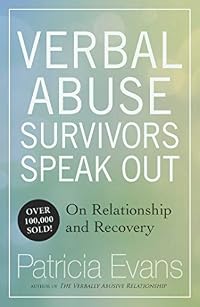
Patricia evans is the bestselling author of four books including the verbally abusive Relationship, Verbal abuse Survivors Speak Out, controlling People, and the Verbally Abusive Man: Can He Change? A highly acclaimed interpersonal communications specialist, public speaker, and consultant, Evans has appeared on Oprah, CNNNn National radio, and in show more Newsweek and O, The Oprah Magazine. Evans lives in the San Francisco Bay area and can be reached via her website at www.VerbolAbuse.com. show less
Common Knowledge
- Original publication date
- 1996
- First words
- Foreword
In 1992, when this book was released, it became the first book to define and describe verbally abusive relationships between adults.
Introduction
This book is for everyone. It happens that the examples, experiences, and stories were told to me by women.
Part I
Part I begins with an evaluation and checklist to help the reader discover unrecognized episodes of verbal abuse.
Chapter I
Evaluating Your Own Experience
Yelling at living things does tend to kill the spirit in them. Sticks and stones may break our bones, but words will break our hearts.
... (show all); —Robert FulghumMost of us are aware that name calling is verbally abusive. - Quotations
- There are two kinds of power. One kills the spirit. The other nourishes the spirit. The first is Power Over. The other is Personal Power. (chapter 2)
- Last words
- (Click to show. Warning: May contain spoilers.)She may long remember how he was—and for just as long, hope that he will be that way again.
Classifications
Statistics
- Members
- 670
- Popularity
- 42,748
- Reviews
- 5
- Rating
- (4.15)
- Languages
- English, French, Croatian, Spanish
- Media
- Paper, Audiobook, Ebook
- ISBNs
- 18
- UPCs
- 2
- ASINs
- 3