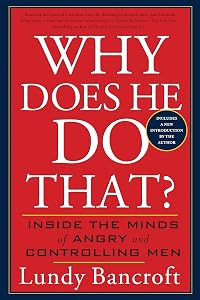
Why Does He Do That? Inside the Minds of Angry and Controlling Men
by Lundy Bancroft
On This Page
Description
Family & Relationships. Nonfiction. He says he loves you. So...why does he do that? You've asked yourself this question again and again. Now you have the chance to see inside the minds of angry and controlling men-and to change your life. In this groundbreaking book, a counselor who specializes in working with abusive men shows you how to improve, survive, or leave an abusive relationship. You will learn about: -The early warning signs -Ten abusive personality types -The role of drugs and show more alcohol -What you can fix, and what you can't -How to get out of a relationship safely. show lessTags
Recommendations


















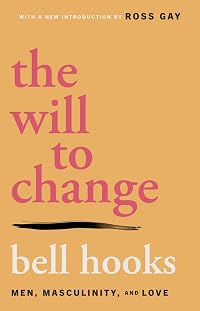
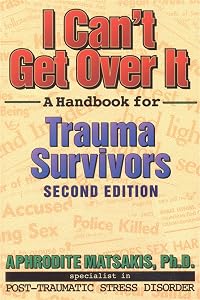

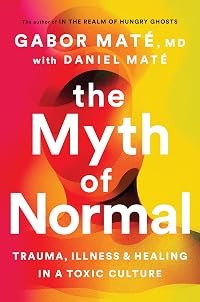
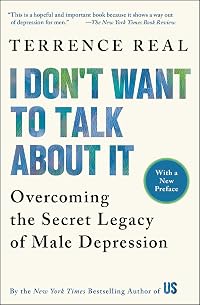






Member Reviews
You do not have to be a survivor of abuse, physical and emotional, to read and share this manual on how to recognize and remove yourself from a horrible situation. The author's 15 year experience with Emerge, a Boston organization established to help men recover from the power and control habits that cause such misery to their partners and children, make him an expert on defining the problem and on determining possible solutions, which admittedly are unlikely to occur. With both anecdotes of his own clients and those of the victims, he makes the causes clear: "Abuse doesn't come from people's inability to resolve conflicts, but from one person's decision to claim a higher status than another. Some people feel threatened by the concept show more that abuse is a solvable problem because, if it is, there's not excuse for NOT solving it." An absolutely authoritative treatise! show less
For a book that came out in 2002, I feel like it held up surprisingly well. This was the first book I've read that did not shy away from calling abusers out on their shit. Even better, it provides so many examples for abused people to finally see themselves. It felt like finally catching a glimpse of light through the lethal fog that abuse shrouded me in for decades.
I would highly recommend this book to everyone. Whether you're currently experiencing abuse or not, know someone who has been abused or not, want to be better prepared to recognize abuse and step in to help abused people rather than remain a bystander, or want to more readily recognize and deconstruct the abusive attitudes/mindsets conditioned in yourself---read this book.
I show more mostly skimmed through for sections relevant to my own experiences. Especially useful to read this way because the book uses a lens of cisheteronormative partner violence. However, I think much of the description of abusive male partners can apply to abusers in general (be they partners, friends, siblings, parents, coworkers, colleagues, etc.) show less
I would highly recommend this book to everyone. Whether you're currently experiencing abuse or not, know someone who has been abused or not, want to be better prepared to recognize abuse and step in to help abused people rather than remain a bystander, or want to more readily recognize and deconstruct the abusive attitudes/mindsets conditioned in yourself---read this book.
I show more mostly skimmed through for sections relevant to my own experiences. Especially useful to read this way because the book uses a lens of cisheteronormative partner violence. However, I think much of the description of abusive male partners can apply to abusers in general (be they partners, friends, siblings, parents, coworkers, colleagues, etc.) show less
Abuse is about entitlement, not anger. It results from misogynistic attitudes, not emotions. As a result, conventional therapy directed at understanding emotions won’t work and may be counterproductive. Abusers sssentially always engage in calculation: they can always answer questions like, you hit her, but why didn’t you break her bones? Why didn’t you kill her? So they don’t lose control entirely, but that explanation is very useful to them. Instead, they abuse because they think they're justified. Abusers believe they're entitled to all a partner's attention and efforts. As a result, any attempt to get him to consider her is an attack and an injury, to which he may justly respond with punishment.
I was incredibly struck by show more the similarities to other assertions of male privilege. It goes way beyond men thinking that women are dominating a conversation when they reach 30% participation (Bancroft points out that abusers think this because they think that zero participation is the appropriate level for women). Consider this Mother Jones story, where a gun advocate bullies deliberately while accusing his peaceful interlocutors of harming him:
Jones and his camera crew began cornering members of [Moms Demand Action]. The women told him they weren't interested in talking on camera, but he kept at it.
An older couple walked over to intervene, the man telling Jones, "A gun grab is something that nobody in this country wants." Jones got in the man's face, hands gesticulating, chest puffed out. "Well sir, all I can say is you're really gettin' in my space!"
"Well, why don't you back up?" the man said.
"No, I'm not gonna back up." Jones retorted, inching in closer. "You're the one got in my space." He glanced over to his camera crew. "Look at this, look at this guy."
The woman tried to pull her husband away. "All right, go ahead," Jones continued. "Listen, I don't want to beat an old guy up," he added, poking the man's chest. "So don't touch me."
I don’t doubt that Jones really believed that he was not the aggressor. That’s part of what makes him and people like him so dangerous: to him, everyone else—especially women—is asking for it. show less
I was incredibly struck by show more the similarities to other assertions of male privilege. It goes way beyond men thinking that women are dominating a conversation when they reach 30% participation (Bancroft points out that abusers think this because they think that zero participation is the appropriate level for women). Consider this Mother Jones story, where a gun advocate bullies deliberately while accusing his peaceful interlocutors of harming him:
Jones and his camera crew began cornering members of [Moms Demand Action]. The women told him they weren't interested in talking on camera, but he kept at it.
An older couple walked over to intervene, the man telling Jones, "A gun grab is something that nobody in this country wants." Jones got in the man's face, hands gesticulating, chest puffed out. "Well sir, all I can say is you're really gettin' in my space!"
"Well, why don't you back up?" the man said.
"No, I'm not gonna back up." Jones retorted, inching in closer. "You're the one got in my space." He glanced over to his camera crew. "Look at this, look at this guy."
The woman tried to pull her husband away. "All right, go ahead," Jones continued. "Listen, I don't want to beat an old guy up," he added, poking the man's chest. "So don't touch me."
I don’t doubt that Jones really believed that he was not the aggressor. That’s part of what makes him and people like him so dangerous: to him, everyone else—especially women—is asking for it. show less
This was an amazing book! It made me rethink so many things. This is one of the first books that has said that I am not a co-dependent or in some way enabled the abuse to happen. In the introduction it said “Counseling men is difficult work. They are usually very reluctant to face up to the damage that they have been causing women, and often children as well, and hold tightly to their excuses and victim blaming.†I have felt that way often about my ex-husband, that it didn't seem anything was helping him and he wasn't taking any responsibility for HIS actions, but so many books put partial blame on me, that I enabled this behavior somehow. Near the end of the book where Bancroft is talking about abusive men changing he said show more “there are no shortcuts to change, no magical overnight transformations, no easy way outs. Change is difficult, uncomfortable work.†“The men who make significant progress in my program are the ones who know that their partners will definitely leave them unless they change, and the ones on probation who have a tough probation officer who that really demands they really confront their abusiveness.†I hope and pray my ex's probation officer is tough, for my children's sake because I have left and that wasn't motivation enough. There were so many points made in this book that hit home with me, points that confirmed ways I already felt, and points that put words to things I had been unable to describe. I absolutely recommend this book to anyone that has been in an abusive relationship.
For more reviews see my blog: https://adventuresofabibliophile.blogspot.com show less
For more reviews see my blog: https://adventuresofabibliophile.blogspot.com show less
I wish I had read this YEARS ago. I'm unfortunately the child of a narcissist and ended up in more than one toxic relationship because I was so messed up I was not seeing the red flags. Although this is mainly about abusive male partners, hence the title, you can apply a lot of information in here to abusive parents, siblings, co-workers, etc. Very insightful and everyone should read it, regardless of sex.
This book was fantastic! Lundy Bancroft published Why Does He Do That in 2002 after working in the trenches with abusive men for 15 years. Bancroft incorporates plenty of helpful research in the book, much of it based on his years of experience with working with abusive men. Even though it’s from 23 years ago, it really holds up! The book is super easy to navigate, which is extra helpful because not every chapter and section will apply to every reader.
Bancroft makes it clear that this book is an especially important resource for therapists because of how easily therapists can be deceived by male clients who are abusers. I was shocked and disheartened by the evidence he lays out indicating that therapists can often unknowingly show more participate in abuse against an abused woman, through their support of an abuser client. Along with being a helpful guide for therapists, it’s also a super useful book for people in abused women’s lives who want to understand and support women who are in relationships with abusers. The author includes an impressively comprehensive list of further reading and resources for readers in the back of the book. show less
Bancroft makes it clear that this book is an especially important resource for therapists because of how easily therapists can be deceived by male clients who are abusers. I was shocked and disheartened by the evidence he lays out indicating that therapists can often unknowingly show more participate in abuse against an abused woman, through their support of an abuser client. Along with being a helpful guide for therapists, it’s also a super useful book for people in abused women’s lives who want to understand and support women who are in relationships with abusers. The author includes an impressively comprehensive list of further reading and resources for readers in the back of the book. show less
I've been fortunate enough never to have to deal with partner abuse in my life or the life of anyone close to me, but this is a fascinating, revealing book anyway. I was continually struck by Bancroft's radical compassion, his willingness to see the roots and supports of abuse in so many everyday situations, and his determination to dig them out. (He doesn't seem to believe that women can be abusers, and I'm willing to believe that that's true for the kind of abuse he's describing, which is very much a consequence of a misogynist, patriarchal culture. But just like people of color can be racist, women can be abusive, but it'll look different than it does coming from the culturally dominant force. Take this book as relevant to show more patriarchal abuse, and consider a different slant for dealing with female abusers.) show less
Members
- Recently Added By
Lists

Books Read in 2015
3,299 works; 129 members

Books Read in 2011
684 works; 20 members

GraceCollection TBR/To Buy List
106 works; 1 member

Books That Changed Our Perspective
423 works; 168 members

Recovery from Psychopath
127 works; 1 member

el
1,139 works; 1 member
Author Information

Lundy Bancroft has spent the last fifteen years of his career specializing in the field of domestic abuse and the behavior of abusive men, and is considered one of the world's experts on the subject.
Some Editions
Work Relationships
Common Knowledge
- Canonical title
- Why Does He Do That? Inside the Minds of Angry and Controlling Men
- Original publication date
- 2002-09-30
- Important places
- United States of America
- Dedication
- To the thousands of courageous women,
many of them survivors of abuse themselves,
who have created and sustained the movement
against the abuse of women, and to the many
men who have joined this struggle as allies... (show all). - First words
- Introduction
I have been working with angry and controlling men for fifteen years as a counselor, evaluator, and investigator, and have accumulated a wealth of knowledge from the two thousand or more cases with which I hav... (show all)e been involved.
Part I
The Nature of Abusive Thinking
I
The Mystery
Listen to the voices of these women:
He's two different people. I feel like I'm living with Dr. Jekyll and Mr Hyde. - Quotations
- Part I
The Nature of Abusive Thinking
I
The Mystery
Listen to the voices of these women:
He's two different people. I feel like I'm living with Dr. Jekyll and Mr Hyde.
He really doesn't mean ... (show all)to hurt me. He just loses control.
Everyone else thinks he's great. I don't know what it is about me that sets him off.
He's fine when he's sober. But when he's drunk, watch out.
I feel like he's never happy with anything I do.
He's scared me a few times, but he never touches the children. He's a great father.
He calls me disgusting names, and then an hour later he wants sex. I don't get it.
He messes up my mind sometimes.
The thing is, he really understands me.
Why does he do that? - Last words
- (Click to show. Warning: May contain spoilers.)All forms of chronic mistreatment in the world are interwoven. When we take one apart, all the rest start to unravel as well.
- Blurbers
- Silverman, Jay G.; Katz, Jackson; Jones, Anne; Buel, Sarah; Browne, Angela; Weitzman, Susan
- Original language
- English
- Canonical DDC/MDS
- 362.82920973; 362.8292; 362.82; 362; 362.82'92'0973
- Canonical LCC
- HV6626.2.B255
Classifications
- Genres
- Nonfiction, General Nonfiction
- DDC/MDS
- 362.82920973 — Society, government, & culture Social problems and social services Social Welfare Problems of and services to other groups Families Specific problems Abuse within the family History, geographic treatment, biography North America United States
- LCC
- HV6626.2 .B255 — Social sciences Social pathology. Social and public welfare. Criminology Social pathology. Social and public welfare. Criminology Crimes and offenses
- BISAC
Statistics
- Members
- 1,103
- Popularity
- 23,013
- Reviews
- 25
- Rating
- (4.45)
- Languages
- English, French, Hungarian, Spanish
- Media
- Paper, Audiobook, Ebook
- ISBNs
- 15
- UPCs
- 1
- ASINs
- 3