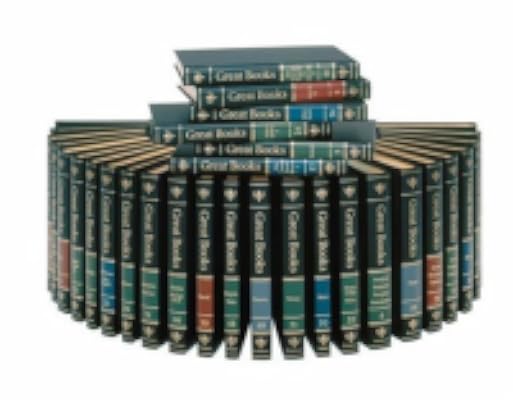
Britannica Great Books of the Western World (54 Volumes)
by Robert Maynard Hutchins
On This Page
Description
The world-renowned philosopher's classic treatise reveals the techniques and strategies for gaining and keeping political control. "How we live is so far removed from how we ought to live, that he who abandons what is done for what ought to be done, will rather bring about his own ruin than his preservation. Therefore, it is necessary to learn how not to be good," wrote Machiavelli.Tags
Recommendations

























Member Reviews
12/22/20 I own the complete set (vol 1-54) and keep them at home on the top west shelf of my office; this includes The Great Conversation (which is volume 1) and The Great Ideas (volumes 2-3, the Synopticon); I also have at home Gateway to the Great Books volumes 2-5 (missing 1 and 6-10, see following paragraph). I have only the years 1979, 1981, and 1982 of The Great Ideas Today published each year 1961-1998. [I also have volumes 1-3 of Great Books of the Western World in the BCSA office, although I have them at home at the moment to read on my next sabbatical (Lord willing) as they seem a little nicer set (for reading).]
(Wikipedia) Gateway to the Great Books is a 10-volume series of books originally published by Encyclopædia show more Britannica Inc. in 1963 and edited by Mortimer Adler and Robert Maynard Hutchins. The set was designed as an introduction to the Great Books of the Western World, published by the same organization and editors in 1952. The set included selections – short stories, plays, essays, letters, and extracts from longer works – by more than one hundred authors. The selections were generally shorter and in some ways simpler than the full-length books included in the Great Books. show less
(Wikipedia) Gateway to the Great Books is a 10-volume series of books originally published by Encyclopædia show more Britannica Inc. in 1963 and edited by Mortimer Adler and Robert Maynard Hutchins. The set was designed as an introduction to the Great Books of the Western World, published by the same organization and editors in 1952. The set included selections – short stories, plays, essays, letters, and extracts from longer works – by more than one hundred authors. The selections were generally shorter and in some ways simpler than the full-length books included in the Great Books. show less
The Great Books are all you need to give yourself a liberal arts education. I'm so happy to be adding this set of books to my shelf.
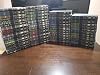
There's 1.5 sets here.
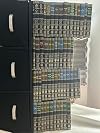
The first is a complete 54 volume set
The second is a compilation of books 1-26 All same 1952 production
The first is a complete 54 volume set
The second is a compilation of books 1-26 All same 1952 production
Good collection, but some of the translation are dated or not up to the latest scholarly standards.
Here are the titles of my set:
54 Volumes:
Volume 1: The Great Conversation
Volume 2: The Great Ideas I
Volume 3: The Great Ideas II
Volume 4: Homer
Volume 5: Aeschylus, Sophocles, Euripides, Aristophanes
Volume 6: Herodotus, Thucydides
Volume 7: Plato
Volume 8: Aristotle I
Volume 9: Aristotle II
Volume 10: Hippocrates, Galen
Volume 11: Euclid, Archimedes, Apollonius, Nicomachus
Volume 12: Lucretius, Epictetus, Marcus Aurelius
Volume 13: Virgil
Volume 14: Plutarch
Volume 15: Tacitus
Volume 16: Ptolemy, Copernicus, Kepler
Volume 17: Plotinus
Volume 18: Augustine
Volume 19: Thomas Aquinas I
Volume 20: Thomas Aquinas II
Volume 21: Dante
Volume show more 22: Chaucer
Volume 23: Machiavelli, Hobbes
Volume 24: Rabelais
Volume 25: Montaigne
Volume 26: Shakespeare I
Volume 27: Shakespeare II
Volume 28: Gilbert, Galileo, Harvey
Volume 29: Cervantes
Volume 30: Francis Bacon
Volume 31: Descartes, Spinoza
Volume 32: Milton
Volume 33: Pascal
Volume 34: Newton, Huygens
Volume 35: Locke, Berkeley, Hume
Volume 36: Swift, Sterne
Volume 37: Fielding
Volume 38: Montesquieu, Rousseau
Volume 39: Adam Smith
Volume 40: Gibbon I
Volume 41: Gibbon II
Volume 42: Kant
Volume 43: American State Papers, The Federalist, J. S. Mill
Volume 44: Boswell
Volume 45: Lavoisier, Fourier, Faraday
Volume 46: Hegel
Volume 47: Goethe
Volume 48: Melville
Volume 49: Darwin
Volume 50: Marx
Volume 51: Tolstoy
Volume 52: Dostoevsky
Volume 53: William James
Volume 54: Freud show less
Here are the titles of my set:
54 Volumes:
Volume 1: The Great Conversation
Volume 2: The Great Ideas I
Volume 3: The Great Ideas II
Volume 4: Homer
Volume 5: Aeschylus, Sophocles, Euripides, Aristophanes
Volume 6: Herodotus, Thucydides
Volume 7: Plato
Volume 8: Aristotle I
Volume 9: Aristotle II
Volume 10: Hippocrates, Galen
Volume 11: Euclid, Archimedes, Apollonius, Nicomachus
Volume 12: Lucretius, Epictetus, Marcus Aurelius
Volume 13: Virgil
Volume 14: Plutarch
Volume 15: Tacitus
Volume 16: Ptolemy, Copernicus, Kepler
Volume 17: Plotinus
Volume 18: Augustine
Volume 19: Thomas Aquinas I
Volume 20: Thomas Aquinas II
Volume 21: Dante
Volume show more 22: Chaucer
Volume 23: Machiavelli, Hobbes
Volume 24: Rabelais
Volume 25: Montaigne
Volume 26: Shakespeare I
Volume 27: Shakespeare II
Volume 28: Gilbert, Galileo, Harvey
Volume 29: Cervantes
Volume 30: Francis Bacon
Volume 31: Descartes, Spinoza
Volume 32: Milton
Volume 33: Pascal
Volume 34: Newton, Huygens
Volume 35: Locke, Berkeley, Hume
Volume 36: Swift, Sterne
Volume 37: Fielding
Volume 38: Montesquieu, Rousseau
Volume 39: Adam Smith
Volume 40: Gibbon I
Volume 41: Gibbon II
Volume 42: Kant
Volume 43: American State Papers, The Federalist, J. S. Mill
Volume 44: Boswell
Volume 45: Lavoisier, Fourier, Faraday
Volume 46: Hegel
Volume 47: Goethe
Volume 48: Melville
Volume 49: Darwin
Volume 50: Marx
Volume 51: Tolstoy
Volume 52: Dostoevsky
Volume 53: William James
Volume 54: Freud show less
Ratings
Members
- Recently Added By
Author Information

194+ Works 5,932 Members
Robert Hutchins wrote widely about education and is best known for his support of liberal education, which he believed "prepares the young for anything that may happen; it has value under any circumstances. . . . It gets them ready for a lifetime of learning. It connects man with man. It introduces all men to the dialogue about the common good of show more their own country and of the world community. It frees their mind of prejudice. It lays the basis of practical wisdom." He believed that the increasing complexities of civilization did not justify any modification in this approach. "The more technological the society," he says in The Learning Society (1968), "the less ad hoc education can be. The reason is that the more technological the society is, the more rapidly it will change and the less valuable ad hoc education will become. It now seems safe to say that the best practical education is the best theoretical one." After serving as dean of Yale Law School in 1929, Hutchins became (at age 29) president and in 1949 chancellor of the University of Chicago, remaining there until 1951. During this period, he and Mortimer Adler introduced the Great Books program into the Chicago curriculum. They believed that the best education is achieved through reading and understanding the great minds of the past. Later he became associate director of the Ford Foundation and president of the Fund for the Republic. In the latter post, Hutchins faced the oppressive climate for free expression brought about by McCarthyism, but he saw to it that the fund's projects included studies of the federal loyalty-security program, of political blacklisting in the entertainment industries, and of the nature of communism in the United States. He retired as the chief executive officer of the Center for the Study of Democratic Institutions in Santa Barbara, California, a "community of scholars" under the aegis of the Ford Foundation. (Bowker Author Biography) show less
Series
Belongs to Publisher Series
Work Relationships
Is contained in
Contains
The Great Books of the Western World, Vol. 2: The Great Ideas, A Syntopicon I: Angel - Love by Mortimer J. Adler
The Great Books of the Western World, Vol. 3: The Great Ideas, A Syntopicon II: Man - World by Encyclopedia Britannica
De dolinge van Ulysse : Homerus' Odysseia I-XVIII in Nederlandse verzen van Dierick Volckertsz. Coornhert by Homer (indirect)
Dialogues of Plato, The: Translated into English with Analyses and Introductions. In Five Volumes, Vol. V by Plato
Britannica Great Books: Hegel - The Philosophy of Right & The Philosophy of History by Georg Wilhelm Friedrich Hegel
Great Books of The Western World: Aeschylus, Sophocles, Euripides, Aristophanes by Robert Maynard Hutchins
The Oresteia Trilogy (Agamemnon, Choephoroe, and Eumenides) [and] Prometheus Bound by Aeschylus (indirect)
Common Knowledge
- Canonical title
- Britannica Great Books of the Western World (54 Volumes) (54 Volumes)
Classifications
- Genres
- Nonfiction, Philosophy
- DDC/MDS
- 028.3 — Computer science, information & general works Library & information sciences Reading and use of other information media Courses of reading
- LCC
- AC1 .G72 — General Works Collections. Series. Collected works Collections. Series. Collected works Collections of monographs, essays, etc. American and English
Statistics
- Members
- 672
- Popularity
- 42,737
- Reviews
- 4
- Rating
- (4.71)
- Languages
- English
- Media
- Paper
- ISBNs
- 2
- ASINs
- 21