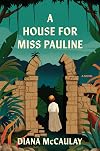
A House for Miss Pauline
by Diana McCaulay
On This Page
Description
"A tender and urgent story about who owns the land on which our identities are forged, starring an unforgettably fierce ninety-nine-year-old heroine"--Tags
Recommendations
























Member Reviews
Not long before her 100th birthday, Miss Pauline starts to experience something strange - the stones which make up her house are shifting, moving and scraping against each other in the night - and sometimes she catches a whiff of stagnant water. She knows, though, that if she tells anyone that her house itself is moving and making noises, that the past is coming for her, they will seek out her four grandchildren, three she’s never met, and two words will chart her final days. Mad ooman. Some tings not good to talk. And yet, the house will not let her be at peace, so she starts to make right the things that happened in the past. This is not easy - Miss Pauline needs to learn how to use Skype to call her granddaughter in New York City, show more and to use Facebook to connect with the daughter of a man who once disappeared in her village. She needs to travel around Jamaica to find some of the people she is looking for. And Miss Pauline is getting old and tired. But as she reminds herself, "Weaker is not fuckin weak." And there are things that she wants to do before she dies. In the process she makes connections with several new people, and learns things that she did not know about her own family history.
I have mixed feelings about this book. Miss Pauline is a wonderful character - proud, no-nonsense and full of fire - and I enjoyed the writing a lot. I think the story got too involved as Miss Pauline did more research into her background and the things that happened all those years ago, and it started to get a bit didactic in trying to explain her responses. So towards the end it did become a bit of a slog, and I wished the writer had trusted her readers a bit more to put the pieces of the puzzle together themselves. I'm still glad I read it though as it was good to be introduced to Miss Pauline. show less
I have mixed feelings about this book. Miss Pauline is a wonderful character - proud, no-nonsense and full of fire - and I enjoyed the writing a lot. I think the story got too involved as Miss Pauline did more research into her background and the things that happened all those years ago, and it started to get a bit didactic in trying to explain her responses. So towards the end it did become a bit of a slog, and I wished the writer had trusted her readers a bit more to put the pieces of the puzzle together themselves. I'm still glad I read it though as it was good to be introduced to Miss Pauline. show less
This novel focuses on a strong female protagonist, 99-year-old Pauline Sinclair, whom the reader will not soon forget.
Pauline has spent her entire life in Mason Hall, a rural Jamaican village. She believes she is not long for the world when the stones of her house begin to shift and she hears voices which she thinks are telling her “there’s atonement to be made”: “mebbe me can set tings right before ma time come.” As she considers what she must do, she reflects on her life and so the reader learns about her past. Self-educated, she raised two children with her beloved Clive and supported her family by becoming a ganja farmer. But there are secrets she has kept hidden from everyone and these are the ones she must now reveal to show more those she feels she has wronged. With the help of her granddaughter Justine and Lamont, a local teenager, she finds these people to make amends but also ends up discovering much she did not know.
It’s impossible not to like Pauline. Fiercely independent, she does not allow anyone to tell her how to live. She understands that many would dismiss her because she can be perceived as “Black, female, old, rural, foreign, poor, powerless, friendless, uneducated,” but she demands the respect she believes she deserves; certainly the last four adjectives do not apply to her. Even as a young girl, she was defiant and took decisive action against a predatory man, leaving a strong message: “That is for me an evry odda girl you ever put you nasty, dutty hand on.” Her life has not been easy, but she persevered and became a community builder and elder. Though not formally educated, she is very intelligent and thoughtful, reflecting on her own actions and on the legacy of slavery in Jamaica.
Though fierce and feisty, there is a softer side to Pauline. Her granddaughter thinks she shares the same hard heart as her grandmother, but Pauline counters, “’Ma heart not hard but ma spine strong. Sometime folks mix up them two tings.’” She does indeed show her heart in her interactions with others, especially in her relationship with Lamont. She sees his vulnerability behind his exterior and virtually adopts him as family. She also has a sense of humour, taking pride in her ability to be as foulmouthed as anyone: “If this man thinks he can win a swearing contest, he’s mistaken.”
The book examines the complex history of colonialism and slavery. Pauline uses stones from the old plantation mansion to build her home and then others in the village do as well. Building homes from the stones enslaved ancestors used to build the backra house is a symbolic reclamation of what was stolen from them and a proclamation that, though the white slave owner is gone, they have survived: “Backra house, the slavery ruin in the forest, where people, her people, her ancestors, toiled and died – no, were murdered – yet became a sanctuary for her.”
Pauline thinks about the meaning of land and its ownership: “Land is what bring the white people here an what mek them capture the Black people an force them clear it an plant it.” She decides that “Home . . . is the land. Not the house. The land will never turn against her.” Land for her is not a commodity; it’s the place that has shaped her identity. But to be at peace she wishes to “settle for herself the question of who owns the land on which her house sits.” Others may have ownership papers for the land but doesn’t her and her ancestors’ intimate and historical connection to the land give her some right to it?
Pauline and other characters speak in Jamaican patwa. This adds realism, but I did sometimes experience some difficulty with some words. I think listening to an audiobook version read by someone familiar with the language would be a good experience.
Note: I received an eARC from the publisher via NetGalley.
Please check out my reader's blog (https://schatjesshelves.blogspot.com/) or substack (https://doreenyakabuski.substack.com/) for over 1,100 of my book reviews. show less
Pauline has spent her entire life in Mason Hall, a rural Jamaican village. She believes she is not long for the world when the stones of her house begin to shift and she hears voices which she thinks are telling her “there’s atonement to be made”: “mebbe me can set tings right before ma time come.” As she considers what she must do, she reflects on her life and so the reader learns about her past. Self-educated, she raised two children with her beloved Clive and supported her family by becoming a ganja farmer. But there are secrets she has kept hidden from everyone and these are the ones she must now reveal to show more those she feels she has wronged. With the help of her granddaughter Justine and Lamont, a local teenager, she finds these people to make amends but also ends up discovering much she did not know.
It’s impossible not to like Pauline. Fiercely independent, she does not allow anyone to tell her how to live. She understands that many would dismiss her because she can be perceived as “Black, female, old, rural, foreign, poor, powerless, friendless, uneducated,” but she demands the respect she believes she deserves; certainly the last four adjectives do not apply to her. Even as a young girl, she was defiant and took decisive action against a predatory man, leaving a strong message: “That is for me an evry odda girl you ever put you nasty, dutty hand on.” Her life has not been easy, but she persevered and became a community builder and elder. Though not formally educated, she is very intelligent and thoughtful, reflecting on her own actions and on the legacy of slavery in Jamaica.
Though fierce and feisty, there is a softer side to Pauline. Her granddaughter thinks she shares the same hard heart as her grandmother, but Pauline counters, “’Ma heart not hard but ma spine strong. Sometime folks mix up them two tings.’” She does indeed show her heart in her interactions with others, especially in her relationship with Lamont. She sees his vulnerability behind his exterior and virtually adopts him as family. She also has a sense of humour, taking pride in her ability to be as foulmouthed as anyone: “If this man thinks he can win a swearing contest, he’s mistaken.”
The book examines the complex history of colonialism and slavery. Pauline uses stones from the old plantation mansion to build her home and then others in the village do as well. Building homes from the stones enslaved ancestors used to build the backra house is a symbolic reclamation of what was stolen from them and a proclamation that, though the white slave owner is gone, they have survived: “Backra house, the slavery ruin in the forest, where people, her people, her ancestors, toiled and died – no, were murdered – yet became a sanctuary for her.”
Pauline thinks about the meaning of land and its ownership: “Land is what bring the white people here an what mek them capture the Black people an force them clear it an plant it.” She decides that “Home . . . is the land. Not the house. The land will never turn against her.” Land for her is not a commodity; it’s the place that has shaped her identity. But to be at peace she wishes to “settle for herself the question of who owns the land on which her house sits.” Others may have ownership papers for the land but doesn’t her and her ancestors’ intimate and historical connection to the land give her some right to it?
Pauline and other characters speak in Jamaican patwa. This adds realism, but I did sometimes experience some difficulty with some words. I think listening to an audiobook version read by someone familiar with the language would be a good experience.
Note: I received an eARC from the publisher via NetGalley.
Please check out my reader's blog (https://schatjesshelves.blogspot.com/) or substack (https://doreenyakabuski.substack.com/) for over 1,100 of my book reviews. show less
“Miss Pauline thinks about the meaning of land. She knows it’s not eternal. If it can be owned, it can be stolen or sold and new owners can do as they please with it, excavate it down to bedrock and deeper, lay it to waste. Even weather wages war against land, land can shake and rend and tear itself apart. And once people arrive, land ceases to be itself. It becomes the place where human events unfolded, it becomes its memories, ghosts and tragedies.”
Ninety-nine-year-old Miss Pauline Evadne Sinclair, a resident of the small village of Mason Hall, St. Mary parish, Jamaica, takes the noises she hears at night—whispers she believes are coming from the shifting stones her house is made of—stones extracted from the ruins of a white show more slaveholder's home—as an omen signaling that her time on earth will soon come to an end. Miss Pauline has led an eventful life and has braved many storms, but she has held her own and lived life on her own terms. Though she lives alone, she has a lifetime of memories—some happy and others not—that keep her company, among which are secrets that have haunted her for most of her adult life. Believing she doesn't have much time left, Miss Pauline decides the time has come to find the people she has wronged and confess. She engages Lamont, a local teenager, and her U.S.-based granddaughter, Justine, to help her in her venture. The narrative follows Miss Pauline as she recalls the significant events and people that have defined her life while embarking on a journey to confront her demons and own up to her wrongdoings—an endeavor that will lead to revelations she could not have imagined.
I thoroughly enjoyed reading A House for Miss Pauline by Diana McCaulay. A well-structured narrative, an interesting cast of characters and strong character development make for an engrossing read that revolves around themes of family and community, resilience, racial identity and much more. The vivid imagery and descriptive writing transport the reader to Mason Hall, Jamaica. Miss Pauline is an admirable protagonist - brave and resilient - and I thought the author has done a brilliant job of not only capturing her personality, thoughts and emotions but also life in a small Jamaican village from the lens of our protagonist. The element of magical realism was well embedded in the story and the author deftly incorporates the history of the village and the legacy of colonialism and slavery in Jamaica into the narrative establishing how the same shapes the lives of our characters. I enjoyed Miss Pauline’s interactions with Lamont and loved how they grew to trust one another. The author injects a fair share of lighter moments into the narrative. I particularly enjoyed Miss Pauline’s experience with the internet/social media which was both realistic and amusing. I did wish Justine had been featured more in the narrative, but I was satisfied with how the story gradually unfolds. The pacing does falter in parts, but read with a bit of patience, this novel is certainly a rewarding read.
“What people build holds their stories, buried, it’s true, but sometimes a new fissure lets them escape to find all who might listen. And there are many different witnesses to a life.”
Do read the exquisitely penned Author’s Note where she discusses the people, events and places that inspired this work of fiction.
Many thanks to Algonquin Books for the digital review copy of this novel via NetGalley. All opinions expressed in this review are my own. show less
Ninety-nine-year-old Miss Pauline Evadne Sinclair, a resident of the small village of Mason Hall, St. Mary parish, Jamaica, takes the noises she hears at night—whispers she believes are coming from the shifting stones her house is made of—stones extracted from the ruins of a white show more slaveholder's home—as an omen signaling that her time on earth will soon come to an end. Miss Pauline has led an eventful life and has braved many storms, but she has held her own and lived life on her own terms. Though she lives alone, she has a lifetime of memories—some happy and others not—that keep her company, among which are secrets that have haunted her for most of her adult life. Believing she doesn't have much time left, Miss Pauline decides the time has come to find the people she has wronged and confess. She engages Lamont, a local teenager, and her U.S.-based granddaughter, Justine, to help her in her venture. The narrative follows Miss Pauline as she recalls the significant events and people that have defined her life while embarking on a journey to confront her demons and own up to her wrongdoings—an endeavor that will lead to revelations she could not have imagined.
I thoroughly enjoyed reading A House for Miss Pauline by Diana McCaulay. A well-structured narrative, an interesting cast of characters and strong character development make for an engrossing read that revolves around themes of family and community, resilience, racial identity and much more. The vivid imagery and descriptive writing transport the reader to Mason Hall, Jamaica. Miss Pauline is an admirable protagonist - brave and resilient - and I thought the author has done a brilliant job of not only capturing her personality, thoughts and emotions but also life in a small Jamaican village from the lens of our protagonist. The element of magical realism was well embedded in the story and the author deftly incorporates the history of the village and the legacy of colonialism and slavery in Jamaica into the narrative establishing how the same shapes the lives of our characters. I enjoyed Miss Pauline’s interactions with Lamont and loved how they grew to trust one another. The author injects a fair share of lighter moments into the narrative. I particularly enjoyed Miss Pauline’s experience with the internet/social media which was both realistic and amusing. I did wish Justine had been featured more in the narrative, but I was satisfied with how the story gradually unfolds. The pacing does falter in parts, but read with a bit of patience, this novel is certainly a rewarding read.
“What people build holds their stories, buried, it’s true, but sometimes a new fissure lets them escape to find all who might listen. And there are many different witnesses to a life.”
Do read the exquisitely penned Author’s Note where she discusses the people, events and places that inspired this work of fiction.
Many thanks to Algonquin Books for the digital review copy of this novel via NetGalley. All opinions expressed in this review are my own. show less
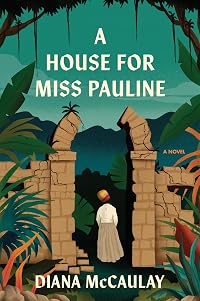
A House for Miss Pauline is a novel by Jamaican author Diana McCaulay about a 99-year-old woman in rural Jamaica who builds her home from the ruins of a plantation, forcing her to confront her past and the legacies of colonialism as her house seems to speak to her. Compelled to make peace before she dies, Pauline decides to leave the only home she has ever known on a final, desperate mission to uncover truths she could never have imagined.
Ratings
Members
- Recently Added By
Lists

Fiction: Historical
288 works; 3 members

Fiction: BLM
60 works; 1 member
Author Information

7 Works 124 Members
Awards and Honors
Common Knowledge
- Canonical title
- A House for Miss Pauline
Classifications
Statistics
- Members
- 46
- Popularity
- 661,734
- Reviews
- 4
- Rating
- (3.58)
- Languages
- English
- Media
- Paper, Ebook
- ISBNs
- 6
- ASINs
- 2