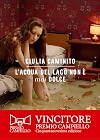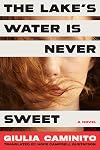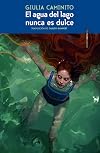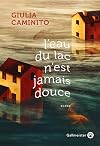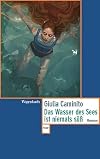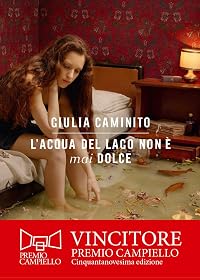
L’acqua del lago non è mai dolce
by Giulia Caminito
On This Page
Description
"The English-language debut of an award-winning Italian novelist, following a teenage girl as her family transitions to a fraught new beginning in a tranquil lakeside town, capturing the disillusionment, loneliness, and rage that defined a generation."--Tags
Recommendations





















Member Reviews
Rating: 4.5* of five
The Publisher Says: In her English-language debut, award-winning Italian novelist Giulia Caminito follows a teenage girl as her family transitions from Rome’s impoverished outskirts to a fraught new beginning in a tranquil lakeside town, capturing the disillusionment, loneliness, and rage that defined a generation.
In the 1990s, Gaia’s family moves from the neglected peripheries of Rome to an idyllic lakeside town twenty miles away, in search of a new life that will lift them out of poverty. Each of them bears their own scars: Gaia’s strong-willed mother is fiercely determined to secure a better future for her children at any cost; her father, a once proud man, now suffers in bitter silence after a devastating show more accident; her anarchist older brother rebels against the political apathy he sees at home; and her young twin brothers wordlessly bear witness to a family in decay.
When Gaia meets two local girls, Agata and Carlotta, the trio builds a fragile friendship throughout their adolescence based as much on their insecurities and jealousies as it is on their mutual affection. Gaia’s encounters with callous boys and contemptuous teachers convince her that she might always be an outsider—excluded from a privileged life and perhaps even beyond the possibility of happiness. Faced with bullying and betrayals among her peers and immense pressure from her mother to excel, Gaia turns inward and her world becomes increasingly insular. Then tragedy strikes her friend group. As more friends slip away and her family fractures, Gaia vows to make the world pay for all the things it has denied her.
Winner of the Campiello Prize, The Lake’s Water Is Never Sweet is an unflinching portrait of a generation, striving to make a place for themselves in a world markedly different from the one their parents promised them. With psychological acuity and stylish prose, Caminito takes us into the volatile, searching mind of a young woman torn between her desire to connect with others and her drive for self-preservation. In a novel that has been acclaimed by readers around the world, Caminito shows how tenderness and fragility often lie just beneath the surface of simmering fury.
I RECEIVED A DRC FROM THE PUBLISHER VIA NETGALLEY. THANK YOU.
My Review: Gaia narrates this story to us, in all her adolescent angst, pain, confusion, bewilderment...all the usual things an adolescent in the middle of the utterly mystifying process of finding out who she is, what she wants, how she's going to set about getting it, feels.
That does not sound like a book I'd like very much. And yet you see those four stars up there. Where'd they come from?
From a scaffolding that wasn't safe. From a stable that showed Gaia she didn't have the power to heal the wounds betrayal leaves. From a bag of rotting lemons, from a carnival shooting game, from texts that can't be answered...from, in other words, life as it is lived. Piece by piece.
Watching in real-time someone coming of age is *maddening* because you're helpless. Reading a novel about a young woman becoming herself is both faster and friendlier on the patience. Gaia's got a hard row to hoe in this life, her entire family's very badly broken in real, honest ways. That leaves her to do what she can with what she's got, and that is never enough. Nothing is ever enough when you're working on, working out, yourself. You paste together the bits you can find, then paper over the holes and cracks and voids. It is how humans have always done it, don't be fooled by fools telling you it used to be easier, it was better when..."when" is the slipperiest word in English. "When" never comes, never came, isn't coming, got lost. "When" immigrated from Old Frisia, from Proto-Indo-Europe whatever wherever whenever that happened. Who needs "when" because we have "now."
And "now" is Gaia's native land.
It was clear to me the story here was not purely foundationally fiction. The author says so in her last word on the subject. She's Gaia; other girls from her past were Iris and Agata. It doesn't help, particularly, to know that but it does make me trust the author more. She's honest; she wrote a novel about realness by using reality, and one person's reality is never, ever enough...see above...for a whole novel. It's too much and never enough, like Mary Trump says. We're not enough for fiction; we're too much for Life. It's a puzzlement, remember Yul Brynner talking those lines on pitch? And no king like The King and I ever spoke greater sooth. Imagine not feeling puzzled! Imagine feeling so sure of yourself that you, a teen anarchist boy, run your family! Imagine how *little* you feel in the face of Life, and you power through anyway, and rotten-souled bastards take your life, your living, your family's home.
Imagine.
And yet here we are. Absolutely in the same place we were, only without instead of with.
Read The Lake's Water Is Never Sweet by Giulia Caminito as translated by Hope Campbell Gustafson and imagine. show less
The Publisher Says: In her English-language debut, award-winning Italian novelist Giulia Caminito follows a teenage girl as her family transitions from Rome’s impoverished outskirts to a fraught new beginning in a tranquil lakeside town, capturing the disillusionment, loneliness, and rage that defined a generation.
In the 1990s, Gaia’s family moves from the neglected peripheries of Rome to an idyllic lakeside town twenty miles away, in search of a new life that will lift them out of poverty. Each of them bears their own scars: Gaia’s strong-willed mother is fiercely determined to secure a better future for her children at any cost; her father, a once proud man, now suffers in bitter silence after a devastating show more accident; her anarchist older brother rebels against the political apathy he sees at home; and her young twin brothers wordlessly bear witness to a family in decay.
When Gaia meets two local girls, Agata and Carlotta, the trio builds a fragile friendship throughout their adolescence based as much on their insecurities and jealousies as it is on their mutual affection. Gaia’s encounters with callous boys and contemptuous teachers convince her that she might always be an outsider—excluded from a privileged life and perhaps even beyond the possibility of happiness. Faced with bullying and betrayals among her peers and immense pressure from her mother to excel, Gaia turns inward and her world becomes increasingly insular. Then tragedy strikes her friend group. As more friends slip away and her family fractures, Gaia vows to make the world pay for all the things it has denied her.
Winner of the Campiello Prize, The Lake’s Water Is Never Sweet is an unflinching portrait of a generation, striving to make a place for themselves in a world markedly different from the one their parents promised them. With psychological acuity and stylish prose, Caminito takes us into the volatile, searching mind of a young woman torn between her desire to connect with others and her drive for self-preservation. In a novel that has been acclaimed by readers around the world, Caminito shows how tenderness and fragility often lie just beneath the surface of simmering fury.
I RECEIVED A DRC FROM THE PUBLISHER VIA NETGALLEY. THANK YOU.
My Review: Gaia narrates this story to us, in all her adolescent angst, pain, confusion, bewilderment...all the usual things an adolescent in the middle of the utterly mystifying process of finding out who she is, what she wants, how she's going to set about getting it, feels.
That does not sound like a book I'd like very much. And yet you see those four stars up there. Where'd they come from?
From a scaffolding that wasn't safe. From a stable that showed Gaia she didn't have the power to heal the wounds betrayal leaves. From a bag of rotting lemons, from a carnival shooting game, from texts that can't be answered...from, in other words, life as it is lived. Piece by piece.
Watching in real-time someone coming of age is *maddening* because you're helpless. Reading a novel about a young woman becoming herself is both faster and friendlier on the patience. Gaia's got a hard row to hoe in this life, her entire family's very badly broken in real, honest ways. That leaves her to do what she can with what she's got, and that is never enough. Nothing is ever enough when you're working on, working out, yourself. You paste together the bits you can find, then paper over the holes and cracks and voids. It is how humans have always done it, don't be fooled by fools telling you it used to be easier, it was better when..."when" is the slipperiest word in English. "When" never comes, never came, isn't coming, got lost. "When" immigrated from Old Frisia, from Proto-Indo-Europe whatever wherever whenever that happened. Who needs "when" because we have "now."
And "now" is Gaia's native land.
It was clear to me the story here was not purely foundationally fiction. The author says so in her last word on the subject. She's Gaia; other girls from her past were Iris and Agata. It doesn't help, particularly, to know that but it does make me trust the author more. She's honest; she wrote a novel about realness by using reality, and one person's reality is never, ever enough...see above...for a whole novel. It's too much and never enough, like Mary Trump says. We're not enough for fiction; we're too much for Life. It's a puzzlement, remember Yul Brynner talking those lines on pitch? And no king like The King and I ever spoke greater sooth. Imagine not feeling puzzled! Imagine feeling so sure of yourself that you, a teen anarchist boy, run your family! Imagine how *little* you feel in the face of Life, and you power through anyway, and rotten-souled bastards take your life, your living, your family's home.
Imagine.
And yet here we are. Absolutely in the same place we were, only without instead of with.
Read The Lake's Water Is Never Sweet by Giulia Caminito as translated by Hope Campbell Gustafson and imagine. show less
This was not an easy novel. It is Gaia's, a young girls coming-of-age in a poverty stricken area of Rome where one must relentlessly fight to survive. Her mother is an Amazon of a woman who single handedly raised Gaia and her three brothers on a maids salary all the while caring for her disabled husband. It is also the story of female friendship, the good, the bad and the ugly. I liked the writing, I liked Gaia but I was dismayed how harsh life was for her and how difficult it was for her to not just survive but never really be able to get ahead. Brutally honest, but in an artistic, beautiful and truthful way. Recommended. 4 stars.
Many thanks to Net Galley and the publisher Spiegel & Grau for a chance to read an ARC version of this show more book. show less
Many thanks to Net Galley and the publisher Spiegel & Grau for a chance to read an ARC version of this show more book. show less
Un libro che entra dentro e scuote, lascia senza fiato.
Per me è stato un crescendo: un inizio che non mi convinceva ma con una scrittura talmente coinvolgente da portarmi avanti fino a non farmi staccare gli occhi. La rabbia, la disperazione e la continua ricerca di qualcosa e del fallimento di quel qualcosa descritti con una precisione disarmante.
Nella postfazione l’autrice scrive “questa è una storia che ha ingoiato frammenti di tante vite per provare a farne una narrazione, il racconto degli anni in cui sono cresciuta, dei dolori che ho solo circumnavigato e di quelli che ho attraversato”. Ed è questa una delle grandi forze secondo me: perché in fondo i dolori, le frustrazioni che descrive li abbiamo, chi più e chi meno e show more in forme diverse, toccati un po’ tutti. E qui, crudi, li troviamo descritti.
Ed ancora, un libro per quelli che almeno una volta “è dolce, è zuccherina, questa acqua, questo pantano, ha il sapore delle ciliegie, della marmellata di clementine, dei marshmallow, l’acqua del lago è sempre dolce”.
Comunque le stelle sono 4.5 almeno e potrebbero diventare 5 tra qualche giorno. show less
Per me è stato un crescendo: un inizio che non mi convinceva ma con una scrittura talmente coinvolgente da portarmi avanti fino a non farmi staccare gli occhi. La rabbia, la disperazione e la continua ricerca di qualcosa e del fallimento di quel qualcosa descritti con una precisione disarmante.
Nella postfazione l’autrice scrive “questa è una storia che ha ingoiato frammenti di tante vite per provare a farne una narrazione, il racconto degli anni in cui sono cresciuta, dei dolori che ho solo circumnavigato e di quelli che ho attraversato”. Ed è questa una delle grandi forze secondo me: perché in fondo i dolori, le frustrazioni che descrive li abbiamo, chi più e chi meno e show more in forme diverse, toccati un po’ tutti. E qui, crudi, li troviamo descritti.
Ed ancora, un libro per quelli che almeno una volta “è dolce, è zuccherina, questa acqua, questo pantano, ha il sapore delle ciliegie, della marmellata di clementine, dei marshmallow, l’acqua del lago è sempre dolce”.
Comunque le stelle sono 4.5 almeno e potrebbero diventare 5 tra qualche giorno. show less
Gaia lives a poverty stricken life with her domineering mother, disabled father, older brother who is embracing Anarchism, and younger twin brothers in Rome. An opportunity arises for the family to move to a lake community where Gaia completes her schooling. The family struggles financially and Gaia never has the material goods or opportunities of many of her peers. Her vulnerable relationships with female and male friends are fraught with self doubt, resentments, changing loyalties.
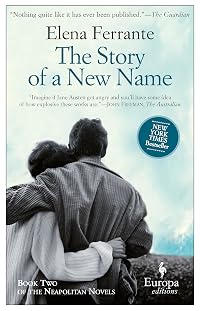
Beautifully written, the prose is almost lyrical at times. Many will find this reminiscent of a Ferrante novel; I thought it darker. Caminito paints a bleak picture of those at the bottom of the social/financial ladder. Coming of age in the 1990s, Gaia is show more filled with insecurity. sadness, fear, anger, rage at times. I really didn’t get the sense that she felt any hope for her future.
People will have differing reactions to the final chapter. I liked it. I enjoyed the evocative reminiscence.
Thanks to #NetGalley and @spiegelandgrau for the DRC. show less
Beautifully written, the prose is almost lyrical at times. Many will find this reminiscent of a Ferrante novel; I thought it darker. Caminito paints a bleak picture of those at the bottom of the social/financial ladder. Coming of age in the 1990s, Gaia is show more filled with insecurity. sadness, fear, anger, rage at times. I really didn’t get the sense that she felt any hope for her future.
People will have differing reactions to the final chapter. I liked it. I enjoyed the evocative reminiscence.
Thanks to #NetGalley and @spiegelandgrau for the DRC. show less
¿Cómo luchar por tus sueños cuando estás en el bando de los que apenas tienen nada?
Roma es cada vez más cara y asfixiante, por lo que la humilde familia de Gaia se muda a las afueras, a un hermoso pueblo cerca del lago Bracciano en el que no es fácil pasar desapercibido: todo el mundo sabe quién eres y cuánto ganan tus padres.
Antonia, la madre, a cargo de cuatro hijos y un marido paralítico por un accidente en la obra, es una mujer honrada e incansable que enseña a Gaia, su única hija, a confiar en las propias capacidades por encima todo, a no desistir y a llevar la cabeza siempre bien alta. Gaia es la más lista de la familia, así que ha de estudiar sin desmayo, hacer una carrera y convertirse en alguien. Y Gaia aprende a show more no quejarse, a leer libros, a defenderse, a saltar al lago sin miedo… Pero la violencia y la rabia, agazapadas como una serpiente, no dejan de crecer en su interior. Orgullosa y obstinada, Gaia lanza a ese mundo en el que no encaja una mirada negrísima, penetrante, furibunda, porque ¿cómo creer en «un futuro mejor» cuando naciste en el lado equivocado del río?
Escrita con un estilo a la vez áspero y poético y con una marcada perspectiva de clase, El agua del lago nunca es dulce, finalista del Premio Strega y ganadora del Campiello, es una memorable novela de iniciación que narra el lento y cruel descubrimiento del mundo en que vivimos, tan lleno de privilegios para unos pocos y de promesas falsas para la mayoría. show less
Roma es cada vez más cara y asfixiante, por lo que la humilde familia de Gaia se muda a las afueras, a un hermoso pueblo cerca del lago Bracciano en el que no es fácil pasar desapercibido: todo el mundo sabe quién eres y cuánto ganan tus padres.
Antonia, la madre, a cargo de cuatro hijos y un marido paralítico por un accidente en la obra, es una mujer honrada e incansable que enseña a Gaia, su única hija, a confiar en las propias capacidades por encima todo, a no desistir y a llevar la cabeza siempre bien alta. Gaia es la más lista de la familia, así que ha de estudiar sin desmayo, hacer una carrera y convertirse en alguien. Y Gaia aprende a show more no quejarse, a leer libros, a defenderse, a saltar al lago sin miedo… Pero la violencia y la rabia, agazapadas como una serpiente, no dejan de crecer en su interior. Orgullosa y obstinada, Gaia lanza a ese mundo en el que no encaja una mirada negrísima, penetrante, furibunda, porque ¿cómo creer en «un futuro mejor» cuando naciste en el lado equivocado del río?
Escrita con un estilo a la vez áspero y poético y con una marcada perspectiva de clase, El agua del lago nunca es dulce, finalista del Premio Strega y ganadora del Campiello, es una memorable novela de iniciación que narra el lento y cruel descubrimiento del mundo en que vivimos, tan lleno de privilegios para unos pocos y de promesas falsas para la mayoría. show less
Nov 23, 2022Spanish
Een jonge vrouw krijgt al vroeg in haar leven te maken met de gevolgen van de Italiaanse klassenmaatschappij en de verwachtingen van haar familie
Feb 14, 2023Dutch
Members
- Recently Added By
Author Information

11 Works 173 Members
Awards and Honors
Awards
Classifications
- Genres
- Fiction and Literature, General Fiction
- DDC/MDS
- 853.92 — Literature & rhetoric Italian, Romanian & related literatures Italian fiction 1900- 21st Century
- LCC
- PQ4903 .A453 .A64 — Language and Literature French, Italian, Spanish and Portuguese literatures Italian literature Individual authors, 2001-
- BISAC
Statistics
- Members
- 107
- Popularity
- 303,810
- Reviews
- 8
- Rating
- (3.64)
- Languages
- 8 — Catalan, Dutch, English, French, German, Italian, Portuguese, Spanish
- Media
- Paper, Ebook
- ISBNs
- 12
- ASINs
- 4