The Rabbits
by John Marsden
On This Page
Description
Uses rabbits, a species introduced to Australia, to represent an allegory of the arrival of Europeans in Australia and the widespread environmental destruction caused by man throughout the continent. A sophisticated picture book. Suggested level: primary, intermediate.Tags
Recommendations








Member Recommendations

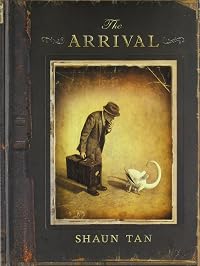
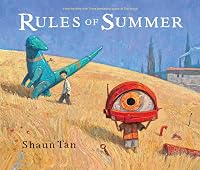
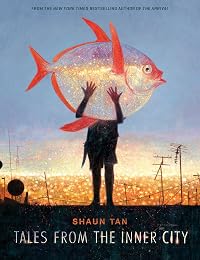
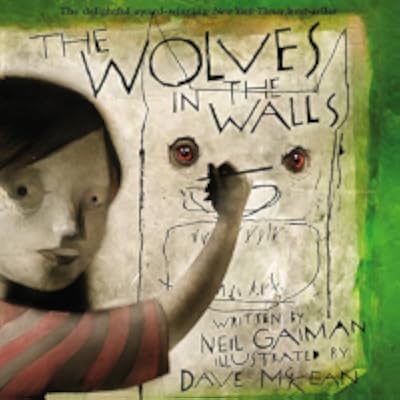
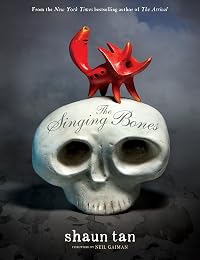
GirlMisanthrope Story is not comparable, but they both use artwork to affect the narrative.
Member Reviews
A gorgeously-illustrated picture-book exploration of the cultural and ecological colonization of Australia. When the strange Rabbits arrive, the indigenous residents aren't sure just what to make of them, but by the time they realize that their elders were correct, that these newcomers don't "understand the right ways," they are already overrun. As the land is transformed, the indigenous residents find themselves marginalized and oppressed - even their children are taken from them. The book closes with the heartfelt question: "Who Will Save Us From the Rabbits?"
The equation of European settlers with rabbits in this book is no accident, as another reviewer noted in her mention of the brilliant film Rabbit-Proof Fence. Rabbits were a show more species unknown in Australia until the arrival of Europeans, and they quickly overran the native flora and fauna. They proved so destructive that a continent-wide fence was built to contain them.
John Marsden's text, which takes the Aboriginal perspective for its narrative, is full of bewilderment and quiet grief. Taken together with Shaun Tan's evocative illustrations, this story is profoundly moving, all the more so because it is told in such a "simple" metaphoric style. Simply beautiful, that is... show less
The equation of European settlers with rabbits in this book is no accident, as another reviewer noted in her mention of the brilliant film Rabbit-Proof Fence. Rabbits were a show more species unknown in Australia until the arrival of Europeans, and they quickly overran the native flora and fauna. They proved so destructive that a continent-wide fence was built to contain them.
John Marsden's text, which takes the Aboriginal perspective for its narrative, is full of bewilderment and quiet grief. Taken together with Shaun Tan's evocative illustrations, this story is profoundly moving, all the more so because it is told in such a "simple" metaphoric style. Simply beautiful, that is... show less
I guess it's a picture book, but it seems too overwhelmingly tragic for that. A brilliant expression of the settlement of Australia, specifically, and the loss to native cultures generally. It packs a huge emotional impact for a deceptively simple book.
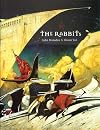
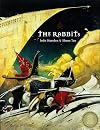
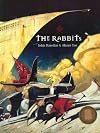
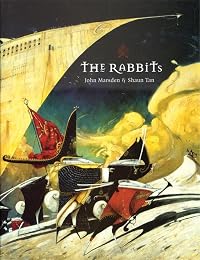
Smokin' artwork. First, allow me to comment on Shaun Tan's beyond-believable gorgeous artwork. I suspect if Dali and Parrish had a lovechild, this is the work that would be spawned. The way he captures light and shadow is what reminds me of Parrish.And a dash of Wyeth in the landscapes. And then the texture, the layers, the surrealistic clouds, the steam punk cows and horses.
Marsden was inspired by the real-life ecological devastation wreaked by rabbits which were carelessly and accidentally unleashed upon Australia by invading Europeans. It becomes an allegory representing any country that has been invaded,conquered. Not only are the indigenous people eradicated, but the land, the ecology is destroyed.
This isn't a happy ending kiddie show more book; this is putting the behavior of conquering nations in your face. What have we lost by destroying rain forests, killing coral reefs, murdering Native Americans, Aborigines, and other indigenous peoples? All treasures that cannot be replaced. Yeah, I might have cried a little. But the painted clouds are sure pretty. show less
Marsden was inspired by the real-life ecological devastation wreaked by rabbits which were carelessly and accidentally unleashed upon Australia by invading Europeans. It becomes an allegory representing any country that has been invaded,conquered. Not only are the indigenous people eradicated, but the land, the ecology is destroyed.
This isn't a happy ending kiddie show more book; this is putting the behavior of conquering nations in your face. What have we lost by destroying rain forests, killing coral reefs, murdering Native Americans, Aborigines, and other indigenous peoples? All treasures that cannot be replaced. Yeah, I might have cried a little. But the painted clouds are sure pretty. show less
My local library classifies this as 'Rabbits - Juvenile Literature', but it should more properly be filed under 'Colonization - Juvenile Literature', being one of the few age-appropriate books about colonization for young children -- here, the invasion of Australia by non-indigenous rabbits serves as a metaphor for the invasion of Australia by the English. Shaun Tan's illustrations are, as always, rich with clever nontextual commentary, but Marsden's text re-iterates all the usual tropes, such as writing in the first-person from an allegedly indigenous point of view, and closing with the oft-imagined plea for a savior: 'Who will save us from the rabbits?'
What's to say about The Rabbits? They're bad. They kill off the original settlers of the country; they cut down all the trees; pollute the water; introduce non-native animals and foods that take over; begin an industrial revolution; ruin that which they didn't understand... Is this starting to sound familiar?
The Rabbits is one of the few age-appropriate books about colonization for young children -- here, the invasion of Australia by non-indigenous rabbits serves as a metaphor for the invasion of Australia by the English. Shaun Tan's illustrations are, as always, rich with clever nontextual commentary, but Marsden's text re-iterates all the usual tropes, such as writing in the first-person from an allegedly indigenous point of view, and closing with the oft-imagined plea for a savior: 'Who will save us from the rabbits?'
Review by: sanguinity | Jan 29, 2010 |
Review by: sanguinity | Jan 29, 2010 |
The illustrations are raw in muted colors, mostly browns, blues, and black foregrounds. As the story draws to the climax, the pages grow darker, symbolizing the demise of two cultures that cannot symbiotically coexist. The simple wording comes to life with the artwork. Though the book jacket promotes the book as one to show a cautionary tale of nature’s downfall, the tale can also be used to demonstrate the triumph of one culture over another culture’s rights and traditions or the ravaging affects of war in the form of a precursor. Older readers can gain much by reading this along with Popov’s Why?
Members
- Recently Added By
Lists

Books Read in 2016
4,666 works; 197 members

Fiction to Read for Earth Day
50 works; 8 members
Author Information

65+ Works 18,166 Members
John Marsden was born in Victoria, Australia in 1950. He was working as a teacher when his first book, So Much to Tell You, was published in 1987. His other works include the Tomorrow series and Ellie chronicles. He bought an 850-acre property just outside Melbourne, Australia where he ran writers' courses and camps for eight years. In 2006, he show more opened a school there called Candlebark. (Bowker Author Biography) show less
All Editions
Awards and Honors
Awards
Work Relationships
Common Knowledge
- Original publication date
- 1998
- Important places
- Australia
- Important events
- Invasion of Australia; Colonisation of Australia
- Dedication
- For Brian Farran,
who cares about these matters, J.M.
For Nick, S.T. - First words
- The rabbits came many grandparents ago.
- Last words
- (Click to show. Warning: May contain spoilers.)Who will save us from the rabbits?
Classifications
Statistics
- Members
- 573
- Popularity
- 51,394
- Reviews
- 21
- Rating
- (4.30)
- Languages
- English, French, Italian, Spanish
- Media
- Paper, Ebook
- ISBNs
- 14
- ASINs
- 5