On This Page
Description
Six episodes in the life of Homer Price including one in which he and his pet skunk capture four bandits and another about a donut machine on the rampage.Tags
Recommendations
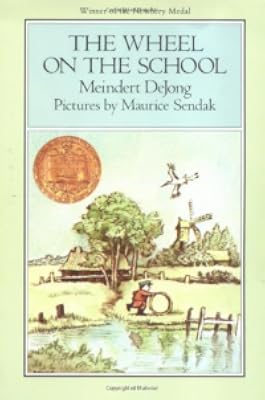
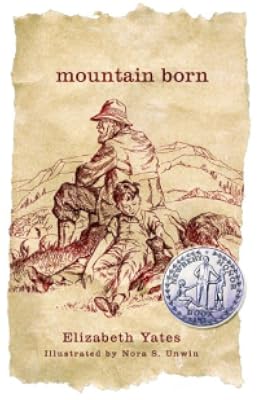
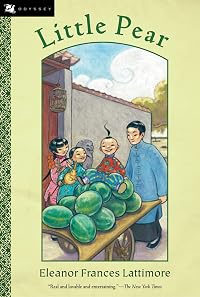
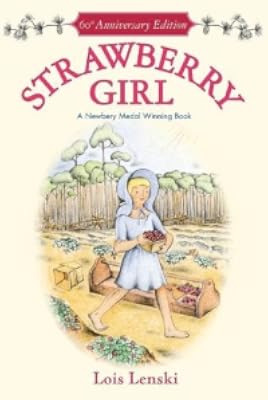

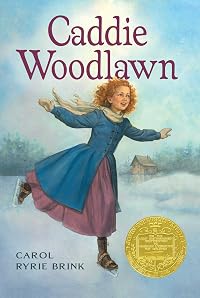

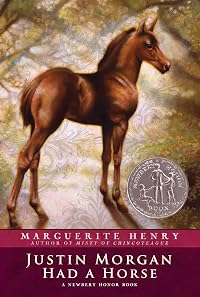
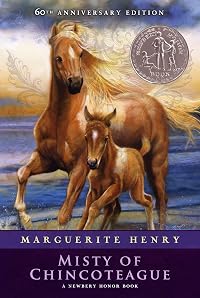
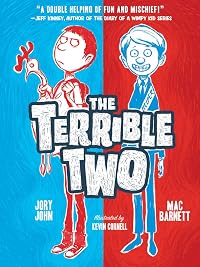


Member Recommendations

Member Reviews
How can a boy and his pet skunk be any match for a four-man team of robbers that comes to the town of Centerburg? It's one thing to read about the mighty Super-Duper in 10¢ superhero comics, but what's it like to meet the Super-Duper in person? And what do you do when an automatic doughnut machine just won't stop making doughnuts? Young Homer may have something to say about all of this and more in Homer Price by author Robert McCloskey.
I like to revisit some books I enjoyed back in my childhood to see (or remember) what it was about them that "got" me. While reading about Homer's adventures again after all these years didn't give me the same wonder and level of pleasure that I still feel when I read about Beverly Cleary's Ramona show more Quimby, I had fun going back through these old-fashioned tales.
This read is intentionally outrageous in places while remaining comfortable and entertaining. I had to smile at the book's nod to the modern American woman—the references to her place in business and public life and the right for her to make up her own mind in romantic matters. And the dilemma concerning the Street Sign Putter Uppers Union got an eyebrow-raise from me even as I chuckled.
The book has a little stuff related to people of color that, while presented in a positive spirit, wouldn't exactly fly today. But I won't pick all of that apart, since some of it's due to American history that can't be erased, and in this middle grade read that's silly overall, the town's brown members aren't singled out to be "the silly ones" or negative figures.
Even as I did some inward cringing, and I can't say this book would be on my list of recommendations for children today, it all gave me something worth remembering about kid lit from three quarters of a century ago. show less
I like to revisit some books I enjoyed back in my childhood to see (or remember) what it was about them that "got" me. While reading about Homer's adventures again after all these years didn't give me the same wonder and level of pleasure that I still feel when I read about Beverly Cleary's Ramona show more Quimby, I had fun going back through these old-fashioned tales.
This read is intentionally outrageous in places while remaining comfortable and entertaining. I had to smile at the book's nod to the modern American woman—the references to her place in business and public life and the right for her to make up her own mind in romantic matters. And the dilemma concerning the Street Sign Putter Uppers Union got an eyebrow-raise from me even as I chuckled.
The book has a little stuff related to people of color that, while presented in a positive spirit, wouldn't exactly fly today. But I won't pick all of that apart, since some of it's due to American history that can't be erased, and in this middle grade read that's silly overall, the town's brown members aren't singled out to be "the silly ones" or negative figures.
Even as I did some inward cringing, and I can't say this book would be on my list of recommendations for children today, it all gave me something worth remembering about kid lit from three quarters of a century ago. show less
My favorite anthology of children's stories (from when I was a kid) has the chapter about the donuts, which I loved as a kid and as an adult. The rest of the book was just as charming, if not completely outdated.
Welcome to Centerburg! Where you can win a hundred dollars by eating all the doughnuts you want; where houses are built in a day; and where a boy named Homer Price can foil four slick bandits using nothing but his wits and pet skunk.
The comic genius of Robert McCloskey and his wry look at small-town America has kept readers in stitches for generations.
The comic genius of Robert McCloskey and his wry look at small-town America has kept readers in stitches for generations.
here's this place called Centerburg which has always appeared just off the map from our collective unconsciousness. It's a past where the town fathers and other leading citizens gather at the barber shop while they let their children mind the diner and bring petty criminals to justice at the end of a gun. It's where ten year old boys could take the family cart and mare into town on their own, or tame a skunk for a pet with just a little milk, an innocent place where the idea of factory-produced homes is welcomed progress and a contest to see which old codger owns the largest ball of string is prime entertainment for a week. And in the center of it all, whether witness or participant, is Homer Price.
As one of Robert McCloskey's forages show more outside the realm of the picture book (Make Way for Ducklings, Blueberries for Sal), Homer Price takes the form of fanciful memoir, the kind of stories written of a young man's retelling of his Ohio home town. Naturally Centerburg doesn't exist, but plenty of Midwest towns like it did exist in the early part of the twentieth century and the book breathes a homespun charm not unlike a Frank Capra movie or a Thornton Wilder play.
Reading this in the late 1960's there was still a sense that these small towns still existed, not yet gobbled up by big cities. I had no doubts that just outside of my home town of Los Angeles there were dozens of these Centerburgs dotting the landscaped edges of the desert and foothills of the Sierra's. More exciting was the prospect that out there, somewhere, a man was in need of a ten year old boy like me to mind the diner while the donut machine ran amok pumping out thousands of the golden cake rings begging to be eaten. That a boy could tame a wild animal made perfect sense to me as I had once tried to convince my parents how (but not why) I could keep a pet squirrel in the closet under the stairs. Never mind that: we lived in a city and rarely saw squirrels; that the closet had no light in it; that the only nuts I was able to gather (in anticipation) were from eucalyptus trees. All that mattered to me was if Homer Price could do it, so could I.
The collection of stories in Homer Price are homespun and sly at times, with only one real dud in the bunch. McCloskey's attempt to modernize The Pied Piper of Hamlin almost threatens to destroy everything leading up to it, but in the final story he regains sure footing and brings together every major character from previous stories into a grand finale.
Rereading it recently I can't help but wonder about the black people of Centerburg, only hinted at in these stories. They appear twice -- when a poor boy finds a diamond bracelet in a donut (and is rewarded with the princely sum of $100) and in the town celebration when the Baptist choir sings out a sort of folk-blues commentary on the town's history. It's both an accurate and sad reflection of the times that towns like Centerburg existed with poor minority communities that lived on the outskirts and peripheries. I wouldn't doom this book to the type of drubbing that Twain's boyhood tales receive but it would be nice to get an inner city version of Homer Price to balance things out. Perhaps a Harlem-set version of the 30's and 40's that celebrated the same spirit of boyhood adventure minus any sort of overt social message or literary revisionism. show less
As one of Robert McCloskey's forages show more outside the realm of the picture book (Make Way for Ducklings, Blueberries for Sal), Homer Price takes the form of fanciful memoir, the kind of stories written of a young man's retelling of his Ohio home town. Naturally Centerburg doesn't exist, but plenty of Midwest towns like it did exist in the early part of the twentieth century and the book breathes a homespun charm not unlike a Frank Capra movie or a Thornton Wilder play.
Reading this in the late 1960's there was still a sense that these small towns still existed, not yet gobbled up by big cities. I had no doubts that just outside of my home town of Los Angeles there were dozens of these Centerburgs dotting the landscaped edges of the desert and foothills of the Sierra's. More exciting was the prospect that out there, somewhere, a man was in need of a ten year old boy like me to mind the diner while the donut machine ran amok pumping out thousands of the golden cake rings begging to be eaten. That a boy could tame a wild animal made perfect sense to me as I had once tried to convince my parents how (but not why) I could keep a pet squirrel in the closet under the stairs. Never mind that: we lived in a city and rarely saw squirrels; that the closet had no light in it; that the only nuts I was able to gather (in anticipation) were from eucalyptus trees. All that mattered to me was if Homer Price could do it, so could I.
The collection of stories in Homer Price are homespun and sly at times, with only one real dud in the bunch. McCloskey's attempt to modernize The Pied Piper of Hamlin almost threatens to destroy everything leading up to it, but in the final story he regains sure footing and brings together every major character from previous stories into a grand finale.
Rereading it recently I can't help but wonder about the black people of Centerburg, only hinted at in these stories. They appear twice -- when a poor boy finds a diamond bracelet in a donut (and is rewarded with the princely sum of $100) and in the town celebration when the Baptist choir sings out a sort of folk-blues commentary on the town's history. It's both an accurate and sad reflection of the times that towns like Centerburg existed with poor minority communities that lived on the outskirts and peripheries. I wouldn't doom this book to the type of drubbing that Twain's boyhood tales receive but it would be nice to get an inner city version of Homer Price to balance things out. Perhaps a Harlem-set version of the 30's and 40's that celebrated the same spirit of boyhood adventure minus any sort of overt social message or literary revisionism. show less
I don't remember loving this as a child, but then, I probably thought it was too much of a boys' book. The irony is, that it isn't really even so much a kids' book. So much subversion and symbolism! The donut adventure, reminiscent of Sorcerer's Apprentice. The battle of the string balls, to determine the lady's affections... that the lady herself entered into. The drawing of the little Black boy, sharing the lunch counter with the rest of the diners. The very name of Uncle Ulysses. The riff on the Pied Piper. Etc. I'm definitely going to read the sequel asap....
When I happened across a mention of this book recently, I realized I hadn’t read it yet—oops! Thankfully, a friend had a copy, and we all enjoyed this book as a read-aloud. My brothers loved it just as much as I did. It’s crazy, it’s fun, it’s a tall tale, and yet the people in the stories are pretty realistic. We all have our favorite stories from this book, and I wouldn’t be at all surprised if we decide we want to read it together again at some stage. If you’re looking for clean, humorous children’s stories, this is an excellent choice! (Also neat: This book was first published in 1943, and still has the same appeal today it had then—I think that’s pretty special!)
Forty-two pounds of edible fungus
In the wilderness a-growin',
Saved the settlers from starvation.
Helped the foundin' of our nation.
Christopher Guest took two hours, in Waiting for Guffman, to skewer the small-town historical pageant. McCloskey gets it all down in a page and a half, in a book for kids..
In the wilderness a-growin',
Saved the settlers from starvation.
Helped the foundin' of our nation.
Christopher Guest took two hours, in Waiting for Guffman, to skewer the small-town historical pageant. McCloskey gets it all down in a page and a half, in a book for kids..
Members
- Recently Added By
Lists

Favorite Childhood Books
1,651 works; 519 members

Top-Rated Children's Books
87 works; 16 members
1001 Children's Books You Must Read Before You Grow Up
774 works; 101 members
Mensa for Kids Excellence in Reading Award Program (Grades 4-6)
64 works; 9 members

Five in a Row
144 works; 8 members

Sonlight Books
1,487 works; 25 members

Satori Smiles Children's Book List
262 works; 7 members
Honey For a Child's Heart
1,152 works; 25 members

Children's Chapter Books from 1940s, ...
77 works; 4 members

Elevenses
316 works; 88 members

Brightly Beaming Curriculum Books
281 works; 8 members

Books with a Character's Name as the Title
129 works; 9 members

Blue Pyramid 1,276 Best Books of All Time
1,248 works; 32 members

CCE 1000 Good Books List
1,033 works; 12 members
Ambleside Books
459 works; 18 members

4th Grade Books
312 works; 5 members

Books About Boys
175 works; 15 members

Before Austen Comes Aesop
318 works; 9 members

Books Read in 2022
5,168 works; 111 members

Five in a Row
174 works; 2 members

Recommended Reading List
219 works; 1 member

Written and Illustrated By
805 works; 1 member

Books We Loved As Children
603 works; 252 members

Books Set in Small Towns and Villages
278 works; 16 members

Read Aloud Revival
108 works; 4 members
Author Information

32+ Works 38,583 Members
Robert McCloskey was born in Hamilton, Ohio on September 14, 1914. In 1932, he won a scholarship to the Vesper George Art School in Boston. Two years later he was commissioned to execute bas-reliefs for the municipal building in his hometown. Then he moved to New York to study at the National Academy of Design. He painted for two summers on Cape show more Cod, but only sold a few water colors during that time. After meeting with a children's book editor, he moved back Ohio and began to draw and paint the things around him in everyday life. The result was Lentil, the story of a boy and his harmonica in a typical Midwestern town. He returned to New York, where Viking Press acquired the book. He then got a job in Boston, assisting Francis Scott Bradford in making an enormous mural of famous people of Beacon Hill. It was there that he got the idea for Make Way for Ducklings, which won the Caldecott Medal in 1942. During World War II, he was a sergeant in the Army. Stationed in Alabama, he was assigned to draw training pictures. After the war, he continued to write and illustrate children's books including Blueberries for Sal, One Morning in Maine, Time of Wonder, and Burt Dow, Deep-Water Man. Time of Wonder was awarded the Caldecott Medal in 1958, making McCloskey the first artist to receive this honor twice. In 1974, he was awarded the Regina Medal by the Catholic Library Association for continued distinguished contribution to children's literature. He died on June 30, 2003 at the age of 88. (Bowker Author Biography) show less
Awards and Honors
Series

Belongs to Publisher Series
Vintage Scholastic (TW0325)
Work Relationships
Is contained in
Common Knowledge
- Original publication date
- 1943
- People/Characters
- Homer Price
- Important places
- Centerburg
- First words
- About two miles outside of Centerburg, where route 56 meets route 56A, there lives a boy named Homer.
- Last words
- (Click to show. Warning: May contain spoilers.)Forty-two pounds of edible fungus
In the wilderness a-growin'
Saved the settles from starvation,
Helped the founding of the nation.
Forty-two pounds of edible fungus
In the wilderness a-growin'.
Classifications
Statistics
- Members
- 4,886
- Popularity
- 2,886
- Reviews
- 28
- Rating
- (4.09)
- Languages
- English, Norwegian
- Media
- Paper, Audiobook, Ebook
- ISBNs
- 37
- UPCs
- 1
- ASINs
- 36