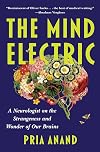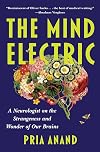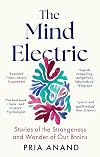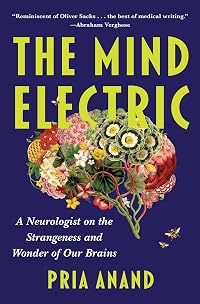
The Mind Electric: A Neurologist on the Strangeness and Wonder of Our Brains
by Pria Anand
On This Page
Description
A girl believes she has been struck blind for stealing a kiss. A mother watches helplessly as each of her children is replaced by a changeling. A woman is haunted each month by the same four chords of a single song. In neurology, illness is inextricably linked with narrative, the clues to unraveling these mysteries hidden in both the details of a patient's story and the tells of their body. Stories are etched into the very structure of our brains, coded so deeply that the impulse for show more storytelling survives and even surges after the most devastating injuries. But our brains are also porous -- the stories they concoct shaped by cultural narratives about bodies and illness that permeate the minds of doctors and patients alike. In the history of medicine, some stories are heard, while others -- the narratives of women, of Black and brown people, of displaced people, of disempowered people -- are too often dismissed. In The Mind Electric, neurologist Pria Anand reveals -- through case study, history, fable, and memoir -- all that the medical establishment has overlooked: the complexity and wonder of brains in health and in extremis, and the vast gray area between sanity and insanity, doctor and patient, and illness and wellness, each separated from the next by the thin veneer of a different story. Moving from the Boston hospital where she treats her patients, to her childhood years in India, to Isla Providencia in the Caribbean and to the Republic of Guinea in West Africa, she demonstrates again and again the compelling paradox at the heart of neurology: that even the most peculiar symptoms can show us something universal about ourselves as humans. show lessTags
Recommendations




















Member Reviews
Anand's The Mind Electric is a fascinating dive into neurology, filled with anecdotes dealing with how various diseases of the mind have been tracked and discovered, the ways our minds work, and cases she's come across as a neurologist. The book as a whole blends medical history, scientific understanding, memoir, and case studies to offer a nonfiction work that transcends any one area of nonfiction and makes for a compelling read offered with respect, humor, gorgeous prose.
This is one of those rare nonfiction works which I think anyone could benefit from reading, and I'm thrilled to have stumbled upon it. I can only hope she writes more works delving into her field and her cases.
Absolutely recommended for anyone remotely interested.
This is one of those rare nonfiction works which I think anyone could benefit from reading, and I'm thrilled to have stumbled upon it. I can only hope she writes more works delving into her field and her cases.
Absolutely recommended for anyone remotely interested.
Rating: a solid 3.5
This is an accomplished, capably written hybrid work of nonfiction by a young practising neurologist. As one might expect given the title and subtitle, the book is focused around case studies of patients with a variety of neurological diseases and the historical understanding of the conditions, sometimes going back as far as antiquity. In addition to patient profiles, the author weaves in personal memoir (of her South Asian heritage, medical residency, and two fairly recent pregnancies) as well as literary elements. There is quite a bit more material about the doctor herself, especially her pregnancies, than I bargained for. (One could argue that the book is often about experiences that shaped her as a neurologist, show more and her pregnancy appears to have been one of the biggies. It made her understand pain on a personal level. Never a bad thing for a physician!) These autobiographical sections didn’t have much to do with “the strangeness and wonder of our brains” (as advertised) and I would have preferred their being excluded. The references to literature likewise seemed to add little. Apart from the discussion of Dostoevsky, who suffered from and referred to temporal lobe epilepsy in his novels, the allusions to literature, myths, and stories seemed tangential and sometimes distracting.
Pria Anand is presently a hospital neurologist, specializing in diseases involving both the nervous and immune systems. She works in what she describes as a “safety-net” medical facility that takes in patients who lack health insurance, citizenship status, and financial means and who wouldn’t be accepted elsewhere. Anand is often called in by other medical professionals for consults on their patients. A few of the cases she presents in the book, however, seem to have been from the time of her training. Although she claims early on that her book will highlight those who have been marginalized by medical culture—women, minorities, the displaced and disempowered—this doesn’t actually play out as much as I expected.
Given her institutional role, it appears that the author doesn’t have warm, longer-term personal relationships with the patients she tends to. Some are in pretty dire straits by the time she is on the scene. For example, the doctor is summoned to assess a pregnant woman with full-blown eclampsia (high blood pressure and convulsions). Emerging from unconsciousness after two days, the patient evidently cannot see, but she doesn’t know it. She has “cortical blindness”: her visual cortex, where vision reaches consciousness, has been badly damaged; the neurons that allow interpretation of what is perceived are now nonfunctional. Cortical blindness is not only marked by the inability to see but also by anosognosia—the total lack of awareness of a neurological deficit. We’re not talking about the garden variety psychological defence mechanism of denial here, but a condition fully grounded in damage to the brain.
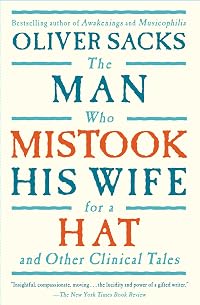
In the blurb for this book, Dr. Anand is (seemingly reflexively) likened to Oliver Sacks. I don’t find the comparison apt. Anand provides interesting and accessible accounts of a range of neurological conditions—their presentation, the anatomy and physiology involved, their cause (if known) and some historical context—but, unlike Sacks, she’s unable to make her patients come alive on the page. The stories seem . . . well . . . rather impersonal. I had little to no sense of who these people actually were, beyond their being “interesting cases”. Furthermore, Anand seldom elaborates on her own reactions to those she cares for. Unlike Sacks, she doesn’t write about her mental and emotional processes as she’s trying to figure out what’s going on with them. She mentions her lack of curiosity as a sleep-deprived, thoroughly exhausted resident and also writes that as a medical student, she’d already absorbed a certain cynicism from physicians she’d trained with. For example, when confronted with an Ethiopian student, the member of a rigid Orthodox Christian order, who suddenly and painfully become blind and believed she was being punished by God for kissing a boy, Anand acknowledges responding to the girl’s tearfulness and emotionality with a sort of stony skepticism. In fact, the patient’s condition was due to neuromyelitis optica, a rare autoimmune disease related to MS which attacks and inflames the fatty myelin sheath covering the optic nerves as well as the spinal cord.
Dr. Anand is very good at explaining what is known (and what is not) about the conditions she highlights. The young Ethiopian student’s medical problem and subsequent treatment are very well described, for example. And this is true for the other pathologies Anand covers in her book as well—among them: fatal familial insomnia (in which a genetic mutation causing the misfolding of a protein brings tormented sleeplessness and death to its victims); temporal lobe epileptic attacks (which, in one case, were presaged by a patient’s hearing four musical chords of a Van Halen song); pain perception (Anand considers the extent to which physician attitudes towards patients in pain are racially biased); Capgras Syndrome (in which sufferers believe family members have been replaced by doubles); autoimmune encephalitis (inflammation that occurs when the body attacks certain protein receptors—NMDA—on the cell membranes of neurons in the brain); and movement disorders (restless legs syndrome and Huntington’s Chorea, which manifests as spasmodic involuntary contractions of the muscles that send the patient into a bizarre, fidgety “dance”).
One of the most compelling and terribly sad sections in Anand’s book concerns the case of a teacher who presented to the neurology clinic with a months-long sensation of the world spinning around her. I’m unfortunately personally acquainted with vestibular neuritis, an inflammation of the nerve associated with balance, and I well recall the weeks’ long torture of vertigo and accompanying nausea, but my experience was nothing compared to this poor patient’s. Anand notes that the woman’s condition was far “too wide-ranging to be blamed on a single nerve.” She was wildly uncoordinated and consequently had great difficulty doing everything, including eating; her torso swayed as she sat; and her voice was strange, uneven, and lacking the rhythm and tones of normal speech. An MRI revealed that the patient’s cerebellum, the “little brain” (Latin) at the back of the big one—the structure that coordinates movement and balance—had atrophied. This can occur with a genetic condition called Machado-Joseph Disease, but that was not at play here.In fact, a paraneoplastic syndrome—which causes strange, varied symptoms far from the site of a cancerous tumour—was responsible. The patient had an ovarian mass, and the antibodies produced by the immune system to target the mutant tumour cells also went for a protein made in the cerebellum. That structure’s Purkinje cells, large branching neurons, were seriously damaged. The patient was unable to walk, eat, and speak with any degree of normalcy. By the time her cancer was found, it was everywhere: in the membranes that cover the abdominal organs, in the abdominal fluid, and in her lymph nodes. The poor woman wondered what might have happened if the first neurologist (Dr. Anand was the second) who’d seen her had actually assessed her gait instead of sending her off with benzodiazepines for anxiety.
The author makes excellent points about the language doctors use: the patient “complains of”, “claims”, and “denies” certain things, as though he (but more often she) is an unreliable witness to what’s going on in the body. Anand writes about a movement dedicated to putting an end to this negatively connoted medical speak, which might influence a patient not to bring up important symptoms for fear of being labelled. She also stresses that in medicine, the body tells a story that isn’t always carefully read by rushed, impatient, fatigued and incurious physicians. That is a wonderful thing to see articulated.
There is a great deal to admire in Anand’s book, and I’d certainly read her again. I am left grateful for a still well-functioning nervous system. I do think the doctor was a bit too ambitious here, however, and as I mentioned earlier I could have done without a lot of the autobiographical details. The lyrical prose also got to me at times. When we’re talking about the body, I prefer that the correct terms are used. Why not call a neuron’s cell membrane by its actual name—a cell membrane— rather than repeatedly refer to it as the neuron’s skin? It isn’t skin.
Thank you to Net Galley and the publisher for providing me with an advance reader copy of a mostly rewarding book. show less
This is an accomplished, capably written hybrid work of nonfiction by a young practising neurologist. As one might expect given the title and subtitle, the book is focused around case studies of patients with a variety of neurological diseases and the historical understanding of the conditions, sometimes going back as far as antiquity. In addition to patient profiles, the author weaves in personal memoir (of her South Asian heritage, medical residency, and two fairly recent pregnancies) as well as literary elements. There is quite a bit more material about the doctor herself, especially her pregnancies, than I bargained for. (One could argue that the book is often about experiences that shaped her as a neurologist, show more and her pregnancy appears to have been one of the biggies. It made her understand pain on a personal level. Never a bad thing for a physician!) These autobiographical sections didn’t have much to do with “the strangeness and wonder of our brains” (as advertised) and I would have preferred their being excluded. The references to literature likewise seemed to add little. Apart from the discussion of Dostoevsky, who suffered from and referred to temporal lobe epilepsy in his novels, the allusions to literature, myths, and stories seemed tangential and sometimes distracting.
Pria Anand is presently a hospital neurologist, specializing in diseases involving both the nervous and immune systems. She works in what she describes as a “safety-net” medical facility that takes in patients who lack health insurance, citizenship status, and financial means and who wouldn’t be accepted elsewhere. Anand is often called in by other medical professionals for consults on their patients. A few of the cases she presents in the book, however, seem to have been from the time of her training. Although she claims early on that her book will highlight those who have been marginalized by medical culture—women, minorities, the displaced and disempowered—this doesn’t actually play out as much as I expected.
Given her institutional role, it appears that the author doesn’t have warm, longer-term personal relationships with the patients she tends to. Some are in pretty dire straits by the time she is on the scene. For example, the doctor is summoned to assess a pregnant woman with full-blown eclampsia (high blood pressure and convulsions). Emerging from unconsciousness after two days, the patient evidently cannot see, but she doesn’t know it. She has “cortical blindness”: her visual cortex, where vision reaches consciousness, has been badly damaged; the neurons that allow interpretation of what is perceived are now nonfunctional. Cortical blindness is not only marked by the inability to see but also by anosognosia—the total lack of awareness of a neurological deficit. We’re not talking about the garden variety psychological defence mechanism of denial here, but a condition fully grounded in damage to the brain.
In the blurb for this book, Dr. Anand is (seemingly reflexively) likened to Oliver Sacks. I don’t find the comparison apt. Anand provides interesting and accessible accounts of a range of neurological conditions—their presentation, the anatomy and physiology involved, their cause (if known) and some historical context—but, unlike Sacks, she’s unable to make her patients come alive on the page. The stories seem . . . well . . . rather impersonal. I had little to no sense of who these people actually were, beyond their being “interesting cases”. Furthermore, Anand seldom elaborates on her own reactions to those she cares for. Unlike Sacks, she doesn’t write about her mental and emotional processes as she’s trying to figure out what’s going on with them. She mentions her lack of curiosity as a sleep-deprived, thoroughly exhausted resident and also writes that as a medical student, she’d already absorbed a certain cynicism from physicians she’d trained with. For example, when confronted with an Ethiopian student, the member of a rigid Orthodox Christian order, who suddenly and painfully become blind and believed she was being punished by God for kissing a boy, Anand acknowledges responding to the girl’s tearfulness and emotionality with a sort of stony skepticism. In fact, the patient’s condition was due to neuromyelitis optica, a rare autoimmune disease related to MS which attacks and inflames the fatty myelin sheath covering the optic nerves as well as the spinal cord.
Dr. Anand is very good at explaining what is known (and what is not) about the conditions she highlights. The young Ethiopian student’s medical problem and subsequent treatment are very well described, for example. And this is true for the other pathologies Anand covers in her book as well—among them: fatal familial insomnia (in which a genetic mutation causing the misfolding of a protein brings tormented sleeplessness and death to its victims); temporal lobe epileptic attacks (which, in one case, were presaged by a patient’s hearing four musical chords of a Van Halen song); pain perception (Anand considers the extent to which physician attitudes towards patients in pain are racially biased); Capgras Syndrome (in which sufferers believe family members have been replaced by doubles); autoimmune encephalitis (inflammation that occurs when the body attacks certain protein receptors—NMDA—on the cell membranes of neurons in the brain); and movement disorders (restless legs syndrome and Huntington’s Chorea, which manifests as spasmodic involuntary contractions of the muscles that send the patient into a bizarre, fidgety “dance”).
One of the most compelling and terribly sad sections in Anand’s book concerns the case of a teacher who presented to the neurology clinic with a months-long sensation of the world spinning around her. I’m unfortunately personally acquainted with vestibular neuritis, an inflammation of the nerve associated with balance, and I well recall the weeks’ long torture of vertigo and accompanying nausea, but my experience was nothing compared to this poor patient’s. Anand notes that the woman’s condition was far “too wide-ranging to be blamed on a single nerve.” She was wildly uncoordinated and consequently had great difficulty doing everything, including eating; her torso swayed as she sat; and her voice was strange, uneven, and lacking the rhythm and tones of normal speech. An MRI revealed that the patient’s cerebellum, the “little brain” (Latin) at the back of the big one—the structure that coordinates movement and balance—had atrophied. This can occur with a genetic condition called Machado-Joseph Disease, but that was not at play here.
The author makes excellent points about the language doctors use: the patient “complains of”, “claims”, and “denies” certain things, as though he (but more often she) is an unreliable witness to what’s going on in the body. Anand writes about a movement dedicated to putting an end to this negatively connoted medical speak, which might influence a patient not to bring up important symptoms for fear of being labelled. She also stresses that in medicine, the body tells a story that isn’t always carefully read by rushed, impatient, fatigued and incurious physicians. That is a wonderful thing to see articulated.
There is a great deal to admire in Anand’s book, and I’d certainly read her again. I am left grateful for a still well-functioning nervous system. I do think the doctor was a bit too ambitious here, however, and as I mentioned earlier I could have done without a lot of the autobiographical details. The lyrical prose also got to me at times. When we’re talking about the body, I prefer that the correct terms are used. Why not call a neuron’s cell membrane by its actual name—a cell membrane— rather than repeatedly refer to it as the neuron’s skin? It isn’t skin.
Thank you to Net Galley and the publisher for providing me with an advance reader copy of a mostly rewarding book. show less
There were some interesting things about brain as an organ in this book that I found intriguing - how Dolphins have half of the brain always active, how brain is an organ of twins, etc. It's an easy read and the author keeps the flow going.
I kind of went back and forth on this one. I was not going to continue after a couple of chapters because I thought it wasn't going anywhere interesting. But then a few things caught my interest and I finished out feeling about the same at the end.
Neurology and the mind a very interesting and weird topic when it comes down to it. I call neurology, voodoo medicine. Dr. Anand takes us through a myriad of topics relating to this and integrates it with her medical training period as well as her family roots in India. She practices here in the US but takes us back and forth to contrast with the life that was her family in India, especially her relatives.
Some of the cases she relates are fascinating, other not so much. She tends to wander show more from theme to theme with not a clear motive or path but still there is much to learn here about our very complex and strange bodies. Her medical training is impeccable with two of the elite schools in her resume so this woman clearly surpasses in intelligence. Her writing may need a bit more work but she will get there. show less
Neurology and the mind a very interesting and weird topic when it comes down to it. I call neurology, voodoo medicine. Dr. Anand takes us through a myriad of topics relating to this and integrates it with her medical training period as well as her family roots in India. She practices here in the US but takes us back and forth to contrast with the life that was her family in India, especially her relatives.
Some of the cases she relates are fascinating, other not so much. She tends to wander show more from theme to theme with not a clear motive or path but still there is much to learn here about our very complex and strange bodies. Her medical training is impeccable with two of the elite schools in her resume so this woman clearly surpasses in intelligence. Her writing may need a bit more work but she will get there. show less
This is a super interesting read for anybody who is interested in the history and current understanding of mental health issues from a practicing neurologist.
Easy to understand and an engaging read to anybody who enjoys this genre. Would highly recommend.
Easy to understand and an engaging read to anybody who enjoys this genre. Would highly recommend.
Ratings
Members
- Recently Added By
Author Information
2+ Works 64 Members
Awards and Honors
Classifications
- Genres
- Nonfiction, Biography & Memoir, Science & Nature, Health & Wellness, General Nonfiction, Business, Sexuality and Gender Studies
- DDC/MDS
- 616.8 — Applied science & technology Medicine & health Diseases, Allergies, Skin Conditions Nervous Disorders: Autism, Anorexia, OCD
- LCC
- QP361 — Science Physiology Physiology Neurophysiology and neuropsychology
- BISAC
Statistics
- Members
- 61
- Popularity
- 508,976
- Reviews
- 5
- Rating
- (3.50)
- Languages
- English
- Media
- Paper, Ebook
- ISBNs
- 8
- ASINs
- 1