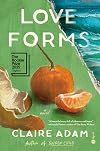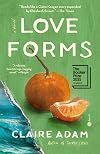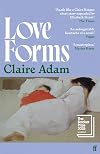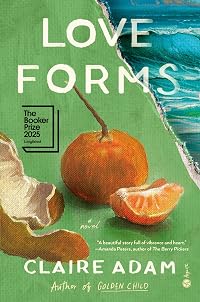
Love Forms
by Claire Adam
On This Page
Description
"For much of her life, Dawn has felt as if something had been missing. Now, at the age of fifty-eight, with a divorce behind her and her two grown-up sons busy with their own lives, she should be trying to settle into a new future for herself. But she keeps returning to the past and to the secret she's kept all these years. At just sixteen, Dawn found herself pregnant, and-as was common in Trinidad back then-her parents sent her away to have the baby and give her up for adoption. More than show more forty years later, Dawn yearns to reconnect with her lost daughter. But tracking down her child is not as easy as she had thought. It's an emotional journey that leads Dawn to retrace her steps back home and to question not only that fateful decision she'd made as a teenager but every turn in the road of her life since. Love Forms is a powerfully moving story of a woman in search of herself-a novel that rings with heartfelt empathy through the passages of a mother's life, depicting the enduring bonds of love, family, and home"-- show lessTags
Recommendations








Member Reviews
A few minor spoilers ahead:
“Maybe my story wasn’t: Dawn, who made a mistake and brought shame to her family. Maybe it’s: Dawn, mortal woman, who took a wrong turn in life and got lost.”
I’ll grant that Love Forms is an undemanding, accessible work of fiction that conveys some interesting information about the culture, politics, and geography of Trinidad (and, to a lesser extent, Venezuela to which it was economically tied). . . Beyond that. . . Hmm. . . I dunno. That it should’ve been considered worthy of a Booker nomination actually stuns me. What were the judges thinking?
Dawn Bishop is the novel’s first-person narrator. She’s a 58-year-old recently divorced white woman, who has lived in England since her late teens. show more Briefly (and unbelievably!) a physician, she gave up medicine when her sons were born and found it too difficult to manage both motherhood and a demanding profession. Born into a wealthy Trinidadian family, Dawn reflects on her life from age sixteen when she became pregnant, the result of a sexual encounter that she initiated with a stranger in his twenties during the annual Carnival festivities on the island. She wanted to be like her friends and have sex.
Given a choice as to how to deal with the shameful pregnancy, she made it clear to her parents that she did not want the child and wished to continue with her studies. Her father subsequently whisked her off to Venezuela under cover of night, where she stayed for several months in a secluded house for girls like herself. Situated in the forest, the place was run by nuns who delivered the illegitimate babies of their teenaged charges and arranged for the infants’ adoptions.
Now in late middle age, Dawn—a member of numerous internet forums geared at reunions between birth mothers and adoptees—is making an effort to track down the daughter she gave up. This is difficult to do, as she has no knowledge of where in Venezuela she was taken or which order of nuns cared for her. Her traditional Trinidadian family’s opposition to her search is yet another major impediment. We learn quite early in the novel that a 42-year-old woman adopted in Caracas and now living in Europe has contacted Dawn. Unfortunately, we must endure pages of tedium to discover if the woman, Monica Sartori, is in fact the long-lost daughter.
Adam’s novel reads like a memoir—and a meandering, repetitive, and less-than-compelling one at that. The prose is plain, even insipid at times, and the book is filled with many dull details of Dawn’s daily life. Adam has created a protagonist who seems inordinately preoccupied with the inconsequential. It is the reader’s unfortunate task to have to labour through seemingly endless descriptions of people’s clothing, the layout of rooms, and details about furnishings—the sofas in her parents’ and her friend Niall’s living rooms, for example. Explanations are gratuitously provided for things that require no explanation. For instance, we’re told airmail paper is thin and the internet allows us to find once inaccessible information. (Did Adam believe she was writing for an audience without any notion of the pre-digital age? It seems so.) Not surprisingly perhaps, the reader is also subjected to Dawn’s ongoing speculations about her daughter’s present appearance, character, profession, economic status, family life, and current place of residence. A novella or a short story may have been a more suitable vehicle for such a thin plot, but I’m doubtful the author would’ve had the chops to appropriately pare down her material.
The novel marginally picks up pace about halfway through—when the main character is recalling the early days of her marriage to a fellow physician and the stress of mothering her first son in a tiny drafty attic flat. Then, in the final few chapters, the pace furiously intensifies, only to come to a sudden dud of a conclusion.
Yes, I completed this novel, but I did not enjoy it. To be clear: this is not a work of literary merit. Poor pacing, poor prose, and a protagonist in whom I found it hard to summon up any interest. Had this not been a nominee for a prestigious prize, I know I would’ve abandoned it. I am somewhat surprised it even saw publication. If you, like me, are wary of novels described as “heartfelt”, you may want to reconsider taking this one on. It would’ve taken very capable hands to write a good novel on this subject. Adam does not have those hands. show less
“Maybe my story wasn’t: Dawn, who made a mistake and brought shame to her family. Maybe it’s: Dawn, mortal woman, who took a wrong turn in life and got lost.”
I’ll grant that Love Forms is an undemanding, accessible work of fiction that conveys some interesting information about the culture, politics, and geography of Trinidad (and, to a lesser extent, Venezuela to which it was economically tied). . . Beyond that. . . Hmm. . . I dunno. That it should’ve been considered worthy of a Booker nomination actually stuns me. What were the judges thinking?
Dawn Bishop is the novel’s first-person narrator. She’s a 58-year-old recently divorced white woman, who has lived in England since her late teens. show more Briefly (and unbelievably!) a physician, she gave up medicine when her sons were born and found it too difficult to manage both motherhood and a demanding profession. Born into a wealthy Trinidadian family, Dawn reflects on her life from age sixteen when she became pregnant, the result of a sexual encounter that she initiated with a stranger in his twenties during the annual Carnival festivities on the island. She wanted to be like her friends and have sex.
Given a choice as to how to deal with the shameful pregnancy, she made it clear to her parents that she did not want the child and wished to continue with her studies. Her father subsequently whisked her off to Venezuela under cover of night, where she stayed for several months in a secluded house for girls like herself. Situated in the forest, the place was run by nuns who delivered the illegitimate babies of their teenaged charges and arranged for the infants’ adoptions.
Now in late middle age, Dawn—a member of numerous internet forums geared at reunions between birth mothers and adoptees—is making an effort to track down the daughter she gave up. This is difficult to do, as she has no knowledge of where in Venezuela she was taken or which order of nuns cared for her. Her traditional Trinidadian family’s opposition to her search is yet another major impediment. We learn quite early in the novel that a 42-year-old woman adopted in Caracas and now living in Europe has contacted Dawn. Unfortunately, we must endure pages of tedium to discover if the woman, Monica Sartori, is in fact the long-lost daughter.
Adam’s novel reads like a memoir—and a meandering, repetitive, and less-than-compelling one at that. The prose is plain, even insipid at times, and the book is filled with many dull details of Dawn’s daily life. Adam has created a protagonist who seems inordinately preoccupied with the inconsequential. It is the reader’s unfortunate task to have to labour through seemingly endless descriptions of people’s clothing, the layout of rooms, and details about furnishings—the sofas in her parents’ and her friend Niall’s living rooms, for example. Explanations are gratuitously provided for things that require no explanation. For instance, we’re told airmail paper is thin and the internet allows us to find once inaccessible information. (Did Adam believe she was writing for an audience without any notion of the pre-digital age? It seems so.) Not surprisingly perhaps, the reader is also subjected to Dawn’s ongoing speculations about her daughter’s present appearance, character, profession, economic status, family life, and current place of residence. A novella or a short story may have been a more suitable vehicle for such a thin plot, but I’m doubtful the author would’ve had the chops to appropriately pare down her material.
The novel marginally picks up pace about halfway through—when the main character is recalling the early days of her marriage to a fellow physician and the stress of mothering her first son in a tiny drafty attic flat. Then, in the final few chapters, the pace furiously intensifies, only to come to a sudden dud of a conclusion.
Yes, I completed this novel, but I did not enjoy it. To be clear: this is not a work of literary merit. Poor pacing, poor prose, and a protagonist in whom I found it hard to summon up any interest. Had this not been a nominee for a prestigious prize, I know I would’ve abandoned it. I am somewhat surprised it even saw publication. If you, like me, are wary of novels described as “heartfelt”, you may want to reconsider taking this one on. It would’ve taken very capable hands to write a good novel on this subject. Adam does not have those hands. show less
My 5th from the Booker Prize longlist required some adjustment after Audition.
Opening line: "It was my father who made the arrangements. My uncle helped, since he lived down south..."
No gimmicks here, or line-by-line tension. "It was.." and she means It was. Cards on the table. direct. This is a slower paced book. It's honest, sincere, by tone. And designed to build up some narrative tension - which it does. It took me a little time to adapt to such a different mindset. I both admired the honesty and worried about it. But I really came to embrace it. I think about this book and this narrator, Dawn of two last names, who gave her baby up for adoption in a foreign country when she was only sixteen.
This is the story of Trinidad and show more Tobago over the last 50 years through our narrator who, at age 16, was sent by her parents to a nun-run institute in Venezuela to give birth and immediately give her daughter up for adoption. Her family is well off. She returns home, everything is hush-hush, and she lives her life, becoming a doctor in England, a mother of two boys and now an empty-nest divorcee.
The novel is a lonely look back. She tells us her story very straight. The first sentence of each section is libel to have a time, a place and a clear setup. It's an honest tone I liked, and, slowly, I got attached. And I loved learning of the little and bigger dramas that are little English-speaking Trinidad, next to the monster Venezuela and its epic financial collapses in 1985 and again in the aughts. I loved the Trinidadian English in the spoken voices. And the bond she felt to her Trinidad home and family even when firmly settled in England. The family ties and dramas and quirks and problems.
A lovely novel. If the above appeals, it's recommended.
2025
https://www.librarything.com/topic/372264#8937095 show less
Opening line: "It was my father who made the arrangements. My uncle helped, since he lived down south..."
No gimmicks here, or line-by-line tension. "It was.." and she means It was. Cards on the table. direct. This is a slower paced book. It's honest, sincere, by tone. And designed to build up some narrative tension - which it does. It took me a little time to adapt to such a different mindset. I both admired the honesty and worried about it. But I really came to embrace it. I think about this book and this narrator, Dawn of two last names, who gave her baby up for adoption in a foreign country when she was only sixteen.
This is the story of Trinidad and show more Tobago over the last 50 years through our narrator who, at age 16, was sent by her parents to a nun-run institute in Venezuela to give birth and immediately give her daughter up for adoption. Her family is well off. She returns home, everything is hush-hush, and she lives her life, becoming a doctor in England, a mother of two boys and now an empty-nest divorcee.
The novel is a lonely look back. She tells us her story very straight. The first sentence of each section is libel to have a time, a place and a clear setup. It's an honest tone I liked, and, slowly, I got attached. And I loved learning of the little and bigger dramas that are little English-speaking Trinidad, next to the monster Venezuela and its epic financial collapses in 1985 and again in the aughts. I loved the Trinidadian English in the spoken voices. And the bond she felt to her Trinidad home and family even when firmly settled in England. The family ties and dramas and quirks and problems.
A lovely novel. If the above appeals, it's recommended.
2025
https://www.librarything.com/topic/372264#8937095 show less
This is a gentle look at the early trauma of a white Trinidadian sixteen year old girl who becomes pregnant and is brought to Venezuela to have and surrender her baby for adoption. Dawn creates a new life and family for herself in London, with a congenial family of a husband and two sons, but as her regret for the actions of her childhood, managed by her parents, surfaces, she divorces and searches for the girl she gave away. Knowing that you made the right difficult decision at the time does not mean you can refuse to admit when you've made a mistake. The best parts of the novel are the descriptions of the commanding physical beauty of Trinidad and Tobago, as experienced by an upper middle class family. The resolution is not show more surprising, but sometimes real life and fiction cannot tie up in a neat bow. show less
Longlisted for the Booker Prize 2025
My second book from this year's list is an enjoyable read, telling the story of a white Trinidadian woman who gave up a baby for adoption in a Venezuelan convent at 16, and her later attempts to find the child and the impact on her marriage, children and life in London. I'd be a little surprised if this makes the shortlist, as its virtues are quiet ones.
My second book from this year's list is an enjoyable read, telling the story of a white Trinidadian woman who gave up a baby for adoption in a Venezuelan convent at 16, and her later attempts to find the child and the impact on her marriage, children and life in London. I'd be a little surprised if this makes the shortlist, as its virtues are quiet ones.
3.5
Longlisted for the 2025 Booker Award.
Sixteen-year-old Dawn Simpson made a mistake that altered her life. She had a one-night stand with a man she met at the Trinidadian carnival and became pregnant. In upper-class Trinidadian society, pregnancy out of wedlock was considered a disgrace that brought shame not only on Dawn but also on her entire family. As a consequence, under the cover of darkness, Dawn's parents shipped her to a Catholic convent in Venezuela. There she gave birth to her daughter, who the nuns put up for adoption.
The family vowed never to speak of the " incident" again.
In Love Forms, Claire Adam explores the lifelong sense of loss, grief, guilt, and shame Dawn experiences as a consequence of giving up her daughter. The show more novel, written from Dawn's point of view at age 58, shifts back and forth in time. It chronicles her move to England, marriage, the birth and rearing of two sons, a faltering medical career, and divorce. Interwoven throughout the tale is her longing, regret, and attempts to find her daughter. This search is also an attempt to come to terms with herself and her life.
As an exploration of the trauma of giving up a baby for adoption, the novel is highly successful. However, the story begins to drag midway through. Dawn is the only fully developed character, and the depiction of her marriage lags due to insufficient development in the characters of her husband and sons.
Overall, I liked the book and found the ending moving. I recommend it, although I'm not sure if it is one of the 13 best books of the year written in English. show less
Longlisted for the 2025 Booker Award.
Sixteen-year-old Dawn Simpson made a mistake that altered her life. She had a one-night stand with a man she met at the Trinidadian carnival and became pregnant. In upper-class Trinidadian society, pregnancy out of wedlock was considered a disgrace that brought shame not only on Dawn but also on her entire family. As a consequence, under the cover of darkness, Dawn's parents shipped her to a Catholic convent in Venezuela. There she gave birth to her daughter, who the nuns put up for adoption.
The family vowed never to speak of the " incident" again.
In Love Forms, Claire Adam explores the lifelong sense of loss, grief, guilt, and shame Dawn experiences as a consequence of giving up her daughter. The show more novel, written from Dawn's point of view at age 58, shifts back and forth in time. It chronicles her move to England, marriage, the birth and rearing of two sons, a faltering medical career, and divorce. Interwoven throughout the tale is her longing, regret, and attempts to find her daughter. This search is also an attempt to come to terms with herself and her life.
As an exploration of the trauma of giving up a baby for adoption, the novel is highly successful. However, the story begins to drag midway through. Dawn is the only fully developed character, and the depiction of her marriage lags due to insufficient development in the characters of her husband and sons.
Overall, I liked the book and found the ending moving. I recommend it, although I'm not sure if it is one of the 13 best books of the year written in English. show less
Travelling between England, Trinidad and Venezuela, this book is a map to help a woman find part of herself.
It is a very easy read (but not necessarily an exciting one) in which the different dimensions of living in Trinidad were explored. Adam's is pretty good at writing compelling characters and painting a sense of place. It offered a view into a middle-aged woman's anxieties as she reflects on decisions made by her (and for her) and trying to come to peace with these things.
Love, family, identity, trauma...it's all here.
It is a very easy read (but not necessarily an exciting one) in which the different dimensions of living in Trinidad were explored. Adam's is pretty good at writing compelling characters and painting a sense of place. It offered a view into a middle-aged woman's anxieties as she reflects on decisions made by her (and for her) and trying to come to peace with these things.
Love, family, identity, trauma...it's all here.
Slow paced and gentle, this book Booker prize nominee lays out the journey of Dawn Bishop, from her girlhood and her "mistake", through to her 58th year, returning home to Trinidad. She is a woman haunted by the loss of the child she had and gave up for adoption. Her search in adulthood for her lost daughter has varying effects on her life in London, with husband and sons, and her family home in Trinidad. Along the way, Adam gives glimpses into politics, customs, and the physical beauty of Trinidad.
I think I've been reading too many mysteries. I spent far too much time trying to figure out who Dawn's daughter was, thinking I had the solution.
I think I've been reading too many mysteries. I spent far too much time trying to figure out who Dawn's daughter was, thinking I had the solution.
Members
- Recently Added By
Lists

2025 Booker Prize Longlist
13 works; 6 members

Books Read in 2025
4,091 works; 97 members

WBS - Book Club
71 works; 1 member

The LonesomeReader Book Club
36 works; 1 member
Author Information

2 Works 494 Members
Awards and Honors
Awards
Distinctions
The Guardian Book of the Day (2025-06-12)
Common Knowledge
- Canonical title
- Love Forms
- Original publication date
- 2025
- People/Characters
- Dawn
- Important places
- Trinidad and Tobago
- Epigraph
- Love
forms in the human body.
—LOUISE GLÜCK, “The Fortress” - First words
- It was my father who made the arrangements.
- Blurbers
- Peters, Amanda; Wilkerson, Charmaine; Collins, Sara; Roffey, Monique; Kilroy, Claire; Gunesekera, Romesh (show all 8); Keys, Marian; Narain, Denise deCaires
Classifications
Statistics
- Members
- 110
- Popularity
- 295,468
- Reviews
- 10
- Rating
- (3.60)
- Languages
- English
- Media
- Paper, Audiobook, Ebook
- ISBNs
- 8
- ASINs
- 4