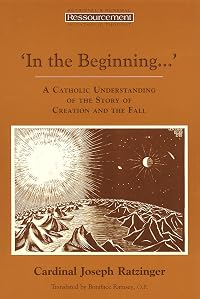
In the Beginning…': A Catholic Understanding of the Story of Creation and the Fall (Ressourcement: Retrieval and Renewal in Catholic Thought (RRRCT))
by Joseph Cardinal Ratzinger
On This Page
Description
In four superb homilies and a concluding essay, Joseph Ratzinger, now Pope Benedict XVI, provides a clear and inspiring exploration of the Genesis creation narratives. While the stories of the world's creation and the fall of humankind have often been subjected to reductionism of one sort or another, literalists treat the Bible as a science textbook whereas rationalists divorce God from creation, Ratzinger presents a rich, balanced Catholic understanding of these early biblical writings and show more attests to their enduring vitality. Beginning each homily with a text selected from the first three chapters of Genesis, Ratzinger discusses, in turn, God the creator, the meaning of the biblical creation accounts, the creation of human beings, and sin and salvation; in the appendix,he unpacks the beneficial consequences of faith in creation. Expertly translated from German, these reflections set out a reasonable and biblical approach to creation. 'In the B' also serves as an excellent homiletic resource for priests and pastors. show lessTags
Recommendations
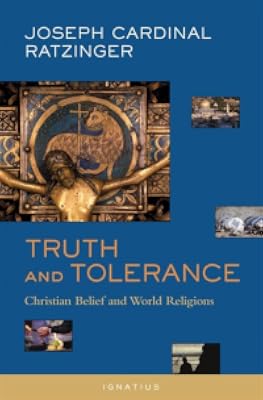
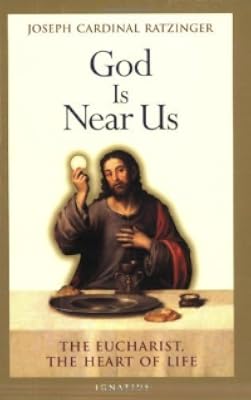

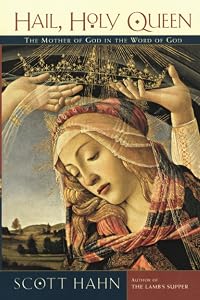

Member Reviews
This very short (100 pages, with rather large print) book is an explication of the Catholic doctrine of the creation, the Fall (of Adam and Eve), and the beginning of sin. I suppose one ought not to quibble with the Pope’s assertion that “This is Catholic doctrine.” On the other hand, I must say that the doctrine itself is highly quibble-able.
Benedict begins each of the first two chapters with extensive quotes from the creation account in the Book of Genesis. He seeks to refute the assertion that “the history of Christianity in the last four hundred years has been a constant rearguard action as the assertions of the faith and of theology have been dismantled piece by piece.” He argues that the Bible cannot be interpreted show more literally, but its essential meaning is simply that God is responsible for the existence of the universe.
Benedict sees the Bible as a unified whole that leads to an inevitable conclusion, the divinity of Christ. He asserts that “[f]or the Christian the Old Testament represents, in its totality, an advance toward Christ; only when it attains to him does its real meaning, which was gradually hinted at, become clear.” How the Pope arrives at this latter conclusion is a mystery to me—it must be just one of those (possibly infallible) assertions popes are wont to make. His argument, if it can be called that, is belied by the fact that the Bible consists of many books by many different authors writing separately. Moreover, it took several hundred years and several church councils to decide what books to include in the biblical canon.
This book contains some very odd stuff. For example, the author writes:
“…the biblical creation account is marked by numbers that reproduce not the mathematical structure of the universe but the inner design of its fabric, so to say, or rather the idea according to which it was constructed. There the numbers three, four, seven, and ten dominate. The words “God Said” appear ten times in the creation account. In this way the creation narrative anticipates the Ten Commandments. This makes us realize that these Ten Commandments are, as it were, an echo of the creation….”
This appears really weird in light of the fact that Catholics, Protestants, and Jews all number the Commandments differently—although they all come up with ten. Depending on how you group them, you can find as few as nine and as many as 13 commandments. I’d hate to think that mystical numerology was a basic tenet of faith.
The pope also picks an unnecessary fight with the theory of evolution. He is not willing to concede that current scientific thinking provides a sufficient explanation of the current state of the human genome. He says :
“…we must have the audacity to say that the great projects of the living creation are not the products of chance and error. Nor are they the products of a selective process to which divine predicates can be attributed in illogical, unscientific, and even mythic fashion. The great projects of the living creation point to a creating Reason and show us a creating Intelligence, and they do so more luminously and radiantly today than ever before.”
My apologies to Mr. Darwin, but the last pope appears to believe in Intelligent Design!
I haven’t read anything written by Francis, the present pope. But if this book is any indication of Benedict’s thought process, the Church almost surely is in more competent hands today than it was under Benedict.
(JAB) show less
Benedict begins each of the first two chapters with extensive quotes from the creation account in the Book of Genesis. He seeks to refute the assertion that “the history of Christianity in the last four hundred years has been a constant rearguard action as the assertions of the faith and of theology have been dismantled piece by piece.” He argues that the Bible cannot be interpreted show more literally, but its essential meaning is simply that God is responsible for the existence of the universe.
Benedict sees the Bible as a unified whole that leads to an inevitable conclusion, the divinity of Christ. He asserts that “[f]or the Christian the Old Testament represents, in its totality, an advance toward Christ; only when it attains to him does its real meaning, which was gradually hinted at, become clear.” How the Pope arrives at this latter conclusion is a mystery to me—it must be just one of those (possibly infallible) assertions popes are wont to make. His argument, if it can be called that, is belied by the fact that the Bible consists of many books by many different authors writing separately. Moreover, it took several hundred years and several church councils to decide what books to include in the biblical canon.
This book contains some very odd stuff. For example, the author writes:
“…the biblical creation account is marked by numbers that reproduce not the mathematical structure of the universe but the inner design of its fabric, so to say, or rather the idea according to which it was constructed. There the numbers three, four, seven, and ten dominate. The words “God Said” appear ten times in the creation account. In this way the creation narrative anticipates the Ten Commandments. This makes us realize that these Ten Commandments are, as it were, an echo of the creation….”
This appears really weird in light of the fact that Catholics, Protestants, and Jews all number the Commandments differently—although they all come up with ten. Depending on how you group them, you can find as few as nine and as many as 13 commandments. I’d hate to think that mystical numerology was a basic tenet of faith.
The pope also picks an unnecessary fight with the theory of evolution. He is not willing to concede that current scientific thinking provides a sufficient explanation of the current state of the human genome. He says :
“…we must have the audacity to say that the great projects of the living creation are not the products of chance and error. Nor are they the products of a selective process to which divine predicates can be attributed in illogical, unscientific, and even mythic fashion. The great projects of the living creation point to a creating Reason and show us a creating Intelligence, and they do so more luminously and radiantly today than ever before.”
My apologies to Mr. Darwin, but the last pope appears to believe in Intelligent Design!
I haven’t read anything written by Francis, the present pope. But if this book is any indication of Benedict’s thought process, the Church almost surely is in more competent hands today than it was under Benedict.
(JAB) show less
Excellent. Full of insight and great pastoral sensitivity in both the issues addressed and the manner of approach - 4 homilies and an appendix which is a little more technical. Whatever anyone thought of him as a Pope, Ratzinger is a theologian of ability.
I bought it for thought about science and Christian belief, and found it excellent and well worth reading.
Like so many writing in this area, he is sensitive to the insights gained from studying the creation accounts in the surrounding cultures. And he is aware of the pitfalls of simply explaining all of the Bible as symbol in the light of scientific discovery.
His understanding that the Bible has multiple creation accounts, tailored for the time of their composition and that the show more ultimate standard by which they (and all scripture) are to be understood is Jesus is well presented and explained. Jesus is the key - from Genesis to Wisdom we have not reached the end of the road until we get to him. Only Jesus do we find the "conclusive and normative scriptural creation account" (he quotes John 1). Not just Gen 1, but all of the Old Testament is to be read in this light. Science needs the reasonable faith in creation because its reasonableness "derives from God's Reason, and there is no other really convincing explanation".
But I gained much more from this short book. Two ideas as a sampler -
In the 4th homily he discusses original sin. As a Protestant, he really caught my attention when he wrote... "The account tells us that sin begets sin, and that therefore all the sins of history are interlinked. Theology refers to this state of affairs by the certainly misleading and imprecise term 'original sin'." His resolution is to see sin as inherently expressed in relationships (for "I alone am not myself, but only in and with you am I myself"). But this means that sin perpetuates cross-generationally as "each person is, from the very start, damaged in relationships and does not engage in them as he or she ought. Sin pursues the human being, and he or she capitulates to it."
In the Appendix, on Faith in Creation, he further pursues this relational idea first surveying the range of anti-creation understandings and then concluding that there are broadly two main views - a Gnostic repudiation of creation with accompanying rejection of inherent dependence, and Christianity, which accepts our dependence as creatures and is set free by love which essentially takes the form of saying "I want you to be". In doing this he asserts that God can only be redeemer because he is creator, and that we move to redemption from creation (having earlier cited 1 Cor 15:46 for this progression of experience and understanding). show less
I bought it for thought about science and Christian belief, and found it excellent and well worth reading.
Like so many writing in this area, he is sensitive to the insights gained from studying the creation accounts in the surrounding cultures. And he is aware of the pitfalls of simply explaining all of the Bible as symbol in the light of scientific discovery.
His understanding that the Bible has multiple creation accounts, tailored for the time of their composition and that the show more ultimate standard by which they (and all scripture) are to be understood is Jesus is well presented and explained. Jesus is the key - from Genesis to Wisdom we have not reached the end of the road until we get to him. Only Jesus do we find the "conclusive and normative scriptural creation account" (he quotes John 1). Not just Gen 1, but all of the Old Testament is to be read in this light. Science needs the reasonable faith in creation because its reasonableness "derives from God's Reason, and there is no other really convincing explanation".
But I gained much more from this short book. Two ideas as a sampler -
In the 4th homily he discusses original sin. As a Protestant, he really caught my attention when he wrote... "The account tells us that sin begets sin, and that therefore all the sins of history are interlinked. Theology refers to this state of affairs by the certainly misleading and imprecise term 'original sin'." His resolution is to see sin as inherently expressed in relationships (for "I alone am not myself, but only in and with you am I myself"). But this means that sin perpetuates cross-generationally as "each person is, from the very start, damaged in relationships and does not engage in them as he or she ought. Sin pursues the human being, and he or she capitulates to it."
In the Appendix, on Faith in Creation, he further pursues this relational idea first surveying the range of anti-creation understandings and then concluding that there are broadly two main views - a Gnostic repudiation of creation with accompanying rejection of inherent dependence, and Christianity, which accepts our dependence as creatures and is set free by love which essentially takes the form of saying "I want you to be". In doing this he asserts that God can only be redeemer because he is creator, and that we move to redemption from creation (having earlier cited 1 Cor 15:46 for this progression of experience and understanding). show less
A great series of homilies on the creation stories in Genesis. Short, to the point, and interesting, if a little non-specific.
From a series of homilies given by the future pope. Excellent clarification of the Church's teaching in light of modern science.
In one sense, the Holy Father's chapter on this subject to more to the point in the the Credo for Today
Copy 2 is located on shelf CATECHESIS (C1 Ben)
Ratings
Members
- Recently Added By
Author Information

1,027+ Works 34,583 Members
Joseph Ratzinger was born on April 16, 1927 in Marktl am Inn in the state of Bavaria, Germany. Ratzinger entered the minor seminary in Traunstein, in 1939 and in 1943 along with the rest of his seminary class he was drafted into the Flak [anti-aircraft corps]. In 1944 he was released from the Flak and returned home only to be drafted into labor show more detail under the infamous Austrian Legion. In the spring of 1945 Ratzinger deserted the army and headed home but when the Americans arrive at his village shortly thereafter, he was identified as a German soldier and incarcerated in a POW camp for a brief time. Following his release he re-entered the seminary. In 1951 Joseph was ordained into the priesthood and began lectures as a full professor of fundamental theology at the University of Bonn. From 1962-65 Ratzinger was present during all four sessions of the Second Vatican Council as a peritus, or chief theological advisor to Cardinal Joseph Frings of Cologne, Germany. . In 1977 Joseph Ratzinger was appointed Archbishop of Munich and Freising and on June 27 elevated to Cardinal of Munich by Pope Paul VI. In 1981 Ratzinger accepted Pope John Paul II's invitation to take over as Prefect for the Congregation for the Doctrine of the Faith and in 1986 he was appointed head of a 12-member commission responsible for drafting the Catechism of the Catholic Church. Cardinal Ratzinger was elected vice dean of the College of Cardinals in 1988. In 2002 Pope John Paul II, approved his election as dean of the College of Cardinals. On April 8, 2005, Cardinal Ratzinger presided over the funeral of Pope John Paul II. On April 19, 2005, Cardinal Ratzinger was elected Bishop of Rome on the fourth ballot of the conclave and took the name Benedict XVI. (Bowker Author Biography) show less
Some Editions
Series
Belongs to Publisher Series
Common Knowledge
- Canonical title*
- In principio Dio creo il cielo e la terra: riflessioni sulla creazione e il peccato
- Original title
- Im anfang schuf Gott
- Original publication date
- 1986 (Ger.) (Ger.)
- Quotations
- For this means that freedom and love are not ineffectual ideas but rather that they are sustaining forces of reality.
*Some information comes from Common Knowledge in other languages. Click "Edit" for more information.
Classifications
Statistics
- Members
- 668
- Popularity
- 43,203
- Reviews
- 7
- Rating
- (4.06)
- Languages
- English, German, Italian, Spanish
- Media
- Paper, Ebook
- ISBNs
- 13
- ASINs
- 4