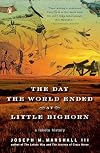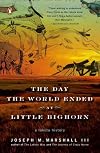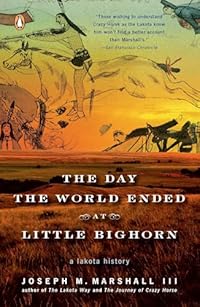
The Day the World Ended at Little Bighorn: A Lakota History
by Joseph M. Marshall, III
On This Page
Description
The Battle of the Little Bighorn in Montana in 1876 has become known as the quintessential clash of cultures between the Lakota Sioux and whites. The men who led the battle—Crazy Horse, Sitting Bull, and Colonel George A. Custer—have become the stuff of legends, ingrained in the lore of the American West.Here award-winning Lakota historian Joseph M. Marshall III reveals the nuanced complexities that led up to and followed the battle, offering a revisionist view of what really happened. show more Until now, this account has been available only within the Lakota oral tradition. Providing fresh insight into the significance of that bloody day, The Day the World Ended at Little Bighorn is required reading for anyone enthralled by the tale of the encounter that changed the scope of both America and the American landscape.
. show less
Tags
Recommendations
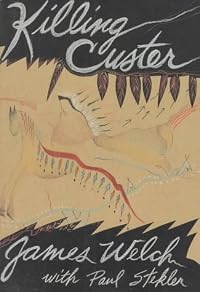
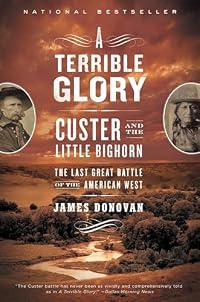
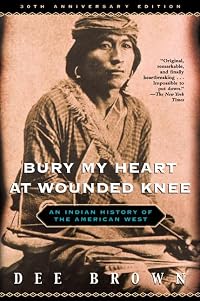
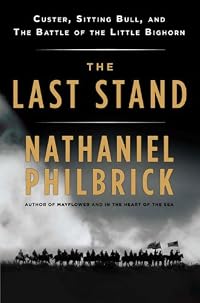



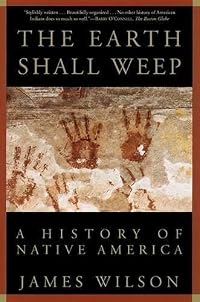
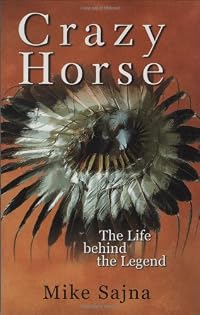
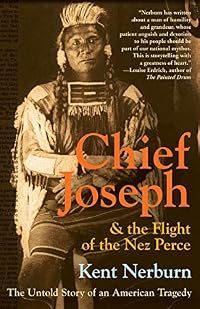
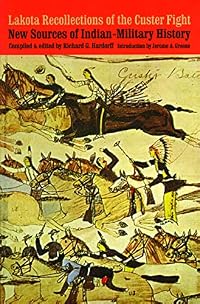








Member Recommendations
Member Reviews
This is a really fascinating book, using the Battle of Little Big Horn—or the Battle of the Greasy Grass, as it is known to the Lakota—as a lens through which to examine the history of the Lakota people in the nineteenth and twentieth centuries. Marshall is a Sicangu Lakota, and draws on the oral history of his people as his primary source. He doesn't write chronologically but thematically, using events immediately before, during, and after the battle as pivot points around which he can examine pre and post-reservation Lakota society. This does result in some narrative redundancy, but overall it's an interestingly elliptical approach, and I felt that I learned a lot despite the book's brevity.
The history of Native American tribes in their encounters with whites is overwhelmingly grim. Only when whites were present in inferior numbers was there anything like peaceful coexistence; the minute white populations increased, the Indians were constantly pressured to move out of traditional lands in order to accommodate white needs. Various tribes resisted, and there were “wars” between encroaching whites and Indians throughout much of the history of the US, “wars” that, during the 19th century, were mostly one-sided and that usually involved massacre of old men, women and children by US Army units; some of the most infamous of such massacres were led by General Harney against the Northern Cheyenne (1850) and Colonel Custer show more against the Sioux and other Plains Indians in the years following the US Civil War.
The Plains Indians resisted; their resistance culminated in the battle at the Little Big Horn River on June 25, 1876. In a move that was militarily stupid as well as genocidal in intent, Custer, leading not quite 700 soldiers of the 7th Cavalry, split his forces against a Sioux and Northern Cheyenne camp whose size he did not know with attacking forces that were worn out from a forced march the night before. Instead of meeting helpless noncombatants whose slaughter would be easy and considered sport by cavalrymen, the two companies under Major Reno, invading at the southern end, rode into a camp of 8,000 to 10,000 Sioux and Northern Cheyenne; they met immediate resistance in the form of Gall and warriors of the Hunkpapa Lakota Sioux. The invaders were routed with great loss of life. Meantime, Custer, at the head of 5 companies, had turned north and then west in order to attack from the east. They were spotted and surprised by some armed old men and boys, who halted the cavalry long enough--a few minutes--to allow other Sioux--notably Crazy Horse-- to enter the fight. The rest is history--Custer’s band were killed to the last man, while the remaining soldiers under Reno and Benteen survived on a hill. The next morning the Indians struck camp and moved off.
The facts of the battle are well known. Marshall, a Lakota Sioux, uses the battle to tell the history of the Sioux--their journey from more eastern lands, having been driven out by other tribes into the plains, their adaptation to the Plains, the acquiring of horses, first encounters with whites (French), the increasing contact with white settlers from the US, their resistance, and finally their subjugation and confinement to reservations. It is a tale that is also well-known: of US arrogance, "treaties" imposed from Washington and enforced by the US Army, lies, treachery, one-sided abrogation of these "treaties" by the US as gold was discovered in the Black Hills and settler demanded the good lands that were “going to waste” under the Sioux, and murder, of Crazy Horse and Sitting Bull, in order to remove annoying leaders. It is a story of the massacre of unarmed Indians at Wounded Knee, of Indian children being taken from their homes without their parents consent to be put into missionary schools and told that what they were was inferior. It is a story of continuing treachery on the part of the US government for over 100 years.
In reality, none of this is new information, but the way it is told is illuminating. Marshall tells the story much as a Lakota might tell a story, in the Lakota way. There is a certain amount of repetition, a certain amount of circling around and back to the beginning, a quiet recounting from the Lakota point of view of what their history has been like. it’s not shrill, it’s not really accusatory--it lets the story speak for itself.
And in the end, he offers a quiet assurance that the Lakota and their ways will survive.
Highly recommended. show less
The Plains Indians resisted; their resistance culminated in the battle at the Little Big Horn River on June 25, 1876. In a move that was militarily stupid as well as genocidal in intent, Custer, leading not quite 700 soldiers of the 7th Cavalry, split his forces against a Sioux and Northern Cheyenne camp whose size he did not know with attacking forces that were worn out from a forced march the night before. Instead of meeting helpless noncombatants whose slaughter would be easy and considered sport by cavalrymen, the two companies under Major Reno, invading at the southern end, rode into a camp of 8,000 to 10,000 Sioux and Northern Cheyenne; they met immediate resistance in the form of Gall and warriors of the Hunkpapa Lakota Sioux. The invaders were routed with great loss of life. Meantime, Custer, at the head of 5 companies, had turned north and then west in order to attack from the east. They were spotted and surprised by some armed old men and boys, who halted the cavalry long enough--a few minutes--to allow other Sioux--notably Crazy Horse-- to enter the fight. The rest is history--Custer’s band were killed to the last man, while the remaining soldiers under Reno and Benteen survived on a hill. The next morning the Indians struck camp and moved off.
The facts of the battle are well known. Marshall, a Lakota Sioux, uses the battle to tell the history of the Sioux--their journey from more eastern lands, having been driven out by other tribes into the plains, their adaptation to the Plains, the acquiring of horses, first encounters with whites (French), the increasing contact with white settlers from the US, their resistance, and finally their subjugation and confinement to reservations. It is a tale that is also well-known: of US arrogance, "treaties" imposed from Washington and enforced by the US Army, lies, treachery, one-sided abrogation of these "treaties" by the US as gold was discovered in the Black Hills and settler demanded the good lands that were “going to waste” under the Sioux, and murder, of Crazy Horse and Sitting Bull, in order to remove annoying leaders. It is a story of the massacre of unarmed Indians at Wounded Knee, of Indian children being taken from their homes without their parents consent to be put into missionary schools and told that what they were was inferior. It is a story of continuing treachery on the part of the US government for over 100 years.
In reality, none of this is new information, but the way it is told is illuminating. Marshall tells the story much as a Lakota might tell a story, in the Lakota way. There is a certain amount of repetition, a certain amount of circling around and back to the beginning, a quiet recounting from the Lakota point of view of what their history has been like. it’s not shrill, it’s not really accusatory--it lets the story speak for itself.
And in the end, he offers a quiet assurance that the Lakota and their ways will survive.
Highly recommended. show less
I bought this book on vacation in South Dakota and read it all through while I was there. We didn't ever visit the historic battle site like I thought that I would (I was not the planner of the itinerary,) but there was still something to reading this book while in (near) the landscape it was talking about.
This book sometimes felt more like a series of essays, as there were thoughts and stories repeated over in successive chapters, without necessarily feeling like it acknowledge that you'd read it before.
This is not just the story of the battle, but how it got to that point, and then the far-reaching consequences. A needed perspective, especially now in the time of NoDAPL and other modern activism. In fact, maybe the storytelling of show more this book was sometimes repetitive in view of the fact that history itself is repetitive and cyclical -- these same patterns happening over and over again. If we want to push on this cycle, bend it with a view to justice, it helps to have an understanding of the past. show less
This book sometimes felt more like a series of essays, as there were thoughts and stories repeated over in successive chapters, without necessarily feeling like it acknowledge that you'd read it before.
This is not just the story of the battle, but how it got to that point, and then the far-reaching consequences. A needed perspective, especially now in the time of NoDAPL and other modern activism. In fact, maybe the storytelling of show more this book was sometimes repetitive in view of the fact that history itself is repetitive and cyclical -- these same patterns happening over and over again. If we want to push on this cycle, bend it with a view to justice, it helps to have an understanding of the past. show less
I can't say how refreshing it is to have a thorough account of the U.S. / Lakota conflict through Lakota eyes. Chapter 1 is a charge-by-charge narration of the Battle of the Greasy Grass, yet never once mentions the name of the U.S. 7th's Lieutenant-Colonel. Never once. Because this story isn't about him. Boo-yah! I was grinning like a maniac as I finished Chapter 1, and I am grinning even as I write this.
Marshall uses the Battle of the Greasy Grass as a pivot point for exploring Lakota history and society, moving both temporally (the events leading into and out of the 1876 battle, both short-range and long-range) and laterally (how Lakota leadership works, how society is structured, what a "lodge" would mean in terms of people and show more horses and possessions, etc.). He doesn't end finish his temporal accounting with Wounded Knee, either, but continues through the present day. A significant portion of his material is from Lakota oral history, and in his introduction he provides an orienting framework for those who are unfamiliar with non-written knowledge. Marshall occasionally makes forays into the POV of white society -- you can't understand the intensity of white reaction to the 7th's defeat at the hands of "mere savages" without knowing that the news broke in the week leading up to the U.S.'s first centennial -- but Marshall's storytelling otherwise stays firmly rooted in a Lakota perspective. I must say, I have gotten so used to trying to hear Lakota history through the twisted perspective of white accounts, the things said backwards and the things not said, that hearing it this way, as one connected history, was a giddy wondrous relief.
(Which is not to say that this is a giddy story. But if reading Lakota history through the white perspective can be painful and difficult, reading about the Lakota tragedies through the white perspective adds a whole new layer of pain and rage to it.)
The audio version features Marshall himself as the reader, and I highly recommend that version. One of the things I like about Marshall is his penchant for reflecting on the meaning and significance of things, and his voice conveys those reflections more richly than the words on the page. However, if you do catch this on audio, find yourself a topo of the terrain at the Greasy Grass--you'll need it for a few of the chapters. (The print edition includes maps.) show less
Marshall uses the Battle of the Greasy Grass as a pivot point for exploring Lakota history and society, moving both temporally (the events leading into and out of the 1876 battle, both short-range and long-range) and laterally (how Lakota leadership works, how society is structured, what a "lodge" would mean in terms of people and show more horses and possessions, etc.). He doesn't end finish his temporal accounting with Wounded Knee, either, but continues through the present day. A significant portion of his material is from Lakota oral history, and in his introduction he provides an orienting framework for those who are unfamiliar with non-written knowledge. Marshall occasionally makes forays into the POV of white society -- you can't understand the intensity of white reaction to the 7th's defeat at the hands of "mere savages" without knowing that the news broke in the week leading up to the U.S.'s first centennial -- but Marshall's storytelling otherwise stays firmly rooted in a Lakota perspective. I must say, I have gotten so used to trying to hear Lakota history through the twisted perspective of white accounts, the things said backwards and the things not said, that hearing it this way, as one connected history, was a giddy wondrous relief.
(Which is not to say that this is a giddy story. But if reading Lakota history through the white perspective can be painful and difficult, reading about the Lakota tragedies through the white perspective adds a whole new layer of pain and rage to it.)
The audio version features Marshall himself as the reader, and I highly recommend that version. One of the things I like about Marshall is his penchant for reflecting on the meaning and significance of things, and his voice conveys those reflections more richly than the words on the page. However, if you do catch this on audio, find yourself a topo of the terrain at the Greasy Grass--you'll need it for a few of the chapters. (The print edition includes maps.) show less
It is amazing that the author mentions (correctly) several times how white writers have written using their boundaries, borders, maps when giving the history of his people while ignoring the reality of where the people were. But then he ignores the large portion of his people that traveled to Canada and settled there. He never writes a word about Sitting Bull's trials and tribulations in Canada or the Lakota reserve granted there, but only after shabby treatment by the Canadian government. He is just as Amerocentric as any white writer and writes only about the USA.
That omission is a shame because there is a lot of detail, including oft-ignored recent history of a proud people.
That omission is a shame because there is a lot of detail, including oft-ignored recent history of a proud people.
Absolutely fabulous book. Also very sad. The Story of The Little Big Horn told by the Lakota's. Most of their history is handed down orally so this was a totally differnt look at what happened.
Overall in my opinion what this country did to the Native Americans is horrible and there is no excuse of any kind that would condone it.
Highly Recommended for EVERYONE
Overall in my opinion what this country did to the Native Americans is horrible and there is no excuse of any kind that would condone it.
Highly Recommended for EVERYONE
Interesting narrative of the Sioux history of the Little Bighorn battle, a side of the story many histories don't account for or pay only token respect to.
Members
- Recently Added By
Lists

Lakota (Sioux) Nation
12 works; 1 member
Author Information

38+ Works 2,462 Members
Joseph M. Marshall III, historian, educator, and storyteller, is the author of six previous books, including The Lakota Way: Stories and Lessons for Living, which was a finalist for the PEN Center USA West Award in 2002. He was raised on the Rosebud Sioux Indian Reservation and his first language is Lakota. Marshall is a recipient of the Wyoming show more Humanities Award, and he has been a technical advisor and actor in television movies, including Return to Lonesome Dove. He makes his home on the Northern Plains show less
Awards and Honors
Awards
Common Knowledge
- Original publication date
- 2007
- People/Characters
- George Armstrong Custer; Sitting Bull; Crazy Horse; Spotted Tail
- Important places
- Little Bighorn, Montana, USA; Wounded Knee, South Dakota, USA
- Important events
- Battle of the Little Bighorn (1876-06)
- First words
- The story goes that an Italian explorer landed on an island in the Caribbean and thought he had found India, and called the dark-skinned people he saw los Indios.
Classifications
- Genres
- History, Nonfiction, General Nonfiction
- DDC/MDS
- 973.82 — History & geography History of North America United States The Gilded Age, Reconstruction, Spanish American War (1865-1901) Ulysses S. Grant 1869-1877
- LCC
- E83.876 .M294 — History of the United States America Indians of North America Indian wars
- BISAC
Statistics
- Members
- 288
- Popularity
- 111,356
- Reviews
- 14
- Rating
- (3.72)
- Languages
- English
- Media
- Paper, Audiobook, Ebook
- ISBNs
- 12
- ASINs
- 4