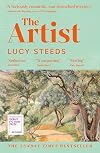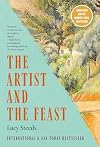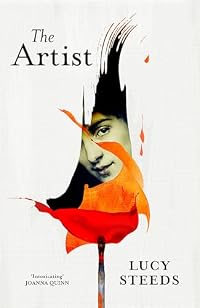
The Artist
by Lucy Steeds
On This Page
Description
During a scorching summer in 1920s Provence, a young journalist, Joseph Adelaide, turns up at the farmhouse of reclusive artist Edouard Tartuffe, hoping to write an article about him. There, he meets Ettie, Tartuffe's niece, who appears to do everything for her uncle--from cooking and cleaning to catering to his maniacal moods. Joseph is beguiled by where he finds himself, not just by this foreign place or Tartuffe himself, but by Ettie, who watches everything so quietly from the periphery. show more Both Joseph and Ettie carry scars from their pasts and it's as they get to know each other that they start to lay bare those scars to themselves and to each other.? As the summer wears on, and as new ideas and passions are explored, Joseph, Ettie, and Tartuffe are propelled toward a finale that reveals long-held secrets and sets the world on fire. show lessTags
Recommendations

















Member Reviews
This book fits neatly into the genre of 'artist as monster' if there is such a genre and I seem to have read several recently. It is a story that draws me but I am not quite sure why. Others that I can remember are Madame Matisse by Sophie Haydock, The Homemade God by Rachel Joyce, The Mischief Makers by Elizabeth Gifford and I Capture the Castle by Dodie Smith, with a patriarchal monster in the guise of a husband or father, often with a block in their creative work.
This book is no different. Set in Provence in the 1920s, Edouard Tartuffe or Tata, lives in an isolated cottage with his niece, Ettie, who cooks, cleans and prepares all the materials that he needs. She even chooses foods that will appeal to him that he will decide to paint, show more the slightly bruised peach, the pink radishes and the purple-tinged artichokes.
Joseph, a journalist in the making, manages to be invited to visit the cottage, staying as long as he will sit for a painting, Man with Orange. He is escaping his father's expectations of him and the fact the he was a conscientious objector during the war. His brother resides in a hospital suffering with what we would now call PTSD but at the time attracted monstrous treatments.
The atmosphere of the novel is claustrophobic. The controlling nature of Tata, the pressing heat of the Provencal summer and the fact that no one is allowed to visit and Tata never leaves the house. What Tata is trying to capture is the light, something he can not control although he has removed all other variables.
What is revealed is Ettie's desire to be an artist and the many ways in which Tata refuses her the opportunity until she creates her own way to exact revenge. This was quite obvious as you move through the story but nevertheless is a fitting way to end.
Steeds writing is wonderful and describes the place beautifully. Told through the eyes of Joseph and Ettie but in third person, the story is revealed, allowing us to experience the emotions of both characters. Secrets are brought into the light including Ettie's paintings.
'You told me you didn't know how to paint,' Joseph says feebly. It is a small detail but he clutches onto it.
'I told you Tata never taught me how to paint,' says Ettie. 'That's not the same thing.'
'Then how did you learn?'
'By watching. By following. I have spent my life observing. It turns out it ws the perfect training.'
p209
And so we come to the heart of the book. The fact that looking is not the same as seeing and that light does not shine on everything equally. show less
This book is no different. Set in Provence in the 1920s, Edouard Tartuffe or Tata, lives in an isolated cottage with his niece, Ettie, who cooks, cleans and prepares all the materials that he needs. She even chooses foods that will appeal to him that he will decide to paint, show more the slightly bruised peach, the pink radishes and the purple-tinged artichokes.
Joseph, a journalist in the making, manages to be invited to visit the cottage, staying as long as he will sit for a painting, Man with Orange. He is escaping his father's expectations of him and the fact the he was a conscientious objector during the war. His brother resides in a hospital suffering with what we would now call PTSD but at the time attracted monstrous treatments.
The atmosphere of the novel is claustrophobic. The controlling nature of Tata, the pressing heat of the Provencal summer and the fact that no one is allowed to visit and Tata never leaves the house. What Tata is trying to capture is the light, something he can not control although he has removed all other variables.
What is revealed is Ettie's desire to be an artist and the many ways in which Tata refuses her the opportunity until she creates her own way to exact revenge. This was quite obvious as you move through the story but nevertheless is a fitting way to end.
Steeds writing is wonderful and describes the place beautifully. Told through the eyes of Joseph and Ettie but in third person, the story is revealed, allowing us to experience the emotions of both characters. Secrets are brought into the light including Ettie's paintings.
'You told me you didn't know how to paint,' Joseph says feebly. It is a small detail but he clutches onto it.
'I told you Tata never taught me how to paint,' says Ettie. 'That's not the same thing.'
'Then how did you learn?'
'By watching. By following. I have spent my life observing. It turns out it ws the perfect training.'
p209
And so we come to the heart of the book. The fact that looking is not the same as seeing and that light does not shine on everything equally. show less
Every now and again a book comes along that makes one catch one’s breath and step back to think about what one has just read. I thought this was a wonderful book. It is beautifully written and draws the reader in right from the opening page.
Set a few years after the end of the First World War, at the simplest level, it recounts the experiences of Joseph, an aspiring art journalist who writes to Edouard Tartuffe and asks if he can interview him for a highbrow monthly magazine. Tartuffe is a renowned painter who, at the height of his fame, had left the Parisian art circle of which he had been a leading figure, and relocated to Provence. Once established there, he had continued to paint there, consolidating his reputation as one of the show more masters of the capture of the nature of light. Tartuffe pursues a frugal life with his niece, Sylvette, who makes all the domestic arrangements, and manages the artist’s correspondence.
Receiving a simple summons in response to his letter, Joseph travels to Provence, and spends a few weeks with the Tartuffes. Throughout his time there, he finds the artist increasingly querulous, and continually reluctant to submit to an interview. Instead, he requires Joseph to sit for him, posing in a portrait. Joseph is entranced as he gets to watch the painter at work.
Lucy Steeds has a marvellous touch when it comes to describing the nature of painting, making the process come to life in the reader’s eyes. She also draws the relationships between Tartuffe, Joseph and Sylvette, and the troubled family situation that Joseph has left behind him in England, in beautiful relief.
This was a wonderful book, and one that I am sure I will revisit very soon. show less
Set a few years after the end of the First World War, at the simplest level, it recounts the experiences of Joseph, an aspiring art journalist who writes to Edouard Tartuffe and asks if he can interview him for a highbrow monthly magazine. Tartuffe is a renowned painter who, at the height of his fame, had left the Parisian art circle of which he had been a leading figure, and relocated to Provence. Once established there, he had continued to paint there, consolidating his reputation as one of the show more masters of the capture of the nature of light. Tartuffe pursues a frugal life with his niece, Sylvette, who makes all the domestic arrangements, and manages the artist’s correspondence.
Receiving a simple summons in response to his letter, Joseph travels to Provence, and spends a few weeks with the Tartuffes. Throughout his time there, he finds the artist increasingly querulous, and continually reluctant to submit to an interview. Instead, he requires Joseph to sit for him, posing in a portrait. Joseph is entranced as he gets to watch the painter at work.
Lucy Steeds has a marvellous touch when it comes to describing the nature of painting, making the process come to life in the reader’s eyes. She also draws the relationships between Tartuffe, Joseph and Sylvette, and the troubled family situation that Joseph has left behind him in England, in beautiful relief.
This was a wonderful book, and one that I am sure I will revisit very soon. show less
It was such a pleasure to read this novel! Longlisted for the 2025 Women's Prize, The Artist (published as The Artist and the Feast in some editions) traverses the well-worn theme of female artists denied the opportunity to realise their ambitions, but in the hands of debut author Lucy Steeds, The Artist is a tale that had me captivated from the first pages.
Set in Provence in 1920, when the world was coming to terms with the aftermath of the Great War, the novel features three main characters: Edouard Tartuffe, a reclusive artist and an expert in coercive control; his niece Ettie (Sylvette), abandoned by her mother when she was seven to take her place as housewife, secretary and assistant in the studio; and the interloper, Joseph show more Adelaide, an aspiring journalist who wants to impress his bullying father by getting the scoop on Tartuffe. Who is famously rude and refuses to be interviewed about his work by anyone.
No one is more surprised than Joseph when his request for an interview, written in careful French, results in a one-word invitation: Venez. Underneath that command to come is a signature...
... most often found in the corner of paintings. It is scrawled in the corner of Joseph's favourite painting in the National Gallery, Bathers at Arles. It appears on paintings in gilded frames at Sotheby's and the Knoedler. And it is at the bottom of a letter addressed to him. (p.5)
However, when Joseph arrives in hot and dusty Provence, Tartuffe refuses to engage, demanding instead that Joseph sit for him in a new painting called 'Young Man with Orange' — and he can write whatever he likes, true or not.
Tartuffe now has someone else captive to his whims.
To read the rest of my review please visit https://anzlitlovers.com/2025/03/16/the-artist-2025-by-lucy-steeds/ show less
Set in Provence in 1920, when the world was coming to terms with the aftermath of the Great War, the novel features three main characters: Edouard Tartuffe, a reclusive artist and an expert in coercive control; his niece Ettie (Sylvette), abandoned by her mother when she was seven to take her place as housewife, secretary and assistant in the studio; and the interloper, Joseph show more Adelaide, an aspiring journalist who wants to impress his bullying father by getting the scoop on Tartuffe. Who is famously rude and refuses to be interviewed about his work by anyone.
No one is more surprised than Joseph when his request for an interview, written in careful French, results in a one-word invitation: Venez. Underneath that command to come is a signature...
... most often found in the corner of paintings. It is scrawled in the corner of Joseph's favourite painting in the National Gallery, Bathers at Arles. It appears on paintings in gilded frames at Sotheby's and the Knoedler. And it is at the bottom of a letter addressed to him. (p.5)
However, when Joseph arrives in hot and dusty Provence, Tartuffe refuses to engage, demanding instead that Joseph sit for him in a new painting called 'Young Man with Orange' — and he can write whatever he likes, true or not.
Tartuffe now has someone else captive to his whims.
To read the rest of my review please visit https://anzlitlovers.com/2025/03/16/the-artist-2025-by-lucy-steeds/ show less
Failed artist Joseph writes a column for a new magazine and he has managed to get invited to the Provence home of legendary recluse Edouard Tartuffe. It is 1920 and Joseph is escaping the post-War malaise where his brother is suffering from shell-shock and he has been disowned by his father. Ettie is Tartuffe's niece, tied to her uncle she has found a way to express herself as an artist but longs to be free.
This novel is onethat, for a change, really lives up to the hype. The writing is very evocative of the dry, scented, hot provencal summer and the passion for art and what it really means comes through. It's not the sort of story I would rave about but this is a confident and powerful debut.
This novel is onethat, for a change, really lives up to the hype. The writing is very evocative of the dry, scented, hot provencal summer and the passion for art and what it really means comes through. It's not the sort of story I would rave about but this is a confident and powerful debut.
Young English art journalist Joseph heads to Provence in the 1920s in search of the erasable artist Edouard Tartuffe (Tata), who for many years has buried himself in the depths of the rural area and turned his back on the Paris life he once had. Looked after by his niece Ettie who does everything for him, all of which taken for granted, the arrival of Joseph shifts everything.
Persuaded by Tata to be the model for his first portrait in years, Young Man with Orange, Joseph has the opportunity of observing his hero at close quarters.
During the weeks he spends in Provence the secrets leak out like a burst pomegranate.
A fine debut novel from Steeds, evocative, beautifully observed with a strong sense of place and character.
Persuaded by Tata to be the model for his first portrait in years, Young Man with Orange, Joseph has the opportunity of observing his hero at close quarters.
During the weeks he spends in Provence the secrets leak out like a burst pomegranate.
A fine debut novel from Steeds, evocative, beautifully observed with a strong sense of place and character.
Faultless. Lush, gorgeous prose.
A very good and exciting art story that unwinds in a gloriously tense manner. Good characterisations, good history, interesting plots and of course the background of one of the greatest artists of all time. Well worth a look.
Members
- Recently Added By
Lists

Maybe This Year? Books to Look Forward To
409 works; 9 members

2025 Women's Prize for Fiction Longlist
16 works; 6 members

Top Five Books of 2025
950 works; 302 members

Books Read in 2026
1,712 works; 62 members
Author Information
3 Works 243 Members
Some Editions
Awards and Honors
Awards
Distinctions
Common Knowledge
- Canonical title
- The Artist
- Alternate titles
- The artist and the feast
- Original publication date
- 2025
- Important places
- Provence, France
Classifications
Statistics
- Members
- 211
- Popularity
- 154,051
- Reviews
- 8
- Rating
- (4.20)
- Languages
- English
- Media
- Paper, Ebook
- ISBNs
- 7
- ASINs
- 3