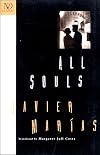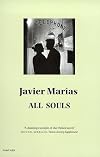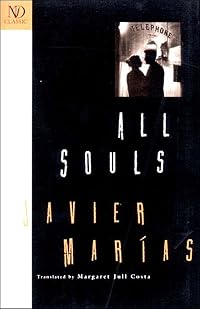
All Souls
by Javier Marías
On This Page
Description
By one of the most important voices in contemporary world literature, a darkly comic novel about that most British of institutions, Oxford University. In All Souls, a visiting Spanish lecturer, viewing Oxford through a prismatic detachment, is alternately amused, puzzled, delighted, and disgusted by its vagaries of human vanity. A bit lonely, not always able to see his charming but very married mistress, he casts about for activity; he barely has to teach. Yet so much goes into simply show more "being" at Oxford: friendship, opinion-mongering, one-upmanship, finicky exchanges of favors, gossip, adultery, book-collecting, back-patting, backstabbing. Marías demonstrates a sweet tooth for eccentricity in this sly campus novel and love story. show lessTags
Recommendations





















Member Reviews
I don't exactly know how to explain All Souls except to say it is the first person narrative of a professor at Oxford with a two year contract. He remembers not having a heavy teaching load, but instead had heavy opinions of his colleagues. Most of his narrative is remembering his struggle to carry on a more then superficial affair with a married woman and the hurt he felt when she snubbed him for a month when her child was ill. He was a hard character to feel sorry for.
Confessional: I don't think I much like the narrator of All Souls. He is an opinionated, standoffish, snarly man. On the other hand, I was fascinated with Will the porter. At ninety years old he lives in his head and those around him never know what era he thinks he is show more in but they accommodate him nicely. show less
Confessional: I don't think I much like the narrator of All Souls. He is an opinionated, standoffish, snarly man. On the other hand, I was fascinated with Will the porter. At ninety years old he lives in his head and those around him never know what era he thinks he is show more in but they accommodate him nicely. show less
It seems that I was in just the mood for an atmospheric, circuitous novel this evening. 'All Souls' concerns a Spanish scholar visiting Oxford, who observes college life and absorbs himself in an affair with a married woman. More specifically, he ruminates on memory, mortality, loneliness, and the strange malaise of academia. I found the writing really beautiful, somewhat akin to that of José Saramago. Like Saramago, Marías indulges in long sentences and paragraphs that take you inside the narrator’s mind with impressive efficacy. The non-linear structure of the novel added to its evocative nature; it felt like a true chain of recollections, in which one anecdote reminds you of another that is emotionally but not temporally show more adjacent. At times these recollections were very funny, at others moving and profound, but always impeccably constructed.
I took 'All Souls' out of the library with a view to comparing my own postgraduate Cambridge experience to its account of The Other Place. The grotesque portrait of dining at High Table is barely an exaggeration. I have definitely experienced a enthusiastic, Halliwell-esque lecture on someone’s very specific research interest whilst I ate two courses and nodded politely. I also identify with the periodic concern that too much solitary research is turning you into an over-obsessed mad person - in the narrator’s case, through his identification with Gawsworth. I am far too junior to take part in the academic gossip-mongering, though.
There are too many wonderful passages in the book for me to pick a definite favourite. Nonetheless, here is a lovely quote I happened upon:
Overall, I found this novel gorgeously well-written and involving. I am inclined to read more by Marías. Actually, I have the nagging suspicion that I read his first 'Your Face Tomorrow' novel years ago, when I was a teenager. Even if that is the case, I’d probably appreciate it much more now. show less
I took 'All Souls' out of the library with a view to comparing my own postgraduate Cambridge experience to its account of The Other Place. The grotesque portrait of dining at High Table is barely an exaggeration. I have definitely experienced a enthusiastic, Halliwell-esque lecture on someone’s very specific research interest whilst I ate two courses and nodded politely. I also identify with the periodic concern that too much solitary research is turning you into an over-obsessed mad person - in the narrator’s case, through his identification with Gawsworth. I am far too junior to take part in the academic gossip-mongering, though.
There are too many wonderful passages in the book for me to pick a definite favourite. Nonetheless, here is a lovely quote I happened upon:
Everything that happens to us, everything that we say or hear, everything we see with our own eyes or we articulate with our tongue, everything that enters through our ears, everything we are witness to (and for which we are therefore partly responsible) must find a recipient outside ourselves and we choose that recipient according to what happens or what we are told or even according to what we ourselves day. Each thing must be told to someone - though not necessarily always to the same person - and each thing will undergo a selection process, the way someone out shopping one afternoon might scrutinise, set aside, and assess presents for the season to come.
Overall, I found this novel gorgeously well-written and involving. I am inclined to read more by Marías. Actually, I have the nagging suspicion that I read his first 'Your Face Tomorrow' novel years ago, when I was a teenager. Even if that is the case, I’d probably appreciate it much more now. show less
An account, from memory, of the Spanish narrator's 2 years at Oxford. _From memory_, that's the important bit here. Everything is account (story) and memory.
At first I was going to complain about the style, the looping, rambling voice of not only the narrator but also the other characters (everyone talks/thinks the same?, I thought to myself). In fact, at one point (the high-table scene where our narrator first meets his lover-to-be) I said to myself, this scene that's supposed to be funny (hilarious even) almost isn't because of the way he's telling it. But by the end I realized that that's the point. The whole book is in the narrator's head, I mean _coming from_ the narrator's head. That's why it's messy, anxious, agitated (as the show more narrator himself readily admits he was during that period in his life).
This novel is also a demonstration of what literature is: keeping going with the story; the immortality of us as persons and as a culture. All souls have a story, all souls are afraid to die because they don't want to miss out on the all the stories: those untold, those yet to unfold...
One of my favorite bits: the scene near the end where Clare recounts a scene from her past that she herself barely remembers (she was only 3 and has constructed the story from others' tellings); but we don't "hear" her finishing the story (the climax), instead the narrator does it himself in his own head, adding his own embellishments and touches...! show less
At first I was going to complain about the style, the looping, rambling voice of not only the narrator but also the other characters (everyone talks/thinks the same?, I thought to myself). In fact, at one point (the high-table scene where our narrator first meets his lover-to-be) I said to myself, this scene that's supposed to be funny (hilarious even) almost isn't because of the way he's telling it. But by the end I realized that that's the point. The whole book is in the narrator's head, I mean _coming from_ the narrator's head. That's why it's messy, anxious, agitated (as the show more narrator himself readily admits he was during that period in his life).
This novel is also a demonstration of what literature is: keeping going with the story; the immortality of us as persons and as a culture. All souls have a story, all souls are afraid to die because they don't want to miss out on the all the stories: those untold, those yet to unfold...
One of my favorite bits: the scene near the end where Clare recounts a scene from her past that she herself barely remembers (she was only 3 and has constructed the story from others' tellings); but we don't "hear" her finishing the story (the climax), instead the narrator does it himself in his own head, adding his own embellishments and touches...! show less
Reading this in the wrong order, a few months after Your face tomorrow, it's interesting to see how much it works as a kind of prologue for the trilogy. The narrator is the same, of course, and many of the characters reappear (some under new names), but it's also notable how many of the scenes in this book prefigure key scenes in the trilogy. It certainly makes sense to read them together.
Otherwise, I enjoyed the comic glimpses into eighties Oxford life - possibly a bit clichéed, but still very much as I remember it. Oxford is, after all, a city that loves to boast about the tackiness of its own image.
Marías is perhaps a bit more self-conscious about his very individual style than in the later books where he and the reader have got show more used to it: there are a few places where he even seems to be sending himself up (e.g. in the Brighton scene, where Clare is about to tell us what promises to be a key story, but is blocked at the word "Listen!" for about ten pages of repetitions and nested parentheses). show less
Otherwise, I enjoyed the comic glimpses into eighties Oxford life - possibly a bit clichéed, but still very much as I remember it. Oxford is, after all, a city that loves to boast about the tackiness of its own image.
Marías is perhaps a bit more self-conscious about his very individual style than in the later books where he and the reader have got show more used to it: there are a few places where he even seems to be sending himself up (e.g. in the Brighton scene, where Clare is about to tell us what promises to be a key story, but is blocked at the word "Listen!" for about ten pages of repetitions and nested parentheses). show less
In this elegiac novel, the narrator looks back on his two year appointment as a lecturer in Spanish at Oxford—"a city in syrup." Although the peculiar traditions of the institution and its faculty are given some attention (the major characters are introduced in a somewhat debauched dinner at high table), this is not a typical academic satire.
Ostensibly the novel is about the two year affair the narrator conducts with Clare Bayes (whose décolletage is the object of much admiration at that high table), the wife of one of his colleagues. Yet the novel is really how he spent his time when not meeting his lover, as they conduct their affair in half-hour segments, or teaching, which also turns out to be not a time-consuming activity. He show more tours Oxford bookstores and falls into collecting the obscure works of John Gawsworth--adventurer, monarch of Redonda (a tiny unihabited island), at one time a well-known writer and who ended as a forgotten drunk. This leads to an afternoon with a man who had shadowed him during his bookstore rounds, and who turned out to be a recruiter for the obscure Galsworthy Society. A period of exile from his lover, while her child is home from boarding school with an illness, prompts an evening at the local (non-university) disco bringing him more intimate knowledge of a few colleagues and the local pick-up scene. This exile also brings him to shadow in turn his lover and her son when he encounters them by chance at the Ashmolean.
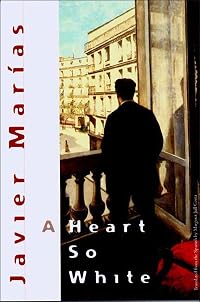
The novel is full of amusing observation and the satire is gentle, but at the same time the episodes are woven together with philosophical explorations on memory, the passage of time and loss. It is finally a melancholy novel, preoccupied with goodbyes. Indeed the specter of final leave-taking hovers from the very first paragraph, where we are informed that two of the three persons whom the narrator felt closest have since died. Marías here has a rich sentence style (as translated by Margaret Jull Costa), not so much periodic but rather probing and meandering. It is not yet the very densely subordinating style of A Heart So White. Here, paragraphs and entire passages end up circuitous in thought, yet the reader is swept along by the re-creation of the process of thought.
The philosophical bent of this work reminded me of Kundera at his best, though Marías, with his psychological probing, is much more focused on perception and the experience of the individual. show less
Ostensibly the novel is about the two year affair the narrator conducts with Clare Bayes (whose décolletage is the object of much admiration at that high table), the wife of one of his colleagues. Yet the novel is really how he spent his time when not meeting his lover, as they conduct their affair in half-hour segments, or teaching, which also turns out to be not a time-consuming activity. He show more tours Oxford bookstores and falls into collecting the obscure works of John Gawsworth--adventurer, monarch of Redonda (a tiny unihabited island), at one time a well-known writer and who ended as a forgotten drunk. This leads to an afternoon with a man who had shadowed him during his bookstore rounds, and who turned out to be a recruiter for the obscure Galsworthy Society. A period of exile from his lover, while her child is home from boarding school with an illness, prompts an evening at the local (non-university) disco bringing him more intimate knowledge of a few colleagues and the local pick-up scene. This exile also brings him to shadow in turn his lover and her son when he encounters them by chance at the Ashmolean.
The novel is full of amusing observation and the satire is gentle, but at the same time the episodes are woven together with philosophical explorations on memory, the passage of time and loss. It is finally a melancholy novel, preoccupied with goodbyes. Indeed the specter of final leave-taking hovers from the very first paragraph, where we are informed that two of the three persons whom the narrator felt closest have since died. Marías here has a rich sentence style (as translated by Margaret Jull Costa), not so much periodic but rather probing and meandering. It is not yet the very densely subordinating style of A Heart So White. Here, paragraphs and entire passages end up circuitous in thought, yet the reader is swept along by the re-creation of the process of thought.
The philosophical bent of this work reminded me of Kundera at his best, though Marías, with his psychological probing, is much more focused on perception and the experience of the individual. show less
All Souls by Javier Marias is about a Spanish academic who spends two years as a visiting academic in Oxford, and has an affair with another tutor, Clare, who is married with a son. I am always drawn to books set in universities, but this one was a little different from the typical campus novel. It was certainly quite funny and contained its fair share of the scandalous relationships and eccentric tutors that are usually found in the university novel, but there are several things that set it apart.
One was a tendency towards philosophical digressions on subjects such as identity, memory and the ritual significance of emptying a rubbish bin. Some of these I found funny (the rubbish bin episode, for example), others rather off-putting and show more tedious. I found some of the abstract and reflective sections quite heavy-going, until the plot acquired some more momentum and I became interested again. I wasn’t particularly drawn to the character of Clare, as she seemed rather vague and distant, and didn’t come alive to me somehow. Perhaps this reflected the slightly apathetic nature of their affair, which seemed partly a way for the main character to fill his time and amuse himself while in Oxford, where he admits, he has ‘minimal duties, a fact that often made me feel I was playing a purely decorative role there’. I was more interested in his friendships with other academics, and his experiences living in Oxford, which is described as ‘a city preserved in syrup’.
Another way the book was quite unusual was the surrealist aspect to it. For example, one subplot of the book was the narrator’s ‘morbid’ interest in collecting rare books, which is a distraction from the emptiness of his life and his inability to see Clare as much as he wants to. This leads to him becoming obsessed with two neglected writers with bizarre life histories and being stalked around second-hand bookshops by a strange antiquarian bookseller. I quite liked this part of the book. It was definitely more entertaining than the narrator’s half-hearted relationship with Clare.
Another way the book differs from the usual Oxford novel or film is its absence of nostalgia or romanticism. As well as the university, it describes the other lives of Oxford, including the homeless people with whom the narrator becomes obsessed in his wanderings around the city. The book doesn’t just talk about the centre of Oxford, but also mentions the towns and villages surrounding it, and reveals an entertaining obsession with Didcot Station (a very dreary, deserted place), where the narrator briefly meets a young girl, an encounter that seems to haunt him for a while. I also liked the description of the narrator’s trip to a sleazy nightclub and the groups of people who go there. Of course, All Souls does concentrate mainly on the university, since all the main characters are academics, but it doesn’t romanticise this either; in fact the narrator’s main feeling towards the place is one of unease. It is seen as a place where nothing changes, where people don’t have enough to occupy them and their academic work is merely a distraction from their real preoccupation with relationships. It is also described, disturbingly, as a place where people exist outside time and reality... This book definitely didn’t have much of the Brideshead spirit about it, or if it did, only the negative flipside.
This wasn’t one of my favourite university novels, since it lacked a certain passion and excitement, but it was pretty entertaining and unusual. I’m still not really sure what to make of it, but I liked how it made me see Oxford in a different way. [2011] show less
One was a tendency towards philosophical digressions on subjects such as identity, memory and the ritual significance of emptying a rubbish bin. Some of these I found funny (the rubbish bin episode, for example), others rather off-putting and show more tedious. I found some of the abstract and reflective sections quite heavy-going, until the plot acquired some more momentum and I became interested again. I wasn’t particularly drawn to the character of Clare, as she seemed rather vague and distant, and didn’t come alive to me somehow. Perhaps this reflected the slightly apathetic nature of their affair, which seemed partly a way for the main character to fill his time and amuse himself while in Oxford, where he admits, he has ‘minimal duties, a fact that often made me feel I was playing a purely decorative role there’. I was more interested in his friendships with other academics, and his experiences living in Oxford, which is described as ‘a city preserved in syrup’.
Another way the book was quite unusual was the surrealist aspect to it. For example, one subplot of the book was the narrator’s ‘morbid’ interest in collecting rare books, which is a distraction from the emptiness of his life and his inability to see Clare as much as he wants to. This leads to him becoming obsessed with two neglected writers with bizarre life histories and being stalked around second-hand bookshops by a strange antiquarian bookseller. I quite liked this part of the book. It was definitely more entertaining than the narrator’s half-hearted relationship with Clare.
Another way the book differs from the usual Oxford novel or film is its absence of nostalgia or romanticism. As well as the university, it describes the other lives of Oxford, including the homeless people with whom the narrator becomes obsessed in his wanderings around the city. The book doesn’t just talk about the centre of Oxford, but also mentions the towns and villages surrounding it, and reveals an entertaining obsession with Didcot Station (a very dreary, deserted place), where the narrator briefly meets a young girl, an encounter that seems to haunt him for a while. I also liked the description of the narrator’s trip to a sleazy nightclub and the groups of people who go there. Of course, All Souls does concentrate mainly on the university, since all the main characters are academics, but it doesn’t romanticise this either; in fact the narrator’s main feeling towards the place is one of unease. It is seen as a place where nothing changes, where people don’t have enough to occupy them and their academic work is merely a distraction from their real preoccupation with relationships. It is also described, disturbingly, as a place where people exist outside time and reality... This book definitely didn’t have much of the Brideshead spirit about it, or if it did, only the negative flipside.
This wasn’t one of my favourite university novels, since it lacked a certain passion and excitement, but it was pretty entertaining and unusual. I’m still not really sure what to make of it, but I liked how it made me see Oxford in a different way. [2011] show less
Periodically I am asked if I've been to Oxford. I glibly reply, yes, I've been to both. Perhaps my first sentence is an overstatement, but i have offered my response a few times in my life and mean it. I don't consider Square Books and Rowan Oak to be tantamount to the learned city on the Isis, but the southern locale is a cultural hub. My wife and i last went to Oxford, on the Thames, a few winters ago. It was a delightful cold and wet day. Our minds were occupied with Inspector Lewis and second-hand books rather than discerning the vapor trails of Senor Marias.
I loved All Souls for its discretion. It struggles to find a pragmatic middle path in life. That said it didn't lose itself in serpentine digressions. Perhaps here, I am show more looking at you [b:Your Face Tomorrow: Fever and Spear / Dance and Dream / Poison, Shadow, and Farewell|9653380|Your Face Tomorrow Fever and Spear / Dance and Dream / Poison, Shadow, and Farewell|Javier Marías|http://d202m5krfqbpi5.cloudfront.net/books/1348998393s/9653380.jpg|14540925]
It was intriguing to note the number of observations in All Souls which resurface in YFT: the thesis on cider tax and the booksellers' distinction of Richard Francis Burton (Captain Burton for those inclined) were but a few. Alas, contrary to the novel, we didn't discover any intrigue, only wonderful Lebanese food and a knapsack stuffed w/ books from the tented stalls. show less
I loved All Souls for its discretion. It struggles to find a pragmatic middle path in life. That said it didn't lose itself in serpentine digressions. Perhaps here, I am show more looking at you [b:Your Face Tomorrow: Fever and Spear / Dance and Dream / Poison, Shadow, and Farewell|9653380|Your Face Tomorrow Fever and Spear / Dance and Dream / Poison, Shadow, and Farewell|Javier Marías|http://d202m5krfqbpi5.cloudfront.net/books/1348998393s/9653380.jpg|14540925]
It was intriguing to note the number of observations in All Souls which resurface in YFT: the thesis on cider tax and the booksellers' distinction of Richard Francis Burton (Captain Burton for those inclined) were but a few. Alas, contrary to the novel, we didn't discover any intrigue, only wonderful Lebanese food and a knapsack stuffed w/ books from the tented stalls. show less
Members
- Recently Added By
Lists

1001 Books You Must Read Before You Die
1,448 works; 1,133 members

Best Campus Novels
99 works; 18 members

Top Five Books of 2017
757 works; 230 members

Books Read in 2017
4,249 works; 130 members

España en cien libros
100 works; 1 member

Llibres que he llegit el 2025
81 works; 2 members
Author Information

156+ Works 13,301 Members
Javier Marias, a literary phenomenon worldwide, is still in the process of being discovered in America. Among his awards are the Premio Ciudad de Barcelona, The Spanish Critics' Award, the Prix L'Oeil et la Lettre, the Premio Mondello, the Premio Internacional de Novela Romulo Gallegos, the Prix Femina Etranger, the Nelly-Sachs Prize, and the show more Dublin International IMPAC Award. He is also King Xavier I of Redonda. show less
Some Editions
Awards and Honors
Notable Lists
Series
Belongs to Publisher Series
Common Knowledge
- Canonical title*
- Aller zielen
- Original title
- Todas las Almas
- Alternate titles*
- Aller zielen : roman
- Original publication date
- 1989
- People/Characters
- Clare Bayes; Cromer-Blake; Toby Rylands; Alan Marriott; Mrs Alabaster
- Important places
- Oxford, Oxfordshire, England, UK
- Related movies
- El último viaje de Robert Rylands (1996 | IMDb)
- Original language
- Spanish
*Some information comes from Common Knowledge in other languages. Click "Edit" for more information.
Classifications
Statistics
- Members
- 991
- Popularity
- 26,502
- Reviews
- 27
- Rating
- (3.58)
- Languages
- 12 — Czech, Danish, Dutch, English, Estonian, French, German, Italian, Portuguese, Romanian, Spanish, Swedish
- Media
- Paper, Audiobook, Ebook
- ISBNs
- 49
- ASINs
- 11