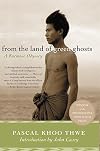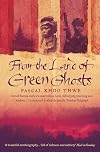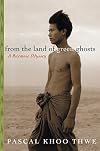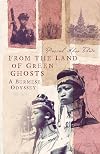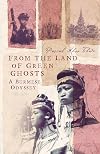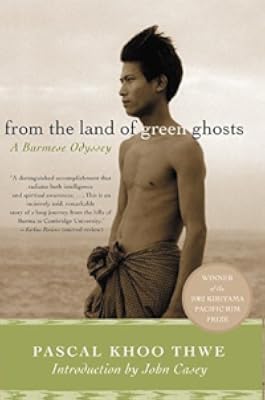
From the Land of Green Ghosts : A Burmese Odyssey
by Pascal Khoo Thwe
On This Page
Description
The autobiographical story of a young man's upbringing in a remote tribal village in Burma and his subsequent journey from his strife-torn country to the tranquil quads of Cambridge. Pascal Khoo-thwe describes his childhood and early days as a member of the Padaung hill tribe, where ancestor worship and communion with spirits blended with the tribe's recent conversion to Christianity. In the 1930s, Pascal's grandfather (and head of the clan) captured an Italian Jesuit, mistaking him for a show more giant or a wild beast; the Jesuit in turn converted the tribe. show lessTags
Recommendations

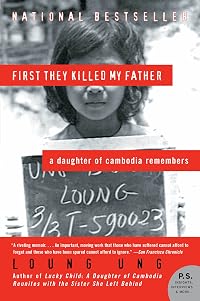









Member Recommendations
Member Reviews
Transcendent Memoir of Universal Yearning
In a lifetime of reading, this memoir stands out as both strikingly unique and universal in its appeal. Pascal Khoo Thwe is the only Burmese hill tribesman to graduate from Cambridge (with honors!), and the events and “coincidences” that drove his life defy belief.
The book starts slowly, seeming to crawl, but the author takes such great pains to portray the world of his upbringing—where commerce between material and spiritual realms was taken for granted—that he gradually draws you out of your western, materialist worldview and into his: a world where his grandfather, just as he predicted, returns from the grave seven days after his death, clomps up the stairs, and listens to his show more wife’s entreaties that he leave the living in peace.
Any Cambridge graduate is entitled to a certain pride, but Khoo Thwe never succumbs to it, remaining humble and modest throughout: from his harrowing escape from murderous government soldiers, to being wracked by malaria, to his rescue by a Cambridge don, to his arrival in England, to graduating with honors.
While the author is the only person ever to ride this life trajectory, his story hums with universal resonance; for who can’t relate to a humble boy from the Padaung tribe, the scorn of majority Burmans, pursuing his love of literature all the way to the halls of Caius College? The yearning for a better life throbs in every human breast, and has rarely been so movingly rendered as here. show less
In a lifetime of reading, this memoir stands out as both strikingly unique and universal in its appeal. Pascal Khoo Thwe is the only Burmese hill tribesman to graduate from Cambridge (with honors!), and the events and “coincidences” that drove his life defy belief.
The book starts slowly, seeming to crawl, but the author takes such great pains to portray the world of his upbringing—where commerce between material and spiritual realms was taken for granted—that he gradually draws you out of your western, materialist worldview and into his: a world where his grandfather, just as he predicted, returns from the grave seven days after his death, clomps up the stairs, and listens to his show more wife’s entreaties that he leave the living in peace.
Any Cambridge graduate is entitled to a certain pride, but Khoo Thwe never succumbs to it, remaining humble and modest throughout: from his harrowing escape from murderous government soldiers, to being wracked by malaria, to his rescue by a Cambridge don, to his arrival in England, to graduating with honors.
While the author is the only person ever to ride this life trajectory, his story hums with universal resonance; for who can’t relate to a humble boy from the Padaung tribe, the scorn of majority Burmans, pursuing his love of literature all the way to the halls of Caius College? The yearning for a better life throbs in every human breast, and has rarely been so movingly rendered as here. show less
Pascal Khoo Thwe grew up in rural Burma, part of the Padaung tribe. His grandfather was the tribal chief, and Pascal grew up secure in his place in the world. His family was Catholic, yet still adhered to many of the traditional animist beliefs. Ghosts were a presence, for both good and ill. Someone who was murdered or died in an accident might become a green ghost, hence the title.
Pascal decides to become a priest and goes to a seminary, but eventually decides to pursue his love of English literature instead, and enrolls in college in Mandalay. The late 80s are a time of turmoil in Burma, however, and his studies are interrupted by student unrest against the regime. Eventually he must flee to the jungle to escape being arrested. But a show more chance meeting with a Cambridge don years earlier will change his fate and perhaps save his life.
Told in an unsentimental, straightforward manner, Thwe's memoir is a fascinating account of rural Burmese life, the impact of British colonization and its marriage with traditional beliefs, the complexity of ethnic relationships within Burmese society, and the educational system during Ne Win's regime. The plight of the students after the uprisings and their life in the jungle with the rebels was harrowing, and a situation about which I knew nothing. Although Thwe's emotional reserve makes the book almost academic in tone, his honest and insightful self-reflection make it a compelling read. Highly recommended for anyone interested in Burma/Myanmar. show less
Pascal decides to become a priest and goes to a seminary, but eventually decides to pursue his love of English literature instead, and enrolls in college in Mandalay. The late 80s are a time of turmoil in Burma, however, and his studies are interrupted by student unrest against the regime. Eventually he must flee to the jungle to escape being arrested. But a show more chance meeting with a Cambridge don years earlier will change his fate and perhaps save his life.
Told in an unsentimental, straightforward manner, Thwe's memoir is a fascinating account of rural Burmese life, the impact of British colonization and its marriage with traditional beliefs, the complexity of ethnic relationships within Burmese society, and the educational system during Ne Win's regime. The plight of the students after the uprisings and their life in the jungle with the rebels was harrowing, and a situation about which I knew nothing. Although Thwe's emotional reserve makes the book almost academic in tone, his honest and insightful self-reflection make it a compelling read. Highly recommended for anyone interested in Burma/Myanmar. show less
I started this book with little enthusiasm and low expectations, as the recent history of Burma has been truly depressing - but this autobiography grew on me mightily: a tale of courage, honesty and affection for his family and heritage. The author's writing is so hugely powerful, with evocative description and telling detail - a tour de force by any measure.
Review
From the land of green ghosts: A Burmese Odyssey Pascal Khoo Thwe
3 stars
Pascal, alias Khun Sa, has created an interesting autobiography of his life as a Padaung Tribesman from the Shan States of Burma, who is picked up by a Cambridge don visiting Mandalay where he is a student. Then later finds his way to England and Cambridge after his stint as an anti-government rebel soldier – through the kindness and intervention of his British friend and the British embassy in Thailand.
He writes rather well in English when you consider that most of his youth was spent in Shan States of Burma where English was not his language. However, one can feel the strong hand of his English and religion instructors or perhaps his editor in the content show more of much of the book. His mentor, Dr. John Casey, admits in the foreword that he was ‘at first diffident’ when asked to revise and cut the manuscript for publication, yet his input can be felt strongly in the final version. Pascal points out in one of the final chapters that Dr. Casey indulged in nostalgia for the imperial past of Burma. This prejudice comes through clearly when Pascal writes of becoming an insurgent to fight against the Burmese government which had replaced the ‘golden age’ of the ‘old British Raj’. Burma/ Myanmar has been involved in a civil war ever since the British completed their occupation of the country and many of the rebel groups would like to have the country return to the British colonial era or become Communist. This feeling comes through as Pascal consistently characterizes the government soldiers of Burma as the ‘enemy’. His strong anti-government bias even comes through against the government of Thailand, which had protected him and his fellow insurgents in refugee camps there.
Pascal’s Grandmother is hauled out to amplify the anti-government screed and tell us what a paradise Burma was during the age of the rule by the British. She says: “We were prosperous under the British, but when they went, they took the prosperity with them.” She fails to point out that the British were replaced by the Japanese, who after a lot of killing were replaced by Nationalists looking for independence.
We learn early on that Pascal’s family introduced him to the Christian God and the Catholic Church. From that point on his writing is peppered with Christian religious euphemisms and often his religion causes him to rebel against the culture of his tribe. You can almost spot when Pascal is writing in the voice of his religious teachers; he uses words like ‘ululation’ “assiduous to novenas’ ‘impeccably’ or he pokes fun at his own culture and animist religion. When speaking in the voice of his Cambridge dons, he misses no opportunity to demonize the ‘regime’ in Burma.
When Pascal writes in his own voice he can be quite down-to-earth and when he writes of his time as a young rebel soldier, shooting and being shot at, he is quite believable. As a poetic lament the book seems to be coming from Pascal, but as a political statement it seems more to originate from his handlers.
No good anti-Burmese government book would be complete without a mention of Ms. Aung San Suu Kyi, the wife of the late Michael Aris of Oxford. Pascal mentions her several times.
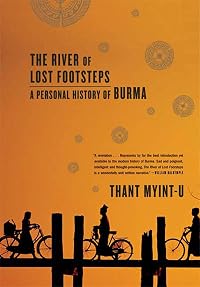
“from the land of the green ghosts’ is a fine book, if read with a good knowledge of the history of Burma. May I recommend reading “The River of Lost Footsteps” as a preliminary to this work. show less
From the land of green ghosts: A Burmese Odyssey Pascal Khoo Thwe
3 stars
Pascal, alias Khun Sa, has created an interesting autobiography of his life as a Padaung Tribesman from the Shan States of Burma, who is picked up by a Cambridge don visiting Mandalay where he is a student. Then later finds his way to England and Cambridge after his stint as an anti-government rebel soldier – through the kindness and intervention of his British friend and the British embassy in Thailand.
He writes rather well in English when you consider that most of his youth was spent in Shan States of Burma where English was not his language. However, one can feel the strong hand of his English and religion instructors or perhaps his editor in the content show more of much of the book. His mentor, Dr. John Casey, admits in the foreword that he was ‘at first diffident’ when asked to revise and cut the manuscript for publication, yet his input can be felt strongly in the final version. Pascal points out in one of the final chapters that Dr. Casey indulged in nostalgia for the imperial past of Burma. This prejudice comes through clearly when Pascal writes of becoming an insurgent to fight against the Burmese government which had replaced the ‘golden age’ of the ‘old British Raj’. Burma/ Myanmar has been involved in a civil war ever since the British completed their occupation of the country and many of the rebel groups would like to have the country return to the British colonial era or become Communist. This feeling comes through as Pascal consistently characterizes the government soldiers of Burma as the ‘enemy’. His strong anti-government bias even comes through against the government of Thailand, which had protected him and his fellow insurgents in refugee camps there.
Pascal’s Grandmother is hauled out to amplify the anti-government screed and tell us what a paradise Burma was during the age of the rule by the British. She says: “We were prosperous under the British, but when they went, they took the prosperity with them.” She fails to point out that the British were replaced by the Japanese, who after a lot of killing were replaced by Nationalists looking for independence.
We learn early on that Pascal’s family introduced him to the Christian God and the Catholic Church. From that point on his writing is peppered with Christian religious euphemisms and often his religion causes him to rebel against the culture of his tribe. You can almost spot when Pascal is writing in the voice of his religious teachers; he uses words like ‘ululation’ “assiduous to novenas’ ‘impeccably’ or he pokes fun at his own culture and animist religion. When speaking in the voice of his Cambridge dons, he misses no opportunity to demonize the ‘regime’ in Burma.
When Pascal writes in his own voice he can be quite down-to-earth and when he writes of his time as a young rebel soldier, shooting and being shot at, he is quite believable. As a poetic lament the book seems to be coming from Pascal, but as a political statement it seems more to originate from his handlers.
No good anti-Burmese government book would be complete without a mention of Ms. Aung San Suu Kyi, the wife of the late Michael Aris of Oxford. Pascal mentions her several times.
“from the land of the green ghosts’ is a fine book, if read with a good knowledge of the history of Burma. May I recommend reading “The River of Lost Footsteps” as a preliminary to this work. show less
From the Land of Green Ghosts by Pascal Khoo Thwe is a stunning account of a man from the minority Padaung tribe who becomes a student activist, rebel soldier, and then exile and shines a light on the lives and experiences of many ethnic minorities living along the Thai – Myanmar border.
Pascal details his idyllic life of growing up near the jungle and developing a love of learning leading him to a mission school. Although he begins to have doubts about a life of religious service, he develops an interest in English literature eventually leading him to the University at Mandalay. Along the way he describes everyday life in rural Burma along with the everyday cruelties and corruption experienced by many. The account of demonetization show more and the lessons of “never argue with a person in a position of authority” especially stand out along with the brutal killing of his girlfriend while at university. Pascal’s account ranges from the poetic to the barbaric, and as the student uprising in 1988 occurs he finds himself becoming an outspoken leader in his community.
Pascal becomes hunted by Burmese authorities, and decides to flee with other students into the jungle and into the hands of an armed insurgent group. The perceptions of Burmese on ethnic minorities as well as the ineffectiveness of the students in that environment is noted upon while Pascal begins to make long journeys to Thailand highlighting the plight of cross – border migrants. A chance encounter years earlier with a professor from Cambridge becomes Pascal’s life line to the outer world. An eye witness to Burmese attacks and insurgent ambushes, the miracle of his survival leads to his rescue. Spirited away to England he his sponsored to study at Cambridge, where again he struggles, but ultimately succeeds in what is both a horrifying and uplifting account of one man’s life.
Review excerpt from my (old and suffering) blog:
http://poetsandpolicymakers.com/ show less
Pascal details his idyllic life of growing up near the jungle and developing a love of learning leading him to a mission school. Although he begins to have doubts about a life of religious service, he develops an interest in English literature eventually leading him to the University at Mandalay. Along the way he describes everyday life in rural Burma along with the everyday cruelties and corruption experienced by many. The account of demonetization show more and the lessons of “never argue with a person in a position of authority” especially stand out along with the brutal killing of his girlfriend while at university. Pascal’s account ranges from the poetic to the barbaric, and as the student uprising in 1988 occurs he finds himself becoming an outspoken leader in his community.
Pascal becomes hunted by Burmese authorities, and decides to flee with other students into the jungle and into the hands of an armed insurgent group. The perceptions of Burmese on ethnic minorities as well as the ineffectiveness of the students in that environment is noted upon while Pascal begins to make long journeys to Thailand highlighting the plight of cross – border migrants. A chance encounter years earlier with a professor from Cambridge becomes Pascal’s life line to the outer world. An eye witness to Burmese attacks and insurgent ambushes, the miracle of his survival leads to his rescue. Spirited away to England he his sponsored to study at Cambridge, where again he struggles, but ultimately succeeds in what is both a horrifying and uplifting account of one man’s life.
Review excerpt from my (old and suffering) blog:
http://poetsandpolicymakers.com/ show less
Fascinerend verhaal over opgroeien in Birma (Myanmar), de geisoleerdheid, de onderdrukking, zijn strijd hiertegen, zijn ontsnapping naar het buitenland.
Geeft veel inzicht in het leven in Birma
Geeft veel inzicht in het leven in Birma
Jun 15, 2012Dutch
Members
- Recently Added By
Lists

Really Good Narrative Non-Fiction
65 works; 24 members

Top Five Books of 2013
1,562 works; 715 members

Top Five Books of 2014
1,064 works; 398 members
Author Information

3 Works 376 Members
Some Editions
Awards and Honors
Awards
Notable Lists
Series
Belongs to Publisher Series
Common Knowledge
- Canonical title
- From the Land of Green Ghosts : A Burmese Odyssey
- Original title
- From the land of green ghosts. A Burmese odyssey
- Original publication date
- 2002-04-02 (1e édition originale anglaise, Harper Collins) (1e édition originale anglaise, Harper Collins); 2009-01-22 (1e traduction et édition française ∙ Témoins ∙ Gallimard) (1e traduction et édition française ∙ Témoins ∙ Gallimard)
- Important places
- Burma; Cambridge, Cambridgeshire, England, UK
- First words
- When I was young I used to watch the rising sun with amazement.
- Last words
- (Click to show. Warning: May contain spoilers.)The pictures are always blurred by mists.
- Blurbers
- Chang, Nien; Brown, Craig; Booth, Martin
- Original language
- English
Classifications
Statistics
- Members
- 364
- Popularity
- 86,347
- Reviews
- 7
- Rating
- (3.92)
- Languages
- Dutch, English, French, Norwegian (Bokmål)
- Media
- Paper
- ISBNs
- 8
- ASINs
- 1