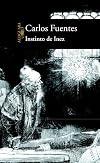
Inez
by Carlos Fuentes
On This Page
Description
In this magical story of love and art, life and death, Carlos Fuentes entwines two narratives- one tells of the passion of orchestra conductor Gabriel Atlan-Ferrara for red-haired Mexican diva, Inez Prada; the other of the first encounter in human history of a man and a woman. Berlioz's music for 'The Damnation of Faust' brings Atlan-Ferrara and Inez together, and continues to resound on every page of this haunting work. At the same time, the emergent love of neh-el and ah-nel - the original show more lovers - reminds us of the Faustian pact of love and death. The link between these two stories is a beautiful crystal seal that belongs to Atlan-Ferrara, who is obsessed by its meaning. Maybe this ancient and seductive object gives its bearer the ability to read unknown languages and hear music of impossible beauty. Inez takes place in two eras, one deeply remote and one perhaps yet to come, but the passions evoked in both transcend the limits of time and space. show lessTags
Recommendations













































Member Reviews
A French conductor, Gabriel, and a Mexican singer, Inez, have an intense sexual and emotional relationship that only seems to exist whilst they are working together on performances of Berlioz's La damnation de Faust, which they do in London in 1940, in Mexico City in 1949, and again in London in 1967. A primeval woman sings to her baby whilst her man paints animals on the wall of the cave, perhaps in Inez's dream, or in a reality that starts to cross over into the other reality of the opera. There's a fragile glass seal that seems to have been a love-token from Inez to Gabriel, but also seems to be an icon of the Mother-Goddess, who also appears as the woman's mother in the dream and as the elderly Gabriel's Austrian housekeeper. And show more there's a mysterious blond, bare-chested man who crosses over into the dream from a photo where he appears with Gabriel, but then turns up playing a bone flute in the pit at Covent Garden...
So there's a lot of - explicit or implicit - general stuff going on here about matriarchy/patriarchy, colonialism, the aftermath of the Mexican Civil War and World War II, power-relations in the arts and between men and women, symbols and archetypes, and so on. But there's also another thread to the book which is all about music and performance, where it's not always obvious whether the relationship between Gabriel and Inez is a metaphor for (or an ironic commentary on) the music they are making together, or vice-versa. Fuentes stresses how music can only be performed as it should be if the performer can do the impossible and combine dispassionate serenity with passionate engagement. He wants us to understand the transience of musical performance, too: Gabriel refuses to have his work recorded, so the performance only exists whilst it's being performed (like the sex?), whereas the Platonic ideal of the music as expressed in Berlioz's score always exists, but is never realised (like the love?).
And there's obviously a reason for bringing in not simply Faust, but Berlioz's Faust in particular. (If Gabriel were simply any old opera conductor, he'd be far more likely to be performing Gounod's Faust.) Presumably that means we have to take as read all the Thomas Mann stuff about mortgaging future salvation to obtain creativity, and the way the Goethe/Marlowe Faust story brings together ideas from the baroque, enlightenment and romantic eras, plus things specific to Berlioz, which I assume means the supremely confident way he harnessed the musical technology of the industrial age to produce sounds that tap into our most primitive emotions...
All very interesting to read, but definitely the sort of book that asks a lot of questions but doesn't answer many of them. show less
So there's a lot of - explicit or implicit - general stuff going on here about matriarchy/patriarchy, colonialism, the aftermath of the Mexican Civil War and World War II, power-relations in the arts and between men and women, symbols and archetypes, and so on. But there's also another thread to the book which is all about music and performance, where it's not always obvious whether the relationship between Gabriel and Inez is a metaphor for (or an ironic commentary on) the music they are making together, or vice-versa. Fuentes stresses how music can only be performed as it should be if the performer can do the impossible and combine dispassionate serenity with passionate engagement. He wants us to understand the transience of musical performance, too: Gabriel refuses to have his work recorded, so the performance only exists whilst it's being performed (like the sex?), whereas the Platonic ideal of the music as expressed in Berlioz's score always exists, but is never realised (like the love?).
And there's obviously a reason for bringing in not simply Faust, but Berlioz's Faust in particular. (If Gabriel were simply any old opera conductor, he'd be far more likely to be performing Gounod's Faust.) Presumably that means we have to take as read all the Thomas Mann stuff about mortgaging future salvation to obtain creativity, and the way the Goethe/Marlowe Faust story brings together ideas from the baroque, enlightenment and romantic eras, plus things specific to Berlioz, which I assume means the supremely confident way he harnessed the musical technology of the industrial age to produce sounds that tap into our most primitive emotions...
All very interesting to read, but definitely the sort of book that asks a lot of questions but doesn't answer many of them. show less
This book is very short, maybe 80 pages or so, but it is not an easy read. You need to take your time to really absorb it. It was disjointed at times, but it is a very interesting and enjoyable read, although there are a few pretty graphic part. It follows two story lines, and brings up interesting themes regarding music, control, the relationships between men and women, and on a broader scale, between different countries. It is very poetic and very well written.
This book is very short, maybe 80 pages or so, but it is not an easy read. You need to take your time to really absorb it. It was disjointed at times, but it is a very interesting and enjoyable read, although there are a few pretty graphic part. It follows two story lines, and brings up interesting themes regarding music, control, the relationships between men and women, and on a broader scale, between different countries. It is very poetic and very well written.
I think Inez may be the first book that I have read by Fuentes. I'm not quite sure what to make of it. It flashes back and forth between modern and almost prehistoric times with two stories, not so much of love, as of seeking and the evolution or description of relationships that are dominant, compliant, cooperative within social structures that can be neutral or cruel in the pressures/demands placed on individuals. The first involves a world famous conductor and the relationship/affair he has, sporadically, over decades with a diva whom he first grooms, and whom he tries to sweep off her feet, at a very young age, with his charm, maturity, and worldliness. But he fails then, and although used to being completely in control, he never show more really is with this woman, even less so sexually when they do become intimate. The second story starts out with two hunters/gatherers, male/female, coming together, eking out an existence, having a child, then moving into a society of others, for safety and stability, but discovering the cruelty of power and the loss of their innocence
(Oct/05) show less
(Oct/05) show less
In spite of the short length of the story, it details the complexity of relationship spanning the life of a conductor of an opera specifically The Damnation of Faust and an opera singer/Diva. It is a story about the control between the two main characters illustrated through the conductor/singer relationship. Even though it is a short novel, it is not an easy read.
Flashing back and forth between primordial and recent time, the book tells the story of longing and artistic love mired in a mass of allegory. I feel like I should be impressed but since much of it went over my head, I wasn't impressed nor did a particularly enjoy the book.
La recepción y descripción musical de Fuentes son fantásticas.
La historia en la Edad de Piedra, muy extraña, rara. De plano me la brinqué, aún con el riesgo de perderne una parte importante de la conexión con los personajes y la historia principal.
El dirigente y la diva, un amor a distancia en el espacio y el tiempo. El define la musica y su filosofia de vida. Ella es egoista y enamorada de uns ilusión de juventud.
Este libro no permanecerá mucho tiempo en mi biblioteca...
La historia en la Edad de Piedra, muy extraña, rara. De plano me la brinqué, aún con el riesgo de perderne una parte importante de la conexión con los personajes y la historia principal.
El dirigente y la diva, un amor a distancia en el espacio y el tiempo. El define la musica y su filosofia de vida. Ella es egoista y enamorada de uns ilusión de juventud.
Este libro no permanecerá mucho tiempo en mi biblioteca...
Members
- Recently Added By
Lists

music to my eyes
86 works; 12 members

Speculative Fiction from around the World
610 works; 18 members
Author Information

198+ Works 15,020 Members
Carlos Fuentes was born in Panama on November 11, 1928. He studied law at the National University of Mexico and did graduate work at the Institute des Hautes Etudes in Switzerland. He entered Mexico's diplomatic service and wrote in his spare time. His first novel, Where the Air Is Clear, was published in 1958. His other works include The Death of show more Artemio Cruz, Destiny and Desire, and Vlad. The Old Gringo was later adapted as a film starring Gregory Peck and Jane Fonda in 1989. He won numerous awards including the Fuentes the Romulo Gallegos Prize in Venezuela for Terra Nostra, the National Order of Merit in France, the Cervantes Prize in 1987, and Spain's Prince of Asturias Award for literature in 1994. He also wrote essays, short stories, screenplays, and political nonfiction. In addition to writing, he taught at numerous universities, including Columbia, Harvard, Princeton, and Brown. He served as the ambassador of Mexico to France. He died on May 15, 2012 at the age of 83. (Bowker Author Biography) show less
Some Editions
Series
Belongs to Publisher Series
Work Relationships
Common Knowledge
- Canonical title*
- L'instinct d'Inez
- Original title
- Instincto de inez
- Original publication date
- 2001 (1e édition originale mexicaine) (1e édition originale mexicaine); 2003-11-06 (1e traduction et édition française, Du monde entier, Gallimard) (1e traduction et édition française, Du monde entier, Gallimard); 2005-03-24 (Réédition française, Folio, Gallimard) (Réédition française, Folio, Gallimard)
- Epigraph
- I have lost, living among humans,
Too many years.
My successive destinies may be read here.
To whom shall I entrust the telling of wondrous successions?
CAO XUEQUIN The Dream of tne Red Pavilion, 1791 - Dedication
- To the memory of my beloved son Carlos Fuentes Lemus (1973-1999)
- First words
- We shall have nothing to say in regard to our own death.
- Last words
- (Click to show. Warning: May contain spoilers.)Now whatever may happen in the future must await, patient and respectful, the next hour of the reunited lovers.
- Original language*
- Espagnol (Mexique) (Mexique)
*Some information comes from Common Knowledge in other languages. Click "Edit" for more information.
Classifications
- Genres
- Fiction and Literature, General Fiction
- DDC/MDS
- 863.64 — Literature & rhetoric Spanish Literature Spanish fiction 20th Century 1945-2000
- LCC
- PQ7297 .F793 .I6713 — Language and Literature French, Italian, Spanish and Portuguese literatures Spanish literature Provincial, local, colonial, etc. Spanish America
- BISAC
Statistics
- Members
- 354
- Popularity
- 89,178
- Reviews
- 11
- Rating
- (3.23)
- Languages
- 14 — Danish, Dutch, English, Estonian, Finnish, French, German, Italian, Polish, Portuguese (Portugal), Romanian, Russian, Spanish, Turkish
- Media
- Paper, Ebook
- ISBNs
- 30
- ASINs
- 4