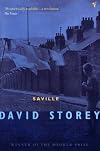
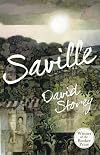
Saville
by David Storey
On This Page
Description
Colin Saville grows up in a mining village in South Yorkshire, against the background of war, of an industrialised countryside, of town and coalmine and village.Tags
Recommendations















Member Reviews
This book reads like a student's report of "What I did on my Summer Vacation": a chronology of events told in a factual style with absolutely no drama whatsoever. The student essay has a distinct advantage: it's short. Saville, on the other hand, is a 500-page tome that plods through the life of Colin Saville. The story opens with his parents moving into a squalid home in a Yorkshire mining village. They soon have a child -- Colin's older brother, Andrew, who died before Colin was born. And then Colin comes into the world, grows up, and is awarded a scholarship to go to a decent grammar school. He has various friends, some from his village and others from his school. He works summer jobs. He decides to attend a 2-year college instead of show more university. He meets various young ladies. He tries hard to overcome his humble origins.
And I'm sorry, but it's all dreadfully dull. There's not a single moment of suspense, tension, or emotion. There were several occasions where I thought a subplot might actually be going somewhere: perhaps a character would turn out to be evil, or some tragedy would befall the Saville family. But no -- even Andrew's death was treated matter-of-factly, and was not mentioned again until Colin was about 20 years old. When he told his girlfriend that his brother's death had a profound impact on his life, all I could say was, "huh?" I'm not sure how I finished it, and I confess to skimming the last 100 pages.
This book suffered significantly from an overdone theme ("dreary English mining village"), coupled with a semi-autobiographical story that was definitely of more interest to the author than it would be to anyone else. show less
And I'm sorry, but it's all dreadfully dull. There's not a single moment of suspense, tension, or emotion. There were several occasions where I thought a subplot might actually be going somewhere: perhaps a character would turn out to be evil, or some tragedy would befall the Saville family. But no -- even Andrew's death was treated matter-of-factly, and was not mentioned again until Colin was about 20 years old. When he told his girlfriend that his brother's death had a profound impact on his life, all I could say was, "huh?" I'm not sure how I finished it, and I confess to skimming the last 100 pages.
This book suffered significantly from an overdone theme ("dreary English mining village"), coupled with a semi-autobiographical story that was definitely of more interest to the author than it would be to anyone else. show less
Dull, dreary, dire. I reached the end of David Storey’s Saville yesterday with a sense of relief that my evenings would no longer be marred by having to plod through this tedious tale. And what a plod it was – 500 or so pages of over-written scenes, mediocre dialogue, scrappy characterisation and a characterless protagonist. The best part was the opening few scenes when a miner and his new wife arrive in some northern colliery- town and spend the day cleaning their meagre little home. After that it was downhill all the way.
The Savilles have a son who is a bit of a strange fish but he dies not far into the novel. Their second son Colin manages to win a scholarship for grammar school; plays sport, has a few run ins with the teacher show more and meets a few girls. Instead of university he opts for the faster track of teacher training so he can begin earning some money to keep his parents and two brothers just above the poverty line. But he feels constrained by his home and his upbringing; taking his frustrations out on his siblings.
By the time he decides what to do with his life, we’re at the end of the book and by then – frankly – I simply didn’t care. Colin Saville just isn’t portrayed in a way that makes me want to take any interest. There’s never any sense of the inner turmoil he supposedly feels in reaction to some of the events that happen to him. Even when his fiancé ditches him for a more wealthy friend, he seems to react as if someone has just told him the number 6 bus left 30 minutes ago. Having the story relayed through an omniscient narrator doesn’t help. But I also just kept waiting for something – anything – to happen that would lift the story from the realms of the mediocre. I was still waiting when I reached the end. If ever there was a book that needed a bit fat blue editor’s pencil to walk all over it, this one was it…..even a scene that according to James Campbell in the Guardian is one of the most memorable (when his friend Stafford visits his home and is treated to a tea of bread, butter and tinned fruit) felt over-written.
How Saville won the Booker Prize, I therefore can’t imagine. According to one retrospective critical review, Storey’s work mixes realism with psychological extremism. I must have been asleep during those chapters in that case. show less
The Savilles have a son who is a bit of a strange fish but he dies not far into the novel. Their second son Colin manages to win a scholarship for grammar school; plays sport, has a few run ins with the teacher show more and meets a few girls. Instead of university he opts for the faster track of teacher training so he can begin earning some money to keep his parents and two brothers just above the poverty line. But he feels constrained by his home and his upbringing; taking his frustrations out on his siblings.
By the time he decides what to do with his life, we’re at the end of the book and by then – frankly – I simply didn’t care. Colin Saville just isn’t portrayed in a way that makes me want to take any interest. There’s never any sense of the inner turmoil he supposedly feels in reaction to some of the events that happen to him. Even when his fiancé ditches him for a more wealthy friend, he seems to react as if someone has just told him the number 6 bus left 30 minutes ago. Having the story relayed through an omniscient narrator doesn’t help. But I also just kept waiting for something – anything – to happen that would lift the story from the realms of the mediocre. I was still waiting when I reached the end. If ever there was a book that needed a bit fat blue editor’s pencil to walk all over it, this one was it…..even a scene that according to James Campbell in the Guardian is one of the most memorable (when his friend Stafford visits his home and is treated to a tea of bread, butter and tinned fruit) felt over-written.
How Saville won the Booker Prize, I therefore can’t imagine. According to one retrospective critical review, Storey’s work mixes realism with psychological extremism. I must have been asleep during those chapters in that case. show less
I am nearing the end of my occasional project to read all of the Booker Prize winners, with just one more to go now. This was the 1976 winner, but in many ways it feels older - in fact the book it reminded me most of is [a:D.H. Lawrence|17623|D.H. Lawrence|https://images.gr-assets.com/authors/1375811585p2/17623.jpg]'s [b:Sons and Lovers|32071|Sons and Lovers|D.H. Lawrence|https://images.gr-assets.com/books/1386924291s/32071.jpg|3173046].
This book tells the story of Colin Saville, a miner's son of Storey's age from a village in South Yorkshire, starting with his parents' arrival in the village in the late 1920s and ending in the 1950s. Storey recreates the life of the village and the poverty and drudgery of its residents in vivid show more detail.
Colin's opportunities to escape the village and the pit depend on gaining entry to the grammar school in the nearby city. He passes this exam, and gains access to a world of which his parents have little or no experience, but he cannot entirely escape the shackles of family obligations and expectations, and he struggles to relate to his richer friends. Opting to train as a teacher instead of taking an extra year at school and aiming for a university place, he soon becomes disillusioned with life teaching those that fail the exam.
There are occasional lighter moments, for example the father's attempts to build an air raid shelter, which is thwarted by flooding, Colin's National Service medical, which he unexpectedly fails due to "flat feet", and the escapades of his privileged friend Neville Stafford.
I found this book an enjoyable and rewarding read, but it is quite long, so some interest in British social history is probably a necessary prerequisite.
One minor irritation is that my Vintage paperback edition appears to have been photocopied from an original copy with holes punched through the text - fortunately in most cases only one or two letters were lost so it is easy enough to deduce what is missing. show less
This book tells the story of Colin Saville, a miner's son of Storey's age from a village in South Yorkshire, starting with his parents' arrival in the village in the late 1920s and ending in the 1950s. Storey recreates the life of the village and the poverty and drudgery of its residents in vivid show more detail.
Colin's opportunities to escape the village and the pit depend on gaining entry to the grammar school in the nearby city. He passes this exam, and gains access to a world of which his parents have little or no experience, but he cannot entirely escape the shackles of family obligations and expectations, and he struggles to relate to his richer friends. Opting to train as a teacher instead of taking an extra year at school and aiming for a university place, he soon becomes disillusioned with life teaching those that fail the exam.
There are occasional lighter moments, for example the father's attempts to build an air raid shelter, which is thwarted by flooding, Colin's National Service medical, which he unexpectedly fails due to "flat feet", and the escapades of his privileged friend Neville Stafford.
I found this book an enjoyable and rewarding read, but it is quite long, so some interest in British social history is probably a necessary prerequisite.
One minor irritation is that my Vintage paperback edition appears to have been photocopied from an original copy with holes punched through the text - fortunately in most cases only one or two letters were lost so it is easy enough to deduce what is missing. show less
This is a novel that only slowly takes on form and develops power to disturb the reader. Rather than using outrageous events the author lets the ordinary slowly invest in the characters a subtle meaning that can only suggest that something extraordinary is happening. The talent to do this is reserved to few authors - David Storey is one of those authors.
This novel epitomizes one of my favorite quotes:
"Literature is the art of discovering something extraordinary about ordinary people, and saying with ordinary words something extraordinary." ― Boris Pasternak
Reading this book really is an extraordinary experience! I found much of it to be very comforting, very homey. I found other parts to be quite disturbing. This novel affected me in ways that I'm still trying to sort out. I suspect this is a story that I'll continue to think about, to try to come to terms with it, for a long time.
"Literature is the art of discovering something extraordinary about ordinary people, and saying with ordinary words something extraordinary." ― Boris Pasternak
Reading this book really is an extraordinary experience! I found much of it to be very comforting, very homey. I found other parts to be quite disturbing. This novel affected me in ways that I'm still trying to sort out. I suspect this is a story that I'll continue to think about, to try to come to terms with it, for a long time.
3066 Saville, by David Storey (read 15 Apr 1998) (Booker prize in 1976) This is an amazing book, well worth reading, though I came to detest the "hero," Colin Saville. His father is a coal-miner in South Yorkshire, and some of the accounts of events are so vivid they have to be based on truth. The account of Colin's early years is full of interest, though the adult Colin is a reprehensible adulterous person, bitterly in revolt against his good parents and his sensible, stoic brother. Towards the end the book is dreary and depressing. But the net impression is of a powerful book, reminding me in a way of Flaubert.
Ratings
Members
- Recently Added By
Lists

Booker Prize
491 works; 62 members

TML 200 Best Books 1950-1999
202 works; 10 members

Man Booker Prize Longlist 1976
6 works; 1 member

Booker Prize Shortlist: Titles Not Yet Read
161 works; 4 members

The Modern Library (The Two Hundred Best Novels....
202 works; 1 member
Author Information

32 Works 1,234 Members
David Malcolm Storey was born in Wakefield, Yorkshire, England on July 13, 1933. He was a professional rugby player with the Leeds Rugby League club and received a diploma from the Slade School of Art in London. He worked as a teacher before becoming a novelist and playwright. His first novel, This Sporting Life was published in 1960 and won the show more Somerset Maugham Fiction Award. He adapted it into film in 1963. His other novels included Flight into Camden, Radcliffe, Pasmore, and Saville, which won the Man Booker Prize in 1976. His plays included The Restoration of Arnold Middleton, In Celebration, The Farm, Life Class, Stages, and Early Days. The Changing Room, Home, and The Contractor were all named best play by the New York Drama Critics' Circle. He died from Parkinson's disease and related dementia on March 26, 2017 at the age of 83. (Bowker Author Biography) show less
Some Editions
Awards and Honors
Awards
Notable Lists
Series
Belongs to Publisher Series
Common Knowledge
- Canonical title
- Saville
- Original title
- Saville
- Original publication date
- 1976
- First words
- Towards the end of the third decade of the present century a coal haulier's cart, pulled by a large, dirt-grey horse, came into the narrow streets of the village of Saxton, a small mining community in the low hill-land of sou... (show all)th Yorkshire.
- Last words
- (Click to show. Warning: May contain spoilers.)Above a distant line of trees a smear of blackish smoke appeared.
- Blurbers
- Brooks, Jeremy; Korn, Eric; Ratcliffe, Michael; Caute, David; Heald, Tim; Driver, C J (show all 7); Elliott, Janice
- Original language
- English
Classifications
Statistics
- Members
- 287
- Popularity
- 112,291
- Reviews
- 6
- Rating
- (3.82)
- Languages
- English, Estonian, Polish
- Media
- Paper, Ebook
- ISBNs
- 10
- ASINs
- 3