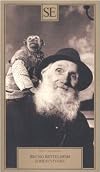
Surviving and Other Essays
by Bruno Bettelheim
On This Page
Description
Includes sections on Adolf Eichmann and Totalitarianism.Tags
Recommendations






































Member Reviews
Bettelheim was born in Vienna, Austria, of middle-class Jewish parents. He received his doctorate from the University of Vienna and became a follower of psychoanalysis. In 1938, with the German annexation of Austria, Bettelheim was incarcerated in Dachau and later Buchenwald for one year. He was released upon the intervention of First Lady Eleanor Roosevelt and New York’s Governor Herbert Lehman. He immediately came to the United States and took up residence in Chicago. The psychiatrist took a position as a professor in the Orthenogenic School, which studies emotionally disturbed children. Bettelheim became an expert on children’s emotional disorders and treatment of such diseases. He wrote a major article on his camp experience, show more “Individual and Mass Behavior in Extreme Situations,” which was accepted by the U.S. Army in 1943. The Informed Heart and the long essay “Surviving” deal directly with Bettelheim’s concentration camp experience and his reflections on the meaning of it. Sickly, in a nursing home in California, he took his own life at age 87.
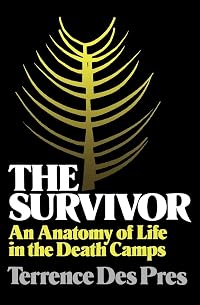
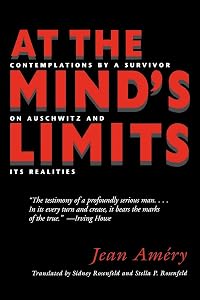
The key essay in this book analyzes the movie Seven Beauties, a spoof on a comic figure in a concentration camp, and the book The Survivor by Terrence Des Pres, an examination of why inmates survived in both Soviet and Nazi camps. For Bettelheim, surviving alone was no virtue. Keeping one’s moral integrity was. Losing one’s dignity, he believes, would be worse than death. Bettelheim rails against Seven Beauties’ death house comedy. Such works confuse aesthetic discrimination. The observer is induced not to take the murderous situation seriously. The psychiatrist notes that those who had strong religious conviction had a much higher chance of survival. His own experience in the camps informs him that cooperation rather than selfishness was more commonplace in the camps. According to Bettelheim, the situations described in the movie Seven Beauties are not credible and the characters are not believable, particularly the female commandant. She understood human nature too well, says the author, to commit such horrible acts. The man who threw himself into a sewer of waste rather than submit to continued indignities is the writer’s hero. Bettelheim’s critics believe that his views are unrealistic and border on a “blame the victim” psychology. show less
The key essay in this book analyzes the movie Seven Beauties, a spoof on a comic figure in a concentration camp, and the book The Survivor by Terrence Des Pres, an examination of why inmates survived in both Soviet and Nazi camps. For Bettelheim, surviving alone was no virtue. Keeping one’s moral integrity was. Losing one’s dignity, he believes, would be worse than death. Bettelheim rails against Seven Beauties’ death house comedy. Such works confuse aesthetic discrimination. The observer is induced not to take the murderous situation seriously. The psychiatrist notes that those who had strong religious conviction had a much higher chance of survival. His own experience in the camps informs him that cooperation rather than selfishness was more commonplace in the camps. According to Bettelheim, the situations described in the movie Seven Beauties are not credible and the characters are not believable, particularly the female commandant. She understood human nature too well, says the author, to commit such horrible acts. The man who threw himself into a sewer of waste rather than submit to continued indignities is the writer’s hero. Bettelheim’s critics believe that his views are unrealistic and border on a “blame the victim” psychology. show less
Ratings
Members
- Recently Added By
Author Information

70+ Works 5,780 Members
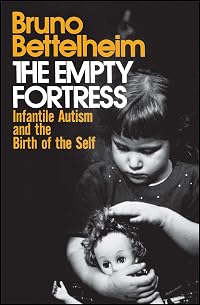
Bruno Bettelheim had remarkable success in treating deeply emotionally disturbed children. A pupil of Sigmund Freud, he was a vehement opponent of the operant conditioning methods of B. F. Skinner and other behaviorists. Austrian-born, Bettelheim came to the United States in 1939. Profoundly influenced by the year he spent in a German show more concentration camp during World War II, he reflects in his writings his sensitivity and knowledge of the fear and anxiety induced under such conditions. His famous Individual and Mass Behavior (1943), first published in a scientific periodical and then in pamphlet form, is a study of the human personality under the stress of totalitarian terror and concentration-camp living. Bettelheim sees a relationship between the disturbances of the concentration camp survivors and those of the autistic, or rigidly withdrawn, children whom he describes in The Empty Fortress (1967), because both have lived through extreme situations. The Children of the Dream (1969) describes with considerable enthusiasm the absence of neurosis in children brought up on kibbutzim in Israel in groups of other children and cared for by adults who are not their parents. Bettelheim believes that American ghetto children would benefit from this kind of experience in preference to the at best partial help of present programs designed to accelerate educational progress for the deprived. From 1944 to 1973, Bettelheim served as the principal of the Sonia Shankman Orthogenic School, a residential laboratory for the treatment of disturbed children at the University of Chicago. Up until his death in 1990, Bettelheim remained active in his scholarly pursuits, continuing to write about the nurturing of healthy children and devoting himself to improving the human condition. (Bowker Author Biography) show less
Classifications
Statistics
- Members
- 198
- Popularity
- 165,997
- Reviews
- 1
- Rating
- (3.90)
- Languages
- 8 — Dutch, English, French, German, Hungarian, Italian, Portuguese, Spanish
- Media
- Paper
- ISBNs
- 16
- ASINs
- 2