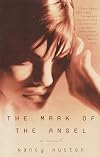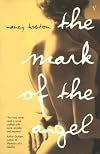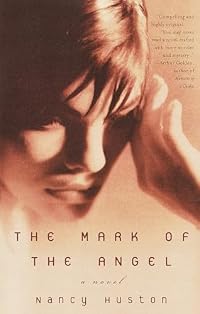
The Mark of the Angel
by Nancy Huston
On This Page
Description
The year is 1957, and the place is Paris, where the psychic wounds of World War II have barely begun to heal. Saffie, a young German woman, becomes maid, then wife to Raphael, a privileged French musician who finds her remoteness provocative and irresistible. One day in the old Jewish quarter of the city, where she has taken Raphael's flute to be repaired, Saffie meets a Hungarian instrument maker - and all their lives are unexpectedly, dramatically altered.Tags
Recommendations



















Member Reviews
An extraordinary book about innocence. A young German woman, Saffie, takes on the job of housekeeper for a Parisian Flautist twelve years after the end of WWII. Her reserve combines with a submissiveness that shocks, yet appeals to, Raphael. In short order he marries her, looking for the ideal married life. His blindness to reality keeps him in the dark while she finds a lover, Andras, a Hungarian Jew, and lives a double life.
Saffie is intent on making a normal life for herself after suffering the loss of her family in the war, and only after much time is she able to talk at all about what she remembers. Andras is caught up in the Algerian war for independence from France, which is brought home to Algerians living in Paris in a show more horrifying way. He joins a resistance movement and can't comprehend Saffie's lack of sight. Raphael is not exactly oblivious to the atrocities committed by his own countrymen while he plays his flute sublimely, but he justifies his lack of a response by pointing to the music he makes.
In the end, who is innocent? Now or then? Beautifully written, often sad but with wit that made me smile, this novel brings the Algerian-French war to the forefront without forcing us to choke on it - although perhaps we should. show less
Saffie is intent on making a normal life for herself after suffering the loss of her family in the war, and only after much time is she able to talk at all about what she remembers. Andras is caught up in the Algerian war for independence from France, which is brought home to Algerians living in Paris in a show more horrifying way. He joins a resistance movement and can't comprehend Saffie's lack of sight. Raphael is not exactly oblivious to the atrocities committed by his own countrymen while he plays his flute sublimely, but he justifies his lack of a response by pointing to the music he makes.
In the end, who is innocent? Now or then? Beautifully written, often sad but with wit that made me smile, this novel brings the Algerian-French war to the forefront without forcing us to choke on it - although perhaps we should. show less
Saffie, a young German woman arrives in Paris in 1957 and takes on a job as housekeeper to a musician, a flautist of growing international reputation. Raphael is smitten with Saffie from the beginning, compelled by her beauty and intrigued by her totally unemotional exterior; she is distant and uninvolved even when he makes love to her. Raphael hopes that marriage and his devotion and the arrival of a son (whom Saffie had tried to abort) will thaw Saffie, but nothing seems to have the desired effect and he begins to despair of his marriage, and Saffie as a mother: cold and distant. And then Saffie meets Andres, a Hungarian immigrant who repairs musical instruments, and she instantly and totally and physically falls in love. It is this show more love that leads to a blossoming of Saffie, an opening to life that includes her son, and which Raphael benefits from even though he does not know the cause. Andres committed to aiding the Algerian side in the war against France; as a Jew whose family suffered death under the Nazis, he cannot in good conscience stand aside and do nothing in what he sees as a replay of murder by the Nazis, nor can he understand Saffie's indifference. Saffie has her own devils (having been raped by Russians at the age of eight, along with her mother who subsequently commits suicide), and she cannot engage like Andres; for her, having found the love of her life and having opened up to her son is sufficient. Raphael, now a world-renowned musician discovers, by accident, the relationship between Andres and Saffie. He confronts his son, who has always been part of the relationship and who regards Andres more as his father, in a horrific scene on a train that results in the boy's death. He is acquitted of responsibility, but the day after Emil's death, Saffie has disappeared from Raphael's life: "there remained not the slightest trace of Saffie's passage through Raphael's existence". And she disappeared from Andres's life as well. As Huston says, "Even I have no idea what became of my heroine".
Those are the bare bones of the story, and it is a novel that I enjoyed. I had not read Huston before, an interesting woman who is originally from Calgary, but now lives in Paris and who is so fluent in French that she often writes in that language. In fact, she sometimes writes a novel in French and then again in English; not exactly a translation, but more of a re-writing.
A phrase later in the novel describes well the underlying structure/themes of the book:
Ah, the dizzying arbitrariness of our choices in life. The insane entanglement of our motivations. The kaleidoscope of our misunderstandings.
On one level, this is a novel about the impact on individuals of great historical events (WWII, the genocide of the Jews, the war in Algeria (Huston is unsparing of French activities and policies during that war)). These are events that mark history and are studied and reflected upon, but sometimes it is forgotten that these events were conducted and perpetrated by individuals, and that vast numbers of individuals were affected, marked, and scarred by these events; their lives have been twisted, distorted, and set on whole new paths because of their experience of the events, and the setting of certain prisms through which they will ever after view the world and live their lives. And when these life-lines intersect, as they did with Andres and Saffie, and then cross the "normal" life-line of someone like Raphael, the results are unpredictable.
I like Huston's writing style. Very clean, very direct. And she has an unusual practice of what I might call "authorial intervention". She often turns and speaks directly to the reader, for example, at the end where she says that even she does not know what happened to her heroine. It is an interesting technique. It reminds you that you are reading a book, something made-up out of the imagination of the author, but I did not find it distracting. Rather, it seems to reinforce the idea that you are on the outside, looking in at the lives of these people unfolding before you, and yet that does not diminish, at least for me, the engagement of the reader with the characters. As Huston says about Saffie at the end: "The truth of our story is that she disappeared. As we shall all disappear, in the end". And this fits with the historical anonymity that is the fate of 99% of the people who live, or have lived, on earth and so it rings true in this novel as well.
(Nov/99) show less
Those are the bare bones of the story, and it is a novel that I enjoyed. I had not read Huston before, an interesting woman who is originally from Calgary, but now lives in Paris and who is so fluent in French that she often writes in that language. In fact, she sometimes writes a novel in French and then again in English; not exactly a translation, but more of a re-writing.
A phrase later in the novel describes well the underlying structure/themes of the book:
Ah, the dizzying arbitrariness of our choices in life. The insane entanglement of our motivations. The kaleidoscope of our misunderstandings.
On one level, this is a novel about the impact on individuals of great historical events (WWII, the genocide of the Jews, the war in Algeria (Huston is unsparing of French activities and policies during that war)). These are events that mark history and are studied and reflected upon, but sometimes it is forgotten that these events were conducted and perpetrated by individuals, and that vast numbers of individuals were affected, marked, and scarred by these events; their lives have been twisted, distorted, and set on whole new paths because of their experience of the events, and the setting of certain prisms through which they will ever after view the world and live their lives. And when these life-lines intersect, as they did with Andres and Saffie, and then cross the "normal" life-line of someone like Raphael, the results are unpredictable.
I like Huston's writing style. Very clean, very direct. And she has an unusual practice of what I might call "authorial intervention". She often turns and speaks directly to the reader, for example, at the end where she says that even she does not know what happened to her heroine. It is an interesting technique. It reminds you that you are reading a book, something made-up out of the imagination of the author, but I did not find it distracting. Rather, it seems to reinforce the idea that you are on the outside, looking in at the lives of these people unfolding before you, and yet that does not diminish, at least for me, the engagement of the reader with the characters. As Huston says about Saffie at the end: "The truth of our story is that she disappeared. As we shall all disappear, in the end". And this fits with the historical anonymity that is the fate of 99% of the people who live, or have lived, on earth and so it rings true in this novel as well.
(Nov/99) show less
Set in late 1950s Paris, a city still somewhat traumatised by its WWII experiences, this is the story of Saffie, a somewhat inscrutable young Swiss woman who applies to me the maid of a successful flautist Raphael. Bewitched by her strange remoteness, he marries her, and they have a child together, despite their distant, cool relationship. And then she meets Andras, who enters the story to repair Raphael's flute. This is their story, and the story of the bloody Algerian conflict tearing Paris apart at the time. It's the story of Jews in France, and it's a dramatic and tragic story: one illustrating how much our lives, however we might wish it otherwise, are shaped by external events. I liked Huston's arch, yet confiding and show more conversational tone, and was engaged by it to the very end. show less
In my opinion Nancy Huston is a brilliant writer. She understands human relationships better than most and conveys them with a stark clarity unusual in novels that I have read. This is not a happy story by any means but it does resonate truly. I'm privileged to have read it. Yet I despair for the tragedy found most often as the result of romance. Humans can be so incredibly cold.
It’s a story of love and betrayal set in Paris at the end of the fifties and at the beginning of sixties at the background of unrests caused by the war in Algeria and very fresh still and lingering World War II experiences. The story revolves around three characters: 20 year old German, Saffie, a Hungarian Jewish émigré, Andras, and French gifted flutist, Raphael.
It’s an interesting and well written novel, but a bit too predictable in some parts, and too improbable and arbitrary in others.
Favourite quote:
‘Ah, the dizzying arbitrariness of our choices in life. The insane entanglement of our motivations. The kaleidoscope of our misunderstandings.’
It’s an interesting and well written novel, but a bit too predictable in some parts, and too improbable and arbitrary in others.
Favourite quote:
‘Ah, the dizzying arbitrariness of our choices in life. The insane entanglement of our motivations. The kaleidoscope of our misunderstandings.’
What a wonderful story, unbelievably well written, no heros, no villians, everyone is a bit of both...
Dues històries d'amor entre persones amb un passat molt divers (un jueu hungarès, una alemanya, un francès) en una França envoltada per la indepedència d'Argèlia. Una història de realitat i aparences, de fidelitats i infidelitats. I en mig de tot això, un nen, l'Émil, que concentra totes les contradiccions dels personatges.
La narradora avança, pel meu gust, una mica massa l'esdevenir de la història.
La narradora avança, pel meu gust, una mica massa l'esdevenir de la història.
Members
- Recently Added By
Author Information

79+ Works 2,669 Members
Some Editions
Awards and Honors
Series
Belongs to Publisher Series
Common Knowledge
- Canonical title*
- L'empreinte de l'ange
- Original publication date
- 1998
- People/Characters
- Saffie; Emil; Raphael; András
- Important places
- Paris, France; Canada; France
- Important events*
- Guerra de Argelia,
- First words
- There she is.
- Quotations*
- "-Aquí -dice él- es donde el ángel posa un dedo sobre los labios del bebé, justo antes de nacer... "¡Sshh¡", dice el ángel, y el bebé lo olvida todo. Todo lo que aprendió antes, allá en el paraíso: olvidado. Para q... (show all)ue pueda venir a este mundo con toda su inocencia..." p. 148
- Last words*
- (Click to show. Warning: May contain spoilers.)Avatkaa vain silmänne: se jatkuu ympärillänne, kaikkialla.
- Original language*
- Français
*Some information comes from Common Knowledge in other languages. Click "Edit" for more information.
Classifications
- Genres
- General Fiction, Fiction and Literature
- DDC/MDS
- 843.914 — Literature & rhetoric French Literature French fiction 1900- 20th Century 1945-1999
- LCC
- PQ3919.2 .H87 .E6613 — Language and Literature French, Italian, Spanish and Portuguese literatures French literature Provincial, local, colonial, etc.
- BISAC
Statistics
- Members
- 468
- Popularity
- 64,800
- Reviews
- 17
- Rating
- (3.62)
- Languages
- 9 — Danish, Dutch, English, Finnish, French, German, Italian, Spanish, Swedish
- Media
- Paper, Audiobook, Ebook
- ISBNs
- 35
- ASINs
- 4