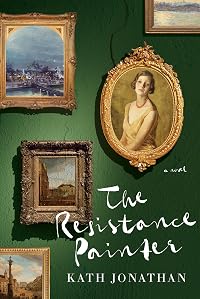
The Resistance Painter
by Kath Jonathan
On This Page
Description
"1939. Irena Marianowka's dreams of attending art school in Paris are crushed when the Nazis invade Poland. Instead, she joins the Home Army and, together with her young husband, risks her life every day in the sewers of Warsaw. In 1944, after a harrowing mission, she returns home to learn that her sister, Lotta, has been abducted by the Gestapo. Determined to find her, Irena is willing to risk everything--all but the safety of her unit. 2011. Jo Blum lives in Toronto with her beloved show more grandmother, a lauded painter of WWII and a decorated war hero. Jo has a flourishing career creating sculptures for grave sites based on the life stories of her dying clients. Her recorded interviews with Stefan, her new Polish client, unveil a heroic wartime past eerily similar to her grandmother's. But Jo's quest to uncover the truth about Stefan and her grandmother opens an explosive Pandora's box with shockwaves that threaten all she has known. The Resistance Painter will resonate with fans of Woman with the Blue Star, The Book of Lost Names, The Tattooist of Auschwitz, The German Girl, and The Dutch Wife, confronting the questions of the accuracy of the stories we tell about our lives and whether buried secrets stay buried."-- show lessTags
Recommendations



Member Reviews
A dramatically exciting WWII novel from the perspective of a passionate, artistic Polish resistance fighter. She goes to great lengths to save as many Polish citizens, friends, neighbors, strangers as possible at great risk and sacrifice. And often draws sketches and paintings of the daring, and frightening escape scenes.
Irene's mother and sister discourage her from her resistance work unsuccessfully. But eventually she is caught by the nazis and sent to Ravensbruck where her drawing skills save her life. Her life after the war is filled with love and success, and a grand-daughter who has inherited her artistic talent, and takes care of her for the rest of her life.
I found Irene's close friendship with Leah to be very moving. How many show more Poles remained friends with Poland's Jewish citizens after the nazis arrived and tried to save them?
The Resistance Painter glows with joy of friendship, determination and love during a long volatile and violent period of history.
Excellent read. show less
Irene's mother and sister discourage her from her resistance work unsuccessfully. But eventually she is caught by the nazis and sent to Ravensbruck where her drawing skills save her life. Her life after the war is filled with love and success, and a grand-daughter who has inherited her artistic talent, and takes care of her for the rest of her life.
I found Irene's close friendship with Leah to be very moving. How many show more Poles remained friends with Poland's Jewish citizens after the nazis arrived and tried to save them?
The Resistance Painter glows with joy of friendship, determination and love during a long volatile and violent period of history.
Excellent read. show less
It was refreshing to read a WWII story from Poland. I knew nothing about Polish resistance,Warsaw uprising, Nazi occupation of Warsaw or the brave people who helped people flee the Jewish ghetto through sewers.
The Resistance Painter tells the story of Irene a young Warsaw art student and how she becomes a resistance fighter. Novel also follows her granddaughter ,also an artist in Toronto, who moves in with her declining grandmother Irene.
I really wanted to love this novel as I paid full price for it at the bookstore but I didn’t.
The Resistance Painter tells the story of Irene a young Warsaw art student and how she becomes a resistance fighter. Novel also follows her granddaughter ,also an artist in Toronto, who moves in with her declining grandmother Irene.
I really wanted to love this novel as I paid full price for it at the bookstore but I didn’t.
A story that weaves together the past and present, it follows Josephine as she discovers her grandmother Irena's heartbreaking past in Nazi-occupied Poland during World War II and reveals a long-hidden secret.
Josephine learns of Irena's involvement in the resistance, helping people escape through the sewer tunnels. Later, Irena is captured and sent to a concentration camp. But the biggest surprise comes when Josephine learns of the existence of her grandmother's sister, whom she did not know about.
Every time I read a book about war, I feel great admiration for people fighting the enemy. And this time, Irena, along with other young people, showed the world how strong the fight for freedom of the homeland is.
A well-woven historical show more fiction about the cruelty of war, but also about courage, survival and sacrifice. show less
Josephine learns of Irena's involvement in the resistance, helping people escape through the sewer tunnels. Later, Irena is captured and sent to a concentration camp. But the biggest surprise comes when Josephine learns of the existence of her grandmother's sister, whom she did not know about.
Every time I read a book about war, I feel great admiration for people fighting the enemy. And this time, Irena, along with other young people, showed the world how strong the fight for freedom of the homeland is.
A well-woven historical show more fiction about the cruelty of war, but also about courage, survival and sacrifice. show less
This is a dual timeline novel.
Irena Marianowska is an art student living in Warsaw with her mother and sister when the Nazis invade Poland. She immediately joins the Home Army and remains involved in the resistance movement throughout the war, becoming an expert in navigating the sewer system of the city to transport people and goods.
In Toronto, 2010, Jo Blum looks after her grandmother Irena, a decorated war hero and renowned painter. An artist herself, Jo creates sculptures for grave sites based on the lives of her clients. She is hired to do one for Stefan Cegielski. When Jo comes to interview him, she discovers parallels between his wartime past and that of her grandmother. Intrigued, she starts investigating further and uncovers show more some surprising family secrets.
One issue with the novel is the number of names one character can have. It’s easy to remember that Jo is Josephine and Mati is Mateusz, but things become more confusing: Irena Marianowska, Irena Iwanowska, Renka, Ala, and Wit are the same person; Alexandra, Ola, Olenka, and Zofia are the same person; and Szarlota, Lotka, and Charlotte are the same person. I’m not sure there’s a need for so much obfuscation.
I enjoyed learning about the Armia Krajowa, the Home Army, which was the dominant resistance movement in German-occupied Poland during World War II. Though my ancestors come from Poland, I knew little about his period in the country’s history. I had never heard about how the sewer system allowed the Polish Home Army to move supplies and people between isolated districts. The descriptions of the smells and rats emphasize the horrors of navigating these underground routes.
I found it difficult to believe that Jo knows so little about her grandmother. Jo, her mother, and her grandparents lived together yet Jo asks, “How is it that I know so little about my grandmother’s life?” Then as she becomes more curious, she avoids asking, more than once using the weak excuse “Now is not the time to ask.”
There are other issues with Jo’s behaviour. Despite her Polish heritage, she can’t differentiate German and Polish when spoken? She has a confidentiality agreement with her client Stefan but she breaks it so unthinkingly, telling what she’s learned not only to Irena but also to Irena’s art dealer? She looks after Irena as her health fails, yet only at the very end does she notice “for the first time a small, deep scar on her left leg above her ankle”? She struggles to make doctor’s appointments for her grandmother, but then she doesn’t insist on Irena going?
There are a lot of coincidences that had me shaking my head in disbelief. How many times does Ala encounter Davey just by chance? Irena doesn’t figure out the clue about meeting at the bakery, but she manages to arrive just at the right time?
To add local colour, the author added some Polish words, but I found the repetition of cholera (23 times) tedious after a while. Some terms like łapanka and Hitlerow are not explained.
The book is unnecessarily long. It drags at time; for instance, Jo’s avoidance of questioning her grandmother feels like plot manipulation. There’s interesting information, but there’s also some unnecessary repetition.
Note: I received an eARC from the publisher via NetGalley.
Please check out my reader's blog (https://schatjesshelves.blogspot.com/) or substack (https://doreenyakabuski.substack.com/) for over 1,100 of my book reviews. show less
Irena Marianowska is an art student living in Warsaw with her mother and sister when the Nazis invade Poland. She immediately joins the Home Army and remains involved in the resistance movement throughout the war, becoming an expert in navigating the sewer system of the city to transport people and goods.
In Toronto, 2010, Jo Blum looks after her grandmother Irena, a decorated war hero and renowned painter. An artist herself, Jo creates sculptures for grave sites based on the lives of her clients. She is hired to do one for Stefan Cegielski. When Jo comes to interview him, she discovers parallels between his wartime past and that of her grandmother. Intrigued, she starts investigating further and uncovers show more some surprising family secrets.
One issue with the novel is the number of names one character can have. It’s easy to remember that Jo is Josephine and Mati is Mateusz, but things become more confusing: Irena Marianowska, Irena Iwanowska, Renka, Ala, and Wit are the same person; Alexandra, Ola, Olenka, and Zofia are the same person; and Szarlota, Lotka, and Charlotte are the same person. I’m not sure there’s a need for so much obfuscation.
I enjoyed learning about the Armia Krajowa, the Home Army, which was the dominant resistance movement in German-occupied Poland during World War II. Though my ancestors come from Poland, I knew little about his period in the country’s history. I had never heard about how the sewer system allowed the Polish Home Army to move supplies and people between isolated districts. The descriptions of the smells and rats emphasize the horrors of navigating these underground routes.
I found it difficult to believe that Jo knows so little about her grandmother. Jo, her mother, and her grandparents lived together yet Jo asks, “How is it that I know so little about my grandmother’s life?” Then as she becomes more curious, she avoids asking, more than once using the weak excuse “Now is not the time to ask.”
There are other issues with Jo’s behaviour. Despite her Polish heritage, she can’t differentiate German and Polish when spoken? She has a confidentiality agreement with her client Stefan but she breaks it so unthinkingly, telling what she’s learned not only to Irena but also to Irena’s art dealer? She looks after Irena as her health fails, yet only at the very end does she notice “for the first time a small, deep scar on her left leg above her ankle”? She struggles to make doctor’s appointments for her grandmother, but then she doesn’t insist on Irena going?
There are a lot of coincidences that had me shaking my head in disbelief. How many times does Ala encounter Davey just by chance? Irena doesn’t figure out the clue about meeting at the bakery, but she manages to arrive just at the right time?
To add local colour, the author added some Polish words, but I found the repetition of cholera (23 times) tedious after a while. Some terms like łapanka and Hitlerow are not explained.
The book is unnecessarily long. It drags at time; for instance, Jo’s avoidance of questioning her grandmother feels like plot manipulation. There’s interesting information, but there’s also some unnecessary repetition.
Note: I received an eARC from the publisher via NetGalley.
Please check out my reader's blog (https://schatjesshelves.blogspot.com/) or substack (https://doreenyakabuski.substack.com/) for over 1,100 of my book reviews. show less
Ratings
Members
- Recently Added By
Lists

Globe and Mail | Canadian Fiction: April 5, 2025
10 works; 1 member
Author Information
1 Work 32 Members
Common Knowledge
- Canonical title
- The Resistance Painter
Classifications
Statistics
- Members
- 32
- Popularity
- 880,872
- Reviews
- 4
- Rating
- (3.25)
- Languages
- English
- Media
- Paper, Ebook
- ISBNs
- 2
- ASINs
- 1