On This Page
Description
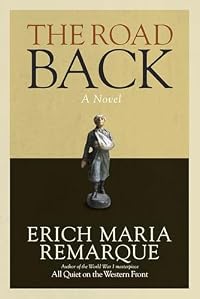
The sequel to the masterpiece All Quiet on the Western Front, The Road Back is a classic novel of the slow return of peace to Europe in the years following World War I. After four grueling years, the Great War has finally ended. Now Ernst and the few men left from his company cannot help wondering what will become of them. The town they departed as eager young men seems colder, their homes smaller, the reasons their comrades had to die even more inexplicable. For Ernst and his friends, the show more road back to peace is more treacherous than they ever imagined. Suffering food shortages, political unrest, and a broken heart, Ernst undergoes a crisis that teaches him what there is to live for-and what he has that no one can ever take away. "The world has a great writer in Erich Maria Remarque. He is a craftsman of unquestionably first rank, a man who can bend language to his will. Whether he writes of men or of inanimate nature, his touch is sensitive, firm, and sure."-The New York Times Book Review. show lessTags
Recommendations
























Member Reviews
Hamisítatlan pacifista propaganda, de a csúcskategóriás fajtából. Remarque a maga érzelmességet, humort és horrort ötvöző néptanító-stílusában leltárt készít mindazon dolgokról, amik az első világháborúból hazatérő német frontkatonákat várták. A Nyugaton a helyzet változatlan szerves továbbgondolásáról van itt szó, kicsit szószaporítón, de talán még gondolatébresztőbben is, mint ahogy azt a méltán népszerű klasszikus előzmény teszi. Helyenként persze már-már idegesítően didaktikus, és akit irritál az irodalomban a népművelés, néha majd a fejét csóválja*, de engem bőven kárpótolt, hogy ebben a könyvben bukkan fel talán először annak a problémának a részletes, show more mégis emészthető irodalmi kibontása, amit manapság poszttraumatikus stressz szindrómának neveznek. És hát az is nagyon ügyes, ahogy Remarque fogja a bajtársiasság éthoszát (azt az erényt, amit ő is, meg a barnaingesek is nagyra becsültek), és bemutatja, a fasiszta fogalomértelmezés hogyan semmisíti meg annak valódi értéktartalmát.
Van ebben a könyvben amúgy egy kép, ami nagyon megragadott: a hazatérő katonák tanácstalansága, amikor a meglátják a háború által nem érintett otthoni városokat. Aztán még az is, amikor a végén az erdőben pihenő veteránok látják a következő generációt, a tejfölösszájú kamaszokat lelkesülten gyakorlatozni. Ennek a résznek a keserűsége jelzi, Remarque tudatában volt annak, irodalma nem fogja megmenteni a történelemtől a németeket. Mondjuk a második világháborúból hazatérő katonákat legalább sikerült Hitlernek megkímélnie attól a sokktól, hogy Németországot romlatlan állapotban lássák viszont… Gratula.
* Engem amúgy idegesít. És néha csóváltam is a fejem. Ugyanakkor ha valamikor szükség volt népnevelésre az irodalomban, akkor az a német ’30-as évek, és ha valaki jól csinálja a népnevelést, akkor az Remarque. show less
Van ebben a könyvben amúgy egy kép, ami nagyon megragadott: a hazatérő katonák tanácstalansága, amikor a meglátják a háború által nem érintett otthoni városokat. Aztán még az is, amikor a végén az erdőben pihenő veteránok látják a következő generációt, a tejfölösszájú kamaszokat lelkesülten gyakorlatozni. Ennek a résznek a keserűsége jelzi, Remarque tudatában volt annak, irodalma nem fogja megmenteni a történelemtől a németeket. Mondjuk a második világháborúból hazatérő katonákat legalább sikerült Hitlernek megkímélnie attól a sokktól, hogy Németországot romlatlan állapotban lássák viszont… Gratula.
* Engem amúgy idegesít. És néha csóváltam is a fejem. Ugyanakkor ha valamikor szükség volt népnevelésre az irodalomban, akkor az a német ’30-as évek, és ha valaki jól csinálja a népnevelést, akkor az Remarque. show less
“But for peace? Are we suitable? Are we fit for anything but soldering?”
That’s the essential question of the German soldiers returning from the front after World War I, a war that they did not win. How do they fit back into 'regular' life? And can they? Can they have real relationships with women? Can they have proper manners at the table and in social situations? Can they find a reason to get jobs, get married, have families, and lead proper lives after all that they have seen and gone through in the war? In many cases, they simply can't.
This book takes us into the lives of these soldiers who have returned to their former lives. It is raw and intense. They went away as teenagers and returned as old men, not in age, but in life. show more Their statements at the trial of one of their friends really lay it out there for all to see. The war, and the defeat, have destroyed these men. It is one brutally honest truth to read these pages.
“All else went west in the war, but comradeship we did believe in; now only to find that what death could not do, life is achieving; it is driving us asunder.” show less
That’s the essential question of the German soldiers returning from the front after World War I, a war that they did not win. How do they fit back into 'regular' life? And can they? Can they have real relationships with women? Can they have proper manners at the table and in social situations? Can they find a reason to get jobs, get married, have families, and lead proper lives after all that they have seen and gone through in the war? In many cases, they simply can't.
This book takes us into the lives of these soldiers who have returned to their former lives. It is raw and intense. They went away as teenagers and returned as old men, not in age, but in life. show more Their statements at the trial of one of their friends really lay it out there for all to see. The war, and the defeat, have destroyed these men. It is one brutally honest truth to read these pages.
“All else went west in the war, but comradeship we did believe in; now only to find that what death could not do, life is achieving; it is driving us asunder.” show less
“Heretofore it was only death or wounds or temporary transfers that depleted the company. Now peace must be reckoned with.” — Erich Maria Remarque, “The Road Back”
For soldiers returning from war, the road back can be much longer than the journey home. Other novels have made this point, but Erich Maria Remarque's “The Road Back” (1930) ranks as a classic, just as his more famous novel, “All Quiet on the Western Front,” is the classic World War I novel. This novel is a sequel to the other, even though they share few characters in common because so many characters in the earlier novel, including the protagonist, did not survive.
Ernst and a few other survivors from his company return to Germany when the war ends and find show more peace a difficult adjustment. There are no officers to tell them what to do. There are choices to be made again, employment to be sought. Women reenter their lives in confusing ways. How does one sleep in silence? Perhaps most difficult of all, peace separates them even more surely than war did. They are on their own.
That a former soldier should miss the good old days of deadly combat seems odd, but Remarque makes it convincing. It's not just the radical change, of course, but also the trauma left by years of constant fear and extreme violence.
Insightful passages abound in the novel, as when Ernst sees a lovely scene and observes, "We see no countryside now, only terrain, — terrain for attack and defence. The old mill on the top there is no mill, but a strong point; the wood is no wood, it is artillery cover, — Such things will always creep in."
Other passages are just beautifully written, such as this description of a foggy night: "The street lamps have big yellow courtyards of light about them and the people are walking on cotton wool. Shop windows show up to right and left like mysterious fires. Wolf swims up through the fog and dives into it again."
For all the novel's pessimism, Remarque ends with a hint of optimism. "Perhaps I shall never be really happy again; perhaps the war has destroyed that, and no doubt I shall always be a little inattentive and nowhere quite at home —- but I shall probably never be wholly unhappy either — for something will always be there to sustain me, be it merely my own hands, or a tree, or the breathing earth."
This novel, like “All Quiet on the Western Front,” was banned and burned in Germany under the Nazis. Remarque moved to Switzerland in 1932, wrote a number of other novels and married an American film star, Paulette Goddard. For this war veteran, the road back seems to have been a little easier than it was for his characters. show less
For soldiers returning from war, the road back can be much longer than the journey home. Other novels have made this point, but Erich Maria Remarque's “The Road Back” (1930) ranks as a classic, just as his more famous novel, “All Quiet on the Western Front,” is the classic World War I novel. This novel is a sequel to the other, even though they share few characters in common because so many characters in the earlier novel, including the protagonist, did not survive.
Ernst and a few other survivors from his company return to Germany when the war ends and find show more peace a difficult adjustment. There are no officers to tell them what to do. There are choices to be made again, employment to be sought. Women reenter their lives in confusing ways. How does one sleep in silence? Perhaps most difficult of all, peace separates them even more surely than war did. They are on their own.
That a former soldier should miss the good old days of deadly combat seems odd, but Remarque makes it convincing. It's not just the radical change, of course, but also the trauma left by years of constant fear and extreme violence.
Insightful passages abound in the novel, as when Ernst sees a lovely scene and observes, "We see no countryside now, only terrain, — terrain for attack and defence. The old mill on the top there is no mill, but a strong point; the wood is no wood, it is artillery cover, — Such things will always creep in."
Other passages are just beautifully written, such as this description of a foggy night: "The street lamps have big yellow courtyards of light about them and the people are walking on cotton wool. Shop windows show up to right and left like mysterious fires. Wolf swims up through the fog and dives into it again."
For all the novel's pessimism, Remarque ends with a hint of optimism. "Perhaps I shall never be really happy again; perhaps the war has destroyed that, and no doubt I shall always be a little inattentive and nowhere quite at home —- but I shall probably never be wholly unhappy either — for something will always be there to sustain me, be it merely my own hands, or a tree, or the breathing earth."
This novel, like “All Quiet on the Western Front,” was banned and burned in Germany under the Nazis. Remarque moved to Switzerland in 1932, wrote a number of other novels and married an American film star, Paulette Goddard. For this war veteran, the road back seems to have been a little easier than it was for his characters. show less
This is a sequel to the author's more famous First World War novel All Quiet on the Western Front, about the experiences of a company of German troops in the trenches. In this novel, published a couple of years later in 1931, a mostly different group of soldiers attempt to come to terms with the end of the war and to re-assimilate into civilian life. We often hear of English Tommies that they failed on their return to find a "country fit for heroes", and the same goes for the German soldiers here ("We imagined that people would be waiting for us, expecting us; now we see that already every one is taken up with his own affairs. Life has moved on, is still moving on; it is leaving us behind almost as if we were superfluous already."). show more They meet incomprehension and an utterly different mindset from those on the Home Front, who can't begin to understand what the soldiers have seen and experienced, the horrors of seeing mates blown up and dying through shrapnel wounds, but also the comradeship, mutual support and sense of a shared mission that dictated the course of their life for four years ("I am quite unable to realize that now I must stay here in the family for good. I still have the feeling that to-morrow, or maybe the next day, but surely sometime, we shall be marching again, side by side, cursing or resigned, but all together."). Many of those at home (but not the soldiers' mothers) see the war as an exciting period for those young men, and the narrative is already becoming a simple heroic one for some young people. The consequences are grim for the soldiers: marriage problems, hallucinations and mental health problems, acts of violence, up to and including killing, and a suicide. All this takes place against the backdrop of the shortlived German Socialist Republic that replaced the Empire for about a year after the war ended, but these soldiers show little interest in politics, concerned with trying to establish a new identity in a world that has become alien to them, and they to it. A powerful read, if not quite up there with its predecessor. show less
The Road Back, although less well known than All Quiet on the Western Front, is just as thought-provoking and, in some subtle ways, even more heart-breaking.
The story begins during the last few days of WWI. As the final battles surge around them, a group of young German soldiers contemplate what peace will be like and dream of returning home with both hope and fear. They grieve for comrades who will not be returning with them but anticipate the joys of being back with friends and family.
When the war finally ends and they head home, they anticipate a hero's welcome but, instead encounter only indifference and misunderstanding. Those who have not gone to war have continued their lives without them and, from their perspective, nothing has show more changed. It is these young men who have changed and they no longer fit into this world. They had left home as boys, hardly more than children, with all the dreams and joys of youth; they are returning as men, old before their time, damaged both physically and psychically and they cannot understand how the world, their world, can be so different from what they remembered.
Their families and friends cannot understand these changes in them - how can they - and so they expect them to behave as they did before. At one point, Ernst, the narrator of the story, swears in front of his mother, something he would never have done before. She is 'pale and horrified' and he tries to explain:
" 'Our language was a bit rough out there, mother, I know - Rough but honest...Soldiers are always like that.'
'Yes, yes, I know,' she protests, 'but you - you too.' "
Ernst realizes that, to his mother, the war had meant "only a pack of wild beasts threatening the life of her child...It had never occurred to her that this same threatened child has been just such another wild beast to the children of yet other mothers."
All of the young men who have returned with Ernst feel lost. They don't fit in and they are unable to settle down. They suffer from shell-shock and depression. Wives have taken lovers, jobs are already occupied by those who stayed back, and they no longer respect those who used to have authority over them - school teachers, parents, police. They cannot break the habits they developed to survive in the trenches, they steal to eat even though food is available, they have flash backs, jumping at every loud noise, and they have nightmares. Things which had seemed so important before seem pointless now and there are no new dreams to replace them. One of Ernst's companions reenlists, seeking the companionship they had enjoyed during the war only to discover it no longer exists in a peacetime army, for another, the solution lies in revolution, only to be killed by the same soldiers he once called friends, for some, suicide is the only answer, and for a very few, including Ernst, the answer lies in nature where, finally, true peace is found.
The Road back is, possibly the hardest, the most gut-wrenching book I have ever read. It is a must-read for anyone, whether pro or anti war, who really wants to understand the effects that war has on young soldiers. show less
The story begins during the last few days of WWI. As the final battles surge around them, a group of young German soldiers contemplate what peace will be like and dream of returning home with both hope and fear. They grieve for comrades who will not be returning with them but anticipate the joys of being back with friends and family.
When the war finally ends and they head home, they anticipate a hero's welcome but, instead encounter only indifference and misunderstanding. Those who have not gone to war have continued their lives without them and, from their perspective, nothing has show more changed. It is these young men who have changed and they no longer fit into this world. They had left home as boys, hardly more than children, with all the dreams and joys of youth; they are returning as men, old before their time, damaged both physically and psychically and they cannot understand how the world, their world, can be so different from what they remembered.
Their families and friends cannot understand these changes in them - how can they - and so they expect them to behave as they did before. At one point, Ernst, the narrator of the story, swears in front of his mother, something he would never have done before. She is 'pale and horrified' and he tries to explain:
" 'Our language was a bit rough out there, mother, I know - Rough but honest...Soldiers are always like that.'
'Yes, yes, I know,' she protests, 'but you - you too.' "
Ernst realizes that, to his mother, the war had meant "only a pack of wild beasts threatening the life of her child...It had never occurred to her that this same threatened child has been just such another wild beast to the children of yet other mothers."
All of the young men who have returned with Ernst feel lost. They don't fit in and they are unable to settle down. They suffer from shell-shock and depression. Wives have taken lovers, jobs are already occupied by those who stayed back, and they no longer respect those who used to have authority over them - school teachers, parents, police. They cannot break the habits they developed to survive in the trenches, they steal to eat even though food is available, they have flash backs, jumping at every loud noise, and they have nightmares. Things which had seemed so important before seem pointless now and there are no new dreams to replace them. One of Ernst's companions reenlists, seeking the companionship they had enjoyed during the war only to discover it no longer exists in a peacetime army, for another, the solution lies in revolution, only to be killed by the same soldiers he once called friends, for some, suicide is the only answer, and for a very few, including Ernst, the answer lies in nature where, finally, true peace is found.
The Road back is, possibly the hardest, the most gut-wrenching book I have ever read. It is a must-read for anyone, whether pro or anti war, who really wants to understand the effects that war has on young soldiers. show less
The war is over and the soldiers go home. What they find there is not what they spent four years dreaming about. When they get home there is protest all over Germany. Those who did not serve are giving lofty speeches about what the soldiers did on the battlefield to the returning soldiers who knew what happened. Ernst and several of the others go back to school to finish their educations but they have a hard time with it. They are too battle weary and too emotionally scarred to fit in to civilian life. Some go back to their "aristocratic" lifestyle and forget the camaraderie of the Front. Others try to get back their old lives but have changed too much to understand those who stayed home. Others try but cannot fit in. Some have show more breakdowns; others commit suicide. Those who were not in battle have no understanding what these men have gone through. Ernst tells it like it is and Ludwig does also. None who came home alive escaped unscarred.
This sequel to All Quiet on the Western Front shows what is like for those coming back and the disrespect given to them, especially if on the losing side. A generation was lost. No one cares but these men whose lives were stolen and broken. This is a book that should be taught in school so that those who will be called to serve in future wars know that it is not glory and victory that come from war but loss--of self, of friends, of home, of life. Was it worth it? Ludwig was right. It was not. show less
This sequel to All Quiet on the Western Front shows what is like for those coming back and the disrespect given to them, especially if on the losing side. A generation was lost. No one cares but these men whose lives were stolen and broken. This is a book that should be taught in school so that those who will be called to serve in future wars know that it is not glory and victory that come from war but loss--of self, of friends, of home, of life. Was it worth it? Ludwig was right. It was not. show less
This book is a sequel of sorts, to All Quiet On The Western Front. It starts with the "Band of Brothers" making their way back after the war. The sound of silence is new to them. On the way, they meet a band of American soldiers, with whom they exchange souvenirs for food.
They wonder - why did we want to kill them?
From there, Erich Maria Remarque takes you on the long road, back to their homes, where they try to integrate back into society.
War is cruel. There is no redemption for the survivors, and those were the days when the stress faced by the soldier was not well appreciated.
The stories, slow as they are, are powerful and can shake you. In the days of old, kings and generals would be in the thick of war. In today's times, leaders show more hide behind microphones and in War Rooms. Posturing is rampant. Yet, the horrors of war remain.
This book, although written many years back, is relevant today. Very much so. show less
They wonder - why did we want to kill them?
From there, Erich Maria Remarque takes you on the long road, back to their homes, where they try to integrate back into society.
War is cruel. There is no redemption for the survivors, and those were the days when the stress faced by the soldier was not well appreciated.
The stories, slow as they are, are powerful and can shake you. In the days of old, kings and generals would be in the thick of war. In today's times, leaders show more hide behind microphones and in War Rooms. Posturing is rampant. Yet, the horrors of war remain.
This book, although written many years back, is relevant today. Very much so. show less
Members
- Recently Added By
Lists

German Literature
514 works; 55 members

Stories set in Western Europe
36 works; 1 member

Best Books of 1926-1935
403 works; 10 members

Books Read in 2019
4,052 works; 110 members

Publisher's Weekly Bestsellers Part I - 1895-1939
399 works; 8 members

Favorite Books in Translation
320 works; 133 members

Widely acclaimed, one book per year
105 works; 3 members
Author Information

106+ Works 29,188 Members
Erich Maria Remarque was born Erich Paul Remark on June 22, 1898 in Germany. He was drafted into the German Army at the age of 18. He was assigned to the Western Front and later moved to the 15th Reserve Infantry Regiment. He was wounded by shrapnel in the left leg, right arm and neck, and was moved to an army hospital in Germany where he spent show more the rest of the war. After the war, he continued his teacher training and became a primary school teacher. He also began pursuing his writing career. He started writing essays and poems and his first novel, The Dream Room. When he published All Quiet on the Western Front, Remarque changed his middle name in memory of his mother and reverted to the earlier spelling of the family name. The original family name, Remarque, had been changed to Remark by his grandfather in the 19th century. All Quiet on the Western Front was written in 1927, but Remarque was unable to find a publisher. The novel was published in 1929 and described the experiences of German soldiers during World War 1. His other works include: Station at the Horizon, The Road Back, Three Comrades, Flotsam, and Shadows in Paradise. Erich Remarque died in 1958 of heart collapse brought on byan aneurysm. (Bowker Author Biography) show less
All Editions
Some Editions
Awards and Honors
Distinctions
Series
Belongs to Publisher Series
Work Relationships
Is contained in
Has the adaptation
Common Knowledge
- Canonical title
- The Road Back
- Original title
- Der Weg zurück
- Alternate titles
- The Way Back
- Original publication date
- 1930-1931: Serialised; 1931: Book
- People/Characters
- Ernst
- Important places
- Germany
- Important events
- World War I
- Related movies
- The Road Back (1937 | IMDb); The Way Back (2010 | IMDb)
- First words
- Der Rest des zweiten Zuges liegt in einem zerschossenen Grabenstück hinter der Front und döst.
- Last words*
- (Click to show. Warning: May contain spoilers.)Onder mijn voeten kraken en bewegen de planken, onder mijn handen splijt het hout van de vensterbank, en naast de weg voor de deur ontspruiten zelfs aan de vermolmde stam van een oude linde, dikke, bruine knoppen - over een paar weken zal de boom even kleine, zijdeachtig groene blaadjes hebben als de wijd uitgespreide takken van de platanen die hem overschaduwen.
- Original language
- German
*Some information comes from Common Knowledge in other languages. Click "Edit" for more information.
Classifications
- Genres
- General Fiction, Fiction and Literature, Historical Fiction
- DDC/MDS
- 833.912 — Literature & rhetoric German & related literatures German fiction 1900- 1900-1990 1900-1945
- LCC
- PT2635 .E68 .W413 — Language and Literature German, Dutch and Scandinavian literatures German literature Individual authors or works 1860/70-1960
- BISAC
Statistics
- Members
- 653
- Popularity
- 43,991
- Reviews
- 19
- Rating
- (4.17)
- Languages
- 22 — Czech, Danish, Dutch, English, Esperanto, Estonian, Finnish, French, German, Hungarian, Italian, Latvian, Lithuanian, Norwegian (Bokmål), Polish, Russian, Slovak, Spanish, Swedish, Turkish, Ukrainian, Yiddish
- Media
- Paper, Audiobook, Ebook
- ISBNs
- 52
- ASINs
- 22