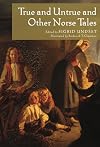
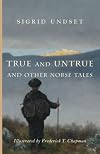
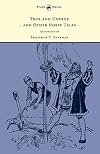
True and Untrue and Other Norse Tales
by Sigrid Undset
On This Page
Description
A selection of Norwegian folktales chosen by Sigrid Undset, True and Untrue and Other Norse Tales is based on the classic folklore collected by Pieter Christian Asbjornsen and Jorgen Moe. These wonderful stories tell of worlds similar to our own, worlds with love and hate, sorrow and joy, humor and pathos. Beginning with brothers named True and Untrue, the book takes readers through tales of princes and princesses, giants and trolls, husbands and wives, and a castle that is "East o' the Sun show more and West o' the Moon." Strikingly illustrated by Frederick T. Chapman while under fire in Italy during the Second World War and with a remarkable foreword by Undset, True and Untrue and Other Norse Tales has a story for everyone. show lessTags
Recommendations


















Member Reviews
Madame Undset's essay on folk tales, which serves as the introduction to this collection of Norwegian stories, encompasses cosmology, mythology, anthropology and more to explain her well-thought out belief that folk tales are good and worthy of knowing. Raised in a secular fashion in a Lutheran country, which to some extent wanted to deny its cultural heritage as "anti-Christian" Undset wished to set the record straight, so to speak, and did so through this fine chapter in her book of folk tales for children.
Ratings
Members
- Recently Added By
Author Information

158+ Works 12,072 Members
Sigrid Undset was the daughter of archeologist Ingvald Undset. Cultural, autobiographical, and religious topics constitute a large and interesting portion of her fiction, which in Norway is categorized according to the time of action: medieval or modern. Jenny (1911), an idealistic and tragic love story, is one of the latter novels. Undset's show more comprehensive knowledge of medieval Scandinavian culture has its literary monuments in Kristin Lavransdatter (1920--22) and The Master of Hestviken (1925--27), historical novels that depict life in the Norwegian Middle Ages. She was awarded the Nobel Prize for Literature in 1928. Norwegian criticism of Sigrid Undset's writing centers on her religiosity (she became a conservative, almost reactionary Catholic in Lutheran Norway in the 1920s; she possesses an intensity of belief that is rather naturally expressed in the medieval novels. Yet while she has written religious polemics, the medieval novels are not tendentious. In fact, the central motifs are eroticism, marriage, and family life, in short, the full life of a medieval woman who sees herself in the light of contemporary Christian beliefs. These novels are great, realistic delineations of medieval personalities. During World War II she escaped the German occupation of Norway and fled to America, where she wrote her autobiographical Happy Times in Norway (1942). (Bowker Author Biography) show less
Classifications
Statistics
- Members
- 57
- Popularity
- 536,886
- Reviews
- 1
- Rating
- (5.00)
- Languages
- English
- Media
- Paper, Ebook
- ISBNs
- 8
- ASINs
- 4