On This Page
Description
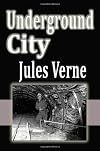
Now widely lauded for his role as a key innovator in the genre of science fiction, French author Jules Verne broke new ground with the publication of titles such as Journey to the Center of the Earth and Twenty Thousand Leagues Under the Sea. Seamlessly blending fact and fiction, The Underground City takes place among a Scottish community of miners. When a promising new seam of coal is identified, the miners attempt to track it to its source—and make a startling discovery that shakes them show more to their very core.. show less
Tags
Recommendations




























Member Recommendations
Member Reviews
Of the dozen or so Verne books i've read i'd put this at number 3 behind '20,000' and 'Paris in the 20th Century'. Having said that Verne does get a bit repetitive in the broad-strokes. This is the fifth story i've read by him that has mysterious events which turn out to be... well i won't say but if he lived Verne could certainly have gotten a job as a Scooby-Doo scriptwriter :P.
However as Scooby-Doo episodes go this is still pretty good. There's a bit of romance and its also a bit darker than most of Verne's stories. As for the romance, it's not overly creepy which is also pretty unusual, for the time, especially given the origin of the love interest.
Finally while living in a mine is clearly over romanticized it is a least a pretty show more interesting setting and Verne does his normal good job on the details. show less
However as Scooby-Doo episodes go this is still pretty good. There's a bit of romance and its also a bit darker than most of Verne's stories. As for the romance, it's not overly creepy which is also pretty unusual, for the time, especially given the origin of the love interest.
Finally while living in a mine is clearly over romanticized it is a least a pretty show more interesting setting and Verne does his normal good job on the details. show less
Chaudière éventrée, pistons tordus, passerelles brisées...
Les vieilles houillères d'Aberfoyle, en Écosse, sont bien mortes. De mystérieux événements continuent pourtant de s'y dérouler... Un terrible mystère semble dissimulé au fond de la mine ! Dans l'épaisse obscurité, les galeries résonnent encore de coups de pic. Les souvenirs, sans doute ! Mais ces lueurs éphémères s'éloignant sans bruit... Les fées maléfiques des légendes écossaises ? Une voûte qui s'écroule, le lac Katrine qui se vide...
Et cette enfant terrorisée... Par quoi ? Par qui ? Pas de doute, un esprit malveillant hante les lieux ! Contre rumeurs et superstitions, James Starr, l'ancien ingénieur, viendra-t-il à bout de tous les secrets que show more referme la vieille mine d'Aberfoyle ?
Dans les houillères épuisées d'Aberfoyle en Ecosse, ne vivent plus que le vieux contremaître Simon Ford, sa femme et son fils. L'ancien directeur, l'ingénieur James Starr, reçoit che lui à Edimbourg, dix ans après la fermeture des mines, un message de Ford: "Si M. Starr veut se rendre demain aux houillères, fosse Dochart, il lui sera fait une communication de nature à l'intéresser..." Quelques heures après, arrive une seconde lettre, non signée: "Inutile à l'ingénieur de se déranger, la lettre de Ford étant maintenant sans objet". Follement intrigué, James Starr part aussitôt pour Aberfoyle.
Au cours de la visite des anciennes galeries, des tentatives de meurtre, des phénomènes étranges se produisent. Cependant, Simon Ford a bel et bien découvert un fabuleux filon! Mais impossible de revenir! On a rebouché l'entaille par où Starr, Ford, sa femme et son fils s'étaient glissés; ils sont enfermés dans la mine!
Les Indes noires: une aventure captivante aux multiples péripéties, comme seul Jules Verne sait les imaginer. show less
Les vieilles houillères d'Aberfoyle, en Écosse, sont bien mortes. De mystérieux événements continuent pourtant de s'y dérouler... Un terrible mystère semble dissimulé au fond de la mine ! Dans l'épaisse obscurité, les galeries résonnent encore de coups de pic. Les souvenirs, sans doute ! Mais ces lueurs éphémères s'éloignant sans bruit... Les fées maléfiques des légendes écossaises ? Une voûte qui s'écroule, le lac Katrine qui se vide...
Et cette enfant terrorisée... Par quoi ? Par qui ? Pas de doute, un esprit malveillant hante les lieux ! Contre rumeurs et superstitions, James Starr, l'ancien ingénieur, viendra-t-il à bout de tous les secrets que show more referme la vieille mine d'Aberfoyle ?
Dans les houillères épuisées d'Aberfoyle en Ecosse, ne vivent plus que le vieux contremaître Simon Ford, sa femme et son fils. L'ancien directeur, l'ingénieur James Starr, reçoit che lui à Edimbourg, dix ans après la fermeture des mines, un message de Ford: "Si M. Starr veut se rendre demain aux houillères, fosse Dochart, il lui sera fait une communication de nature à l'intéresser..." Quelques heures après, arrive une seconde lettre, non signée: "Inutile à l'ingénieur de se déranger, la lettre de Ford étant maintenant sans objet". Follement intrigué, James Starr part aussitôt pour Aberfoyle.
Au cours de la visite des anciennes galeries, des tentatives de meurtre, des phénomènes étranges se produisent. Cependant, Simon Ford a bel et bien découvert un fabuleux filon! Mais impossible de revenir! On a rebouché l'entaille par où Starr, Ford, sa femme et son fils s'étaient glissés; ils sont enfermés dans la mine!
Les Indes noires: une aventure captivante aux multiples péripéties, comme seul Jules Verne sait les imaginer. show less
The sixteenth Extraordinary Voyage does not really involve much voyaging. Its original title is "Les indes noires" (literally "The Black Indies"), which makes reference to the Scottish coal region, as rich in natural resources as the Indies. It's the second Verne novel (after Journey to the Center of the Earth) to be set mostly underground.
What is it about?: Receiving a letter from an old colleague, mining engineer James Starr sets off for the old Aberfoyle mine, thought to have been mined out ten years earlier. Starr finds the former mine overseer Simon Ford and his family living in a cottage deep inside the abandoned mine. The Fords claim they have discovered a new, large vein of coal. However, unexplained happenings and accidents show more start to occur around the main characters. Is it the work of goblins and firemaidens, or is there someone interested in keeping the mine closed?
This is a low-key adventure when compared to other Verne novels. In that sense, it reminded me of The Floating City, although I felt The Floating City was more solid as a novel.
Even though it involves some underground exploring, this novel is a mystery more than an adventure story or a tale of exploration. There is also a romantic element, which is not Verne's forte, since he is always more focused on the plot than on the character's feelings and internal life.
One element I enjoyed is the vivid descriptions of Scotland, tying the various locations to Walter Scott's novels. Verne's knowledge of the region was not the result of his reading, like in most of his novels, but of a trip he had made to Scotland years earlier, his first trip abroad. Verne loved Scotland and Walter Scott, and it shows.
The enthusiasm for living underground, illuminated by electric lights, was an interesting element, although I can't say it converted me. It looks like a miserable way to live. Verne, I suppose, placed too much trust on electric illumination as a substitute of natural lighting. Being more familiar with electric lights, I know they do the job, of course, but they can't really replace the sun, at least for me. Maybe it's just that, unlike the Ford family, I don't have miner's blood running through my veins.
My main objection is that the central plot, although intriguing, does not end up offering any of those twists or memorable moments that many other Verne stories have. The whole thing gets solved in a relatively inconspicuous manner. There might have been a more thrilling story to be told with this material.
Enjoyment factor: This was pleasant to read and not without interest, but it's a minor Verne work. The pace is fine (these one-volume Verne novels are quite short, you don't have time to get bored). As a romance it is not convincing. I liked the descriptions of the setting and the mystery was intriguing, although the resolution is somewhat lackluster.
Next up: Dick Sand, A Captain at Fifteen. This one was an old childhood favorite, so I have high expectations.
See all my Verne reviews here: https://www.sffworld.com/forum/threads/reading-vernes-voyages-extraordinaires.58... show less
What is it about?: Receiving a letter from an old colleague, mining engineer James Starr sets off for the old Aberfoyle mine, thought to have been mined out ten years earlier. Starr finds the former mine overseer Simon Ford and his family living in a cottage deep inside the abandoned mine. The Fords claim they have discovered a new, large vein of coal. However, unexplained happenings and accidents show more start to occur around the main characters. Is it the work of goblins and firemaidens, or is there someone interested in keeping the mine closed?
This is a low-key adventure when compared to other Verne novels. In that sense, it reminded me of The Floating City, although I felt The Floating City was more solid as a novel.
Even though it involves some underground exploring, this novel is a mystery more than an adventure story or a tale of exploration. There is also a romantic element, which is not Verne's forte, since he is always more focused on the plot than on the character's feelings and internal life.
One element I enjoyed is the vivid descriptions of Scotland, tying the various locations to Walter Scott's novels. Verne's knowledge of the region was not the result of his reading, like in most of his novels, but of a trip he had made to Scotland years earlier, his first trip abroad. Verne loved Scotland and Walter Scott, and it shows.
The enthusiasm for living underground, illuminated by electric lights, was an interesting element, although I can't say it converted me. It looks like a miserable way to live. Verne, I suppose, placed too much trust on electric illumination as a substitute of natural lighting. Being more familiar with electric lights, I know they do the job, of course, but they can't really replace the sun, at least for me. Maybe it's just that, unlike the Ford family, I don't have miner's blood running through my veins.
My main objection is that the central plot, although intriguing, does not end up offering any of those twists or memorable moments that many other Verne stories have. The whole thing gets solved in a relatively inconspicuous manner. There might have been a more thrilling story to be told with this material.
Enjoyment factor: This was pleasant to read and not without interest, but it's a minor Verne work. The pace is fine (these one-volume Verne novels are quite short, you don't have time to get bored). As a romance it is not convincing. I liked the descriptions of the setting and the mystery was intriguing, although the resolution is somewhat lackluster.
Next up: Dick Sand, A Captain at Fifteen. This one was an old childhood favorite, so I have high expectations.
See all my Verne reviews here: https://www.sffworld.com/forum/threads/reading-vernes-voyages-extraordinaires.58... show less
Not one of his better known novels, the characters here are all totally unbelievable and the basic plot pretty daft (a common point made against Verne plots, but more than usually evident here), though there are some moments of quite good suspense. As a SAD sufferer I found the idea of so many people willing to live permanently underground quite horrible and entirely unfeasible. What comes across most clearly here is Verne's love of Scotland as some chapters are brain dumps of Scottish geography, history, culture and literature.
This was a fairly short and straightforward novel by Jules Verne with some exceptions that proved to be welcome surprises. Overall, the plot is engaging and the characters are provided with enough background, exploration, and originality as to make the tale appealing to me as a reader. This is a good Verne novel, and fans of his work should not skip this one.
3.25 stars.
3.25 stars.
Simon Ford, zijn vrouw en zoon zijn in de mijn blijven wonen nadat deze stilgelegd is. Na 10 jaar stuiten zij op nieuwe steenkoollagen. Zij zenden bericht aan de voormalig opzichter James Starr. Daarmee begint een reeks incidenten gericht tegen het opnieuw exploiteren van de mijn. Deze incidenten zorgen voor een spanningsopbouw in het verhaal, dat zich afspeelt in Schotland in de 19e eeuw.
This isn't what I thought it would be, but I still really enjoyed the story.
Members
- Recently Added By
Lists

Works Referenced in The League of Extraordinary Gentlemen
122 works; 6 members
Author Information

Jules Verne was born on February 8, 1828 in Nantes, France. He wrote for the theater and worked briefly as a stockbroker. He is considered by many to be the father of science fiction. His most popular novels included Journey to the Center of the Earth, Twenty Thousand Leagues Under the Sea, and Around the World in Eighty Days. Several of his works show more have been adapted into movies and TV mini-series. In 1892, he was made a Chevalier of the Legion of Honor in France. He died on March 24, 1905 at the age of 77. (Bowker Author Biography) Jules Verne (1828-1905) is the author of numerous adventure stories grounded in popularizations of science. (Publisher Provided) show less
Some Editions
Series

Belongs to Publisher Series
Work Relationships
Is contained in
Has as a student's study guide
Common Knowledge
- Canonical title
- The Child of the Cavern; The Underground City
- Original title
- Les Indes noires
- Alternate titles
- The Underground City; Black Diamonds; Black Indies; Strange Doings Underground
- Original publication date
- 1877
- First words
- To Mr. F. R. Starr, Engineer, 30 Canongate, Edinburgh.
- Last words
- (Click to show. Warning: May contain spoilers.)Thanks to him, the story of old Silfax and his bird will long be preserved, and handed down to future generations of the Scottish peasantry.
- Original language
- French
Classifications
Statistics
- Members
- 550
- Popularity
- 53,828
- Reviews
- 19
- Rating
- (3.54)
- Languages
- 13 — Czech, Dutch, English, Finnish, French, German, Hungarian, Italian, Norwegian (Nynorsk), Polish, Portuguese, Spanish, Turkish
- Media
- Paper, Audiobook, Ebook
- ISBNs
- 115
- ASINs
- 31