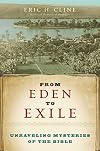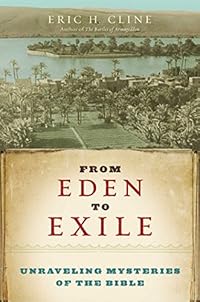
From Eden to Exile: Unraveling Mysteries of the Bible
by Eric H. Cline
On This Page
Description
Eric H. Cline uses the tools of his trade to examine some of the most puzzling mysteries from the Hebrew Bible and, in the process, to narrate the history of ancient Israel. Combining the academic rigor that has won the respect of his peers with an accessible style that has made him a favorite with readers and students alike, he lays out each mystery, evaluates all available evidence-from established fact to arguable assumption to far-fetched leap of faith-and proposes an explanation that show more reconciles Scripture, science, and history. Numerous amateur archaeologists have sought some trace of Noah's Ark to meet only with failure. But, though no serious scholar would undertake such a literal search, many agree that the Flood was no myth but the cultural memory of a real, catastrophic inundation, retold and reshaped over countless generations. Likewise, some experts suggest that Joshua's storied victory at Jericho is the distant echo of an earthquake instead of Israel's sacred trumpets-a fascinating, geologically plausible theory that remains unproven despite the best efforts of scientific research. Cline places these and other Biblical stories in solid archaeological and historical context, debunks more than a few lunatic-fringe fantasies, and reserves judgment on ideas that cannot yet be confirmed or denied. Along the way, our most informed understanding of ancient Israel comes alive with dramatic but accurate detail in this groundbreaking, engrossing, entertaining book by one of the rising stars in the field. show lessTags
Recommendations






Member Reviews
Very good examination of biblical mysteries based on scholarly reason written for the lay person - Cline presents different ideas, examines the evidence for or against each one, explains the limits of archeological capabilities, and proposes the most likely solution based on textual and archeological evidence, not wishful or pious thinking. If a proposed solution can be dismissed, Cline explains why. Cline emphasizes that current thinking can change anytime upon discovery of new evidence. An extensive epilogue and afterward bring the reader up to date on the situation since the book was first published. A detailed bibliography provides sources for further reading. I highly recommend this book to anyone interested in historical truth.
This was a fascinating journey through a number of events from the Old Testament. I found that the author did a remarkable job with other ancient literature and the comparisons were useful and helpful. There were a number of new insights brought to bear. However, it was clear that writing from the viewpoint of faith or better of "the faith" was not his intention or within his ability. He never discussed the different conceptions of time and insisted on projecting contemporary, western greek concepts of time into the work. The inability to match times with other "known" times obviously troubled the author. This however, should not take away from his scholarship and addition to the understanding of the mysteries of several noteworthy show more events of the Old Testament. It was a good fast read that was written so that it would be accessible to most readers. show less
 This review was written for LibraryThing Early Reviewers.
I was tickled pink to get a review copy of Eric Cline's From Eden to Exile: Unraveling Mysteries of the Bible. Those who know me know that I'm not usually drawn to Biblical studies as a field, but I do like to know what is going on in a field that is important to any Christian theology. Cline did not let me down. This is an engaging read.
The first thing that grabbed my attention was Cline's project. He is not trying to shoulder up some agenda of proving or disproving the historicity of the Bible, rather he provides a frank look at the Biblical, extra-biblical and archeological evidence (or lack thereof) for several fascinating Biblical mysteries. These mysteries include such favourites as the location of Eden and Noah's ark, as well as show more finding the lost tribes of Israel. If you are looking for someone to tell you that there are clear answers for any of these mysteries you probably want a different book.
While the whole book is quite engaging and accessible, it was his concluding chapter that really shined. Here Cline urges us not to give up our various positions on the historicity of the various early Biblical accounts, but rather to take seriously all the data. To avoid speculating and going beyond the evidence. But remember that the Biblical narratives are about something more important than a verifiable history. "People read the Bible to find themselves in it, and many people don't just read the story, they live it." (p.185)
Respond to this review here. show less
The first thing that grabbed my attention was Cline's project. He is not trying to shoulder up some agenda of proving or disproving the historicity of the Bible, rather he provides a frank look at the Biblical, extra-biblical and archeological evidence (or lack thereof) for several fascinating Biblical mysteries. These mysteries include such favourites as the location of Eden and Noah's ark, as well as show more finding the lost tribes of Israel. If you are looking for someone to tell you that there are clear answers for any of these mysteries you probably want a different book.
While the whole book is quite engaging and accessible, it was his concluding chapter that really shined. Here Cline urges us not to give up our various positions on the historicity of the various early Biblical accounts, but rather to take seriously all the data. To avoid speculating and going beyond the evidence. But remember that the Biblical narratives are about something more important than a verifiable history. "People read the Bible to find themselves in it, and many people don't just read the story, they live it." (p.185)
Respond to this review here. show less
This review was written for LibraryThing Early Reviewers.I just finished Eric H. Cline's book From Eden to Exile: Unraveling Mysteries of the Bible. It examines seven "mysteries" of the Hebrew Bible from an archaeological perspective. Mr. Cline is a biblical archaeology scholar and is the associate directory of an ongoing excavation in Meggido (the biblical Armaggedon) in Israel.
The book is aimed at the interested layman and his writing style is very readable and easy to understand. His treatment of the various mysteries in the Hebrew Bible is short but informative. While I question some of his positions, on the whole the book is a great resource and I recommend it to everyone.
The seven mysteries his book tackles are:
1) The Garden of Eden
2) Noah's Ark
3) Sodom and Gomorrah
4) Moses and the show more Exodus
5) Joshua and the Battle of Jericho
6) The Ark of the Covenant
7) The Ten Lost Tribes of Israel
What's surprising in his book is his acknowledgement and treatment of crackpots. I'm used to scholars ignoring works by the lunatic fringe, for even acknowledging their theories gives them too much credibility. Not with Cline's book. In each of the mysteries, he enumerates both sober and fantastical ideas, challenging them for their consistency with the archaeological record. His dismissal of some fringe works can be acerbic, but not unwarranted as most of these "theories" get more media attention and gives genuine research a bad name.
I won't go into detail on each of the mysteries (go out and buy a copy if you want to know more!) but I will have to nitpick on his chapter about the Ark of the Covenant. I think he gives too much credibility with the biblical claim that King Josiah rediscovered the Ark (p. 151, "Since no one has seen the ark since at least Josiah's time"). It seems to me that Josiah concocted the story to give divine credence to his religious reforms. I think it's much too convenient that Josiah would suddenly stumble upon the Ark, with its Deuteronomic revisions of the Law, and how it so happens to justify his reforms.
Maybe I'm being too unsympathetic in my reading of that rather innocuous line, but at the very least Mr. Cline should've hinted at the possibility of Josiah's fabrication of the story about the ark. (Cline admits that he's less interested with examining the text of the bible and more with what archaeology has to say, so I guess he doesn't want to wade into contentious textual criticism territory.) show less
The book is aimed at the interested layman and his writing style is very readable and easy to understand. His treatment of the various mysteries in the Hebrew Bible is short but informative. While I question some of his positions, on the whole the book is a great resource and I recommend it to everyone.
The seven mysteries his book tackles are:
1) The Garden of Eden
2) Noah's Ark
3) Sodom and Gomorrah
4) Moses and the show more Exodus
5) Joshua and the Battle of Jericho
6) The Ark of the Covenant
7) The Ten Lost Tribes of Israel
What's surprising in his book is his acknowledgement and treatment of crackpots. I'm used to scholars ignoring works by the lunatic fringe, for even acknowledging their theories gives them too much credibility. Not with Cline's book. In each of the mysteries, he enumerates both sober and fantastical ideas, challenging them for their consistency with the archaeological record. His dismissal of some fringe works can be acerbic, but not unwarranted as most of these "theories" get more media attention and gives genuine research a bad name.
I won't go into detail on each of the mysteries (go out and buy a copy if you want to know more!) but I will have to nitpick on his chapter about the Ark of the Covenant. I think he gives too much credibility with the biblical claim that King Josiah rediscovered the Ark (p. 151, "Since no one has seen the ark since at least Josiah's time"). It seems to me that Josiah concocted the story to give divine credence to his religious reforms. I think it's much too convenient that Josiah would suddenly stumble upon the Ark, with its Deuteronomic revisions of the Law, and how it so happens to justify his reforms.
Maybe I'm being too unsympathetic in my reading of that rather innocuous line, but at the very least Mr. Cline should've hinted at the possibility of Josiah's fabrication of the story about the ark. (Cline admits that he's less interested with examining the text of the bible and more with what archaeology has to say, so I guess he doesn't want to wade into contentious textual criticism territory.) show less
From Eden to Exile is a well-balanced look into the disputable "mysteries of the Bible." Tackling the topics from the Hebrew scriptures such as the Garden of Eden, Noah's Ark, Sodom and Gomorrah, Moses and the Exodus, Joshua and the Battle of Jericho, The Ark of the Covenant, and the Ten Lost Tribes of Israel Cline attempts to look critically at the evidence for and against (as well as the rumors, theories, and conjectures) these fascinating stories.
Cline writes as a trained scholar and archaeologist and speaks highly of others trained in the field and their theories; he is also willing to call a crackpot theorist when he sees one.
When so many experts attempt to polarize opinion, From Eden to Exile is a refreshing departure: willing to show more live and write in the gray uncertainties of investigating pre-histories from millennia ago. Throughout the book, Cline wades in to the supporting evidence, both inter-textual and archaeological, when it exists and is willing to admit when there are no clear answers, or clear conclusions to be drawn.
Although this shouldn't be the last book you read about the 'mysteries of the Bible', it is certainly a good place to have conversations condensed. show less
Cline writes as a trained scholar and archaeologist and speaks highly of others trained in the field and their theories; he is also willing to call a crackpot theorist when he sees one.
When so many experts attempt to polarize opinion, From Eden to Exile is a refreshing departure: willing to show more live and write in the gray uncertainties of investigating pre-histories from millennia ago. Throughout the book, Cline wades in to the supporting evidence, both inter-textual and archaeological, when it exists and is willing to admit when there are no clear answers, or clear conclusions to be drawn.
Although this shouldn't be the last book you read about the 'mysteries of the Bible', it is certainly a good place to have conversations condensed. show less
This review was written for LibraryThing Early Reviewers.This book looks at the attempts to prove many of the most famous stories in the bible through archeology and science and how most of them failed and why.
It was well written, somewhat short considering the topic but still very informative without being to dry and, I felt very respectful towards the topic.
Each chapter covered a specific biblical event, place or object, such as the Garden of Eden, the Ark of the Covenant or the Exodus and discusses the various efforts to prove or discover their whereabouts, pointing out why they have failed, the difficulties one faces when even trying to prove something from one source and from so long ago and offers his own opinions on whether or not something can be proved and why or why not.
While I was show more familiar with many of these stories and some of the attempts to prove or disprove them, I still feel I learned a lot from reading this book and am actually curios to read more about biblical history. show less
It was well written, somewhat short considering the topic but still very informative without being to dry and, I felt very respectful towards the topic.
Each chapter covered a specific biblical event, place or object, such as the Garden of Eden, the Ark of the Covenant or the Exodus and discusses the various efforts to prove or discover their whereabouts, pointing out why they have failed, the difficulties one faces when even trying to prove something from one source and from so long ago and offers his own opinions on whether or not something can be proved and why or why not.
While I was show more familiar with many of these stories and some of the attempts to prove or disprove them, I still feel I learned a lot from reading this book and am actually curios to read more about biblical history. show less
Eric Cline's cleverly-titled book, From Eden To Exile: Unraveling The Mysteries of the Bible is structured around seven puzzling stories from the Old Testament. He presents the consensus of modern researchers as well as popular amateur theories (the sort you frequently hear espoused in televised documentaries). He critiques these "enthusiast" theories solidly, which I very much appreciated.
Given that he consistently engaged both the scholarly world and the popular world, I'm puzzled that he so rarely engaged the world of contemporary evangelical scholarship. He's clearly aware of it (he references evangelical scholars several times), but he doesn't often present evangelical perspectives or arguments (not even to critique them). This show more weakness seriously undermines the usefulness (and credibility) of the book for a significant segment of his potential audience, many people interested in the archeology of the Old Testament are either pious believers or ardent skeptics. Both groups are quite interested in the arguments of evangelical scholars.
He summarizes his conclusions on page 182, "While we may not have located Noah's ark, I believe that we have successfully documented that the Ten Lost Tribes weren't lost after all, that the Ark of the Covenant was most likely destroyed during the obliteration of Solomon's Temple by Nebuchadnezzar and the Neo-Babylonians, that Jericho was probably not destroyed by Joshua and the Israelites, that we can neither confirm nor deny the biblical account of the Exodus, that Sodom and Gomorrah are still missing, and that the Garden of Eden is most likely to have been located in Mesopotamia."
It's a fun little volume, but don't let it be the only book you read on the cultural background of the Old Testament. show less
Given that he consistently engaged both the scholarly world and the popular world, I'm puzzled that he so rarely engaged the world of contemporary evangelical scholarship. He's clearly aware of it (he references evangelical scholars several times), but he doesn't often present evangelical perspectives or arguments (not even to critique them). This show more weakness seriously undermines the usefulness (and credibility) of the book for a significant segment of his potential audience, many people interested in the archeology of the Old Testament are either pious believers or ardent skeptics. Both groups are quite interested in the arguments of evangelical scholars.
He summarizes his conclusions on page 182, "While we may not have located Noah's ark, I believe that we have successfully documented that the Ten Lost Tribes weren't lost after all, that the Ark of the Covenant was most likely destroyed during the obliteration of Solomon's Temple by Nebuchadnezzar and the Neo-Babylonians, that Jericho was probably not destroyed by Joshua and the Israelites, that we can neither confirm nor deny the biblical account of the Exodus, that Sodom and Gomorrah are still missing, and that the Garden of Eden is most likely to have been located in Mesopotamia."
It's a fun little volume, but don't let it be the only book you read on the cultural background of the Old Testament. show less
This review was written for LibraryThing Early Reviewers.Members
- Recently Added By
Author Information

33+ Works 4,087 Members
Eric H. Cline is professor of classics and anthropology and director of the Capitol Archaeological Institute George Washington University.
Some Editions
Awards and Honors
Common Knowledge
- Original publication date
- 2007
- Epigraph
- "The greatest challenge for anyone trying to 'solve' a Biblical mystery is that the Bible interweaves the historical and the theological, the mystical and the verifiable - often in one sentence."
-Molly Dewsnap Mein... (show all)hardt, Biblical Archaeology Society
"When you set out on your journey to Ithaca
then pray that the road is long,
full of adventure, full of knowledge."
-Constantine P. Cavafy (1911) - Publisher's editor
- Brown, Garrett
Classifications
- Genres
- Religion & Spirituality, Nonfiction, Anthropology, History, General Nonfiction
- DDC/MDS
- 221.67 — Religion The Bible Old Testament (Tanakh) Bible. O.T.--exegesis
- LCC
- BS1180 .C64 — Philosophy, Psychology and Religion The Bible The Bible Old Testament Works about the Old Testament Criticism and interpretation
- BISAC
Statistics
- Members
- 217
- Popularity
- 149,178
- Reviews
- 15
- Rating
- (3.35)
- Languages
- English, German, Hungarian
- Media
- Paper, Ebook
- ISBNs
- 6
- ASINs
- 2