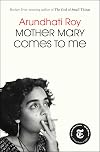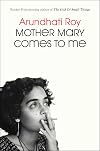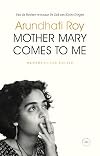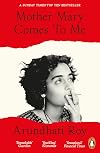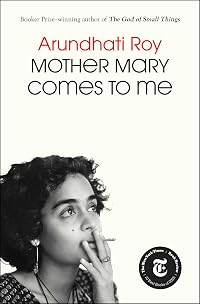
Mother Mary Comes to Me
by Arundhati Roy
On This Page
Description
Named One of the New York Times Book Review's Top Ten Books of 2025Finalist for the Kirkus Prize
A raw and deeply moving memoir from the legendary author of The God of Small Things and The Ministry of Utmost Happiness that traces her complex relationship with her mother, Mary Roy, a fierce and formidable force who shaped Arundhati's life both as a woman and a writer.
Mother Mary Comes to Me, Arundhati Roy's first work of memoir, is a soaring account, both intimate and inspirational, of show more how the author became the person and the writer she is, shaped by circumstance, but above all by her complex relationship to the extraordinary, singular mother she describes as "my shelter and my storm."
"Heart-smashed" by her mother Mary's death in September 2022 yet puzzled and "more than a little ashamed" by the intensity of her response, Roy began to write, to make sense of her feelings about the mother she ran from at age eighteen, "not because I didn't love her, but in order to be able to continue to love her." And so begins this astonishing, sometimes disturbing, and surprisingly funny memoir of the author's journey from her childhood in Kerala, India, where her single mother founded a school, to the writing of her prizewinning novels and essays, through today.
With the scale, sweep, and depth of her novels, The God of Small Things and The Ministry of Utmost Happiness, and the passion, political clarity, and warmth of her essays, Mother Mary Comes to Me is an ode to freedom, a tribute to thorny love and savage grace—a memoir like no other. Biography & Autobiography. Nonfiction. show less
Tags
Recommendations






Member Reviews
Talk about an incredibly complicated and conflicted child-mother relationship. This justifiably praised memoir of how a domineering and often cruel mother shaped a world-renowned activist/author also immerses readers in the history and political climate of India — topics I previously knew nothing about.
As a reader who has always been fascinated by tales of entrepreneurialism, I appreciated learning about the challenges Roy’s mother faced in establishing a respected school in India.
Now for the critique. As a favorite GoodReads reviewer commented, there are parts of this otherwise engaging memoir that seem “unfocused” and “meandering.” As I all-too-often write, a disciplined editor could have trimmed this autobiography by 25 show more percent without sacrificing a single significant angle. One example: Roy could have more succinctly summarized her political activities in the final quarter of the book.
Still, my first foray into Roy’s literary works will likely inspire me to “The God of Small Things” and inspires me to read God of Small Things” and “The Minister of Utmost Happiness.” show less
As a reader who has always been fascinated by tales of entrepreneurialism, I appreciated learning about the challenges Roy’s mother faced in establishing a respected school in India.
Now for the critique. As a favorite GoodReads reviewer commented, there are parts of this otherwise engaging memoir that seem “unfocused” and “meandering.” As I all-too-often write, a disciplined editor could have trimmed this autobiography by 25 show more percent without sacrificing a single significant angle. One example: Roy could have more succinctly summarized her political activities in the final quarter of the book.
Still, my first foray into Roy’s literary works will likely inspire me to “The God of Small Things” and inspires me to read God of Small Things” and “The Minister of Utmost Happiness.” show less
Mother Mary Comes to Me is a memoir by the Indian writer and activist Arundhati Roy, best known for her 1997 novel The God of Small Things. Arundhati's compelling account of her own life, work and development as a writer and activist is constructed around a moving account of her complicated and difficult relationship with her mother Mary Roy, a formidable presence throughout the book's pages, a woman who never said Let it Be (the author's Dedication).
Mary Roy was from a highly educated Syrian Christian family in southern India. She had a university degree in education, her aunt had been a college teacher, and her brother had been a Rhodes Scholar in Oxford, England. She left her alcoholic husband and returned to southern India, where show more she worked as a teacher before setting up her own school, which her daughter describes as definitely her favourite child. All this was far from easy - Mary Roy had several legal battles with her family over property and inheritance rights, eventually winning a case in the Supreme Court of India, and overturning a law that denied women the right to inherit.
This is just some of the background to the development of a formidable woman, with a commitment to a mixture of strong but sometimes contradictory values and principles, an inheritance that she definitely passed on to her daughter, herself evidently a strong, contentious character. Often when reading this, I thought that Mary Roy was a monster, and Arundhati and her mother were estranged for many years after some outrageous and dramatic scenes, but Arundhati's love of and respect for her mother also come through very clearly.
Arundhati Roy and her brother were pupils at their mother's school, Corpus Christi, before being sent away to boarding school, but could expect no favouritism, rather the opposite. Mrs Roy, as they were expected to address her, was both very demanding and harshly critical of Arundhati as her daughter and student, rarely acknowledging her daughter's efforts to please her, her commitment as a young carer when she was seriously ill, dismissing her early efforts at writing as terrible.
In her memoir, Arundhati Roy also details her work, all kinds of odd jobs to fund herself through her education, work as an architect and draughtsman, her relationships, her move into writing scripts and making films, dealing with all the creative, practical and financial aspects. While as a young woman she said she would never return home, and was estranged from her mother for some time, her description of Mrs Roy's response to her novel The God of Small Things, which included praise and pride along with some thought provoking questions, is very revealing - her mother's response never ceased to matter to Arundhati, and I think she was important to her mother too.
I also enjoyed Roy's accounts of her other writing and creative work and of her other relationships, of the social and political response to her famous novel and the ensuing legal battles, and of some of her political activism. I would like to read some of her non fiction/political writings now, as well as rereading her two novels and this memoir.
Finally, Roy writes about the end of her mother's long life, and the strength of her reaction, prompting her to start writing this memoir, a compelling, intimate and emotional account of how a mother-daughter relationship can shape the lives of both women.
I am now wondering what my own mother would have thought of this book - I am not sure whether she ever read The God of Small Things but I think she might have preferred Mother Mary Comes to Me. I will never know but this is the sort of book that makes me wish I could discuss it with her. show less
Mary Roy was from a highly educated Syrian Christian family in southern India. She had a university degree in education, her aunt had been a college teacher, and her brother had been a Rhodes Scholar in Oxford, England. She left her alcoholic husband and returned to southern India, where show more she worked as a teacher before setting up her own school, which her daughter describes as definitely her favourite child. All this was far from easy - Mary Roy had several legal battles with her family over property and inheritance rights, eventually winning a case in the Supreme Court of India, and overturning a law that denied women the right to inherit.
This is just some of the background to the development of a formidable woman, with a commitment to a mixture of strong but sometimes contradictory values and principles, an inheritance that she definitely passed on to her daughter, herself evidently a strong, contentious character. Often when reading this, I thought that Mary Roy was a monster, and Arundhati and her mother were estranged for many years after some outrageous and dramatic scenes, but Arundhati's love of and respect for her mother also come through very clearly.
Arundhati Roy and her brother were pupils at their mother's school, Corpus Christi, before being sent away to boarding school, but could expect no favouritism, rather the opposite. Mrs Roy, as they were expected to address her, was both very demanding and harshly critical of Arundhati as her daughter and student, rarely acknowledging her daughter's efforts to please her, her commitment as a young carer when she was seriously ill, dismissing her early efforts at writing as terrible.
In her memoir, Arundhati Roy also details her work, all kinds of odd jobs to fund herself through her education, work as an architect and draughtsman, her relationships, her move into writing scripts and making films, dealing with all the creative, practical and financial aspects. While as a young woman she said she would never return home, and was estranged from her mother for some time, her description of Mrs Roy's response to her novel The God of Small Things, which included praise and pride along with some thought provoking questions, is very revealing - her mother's response never ceased to matter to Arundhati, and I think she was important to her mother too.
I also enjoyed Roy's accounts of her other writing and creative work and of her other relationships, of the social and political response to her famous novel and the ensuing legal battles, and of some of her political activism. I would like to read some of her non fiction/political writings now, as well as rereading her two novels and this memoir.
Finally, Roy writes about the end of her mother's long life, and the strength of her reaction, prompting her to start writing this memoir, a compelling, intimate and emotional account of how a mother-daughter relationship can shape the lives of both women.
I am now wondering what my own mother would have thought of this book - I am not sure whether she ever read The God of Small Things but I think she might have preferred Mother Mary Comes to Me. I will never know but this is the sort of book that makes me wish I could discuss it with her. show less
I left my mother not because I didn’t love her, but in order to be able to continue to love her.
There are two dominant themes in this memoir - Arundhati Roy's relationship with her (domineering, mercurial, charismatic) mother, and Roy's own commitment to think independently, support the downtrodden, and live in a way congruent with those two things. She writes about the way that the unpredictable nature of her mother's love created her need to be independent. She doesn't, I think, write about the extent to which her personality is inherited from the woman she calls "Mrs Roy", but look at this description: "her genius, her eccentricity, her radical kindness, her militant courage, her ruthlessness, her generosity, her cruelty, her show more bullying, her head for business and her wild, unpredictable temper". From this memoir, Arundhati Roy also shares the first six of those traits. She is, however, very conflicted about her success as a writer, in a way that her mother never seems to have been. (All this according to the telling in the memoir - but then, as Roy says, "read this book as you would a novel. It makes no larger claim.")
A fascinating and well-told psychological study of these two remarkable women. show less
There are two dominant themes in this memoir - Arundhati Roy's relationship with her (domineering, mercurial, charismatic) mother, and Roy's own commitment to think independently, support the downtrodden, and live in a way congruent with those two things. She writes about the way that the unpredictable nature of her mother's love created her need to be independent. She doesn't, I think, write about the extent to which her personality is inherited from the woman she calls "Mrs Roy", but look at this description: "her genius, her eccentricity, her radical kindness, her militant courage, her ruthlessness, her generosity, her cruelty, her show more bullying, her head for business and her wild, unpredictable temper". From this memoir, Arundhati Roy also shares the first six of those traits. She is, however, very conflicted about her success as a writer, in a way that her mother never seems to have been. (All this according to the telling in the memoir - but then, as Roy says, "read this book as you would a novel. It makes no larger claim.")
A fascinating and well-told psychological study of these two remarkable women. show less
This memoir could stand as THE ultimate mother-daughter conflict narrative. The author, who won a 1997 Booker Prize for her ground-breaking The God of Small Things, is almost a secondary character to her mother Mary Roy, who left her alcoholic husband and roamed with her two children until settling in Kerala state and starting a school. Mary was astonishingly ambitious and unbelievable cruel, with strength enough to sue and overturn a traditional inheritance law which denied her funds from her father due to her gender. As a young girl, Arundhati cannot fathom the dichotomy of her mother's contempt for her vs her love for all others who worshipped her. But that shunning provides a rocky path to fulfilment in literature, love, and show more progressive Indian politics. There is reconciliation but also acknowledgement and disbelief at how Mary's resentment of traditional expectations crept into her treatment of her children. Arundhati's journey is marked by her strong empathy, her reluctance to indulge in wealth, and her diligent care for her created family. show less
I would describe this book as painfully raw and exquisitely written. Roy was raised by a woman who at once degraded her and supported her. Mary, her mother, was married briefly to an alcoholic, who she left quickly. Mary was also a two-sides-of-the-coin person: incredibly gifted and horrible to people she was close to, especially her son and daughter. She (Mary) was a rabble rouser who started a successful school, and fought the Indian government on property inheritance issues (and won). Because the author’s life was so compromised with such a complicated mother, she learned 2 things in life: 1. Anything Can Happen To Anyone, and 2. It’s Best To Be Prepared. These lessons came in handy when she left home at 16 and forged a way show more forward, eventually becoming a world-famous author. Roy writes like no one else I have encountered. The grimmer parts were made accessible to me only by her flashes of humor. I learned a lot about the current government of India - very concerning. I will call this a unique book. Mary’s story was indeed worth telling. I hope the author has found some peace. show less
My first by this author, selected because memoirs are a good fit for on audio, and because Arundhati Roy has a wonderful reader voice that struck me powerfully in my audible sample.
I knew of Roy's novels and of her passionate speeches shared on leftwing media sites, like DemocracyNow, back when I listened to that. I had envisioned an overly dramatic personality. But that's not what comes across here. She has been a free spirit her whole life who defied any kind of constrictions, whether parents, money, men or even fame, and made a point to find ways to do something meaningful, whatever the personal risks. This personal memoir, titled as if on her mother but really about her, tells about her childhood under an oddly stern and explosive show more single mother who would founded her own school without any money in the Indian state of Kerala, in a largely Christian community. Mom's love was rough love. Roy would roam the natural world and then suffer in this school, which was also her home. Both her and her brother would go away to college, and conclude they needed to stay away from home, and both did for a long time.
So, we get Roy's story of growing up, her college experience in Dehli with no parental support, her odd success as partner, and lover, of a small film maker, where her scripts would generate the sponsorship and awards. Her experience writing the [God of Small Things], it's unexpected success. The mostly unknown Arundhatti Roy got a $1 million advance before it was published and won the Booker Prize. Never one to dwell on money, the newly well-funded Roy was determined not be controlled by her money or sudden fame. She used her money to criticize the government in provocative ways, both for environmentally destructive policies and for government sanctioned violence against Muslims in Kashmir and Gujarat - this while India was run by the right-wing extreme-nationalist BJP party, a 1990's phenom when multi-cultural Indian turned Hindi-centric India, and the current Indian government today. She spent a day in jail for these actions, and won countless death threats, including from prominent media figures on the air.
This rightwing swing in India is the same thing Salman Rushdie was trying to condemn in [The Moor's Last Sigh], a book with several odd parallels to Roy's real life. Rushdie has a prominent Christian character from Kerala, toys with chutney production, an industry part of Roy's family was involved in, and of course, dreaded and deeply criticized maga-like India. But his name doesn't come up here. One of the oddities to me was that very few names come up. We are left with the impression that Arundhatti Roy really came out of nowhere with [The God of Small Things]. Which is fascinating. The only literary name that gets any real prominence is John Berger, who befriended Roy late in his life.
Right, the book. It's a thoroughly enjoyable, fascinating and inspiring memoir. Roy fans and the Roy-curious (like me), and memoir readers will enjoy this a lot.
2026
https://www.librarything.com/topic/384249#9203201 show less
I knew of Roy's novels and of her passionate speeches shared on leftwing media sites, like DemocracyNow, back when I listened to that. I had envisioned an overly dramatic personality. But that's not what comes across here. She has been a free spirit her whole life who defied any kind of constrictions, whether parents, money, men or even fame, and made a point to find ways to do something meaningful, whatever the personal risks. This personal memoir, titled as if on her mother but really about her, tells about her childhood under an oddly stern and explosive show more single mother who would founded her own school without any money in the Indian state of Kerala, in a largely Christian community. Mom's love was rough love. Roy would roam the natural world and then suffer in this school, which was also her home. Both her and her brother would go away to college, and conclude they needed to stay away from home, and both did for a long time.
So, we get Roy's story of growing up, her college experience in Dehli with no parental support, her odd success as partner, and lover, of a small film maker, where her scripts would generate the sponsorship and awards. Her experience writing the [God of Small Things], it's unexpected success. The mostly unknown Arundhatti Roy got a $1 million advance before it was published and won the Booker Prize. Never one to dwell on money, the newly well-funded Roy was determined not be controlled by her money or sudden fame. She used her money to criticize the government in provocative ways, both for environmentally destructive policies and for government sanctioned violence against Muslims in Kashmir and Gujarat - this while India was run by the right-wing extreme-nationalist BJP party, a 1990's phenom when multi-cultural Indian turned Hindi-centric India, and the current Indian government today. She spent a day in jail for these actions, and won countless death threats, including from prominent media figures on the air.
This rightwing swing in India is the same thing Salman Rushdie was trying to condemn in [The Moor's Last Sigh], a book with several odd parallels to Roy's real life. Rushdie has a prominent Christian character from Kerala, toys with chutney production, an industry part of Roy's family was involved in, and of course, dreaded and deeply criticized maga-like India. But his name doesn't come up here. One of the oddities to me was that very few names come up. We are left with the impression that Arundhatti Roy really came out of nowhere with [The God of Small Things]. Which is fascinating. The only literary name that gets any real prominence is John Berger, who befriended Roy late in his life.
Right, the book. It's a thoroughly enjoyable, fascinating and inspiring memoir. Roy fans and the Roy-curious (like me), and memoir readers will enjoy this a lot.
2026
https://www.librarything.com/topic/384249#9203201 show less
(3) I came across a list that suggested this was one of the best books of 2025 and I did enjoy her "God of Small Things" and most fiction set in India - so an impulse hard cover. Surprised to learn that God of Small Things won the Booker 1997. I didn't actually read and review until 2012 and honestly at the time - I don't think I realized it was an "old" book. Anyway, Roy is raised in Kerala (the setting for God of Small Things) by a domineering single mother who is Syrian Christian - an ethnic minority in India that is often thought of as higher caste. Mary Roy raises her children with severity and ends up opening a boarding school from scratch that becomes incredibly successful and she herself becomes an iconic tyrant. The novel is show more about her mom, but also about how her mother's decisions and child-rearing style shaped who she became. It reads much like a novel and is engaging.
Arundhati becomes quite the activist - standing up to the Hindu Nationalist government and writing quite a bit of non-fiction, including from the perspective of the Naxalaite movement which I first remember learning about from her Booker award winning first book. She goes into the forest with the rebels where a guerrilla battle is raging! Reading between the lines, it seems the author perhaps is as prickly and even as difficult as her mother. She leaves her husband and the girls she raised to live alone ... just because. It bothered me a bit that she revered her mother so despite the emotional abuse. I think we would all recognize that is not acceptable for a 'battered wife' - but I guess perhaps it is different with a mother. But at the end, when Mrs Roy was sick and blasting all her caretakers -- I had no empathy.
I enjoyed this for the most part - especially her early life was well written. I felt that the last third or so became a bit repetitive and less interesting to me and I was not sad when it ended. A generous 4 stars - maybe 1/2 star for the haunting lyrics of 'Let it Be,' that kept playing in my head due to the title... show less
Arundhati becomes quite the activist - standing up to the Hindu Nationalist government and writing quite a bit of non-fiction, including from the perspective of the Naxalaite movement which I first remember learning about from her Booker award winning first book. She goes into the forest with the rebels where a guerrilla battle is raging! Reading between the lines, it seems the author perhaps is as prickly and even as difficult as her mother. She leaves her husband and the girls she raised to live alone ... just because. It bothered me a bit that she revered her mother so despite the emotional abuse. I think we would all recognize that is not acceptable for a 'battered wife' - but I guess perhaps it is different with a mother. But at the end, when Mrs Roy was sick and blasting all her caretakers -- I had no empathy.
I enjoyed this for the most part - especially her early life was well written. I felt that the last third or so became a bit repetitive and less interesting to me and I was not sad when it ended. A generous 4 stars - maybe 1/2 star for the haunting lyrics of 'Let it Be,' that kept playing in my head due to the title... show less
Members
- Recently Added By
Lists

Top Five Books of 2025
954 works; 304 members

Books Read in 2025
4,128 works; 98 members
Author Information

60+ Works 29,634 Members
Suzanna Arundhati Roy, 1961 - Suzanna Roy was born November 24, 1961. Her parents divorced and she lived with her mother Mary Roy, a social activist, in Aymanam. Her mother ran an informal school named Corpus Christi and it was there Roy developed her intellectual abilities, free from the rules of formal education. At the age of 16, she left home show more and lived on her own in a squatter's colony in Delhi. She went six years without seeing her mother. She attended Delhi School of Architecture where she met and married fellow student Gerard Da Cunha. Neither had a great interest in architecture so they quit school and went to Goa. They stayed there for seven months and returned broke. Their marriage lasted only four years. Roy had taken a job at the National Institute of Urban Affairs and, while cycling down a road; film director Pradeep Krishen offered her a small role as a tribal bimbo in Massey Saab. She then received a scholarship to study the restoration of monuments in Italy. During her eight months in Italy, she realized she was a writer. Now married to Krishen, they planned a 26-episode television epic called Banyan Tree. They didn't shoot enough footage for more than four episodes so the serial was scrapped. She wrote the screenplay for the film In Which Annie Gives It Those Ones and Electric Moon. Her next piece caused controversy. It was an article that criticized Shekar Kapur's film Bandit Queen, which was about Phoolan Devi. She accused Kapur of misrepresenting Devi and it eventually became a court case. Afterwards, finished with film, she concentrated on her writing, which became the novel "A God of Small Things." It is based on what it was like growing up in Kerala. The novel contains mild eroticism and again, controversy found Roy having a public interest petition filed to remove the last chapter because of the description of a sexual act. It took Roy five years to write "A God of Small Things" and was released April 4, 1997 in Delhi. It received the Booker prize in London in 1997 and has topped the best-seller lists around the world. Roy is the first non-expatriate Indian author and the first Indian woman to win the Booker prize. (Bowker Author Biography) show less
Awards and Honors
Common Knowledge
- Canonical title
- Mother Mary Comes to Me
- Original publication date
- 2025
- Epigraph
- The guests as they left
kissed the crown of her head
and she knew them
by their voices
—John Berger - Dedication
- For LKC
Together we made it to the shore
For Mary Roy
Who never said Let It Be - First words
- She chose September, that most excellent month, to make her move.
- Last words
- (Click to show. Warning: May contain spoilers.)I'll be seeing you.
- Original language
- English
- Canonical DDC/MDS
- 928.23
Classifications
- Genres
- Biography & Memoir, General Nonfiction, Nonfiction
- DDC/MDS
- 928.23 — History & geography Biographies, Genealogy, Heraldry Writers, Authors / Poets / Dramatists Writers in English
- LCC
- PR9499.3 .R59 .Z46 — Language and Literature English English Literature English literature: Provincial, local, etc.
- BISAC
Statistics
- Members
- 578
- Popularity
- 51,166
- Reviews
- 20
- Rating
- (4.35)
- Languages
- 7 — Dutch, English, French, German, Norwegian, Spanish, Swedish
- Media
- Paper, Audiobook, Ebook
- ISBNs
- 23
- ASINs
- 7