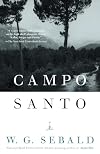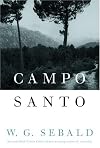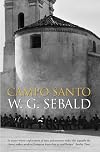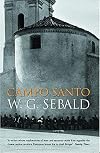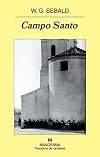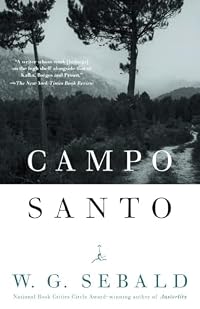
Campo Santo
by W. G. Sebald 
On This Page
Description
These sixteen moving essays contain Sebald's trademark themes--the power of memory and personal history, the connections between images in the arts and life, the existence of ghosts in both places and artifacts. Four essays pay tribute to Corsica, weaving elegiacally between past and present on the Mediterranean isle. In "A Little Excursion to Ajaccio," Sebald visits the birthplace of Napoleon and muses on the hints of a great man's future in his childhood home. Several essays on European show more writers such as Kafka. Nabokov, and Gunter Grass blend criticism with political observation and memoir, examining how literature can be an attempt at restitution for the injustices of the real world. Dazzling in its erudition, accessible in its deep emotion, Campo Santo confirms Sebald's place beside Proust and Nabokov, great writers who perceived the invisible connections that determine our lives. show lessTags
Recommendations

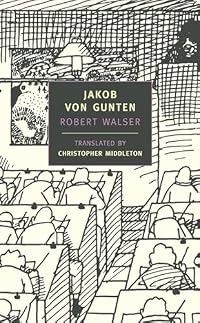
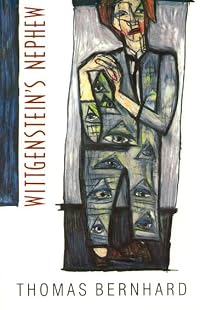

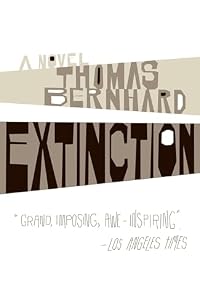
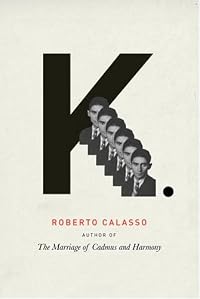


Member Recommendations
fiktions Erudite and well burnished.
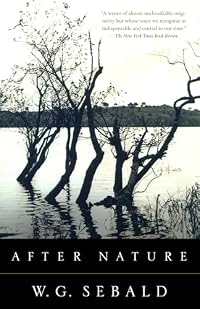
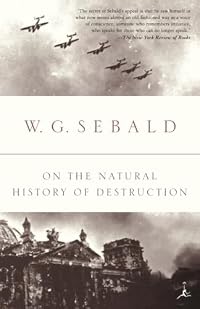
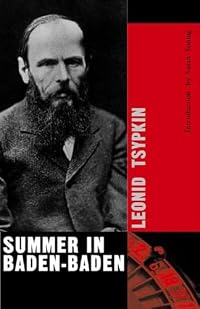
fishersnap Both may change your relationship on how you look at nature.

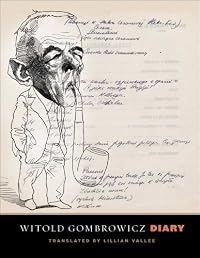
gust Sebald wijdt een essay aan de dagboeken.
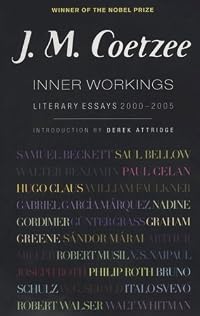
gust Sebald wijdt een essay aan Améry

Member Reviews
“W. G. Sebald exemplified the best kind of cosmopolitan literary intelligence–humane, digressive, deeply erudite, unassuming and tinged with melancholy. . . . In [Campo Santo] Sebald reveals his distinctive tone, as his winding sentences gradually mingle together curiosity and plangency, learning and self-revelation. . . . [Readers will] be rewarded with unexpected illuminations.”
–The Washington Post Book World
This final collection of essays by W. G. Sebald offers profound ruminations on many themes common to his work–the power of memory and personal history, the connections between images in the arts and life, the presence of ghosts in places and artifacts. Some of these pieces pay tribute to the Mediterranean island of show more Corsica, weaving elegiacally between past and present, examining, among other things, the island’s formative effect on its most famous citizen, Napoleon. In others, Sebald examines how the works of Günter Grass and Heinrich Böll reveal “the grave and lasting deformities in the emotional lives” of postwar Germans; how Kafka echoes Sebald’s own interest in spirit presences among mortal beings; and how literature can be an attempt at restitution for the injustices of the real world.
Dazzling in its erudition, accessible in its deep emotion, Campo Santo confirms Sebald’s status as one of the great modern writers who divined and expressed the invisible connections that determine our lives. show less
–The Washington Post Book World
This final collection of essays by W. G. Sebald offers profound ruminations on many themes common to his work–the power of memory and personal history, the connections between images in the arts and life, the presence of ghosts in places and artifacts. Some of these pieces pay tribute to the Mediterranean island of show more Corsica, weaving elegiacally between past and present, examining, among other things, the island’s formative effect on its most famous citizen, Napoleon. In others, Sebald examines how the works of Günter Grass and Heinrich Böll reveal “the grave and lasting deformities in the emotional lives” of postwar Germans; how Kafka echoes Sebald’s own interest in spirit presences among mortal beings; and how literature can be an attempt at restitution for the injustices of the real world.
Dazzling in its erudition, accessible in its deep emotion, Campo Santo confirms Sebald’s status as one of the great modern writers who divined and expressed the invisible connections that determine our lives. show less
...for my father, who came home only at weekends, had a particular fondness for this kind of traditional Bavarian folk music, which to me has taken on in retrospect the character of something terrible which I know will pursue me to my grave.
A posthumous collection of essays and reviews by the least German of post-war German writers, which when combined form a slightly uncomfortable mix in which you're never quite sure whether it's the writer of literature or the professional academic who is addressing you, but singly are all little gems that we need to keep and treasure.
There are four chapters intended for a projected but sadly unfinished book about Corsica, there are a couple of essays about post-war German writing that formed the show more germ for his book On the natural history of destruction, there are book reviews, notes on Kafka, Nabokov, and Bruce Chatwin, there's an essay on the mackerel (riffing off a couple of paintings by his former classmate Jan Peter Tripp) and there are a few pieces of more or less autobiographical character. Lovely, clear thinking expressed in lovely, clear writing: something to dip into with pleasure even if you're only vaguely interested in the subjects he's writing about. show less
A posthumous collection of essays and reviews by the least German of post-war German writers, which when combined form a slightly uncomfortable mix in which you're never quite sure whether it's the writer of literature or the professional academic who is addressing you, but singly are all little gems that we need to keep and treasure.
There are four chapters intended for a projected but sadly unfinished book about Corsica, there are a couple of essays about post-war German writing that formed the show more germ for his book On the natural history of destruction, there are book reviews, notes on Kafka, Nabokov, and Bruce Chatwin, there's an essay on the mackerel (riffing off a couple of paintings by his former classmate Jan Peter Tripp) and there are a few pieces of more or less autobiographical character. Lovely, clear thinking expressed in lovely, clear writing: something to dip into with pleasure even if you're only vaguely interested in the subjects he's writing about. show less
Rounding upwards, we should all push that direction towards the mute heavens. Yet our hearts remain shipwrecked.
There’s a lazy longing. This work is part meditation on Corsica but larded with essays on the German Miracle and the stewardship of postwar literature. There are pieces on Kafka and Nabokov. Sebald plunges deep into memory, pocketing chance discoveries for our benefit. I realized just now I’ve been reading Sebald for twenty years. I don’t believe I’ve traveled with him. Reading earlier today about the wildfires around Berlin and the consequent explosion of buried munitions, I thought about Thomas Browne and WG Sebald.
There’s a lazy longing. This work is part meditation on Corsica but larded with essays on the German Miracle and the stewardship of postwar literature. There are pieces on Kafka and Nabokov. Sebald plunges deep into memory, pocketing chance discoveries for our benefit. I realized just now I’ve been reading Sebald for twenty years. I don’t believe I’ve traveled with him. Reading earlier today about the wildfires around Berlin and the consequent explosion of buried munitions, I thought about Thomas Browne and WG Sebald.
Yes, I read it, but can anyone say they 'read' a book that was never finished. We just pick over the words. Some of the excerpts were building up their layers of Sebaldian meaning and detail, only to stop, unfinished. They missed their opportunity. I can only stare at the cover, wonder what's inside, though I've read it, I know it contains something that I never quite found. A tragic death, far too early.
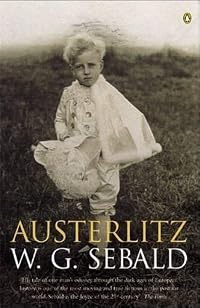
En 2001, un trágico accidente de tráfico nos privó de uno de los más grandes escritores europeos, W.G. Sebald, cuya obra empezaba a ser reconocida ampliamente. Justo ese año, 2001, salió a la luz su última novela, la celebrada ‘Austerlitz’, que lo consagraría finalmente. Sebald, alemán de nacimiento, vivió posteriormente en Suiza, para trasladarse después a Inglaterra, donde se dedicó a la docencia y a la publicación de ensayos, siendo su paso a la ficción bastante tardío. Pero Sebald cultivaba todos los géneros: la poesía en ‘Del natural’, los relatos en ‘Los emigrados’, los ensayos en ‘Pútrida patria’, la novela en ‘Austerlitz’, y sus queridos libros de viajes en ‘Los anillos de Saturno’ y show more ‘Vértigo’; y todos ellos acompañados de fotografías para acentuar los textos, realizadas con su inseparable cámara. En sus últimos escritos, el límite entre géneros es difícil de distinguir, como reconoció el propio Sebald en una entrevista: ”Mi medio es la prosa, no la novela”. Los temas de Sebald son la posguerra europea, la destrucción de su país, el exterminio, la observación en sus viajes, convirtiéndose en memoria y conciencia de un país, Alemania.
En ’Campo Santo’, el editor Sven Mayer reunió los últimos escritos del autor, una páginas dedicadas a un viaje a Córcega que realizó a mediados de la década de 1990, que formaban parte de un trabajo que Sebald dejó aparcado. En estas páginas, divididas en cuatro capítulos, Sebald describe lugares, paisajes y personas con la prosa poética que le caracteriza, impregnada de cierta nostalgia, donde reflexiona sobre la muerte y la decadencia. El viaje al pasado y la persistencia de los muertos están muy presentes en estos textos; sus paseos por museos y casas antiguas, en ‘Pequeña excursión a Ajaccio’; una visita al cementerio de Piana, con sus lápidas rotas, reflejo del abandono por parte de los vivos, en ‘Campo Santo’; sus reflexiones sobre antiguos y majestuosos bosques, fuente de destrucción, en ‘Los Alpes en el mar’; y finalmente, '”La tour de l’ancienne école”', donde Sebald recuerda la malaria que diezmo la isla.
La segunda parte del libro está dedicada a diversos ensayos, que ya aparecieron en otras publicaciones. En ellos, Sebald alude a figuras como Kafka, Nabokov, Chatwin, Weiss o Améry, comentando obras como Kaspar, de Peter Handke, e incluyendo algún escrito autobiográfico, siendo el último ensayo su discurso de ingreso en el Colegio de la Academia. Todos estos textos (algunos de los cuáles se hacen difíciles de seguir si no se han leído los trabajos a los que alude el autor), nos hablan de soledad, destrucción y memoria, buscando la legitimación y restitución de su patria a través de la literatura, reivindicando el pasado para no olvidar y repetir en el futuro. show less
En ’Campo Santo’, el editor Sven Mayer reunió los últimos escritos del autor, una páginas dedicadas a un viaje a Córcega que realizó a mediados de la década de 1990, que formaban parte de un trabajo que Sebald dejó aparcado. En estas páginas, divididas en cuatro capítulos, Sebald describe lugares, paisajes y personas con la prosa poética que le caracteriza, impregnada de cierta nostalgia, donde reflexiona sobre la muerte y la decadencia. El viaje al pasado y la persistencia de los muertos están muy presentes en estos textos; sus paseos por museos y casas antiguas, en ‘Pequeña excursión a Ajaccio’; una visita al cementerio de Piana, con sus lápidas rotas, reflejo del abandono por parte de los vivos, en ‘Campo Santo’; sus reflexiones sobre antiguos y majestuosos bosques, fuente de destrucción, en ‘Los Alpes en el mar’; y finalmente, '”La tour de l’ancienne école”', donde Sebald recuerda la malaria que diezmo la isla.
La segunda parte del libro está dedicada a diversos ensayos, que ya aparecieron en otras publicaciones. En ellos, Sebald alude a figuras como Kafka, Nabokov, Chatwin, Weiss o Améry, comentando obras como Kaspar, de Peter Handke, e incluyendo algún escrito autobiográfico, siendo el último ensayo su discurso de ingreso en el Colegio de la Academia. Todos estos textos (algunos de los cuáles se hacen difíciles de seguir si no se han leído los trabajos a los que alude el autor), nos hablan de soledad, destrucción y memoria, buscando la legitimación y restitución de su patria a través de la literatura, reivindicando el pasado para no olvidar y repetir en el futuro. show less
Después de Austerlitz, posiblemente su mejor obra, he podido leer éste su libro póstumo. Es una lástima que no conozca mejor a algunos de los autores que maneja, como Kafka, puesto qwue disfrutaría más de la lectura de unos ensayos excelentes. Como siempre su prosa atrapa, te arastra a rincones que crees no existen. Posiblemente sea Sebald el escritor más hondo, que no profundo, que conozco. La primera parte del libro, dedicado a Córcega es excelente, en su línea de mestizaje entre literatura de viajes, ensayos, memorialística; los ensayos literarios son muy placenteros de leer, repletos de agudas observaciones pero, como dije, no los puedo disfrutar plenamente al desconocer a sus autores. La suerte es que me ha hecho encender show more mi curiosidad por Bruce Chatwin y, definitivamente, por Jean Améry de quien próximamente leeré algo. Los discursos que figuran en la tercera parte son una auténtica maravilla, en especial el dedicado a la música.
Estupendo. show less
Estupendo. show less
I have totally changed my opinion of this book after reading it the second (this time in full) and after reading much other Sebald work and related material. By all means one of my very favorite writers now. This is an important collection of Sebald's and one I believe will get more legs as his respect is sure to grow.
Members
- Recently Added By
Lists

German Literature
514 works; 55 members
Author Information

32+ Works 16,941 Members
He studied German language and literature in Freiburg, Switzerland and Manchester. He has taught at the University of East Anglia in Norwich, England since 1970. He became a professor of European literature in 1987. From 1989 to 1994 was the first director of the British Centre for Literary Translation. He was born in Wertach in Allgau, Germany in show more 1944. (Bowker Author Biography) show less
W. G. Sebald has a Legacy Library. Legacy libraries are the personal libraries of famous readers, entered by LibraryThing members from the Legacy Libraries group.
Some Editions
Awards and Honors
Distinctions
Series
Belongs to Publisher Series
Work Relationships
Common Knowledge
- Canonical title*
- Campo Santo
- Original title
- Campo Santo
- Original publication date
- 2003
- Original language*
- Duits
*Some information comes from Common Knowledge in other languages. Click "Edit" for more information.
Classifications
- Genres
- Fiction and Literature, Literature Studies and Criticism
- DDC/MDS
- 834.914 — Literature & rhetoric German & related literatures German essays 1900- 1900-1990 1945-1990
- LCC
- PT2681 .E18 .C36 — Language and Literature German, Dutch and Scandinavian literatures German literature Individual authors or works 1961-2000
- BISAC
Statistics
- Members
- 580
- Popularity
- 50,527
- Reviews
- 13
- Rating
- (3.73)
- Languages
- 10 — Danish, Dutch, English, French, German, Japanese, Polish, Portuguese (Portugal), Spanish, Swedish
- Media
- Paper, Ebook
- ISBNs
- 26
- ASINs
- 4