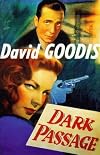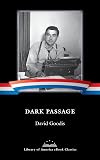
Dark Passage
by David Goodis
On This Page
Description
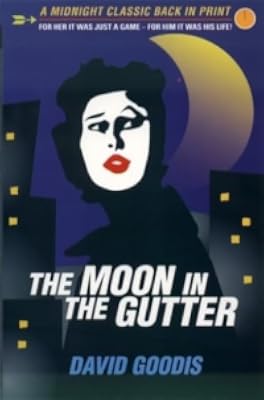
Fiction. Mystery. HTML:For the first time, the best work of a distinctive master of American noir is available in authoritative e-book editions from The Library of America. David Goodis experienced a brief celebrity when his novel Dark Passage (1946) became the basis for a popular movie starring Humphrey Bogart and Lauren Bacall. The story of a man railroaded for his wife’s murder and forced to assume a different identity after escaping from prison becomes in Goodis’s hands a lyrical show more evocation of urban fear and loneliness. Other David Goodis novels available as Library of America E-Book Classics include: Nightfall, The Burglar, The Moon in the Gutter, and Street of No Return. show lessTags
Recommendations















Member Reviews
Hardboiled Fun, But Flawed
Vincent Parry, convicted of murdering his wife, escapes from San Quintin, and goes on the run. He adamantly claims he didn’t do it, but a star witness, Madge, a friend of his wife he had an affair with, testified that Parry’s wife, Gert, with her last dying breath said Parry killed her. You wonder if he did kill her, because during his escape, he engages in several acts of violence; including two murders, and suffers a few mental lapses. Luckily for him, a young woman, Irene, picks him up on a highway heading into San Francisco. She provides him with shelter at her apartment, buys him new clothes, and gives him money, reasons for which are revealed slowly. He also, by happenstance, hooks up with a cabbie show more who knows a guy who performs plastic surgery in a shabby office and can give him a new face. With the money Irene gave him, he’s able to afford the back alley surgery and has a place in which he can spend five days recovering. Turns out that Irene knows Madge, because her ex-husband and she are friends, though the ex wishes it were more. With time to think, Parry begins to piece together the murder of his wife, and also that of his best friend, and learns who the real killer is. He confronts the killer, who eventually admits to the murder, but in a fit of rage, he struggles with the killer who ends dying by defenestration. Now unable to prove his innocence, he decides he has to flee the country to the small town of Pativilca (Patavilca in the novel), Peru. It ends with him leaving and Irene planning to join him in a couple of months when the heat over Madge’s death dies down.
Dark Passage is a psychological thriller told from Parry’s perspective. Readers are always in Parry’s head as he broods over his plight, as he bounces from one situation to the next, always weighting whether he will have to resort to violence to stay free. He’s a man alone in the world living by his wits. Then Irene takes him in and he faces a new set of challenges as he finds himself drawn to her. The attraction strengthens as she nurses him back to health after his surgery. He has bitter memories of Gert, who humiliated and rejected him constantly no matter how he placated her. At first wary of Irene, his affection for her increases and he struggles with either protecting her from prosecution for harboring a fugitive and living with her in Peru.
At its heart, for all the psychological aspects, it is hardboiled pulp fiction. But what makes it a standout in this genre is Goodis’ economical style. It has a staccato feel to it that really makes it a pleasure to read. Readers, though, will have to suspense their disbelief regarding a bunch of improbabilities, such as the whole core bit revolving around the back ally face reconstruction, and that Parry can run around San Francisco though the police must be conducting a pretty intensive search for an escaped murderer, not to mention the longwinded exchanges with a blackmailer and the killer (which, actually, are kind of fun to read). Do that and you’ll enjoy this bit of noir from the ‘50s.
David Goodis died at the age of 49, but during his short lifespan, he produced millions of words, first in advertising, then as a pulp fiction magazine writer, a novelist, and a Hollywood scriptwriter. Dark Passage, published in 1946, proved to be his breakout novel, a bestseller turned into a noir film of the same name in 1947, starring Humphrey Bogart, Lauren Bacall, and Agnes Moorehead. show less
Vincent Parry, convicted of murdering his wife, escapes from San Quintin, and goes on the run. He adamantly claims he didn’t do it, but a star witness, Madge, a friend of his wife he had an affair with, testified that Parry’s wife, Gert, with her last dying breath said Parry killed her. You wonder if he did kill her, because during his escape, he engages in several acts of violence; including two murders, and suffers a few mental lapses. Luckily for him, a young woman, Irene, picks him up on a highway heading into San Francisco. She provides him with shelter at her apartment, buys him new clothes, and gives him money, reasons for which are revealed slowly. He also, by happenstance, hooks up with a cabbie show more who knows a guy who performs plastic surgery in a shabby office and can give him a new face. With the money Irene gave him, he’s able to afford the back alley surgery and has a place in which he can spend five days recovering. Turns out that Irene knows Madge, because her ex-husband and she are friends, though the ex wishes it were more. With time to think, Parry begins to piece together the murder of his wife, and also that of his best friend, and learns who the real killer is. He confronts the killer, who eventually admits to the murder, but in a fit of rage, he struggles with the killer who ends dying by defenestration. Now unable to prove his innocence, he decides he has to flee the country to the small town of Pativilca (Patavilca in the novel), Peru. It ends with him leaving and Irene planning to join him in a couple of months when the heat over Madge’s death dies down.
Dark Passage is a psychological thriller told from Parry’s perspective. Readers are always in Parry’s head as he broods over his plight, as he bounces from one situation to the next, always weighting whether he will have to resort to violence to stay free. He’s a man alone in the world living by his wits. Then Irene takes him in and he faces a new set of challenges as he finds himself drawn to her. The attraction strengthens as she nurses him back to health after his surgery. He has bitter memories of Gert, who humiliated and rejected him constantly no matter how he placated her. At first wary of Irene, his affection for her increases and he struggles with either protecting her from prosecution for harboring a fugitive and living with her in Peru.
At its heart, for all the psychological aspects, it is hardboiled pulp fiction. But what makes it a standout in this genre is Goodis’ economical style. It has a staccato feel to it that really makes it a pleasure to read. Readers, though, will have to suspense their disbelief regarding a bunch of improbabilities, such as the whole core bit revolving around the back ally face reconstruction, and that Parry can run around San Francisco though the police must be conducting a pretty intensive search for an escaped murderer, not to mention the longwinded exchanges with a blackmailer and the killer (which, actually, are kind of fun to read). Do that and you’ll enjoy this bit of noir from the ‘50s.
David Goodis died at the age of 49, but during his short lifespan, he produced millions of words, first in advertising, then as a pulp fiction magazine writer, a novelist, and a Hollywood scriptwriter. Dark Passage, published in 1946, proved to be his breakout novel, a bestseller turned into a noir film of the same name in 1947, starring Humphrey Bogart, Lauren Bacall, and Agnes Moorehead. show less
Goodis was one of the greats of mid-century noir paperbacks. His novels generally took the reader on a dizzying march into the deepest wells of despair. A typical Goodis character is the so-called innocent man with half the city's police force after him. The character is soon penniless and fleeing through dark alleys and swampy muck, descending into depths of hell. Drugs, alcohol, women all proving to be his downfall. Dark Passage takes place in San Francisco, not Goodis' usual location of Philadelphia. It is a story of a man tried and convicted for his wife's murder and who then escapes a maximum security prison. It is a psycho-social study of his troubled and distrustful mind. When you are on the run, it pays to be paranoid. Is he a show more psychopathic killer or the patsy he claims to be? Can you trust his narration? Does he attract nuts like moths to a flame? Is the trial groupie cuckoo or just smitten? Is there a man in a studebaker pursuing him? From the frenetic pace of the prison escape to his crazy running back and forth without a plan, the story is relentless. Amidst the backdrop of 1950's soda fountains, you have murder and promiscuity and obsession and craziness. show less
David Goodis’s Dark Passage is most famous today because of the WB film starring Humphrey Bogart and Lauren Bacall. Goodis sold the rights to film it for $25,000 and secured for himself immortality by doing so. To those who read, however, and especially those who enjoy a good crime noir, Goodis’s name would be known and bandied about during discussions of the genre, regardless.
Anyone familiar with the very good film based on the book knows that for the first forty minutes or so of the movie, we are in Parry’s (Bogart’s) shoes during the prison break and the ensuing escape. We never see Parry’s face during this portion of the film. Goodis’s entire novel is the equivalent of that portion of the film, the reader placed into show more Parry’s head, “hearing” him panic, reason out things, fight his fear and paranoia, and finally, figure out who killed his unfaithful wife and framed him for the murder.
Tightly constructed and narratively claustrophobic, Dark Passage is a unique narrative that won’t appeal to everyone. It is more likely to appeal to fans of the genre, and fans of the greatest writer of suspense, Cornell Woolrich. Goodis here seems to be influenced by Woolrich’s work. Parry even has an entire conversation in his head with his only friend, who has just been murdered, which is very Woolrichian.
One can almost picture Agnes Morehead as the shrill and annoying Madge Rapf, and Bacall as the lovely and lonely Irene, whose motives for helping Parry hide out at the outset, and later so that his face can heal when he has it altered, are at first unclear. Those motives will be seem more ambiguous for anyone who hasn’t seen the 40s film, but that’s not many.
There is loneliness here, and not just Parry’s, and there is that feeling of the little guy fighting against fate which permeated Woolrich’s work during this period. While Goodis doesn’t quite reach the level of Woolrich noir, this is very good, and there are moments when he comes close. A tricky and ultimately dooming confrontation with a guy referred to as Studebaker for much of the book, and the color of a car, set in motion an exciting conclusion. It is here, at the end, when Goodis throws the reader a Deadline at Dawn type of lifeline that makes this a memorable read.
While the narrative style of nearly every thought in Parry’s head can become too overblown at times, at other times it’s marvelous, both cerebrally claustrophobic and entertainingly mesmerizing. This seminal noir novel will have you looking up Patavilca, Peru on your globe, and wondering…
Because Goodis seemed to be channeling Woolrich, but didn’t quite reach that lofty plateau, this is 4.5 stars for me. But it is such a terrific read, I’m rounding up. A unique novel (unless you’ve read Woolrich), and like Woolrich, not for everyone. Fans of 1940s and '50s noir/suspense, however, must have a go at it to sample the full spectrum of what the genre has to offer. show less
Anyone familiar with the very good film based on the book knows that for the first forty minutes or so of the movie, we are in Parry’s (Bogart’s) shoes during the prison break and the ensuing escape. We never see Parry’s face during this portion of the film. Goodis’s entire novel is the equivalent of that portion of the film, the reader placed into show more Parry’s head, “hearing” him panic, reason out things, fight his fear and paranoia, and finally, figure out who killed his unfaithful wife and framed him for the murder.
Tightly constructed and narratively claustrophobic, Dark Passage is a unique narrative that won’t appeal to everyone. It is more likely to appeal to fans of the genre, and fans of the greatest writer of suspense, Cornell Woolrich. Goodis here seems to be influenced by Woolrich’s work. Parry even has an entire conversation in his head with his only friend, who has just been murdered, which is very Woolrichian.
One can almost picture Agnes Morehead as the shrill and annoying Madge Rapf, and Bacall as the lovely and lonely Irene, whose motives for helping Parry hide out at the outset, and later so that his face can heal when he has it altered, are at first unclear. Those motives will be seem more ambiguous for anyone who hasn’t seen the 40s film, but that’s not many.
There is loneliness here, and not just Parry’s, and there is that feeling of the little guy fighting against fate which permeated Woolrich’s work during this period. While Goodis doesn’t quite reach the level of Woolrich noir, this is very good, and there are moments when he comes close. A tricky and ultimately dooming confrontation with a guy referred to as Studebaker for much of the book, and the color of a car, set in motion an exciting conclusion. It is here, at the end, when Goodis throws the reader a Deadline at Dawn type of lifeline that makes this a memorable read.
While the narrative style of nearly every thought in Parry’s head can become too overblown at times, at other times it’s marvelous, both cerebrally claustrophobic and entertainingly mesmerizing. This seminal noir novel will have you looking up Patavilca, Peru on your globe, and wondering…
Because Goodis seemed to be channeling Woolrich, but didn’t quite reach that lofty plateau, this is 4.5 stars for me. But it is such a terrific read, I’m rounding up. A unique novel (unless you’ve read Woolrich), and like Woolrich, not for everyone. Fans of 1940s and '50s noir/suspense, however, must have a go at it to sample the full spectrum of what the genre has to offer. show less
Brilliant little novel about loneliness and identity disguised as crime fiction and mystery. Goodis stretches his stream of consciousness expressionism with talking corpses and other weirdness as escaped convict Vincent Parry sheds one identity after another. Parry initially gets so much bad luck that even when the breaks start coming he practically throws them away. He escapes San Quentin seemingly by accident or fate. Somehow his guardian angel keeps him from messing it all up too badly as he tries to stay out of the Big House or The Chair and stumbles around San Francisco sort of trying to find out who did kill his wife and best friend.
Made into an interesting film with Bogart and Bacall where Bogie is heard but never seen during the show more first half of the film due to a first person perspective and the necessity to keep the protagonist’s face hidden until after the plastic surgery. With special effects and sound looping this would probably be done differently today but the need to solve the cinematic problem back in the ‘40s ends up with a unique and effective solution. Makes the film particularly memorable. show less
Made into an interesting film with Bogart and Bacall where Bogie is heard but never seen during the show more first half of the film due to a first person perspective and the necessity to keep the protagonist’s face hidden until after the plastic surgery. With special effects and sound looping this would probably be done differently today but the need to solve the cinematic problem back in the ‘40s ends up with a unique and effective solution. Makes the film particularly memorable. show less
Hardboiled Fun, But Flawed
Vincent Parry, convicted of murdering his wife, escapes from San Quintin, and goes on the run. He adamantly claims he didn’t do it, but a star witness, Madge, a friend of his wife he had an affair with, testified that Parry’s wife, Gert, with her last dying breath said Parry killed her. You wonder if he did kill her, because during his escape, he engages in several acts of violence; including two murders, and suffers a few mental lapses. Luckily for him, a young woman, Irene, picks him up on a highway heading into San Francisco. She provides him with shelter at her apartment, buys him new clothes, and gives him money, reasons for which are revealed slowly. He also, by happenstance, hooks up with a cabbie show more who knows a guy who performs plastic surgery in a shabby office and can give him a new face. With the money Irene gave him, he’s able to afford the back alley surgery and has a place in which he can spend five days recovering. Turns out that Irene knows Madge, because her ex-husband and she are friends, though the ex wishes it were more. With time to think, Parry begins to piece together the murder of his wife, and also that of his best friend, and learns who the real killer is. He confronts the killer, who eventually admits to the murder, but in a fit of rage, he struggles with the killer who ends dying by defenestration. Now unable to prove his innocence, he decides he has to flee the country to the small town of Pativilca (Patavilca in the novel), Peru. It ends with him leaving and Irene planning to join him in a couple of months when the heat over Madge’s death dies down.
Dark Passage is a psychological thriller told from Parry’s perspective. Readers are always in Parry’s head as he broods over his plight, as he bounces from one situation to the next, always weighting whether he will have to resort to violence to stay free. He’s a man alone in the world living by his wits. Then Irene takes him in and he faces a new set of challenges as he finds himself drawn to her. The attraction strengthens as she nurses him back to health after his surgery. He has bitter memories of Gert, who humiliated and rejected him constantly no matter how he placated her. At first wary of Irene, his affection for her increases and he struggles with either protecting her from prosecution for harboring a fugitive and living with her in Peru.
At its heart, for all the psychological aspects, it is hardboiled pulp fiction. But what makes it a standout in this genre is Goodis’ economical style. It has a staccato feel to it that really makes it a pleasure to read. Readers, though, will have to suspense their disbelief regarding a bunch of improbabilities, such as the whole core bit revolving around the back ally face reconstruction, and that Parry can run around San Francisco though the police must be conducting a pretty intensive search for an escaped murderer, not to mention the longwinded exchanges with a blackmailer and the killer (which, actually, are kind of fun to read). Do that and you’ll enjoy this bit of noir from the ‘50s.
David Goodis died at the age of 49, but during his short lifespan, he produced millions of words, first in advertising, then as a pulp fiction magazine writer, a novelist, and a Hollywood scriptwriter. Dark Passage, published in 1946, proved to be his breakout novel, a bestseller turned into a noir film of the same name in 1947, starring Humphrey Bogart, Lauren Bacall, and Agnes Moorehead. show less
Vincent Parry, convicted of murdering his wife, escapes from San Quintin, and goes on the run. He adamantly claims he didn’t do it, but a star witness, Madge, a friend of his wife he had an affair with, testified that Parry’s wife, Gert, with her last dying breath said Parry killed her. You wonder if he did kill her, because during his escape, he engages in several acts of violence; including two murders, and suffers a few mental lapses. Luckily for him, a young woman, Irene, picks him up on a highway heading into San Francisco. She provides him with shelter at her apartment, buys him new clothes, and gives him money, reasons for which are revealed slowly. He also, by happenstance, hooks up with a cabbie show more who knows a guy who performs plastic surgery in a shabby office and can give him a new face. With the money Irene gave him, he’s able to afford the back alley surgery and has a place in which he can spend five days recovering. Turns out that Irene knows Madge, because her ex-husband and she are friends, though the ex wishes it were more. With time to think, Parry begins to piece together the murder of his wife, and also that of his best friend, and learns who the real killer is. He confronts the killer, who eventually admits to the murder, but in a fit of rage, he struggles with the killer who ends dying by defenestration. Now unable to prove his innocence, he decides he has to flee the country to the small town of Pativilca (Patavilca in the novel), Peru. It ends with him leaving and Irene planning to join him in a couple of months when the heat over Madge’s death dies down.
Dark Passage is a psychological thriller told from Parry’s perspective. Readers are always in Parry’s head as he broods over his plight, as he bounces from one situation to the next, always weighting whether he will have to resort to violence to stay free. He’s a man alone in the world living by his wits. Then Irene takes him in and he faces a new set of challenges as he finds himself drawn to her. The attraction strengthens as she nurses him back to health after his surgery. He has bitter memories of Gert, who humiliated and rejected him constantly no matter how he placated her. At first wary of Irene, his affection for her increases and he struggles with either protecting her from prosecution for harboring a fugitive and living with her in Peru.
At its heart, for all the psychological aspects, it is hardboiled pulp fiction. But what makes it a standout in this genre is Goodis’ economical style. It has a staccato feel to it that really makes it a pleasure to read. Readers, though, will have to suspense their disbelief regarding a bunch of improbabilities, such as the whole core bit revolving around the back ally face reconstruction, and that Parry can run around San Francisco though the police must be conducting a pretty intensive search for an escaped murderer, not to mention the longwinded exchanges with a blackmailer and the killer (which, actually, are kind of fun to read). Do that and you’ll enjoy this bit of noir from the ‘50s.
David Goodis died at the age of 49, but during his short lifespan, he produced millions of words, first in advertising, then as a pulp fiction magazine writer, a novelist, and a Hollywood scriptwriter. Dark Passage, published in 1946, proved to be his breakout novel, a bestseller turned into a noir film of the same name in 1947, starring Humphrey Bogart, Lauren Bacall, and Agnes Moorehead. show less
After reading three Goodis books back-to-back-to-back, I have drawn a few conclusions. First, for the most part he is a very good writer. Some of the conversations in his books, especially, are entertaining and quite humorous in an ironic or dark way. Second, he really has a thing about nasty women. This book features another one whose testimony put the book's protagonist behind bars for murdering his wife, which he says he didn't do. Third, the men LIKE the women to be nasty to them. This is really the hardest part of his books to read. The men are weak and passive for the most part as the women treat them like dirt (or send them across town in a blizzard for a particular brand of coffee, as happened in the last Goodis book I read, show more then curse at them even when they actually bring back the right thing.) Fourth, there will be a few people along the way who turn out to be human and offer their help.
The plot of Dark Passage has a lot going on, and from the escape to the book's conclusion, you'll remain absorbed, if in a semi state of disbelief at the somewhat random nature of events, though not as random as "Of Tender Sin". I'll have to rewatch the Bogart movie made from this and see how much they changed. show less
The plot of Dark Passage has a lot going on, and from the escape to the book's conclusion, you'll remain absorbed, if in a semi state of disbelief at the somewhat random nature of events, though not as random as "Of Tender Sin". I'll have to rewatch the Bogart movie made from this and see how much they changed. show less
Vincent Parry is a man wrongly convicted of murdering his wife. It's true their marriage had soured and both he and Gert saw other people, but Vincent didn't hate her - certainly not enough to bash her head in with an ashtray. A witness testifies that with her dying breath Gert named Vincent as her killer and with that Vincent found himself in a bunk at San Quentin. He doesn't know who the murderer is but Vincent does know he shouldn't be in prison and when he sees his opportunity to break out, he takes it. It's risky but Vincent returns to San Francisco and finds a few people who have enough doubt of his guilt to help him evade the manhunt that makes the streets so dangerous for him. At first Vincent planned on taking the next bus show more across the border but then he decides he can't leave. He's not just scared anymore, he's angry. Not about the ruin of his own life but for the attacks on his friends. One is dead and another is under threat of blackmail. So he stays and he digs because he needs to know who killed his wife.
Does the story sound familiar? David Goodis believed that Dark Passage was the source material for The Fugitive mini-series. He sued and his lawyer outlined over a dozen similarities between the two properties. Goodis died before the decision was handed down but the court said that the serialized portions of Dark Passage that were published in The Saturday Evening Post did not have copyright protection. The Goodis estate appealed that ruling and eventually reached a settlement. I think it's fascinating that Goodis was involved with the issues of format copyright back in the Sixties and it is still a concern we address today.
Well let me say, if you've seen the movie staring Humphrey Bogart and Lauren Bacall than you will be very familiar with the book. Whole swaths of dialogue are lifted verbatim. What's new here is that we get more background, especially into the Parry marriage. To be honest, I think I liked the book a little better than I should because I love the movie so well. If you're a fan of hardboiled fiction I would recommend it. show less
Does the story sound familiar? David Goodis believed that Dark Passage was the source material for The Fugitive mini-series. He sued and his lawyer outlined over a dozen similarities between the two properties. Goodis died before the decision was handed down but the court said that the serialized portions of Dark Passage that were published in The Saturday Evening Post did not have copyright protection. The Goodis estate appealed that ruling and eventually reached a settlement. I think it's fascinating that Goodis was involved with the issues of format copyright back in the Sixties and it is still a concern we address today.
Well let me say, if you've seen the movie staring Humphrey Bogart and Lauren Bacall than you will be very familiar with the book. Whole swaths of dialogue are lifted verbatim. What's new here is that we get more background, especially into the Parry marriage. To be honest, I think I liked the book a little better than I should because I love the movie so well. If you're a fan of hardboiled fiction I would recommend it. show less
Members
- Recently Added By
Lists

Noirvember: The Best Noir
113 works; 56 members

Read
293 works; 4 members
Author Information

65+ Works 3,362 Members
Some Editions
Awards and Honors
Notable Lists
Series
Belongs to Publisher Series
Colección Esfinge (59)
Work Relationships
Is contained in
Has the adaptation
Common Knowledge
- Canonical title
- Dark Passage
- Original title
- Dark Passage
- Original publication date
- 1946
- Related movies
- Dark Passage (1947 | IMDb)
- Original language*
- Inglés
*Some information comes from Common Knowledge in other languages. Click "Edit" for more information.
Classifications
Statistics
- Members
- 197
- Popularity
- 166,277
- Reviews
- 15
- Rating
- (3.79)
- Languages
- 6 — English, Finnish, French, Italian, Spanish, Swedish
- Media
- Paper, Ebook
- ISBNs
- 9
- ASINs
- 4