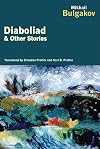
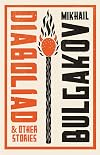
Diaboliad and Other Stories
by Mikhail Bulgakov
On This Page
Description
A collection of irreverent and satirical stories varing in range from straight realism to science fiction.Tags
Recommendations













Member Reviews
Mikhail Bulgakov (1891 - 1940) and the composer Dmitri Shostakovich (1906 - 1975) had met and briefly toyed with the idea of working together on a dramatic work. It was not to be, but their collaboration is a tantalizing "might have been". Indeed, the more I read of Bulgakov, the more he reminds me of Shostakovich. Not the composer of the symphonies perhaps, but the Shostakovich of the circus music, of the manic and dissonant galops, of the acerbic music theatre pieces. This is particularly true of Bulgakov's short stories, four of which are grouped in this attractive Oneworld Classics edition.
The title-piece is "Diaboliad", featuring the unassuming office clerk Korotkov who is sacked from his job at the "Main Central Depot of Match show more Materials" for a farcical error. The story describes his increasingly despairing and nightmarish quest through the Soviet civil service to seek the official responsible for his dismissal. There's no denying the narrative's brilliance, but this is no comfort reading - the surreal world depicted becomes as head-splitting as a hangover on cheap wine.
A similar atmosphere pervades "No. 13 - The Elpit Workers' Commune Building", a tale about an exclusive condominium which is expropriated by the new Communist regime and "A Chinese Tale", in which a Chinese immigrant discovers his talent as a machine-gunner...with tragic consequences.
The most lighthearted work in the collection is "The Adventures of Chichikov", a literary divertissement in which characters from Gogol's "Dead Soul" reappear in Communist Russia. This story displays Bulgakov's admiration for the classic Russian author - yet, even here, it's not difficult to decipher the political commentary simmering beneath the surface. One starts to feel that, whilst being no nostalgic sympathizer of the "ancien regime", Bulgakov had little faith in the utopian promises of Communism.
The works in this Oneword Classics edition are presented in a new translation by Hugh Aplin who has previously translated Chekhov, Dostoevsky and Turgenev amongst others. Aplin also provides notes on the text and thirty pages of very helpful "extra material" including a biography of Bulgakov and a brief introduction to his major works.
Highly recommended. show less
The title-piece is "Diaboliad", featuring the unassuming office clerk Korotkov who is sacked from his job at the "Main Central Depot of Match show more Materials" for a farcical error. The story describes his increasingly despairing and nightmarish quest through the Soviet civil service to seek the official responsible for his dismissal. There's no denying the narrative's brilliance, but this is no comfort reading - the surreal world depicted becomes as head-splitting as a hangover on cheap wine.
A similar atmosphere pervades "No. 13 - The Elpit Workers' Commune Building", a tale about an exclusive condominium which is expropriated by the new Communist regime and "A Chinese Tale", in which a Chinese immigrant discovers his talent as a machine-gunner...with tragic consequences.
The most lighthearted work in the collection is "The Adventures of Chichikov", a literary divertissement in which characters from Gogol's "Dead Soul" reappear in Communist Russia. This story displays Bulgakov's admiration for the classic Russian author - yet, even here, it's not difficult to decipher the political commentary simmering beneath the surface. One starts to feel that, whilst being no nostalgic sympathizer of the "ancien regime", Bulgakov had little faith in the utopian promises of Communism.
The works in this Oneword Classics edition are presented in a new translation by Hugh Aplin who has previously translated Chekhov, Dostoevsky and Turgenev amongst others. Aplin also provides notes on the text and thirty pages of very helpful "extra material" including a biography of Bulgakov and a brief introduction to his major works.
Highly recommended. show less
Mikhail Bulgakov (1891 - 1940) and the composer Dmitri Shostakovich (1906 - 1975) had met and briefly toyed with the idea of working together on a dramatic work. It was not to be, but their collaboration is a tantalizing "might have been". Indeed, the more I read of Bulgakov, the more he reminds me of Shostakovich. Not the composer of the symphonies perhaps, but the Shostakovich of the circus music, of the manic and dissonant galops, of the acerbic music theatre pieces. This is particularly true of Bulgakov's short stories, four of which are grouped in this attractive Oneworld Classics edition.
The title-piece is "Diaboliad", featuring the unassuming office clerk Korotkov who is sacked from his job at the "Main Central Depot of Match show more Materials" for a farcical error. The story describes his increasingly despairing and nightmarish quest through the Soviet civil service to seek the official responsible for his dismissal. There's no denying the narrative's brilliance, but this is no comfort reading - the surreal world depicted becomes as head-splitting as a hangover on cheap wine.
A similar atmosphere pervades "No. 13 - The Elpit Workers' Commune Building", a tale about an exclusive condominium which is expropriated by the new Communist regime and "A Chinese Tale", in which a Chinese immigrant discovers his talent as a machine-gunner...with tragic consequences.
The most lighthearted work in the collection is "The Adventures of Chichikov", a literary divertissement in which characters from Gogol's "Dead Soul" reappear in Communist Russia. This story displays Bulgakov's admiration for the classic Russian author - yet, even here, it's not difficult to decipher the political commentary simmering beneath the surface. One starts to feel that, whilst being no nostalgic sympathizer of the "ancien regime", Bulgakov had little faith in the utopian promises of Communism.
The works in this Oneword Classics edition are presented in a new translation by Hugh Aplin who has previously translated Chekhov, Dostoevsky and Turgenev amongst others. Aplin also provides notes on the text and thirty pages of very helpful "extra material" including a biography of Bulgakov and a brief introduction to his major works.
Highly recommended. show less
The title-piece is "Diaboliad", featuring the unassuming office clerk Korotkov who is sacked from his job at the "Main Central Depot of Match show more Materials" for a farcical error. The story describes his increasingly despairing and nightmarish quest through the Soviet civil service to seek the official responsible for his dismissal. There's no denying the narrative's brilliance, but this is no comfort reading - the surreal world depicted becomes as head-splitting as a hangover on cheap wine.
A similar atmosphere pervades "No. 13 - The Elpit Workers' Commune Building", a tale about an exclusive condominium which is expropriated by the new Communist regime and "A Chinese Tale", in which a Chinese immigrant discovers his talent as a machine-gunner...with tragic consequences.
The most lighthearted work in the collection is "The Adventures of Chichikov", a literary divertissement in which characters from Gogol's "Dead Soul" reappear in Communist Russia. This story displays Bulgakov's admiration for the classic Russian author - yet, even here, it's not difficult to decipher the political commentary simmering beneath the surface. One starts to feel that, whilst being no nostalgic sympathizer of the "ancien regime", Bulgakov had little faith in the utopian promises of Communism.
The works in this Oneword Classics edition are presented in a new translation by Hugh Aplin who has previously translated Chekhov, Dostoevsky and Turgenev amongst others. Aplin also provides notes on the text and thirty pages of very helpful "extra material" including a biography of Bulgakov and a brief introduction to his major works.
Highly recommended. show less
An interesting collection of stories from Bulgakov, and published in his lifetime. It’s unmistakably his writing: “Diaboliad” has elements of The Master and the Margarita, “Fatal Eggs” elements of “Heart of a Dog”, and “The Raid” elements of “The White Guard”.
Bulgakov was very creative in holding a mirror up to Soviet society and lampooning it, but not getting on a soapbox while doing so. This was of course because of his fear of the censor, but also because he was conflicted. He was a man of science (a doctor in fact) and certainly no religious fundamentalist, and yet he was skeptical about scientific progress and its replacement of religion in modern Soviet society. He was sensitive to common people, and yet he show more saw such violence in the revolution and such bureaucracy in the new regime that he could not help but have monarchist sympathies. As a result, his actual viewpoints in his works are often subject to interpretation. Critics at the time and over the years have been trying to figure out what this man’s message was, which “side” he was on; my personal take is that he first and foremost wanted to write, to create, and to have the freedom to satirize the lunacy he saw around him in his changing world.
In this collection aside from the works cited above which stand out, “A Treatise on Housing” is quite good and “Psalm” is outstanding - a beautiful portrait in a few pages via simple dialogue, similar to a painter conjuring an image with a few brush strokes. For those stories alone, it’s worth reading. Unfortunately several of the other stories are not so good, e.g. “No. 13. The Elpit – Rabkommun Building” and “A Chinese Tale”.
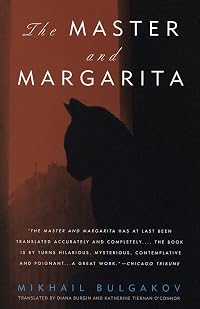
“Fatal Eggs” or “Psalm” are strong enough to recommend this book to a first-time Bulgakov reader, otherwise because of some of the unevenness in this collection and because the novel forms are more complete, I would recommend going directly to them, starting with his masterpiece, “The Master and the Margarita”.
Quotes:
I love this night scene from “The Fatal Eggs”:
“The days got unbearably hot. One could clearly see the dense transparent heat shimmering over the fields. But the nights were marvelous, deceptive, green. The moon shone brightly, casting such beauty on the former Sheremetiev estate that it is impossible to express it in words. The sovkhoz palace gleamed as though made of sugar, the shadows trembled in the park, and the ponds were cleft into two colors – a slanting shaft of moonlight across it, and the rest, bottomless darkness. In the patches of moonlight, you could easily read Izvestia, except for the chess column, which is printed in tiny nonpareil. But naturally, nobody read Izvestia on nights like these … Dunya, the cleaning woman, turned up in the copse behind the sovkhoz, and as a result of some coincidence, the red-mustachioed driver of a battered sovkhoz pickup turned up there too. What they did there – remains unknown. They took shelter in the melting shadow of an elm, right on the driver’s outspread leather jacket. A lamp burned in the kitchen where two gardeners were having their supper, and Madame Feyt, wearing a white robe, was sitting on the becolumned veranda and dreaming as she gazed at the beautiful moon.
At ten in the evening when all of the sounds had subsided in the village of Kontsovka, situated behind the sovkhoz, the idyllic landscape was filled with the charming, delicate sounds of a flute. It is unthinkable to try to express how this suited the copses and former columns of the Sheremetiev palace. Fragile Liza from The Queen of Spades mingled her voice in a duet with the voice of the passionate Polina, and the melody swept up into the moonlit heights like the ghost of an old regime – old, but infinitely lovely, enchanting to the point of tears.”
And these from “A Treatise on Housing”, which I smiled over:
“All of Vasily Ivanovich’s acts are intended to harm his neighbors, and there is not a single section of the Law Code of the Republic which he has not broken. Is it bad to swear loudly using your mother’s name? It is bad. But he does it. Is it bad to drink moonshine? It is bad. But he drinks it. Is rampaging allowed? No, no one is allowed to. But he goes on rampages. And so on. It is a great pity there is no section of the code forbidding playing accordions in apartments. Attention Soviet jurists: I implore you, take him away!”
And:
“And the day before yesterday the doctor appeared and said, ‘Well, thank God, I never got married … Do you quarrel with your wife?’
‘Hm…occasionally…how can I put it…’ I answered evasively and courteously, glancing over at my wife. ‘Generally speaking…there are…occasionally…you see…’
‘And who’s to blame?’ my wife asked quickly.
‘Me, I’m to blame,’ I hastened to assure her.” show less
Bulgakov was very creative in holding a mirror up to Soviet society and lampooning it, but not getting on a soapbox while doing so. This was of course because of his fear of the censor, but also because he was conflicted. He was a man of science (a doctor in fact) and certainly no religious fundamentalist, and yet he was skeptical about scientific progress and its replacement of religion in modern Soviet society. He was sensitive to common people, and yet he show more saw such violence in the revolution and such bureaucracy in the new regime that he could not help but have monarchist sympathies. As a result, his actual viewpoints in his works are often subject to interpretation. Critics at the time and over the years have been trying to figure out what this man’s message was, which “side” he was on; my personal take is that he first and foremost wanted to write, to create, and to have the freedom to satirize the lunacy he saw around him in his changing world.
In this collection aside from the works cited above which stand out, “A Treatise on Housing” is quite good and “Psalm” is outstanding - a beautiful portrait in a few pages via simple dialogue, similar to a painter conjuring an image with a few brush strokes. For those stories alone, it’s worth reading. Unfortunately several of the other stories are not so good, e.g. “No. 13. The Elpit – Rabkommun Building” and “A Chinese Tale”.
“Fatal Eggs” or “Psalm” are strong enough to recommend this book to a first-time Bulgakov reader, otherwise because of some of the unevenness in this collection and because the novel forms are more complete, I would recommend going directly to them, starting with his masterpiece, “The Master and the Margarita”.
Quotes:
I love this night scene from “The Fatal Eggs”:
“The days got unbearably hot. One could clearly see the dense transparent heat shimmering over the fields. But the nights were marvelous, deceptive, green. The moon shone brightly, casting such beauty on the former Sheremetiev estate that it is impossible to express it in words. The sovkhoz palace gleamed as though made of sugar, the shadows trembled in the park, and the ponds were cleft into two colors – a slanting shaft of moonlight across it, and the rest, bottomless darkness. In the patches of moonlight, you could easily read Izvestia, except for the chess column, which is printed in tiny nonpareil. But naturally, nobody read Izvestia on nights like these … Dunya, the cleaning woman, turned up in the copse behind the sovkhoz, and as a result of some coincidence, the red-mustachioed driver of a battered sovkhoz pickup turned up there too. What they did there – remains unknown. They took shelter in the melting shadow of an elm, right on the driver’s outspread leather jacket. A lamp burned in the kitchen where two gardeners were having their supper, and Madame Feyt, wearing a white robe, was sitting on the becolumned veranda and dreaming as she gazed at the beautiful moon.
At ten in the evening when all of the sounds had subsided in the village of Kontsovka, situated behind the sovkhoz, the idyllic landscape was filled with the charming, delicate sounds of a flute. It is unthinkable to try to express how this suited the copses and former columns of the Sheremetiev palace. Fragile Liza from The Queen of Spades mingled her voice in a duet with the voice of the passionate Polina, and the melody swept up into the moonlit heights like the ghost of an old regime – old, but infinitely lovely, enchanting to the point of tears.”
And these from “A Treatise on Housing”, which I smiled over:
“All of Vasily Ivanovich’s acts are intended to harm his neighbors, and there is not a single section of the Law Code of the Republic which he has not broken. Is it bad to swear loudly using your mother’s name? It is bad. But he does it. Is it bad to drink moonshine? It is bad. But he drinks it. Is rampaging allowed? No, no one is allowed to. But he goes on rampages. And so on. It is a great pity there is no section of the code forbidding playing accordions in apartments. Attention Soviet jurists: I implore you, take him away!”
And:
“And the day before yesterday the doctor appeared and said, ‘Well, thank God, I never got married … Do you quarrel with your wife?’
‘Hm…occasionally…how can I put it…’ I answered evasively and courteously, glancing over at my wife. ‘Generally speaking…there are…occasionally…you see…’
‘And who’s to blame?’ my wife asked quickly.
‘Me, I’m to blame,’ I hastened to assure her.” show less
Ratings
Members
- Recently Added By
Author Information

361+ Works 35,032 Members
Mikhail Afanasevich Bulgakov was a Russian playwright, novelist, and short-story writer best known for his use of humor and satire. He was born in Kiev, Ukraine, on May 15, 1891, and graduated from the Medical School of Kiev University in 1916. He served as a field doctor during World War I. Bulgakov's association with the Moscow Art Theater began show more in 1926 with the production of his play The Days of the Turbins, which was based on his novel The White Guard. His work was popular, but since it ridiculed the Soviet establishment, was frequently censored. His satiric novel The Heart of a Dog was not published openly in the U.S.S.R. until 1987. Bulgakov's plays including Pushkin and Moliere dealt with artistic freedom. His last novel, The Master and Margarita, was not published until 1966-67 and in censored form. Bulgakov died in Moscow on March 10, 1940. (Bowker Author Biography) A practicing physician like Anton Chekhov, Mikhail Afanasevich Bulgakov became a popular writer and playwright in the comparatively easier political climate of the Soviet Union during the 1920s. The civil war and its internecine horrors became one of his major themes as did the new Soviet society. His early prose is often satiric, with strong elements of the fantastic and grotesque, but it also contains the themes of guilt and personal responsibility that become so crucial in his later work. Bulgakov wrote a number of important plays that provoked bitter attacks in the press, and he was shut out of the theater and literature in 1929. Only a direct appeal to Stalin allowed Bulgakov to resume a professional career. Even then, however, some publishing houses and theaters rejected some of his important works, such as the novel Life of Monsieur de Moliere (1933). Bulgakov's masterpiece written over a number of years and only published decades after his death is the novel Master and Margarita (1966-67). Combining two principal plot lines-Satan's visit to contemporary Moscow and the trial and execution of Jesus in biblical Judaea-the work may be read on many levels, from the purely satiric to the allegorical. It has been acclaimed as one of the most important achievements of twentieth-century Russian fiction. Today, Bulgakov is celebrated for both his plays and his novels. Several of his plays are public favorites and standard fare in Russian theaters. Bulgakov died in Moscow on March 10, 1940. (Bowker Author Biography) show less
Some Editions
Series
Belongs to Publisher Series
Work Relationships
Contains
Common Knowledge
- Canonical title
- Diaboliad and Other Stories
- Blurbers
- Frayn, Michael
- Original language
- Russian
Classifications
- Genres
- Fiction and Literature, General Fiction
- DDC/MDS
- 891.7 — Literature & rhetoric Asian Literature East Indo-European and Celtic literatures Russian and East Slavic languages
- LCC
- PG3476 .B78 .D513 — Language and Literature Slavic languages and literatures. Baltic languages. Albanian language Slavic. Baltic. Albanian Russian literature Individual authors and works 1917-1960
- BISAC
Statistics
- Members
- 183
- Popularity
- 178,482
- Reviews
- 3
- Rating
- (3.68)
- Languages
- English, German, Russian
- Media
- Paper, Ebook
- ISBNs
- 9
- ASINs
- 2