On This Page
Description
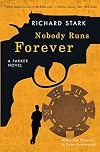
"Lots of bleak fun . . . This stellar series just gets better and better." -Publishers Weekly (starred review) The saga begins with a poker game gone lethally awry. When Parker goes in on a messy scam-stealing an armored car-with someone he barely knows, as usual the amateurs get in the way of the job. From a nervous ex-con and his well-intentioned sister to a bank manager's two-timing wife and a beautiful, relentless cop, too many people have their hands too close to Parker's pie. Even when show more he sees the job turning bad, he can't let go of the score-and there just might be nowhere left to run . . . "Another thrill ride worth staying up all night and calling in sick tomorrow morning for." ?Austin Chronicle "The shrewdest sociopath this side of Tom Ripley . . . a great hard-boiled series." -Booklist. show lessTags
Recommendations













Member Reviews
If you end up writing what turns out to be a long-running series, you needed to find ways of keeping yourself interested. Evan Hunter, writer of the 87th precinct series as Ed McBain, did what comic books used to call “a change of pace issue.” He would write a novel completely from the criminal’s point of view, or from that of a neighborhood, or he would focus on something off-topic for your standard police procedural: a doll, a dead girl’s diary, calypso music, even ghosts. I’ve always associated Hunter with Donald Westlake, the man behind Richard Stark and Parker, even if they started almost a decade apart. To me the passage of time has relegated them to the same era. They also both worked for the same literary agency, show more though not simultaneously; both could write in any style or voice; both wrote under at least a half a dozen pseudonyms; they had their greatest series success under one of those pseudonyms; had successful forays into Hollywood, both with adaptations of their work and screenplays of their own; and, finally, they made it into the 21st Century when most of their contemporaries had retired or passed on.
Westlake didn’t take the precautions Hunter did; consequently, 12 years into the series, Parker came to an abrupt stop. At least from Westlake’s point of view. He is quoted as saying that one day he had simply lost the Richard Stark voice. I have to believe on some subconscious level he had to know he was coming to the end. Those last three or four books in the initial run read like they were headed toward a definitive conclusion. And it would be twenty-plus years before Westlake would find that voice again, and Stark and Parker would return.
This time the author made sure to keep himself entertained while he entertained us. In small ways at first. Like playing Dominoes with the titles. The first new one, COMEBACK, led to BACKFLASH, then to FLASHFIRE, then FIREBREAK, and then BREAKOUT. That was where the game ended. It was time to attempt a trilogy. Now that’s a challenge! Maybe espionage stories, because of the multiple layers and complexities to be explored, can be stretched out over several books, but generally speaking crime fiction comes with the expectation of a conclusion. Maybe that’s why these final three books--before publication or since--have never been referred to as a trilogy. But the intent seems clear.
To answer his self-challenge Westlake had to use every trick in the book. Literally. Every trick he’s ever used. A single heist story can go smoothly and remain interesting but a series featuring a professional thief needs complications, sometimes while planning the job, sometimes during its execution, sometimes in making the getaway. Sometimes they overlap. Westlake needed them all for the next three books. Plus ancillary characters and subplots.
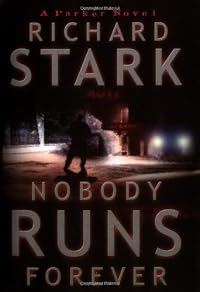
Like most Parker novels Nobody Runs Forever opens with a sudden act of violence. Seven men in a hotel room, one of them wearing a wire, whom Parker promptly dispatches. It is an act that will later spawn the complications that the novel needs but immediately leads to the next job. An iffy job to begin with, but even as early as 2004 the world was changing and finding large sums of cash was becoming increasingly difficult. Reservations aside, Parker and his associates go forward. What results is your typical Parker novel. Quick, sparse and engaging. And in due course Westlake passes his first test: How to end the book without ending the story? His answer, from word one, was to write toward a specific conclusion. A conclusion that was not necessarily an ending. Certainly not the ending.
Only in not rising to that particular challenge could he mar everything that preceded it. And so, mark “Part 1” a complete success. show less
Westlake didn’t take the precautions Hunter did; consequently, 12 years into the series, Parker came to an abrupt stop. At least from Westlake’s point of view. He is quoted as saying that one day he had simply lost the Richard Stark voice. I have to believe on some subconscious level he had to know he was coming to the end. Those last three or four books in the initial run read like they were headed toward a definitive conclusion. And it would be twenty-plus years before Westlake would find that voice again, and Stark and Parker would return.
This time the author made sure to keep himself entertained while he entertained us. In small ways at first. Like playing Dominoes with the titles. The first new one, COMEBACK, led to BACKFLASH, then to FLASHFIRE, then FIREBREAK, and then BREAKOUT. That was where the game ended. It was time to attempt a trilogy. Now that’s a challenge! Maybe espionage stories, because of the multiple layers and complexities to be explored, can be stretched out over several books, but generally speaking crime fiction comes with the expectation of a conclusion. Maybe that’s why these final three books--before publication or since--have never been referred to as a trilogy. But the intent seems clear.
To answer his self-challenge Westlake had to use every trick in the book. Literally. Every trick he’s ever used. A single heist story can go smoothly and remain interesting but a series featuring a professional thief needs complications, sometimes while planning the job, sometimes during its execution, sometimes in making the getaway. Sometimes they overlap. Westlake needed them all for the next three books. Plus ancillary characters and subplots.
Like most Parker novels Nobody Runs Forever opens with a sudden act of violence. Seven men in a hotel room, one of them wearing a wire, whom Parker promptly dispatches. It is an act that will later spawn the complications that the novel needs but immediately leads to the next job. An iffy job to begin with, but even as early as 2004 the world was changing and finding large sums of cash was becoming increasingly difficult. Reservations aside, Parker and his associates go forward. What results is your typical Parker novel. Quick, sparse and engaging. And in due course Westlake passes his first test: How to end the book without ending the story? His answer, from word one, was to write toward a specific conclusion. A conclusion that was not necessarily an ending. Certainly not the ending.
Only in not rising to that particular challenge could he mar everything that preceded it. And so, mark “Part 1” a complete success. show less
Excellent Parker novel.
These just whip right along, every heist coming with numerous complications and mistakes, exemplifying human foibles except for Parker who remains totally amoral and focused only on the job, and who must use his wits to deal with the inevitable screw-ups and unforeseen holes in the road.
To recount the plot would be to layer the review in spoilers. I’ll just whet your interest with four armored trucks, one very smart police detective, a smarmy doctor, two bounty hunters looking for a dead body, some ex-cons, and a church filled with hymnals.
Number 22 in the series. Read them all. Perfect length for a transcontinental flight. You won’t even miss flying over Kansas and Nebraska.
These just whip right along, every heist coming with numerous complications and mistakes, exemplifying human foibles except for Parker who remains totally amoral and focused only on the job, and who must use his wits to deal with the inevitable screw-ups and unforeseen holes in the road.
To recount the plot would be to layer the review in spoilers. I’ll just whet your interest with four armored trucks, one very smart police detective, a smarmy doctor, two bounty hunters looking for a dead body, some ex-cons, and a church filled with hymnals.
Number 22 in the series. Read them all. Perfect length for a transcontinental flight. You won’t even miss flying over Kansas and Nebraska.
In the introduction to "Deadly Edge," Charles Ardai explains that the Parker novels are all rather similar in that they all involve some kind of heist and things go wrong, but they are like jazz tunes that are all familiar in a sense, but no two solos are alike. "Nobody Runs Forever" is the 22nd book in this series ( not counting the four Grofield books) and it is part one of the trilogy that ends the series with "Ask The Parrot" and "Dirty Money" being the other two pieces. Each of these three novels is complete for themselves, but together they are part of a continuous story about an armored car robbery in Western Massachusetts and it's aftermath.
A smaller bank is getting swallowed up by a larger one and all the cash is being moved at show more night by a high security team in four armored vehicles. An Ex-con has been dating the bank president's wife and she has the inside scoop on when and what route the money is being moved. A perfect chance or is it ever that simple in Parker's world? Maybe you got an inside person, but the absolute worst thing is to have an amateur involved. And, before they even got underway (like on the first few pages) some joker wearing a wire had to be put down and the body hasn't even been laid to rest. At least, you're not attracting the attention of an over zealous woman cop, Detective Reversa. At least, a bounty hunter isn't trying to crash the party. At least the ex-con isn't running from a jealous husband.
It's hard to pick a favorite among the Parker novels as they are all terrific. This is another brilliant work by Mr. Westlake. Well-plotted and simply well done. show less
A smaller bank is getting swallowed up by a larger one and all the cash is being moved at show more night by a high security team in four armored vehicles. An Ex-con has been dating the bank president's wife and she has the inside scoop on when and what route the money is being moved. A perfect chance or is it ever that simple in Parker's world? Maybe you got an inside person, but the absolute worst thing is to have an amateur involved. And, before they even got underway (like on the first few pages) some joker wearing a wire had to be put down and the body hasn't even been laid to rest. At least, you're not attracting the attention of an over zealous woman cop, Detective Reversa. At least, a bounty hunter isn't trying to crash the party. At least the ex-con isn't running from a jealous husband.
It's hard to pick a favorite among the Parker novels as they are all terrific. This is another brilliant work by Mr. Westlake. Well-plotted and simply well done. show less
The heist in this one is a bank/four armored car job. That gets complicated by a card game at the beginning!
Chapter 1 of part Four is a doozy! Stark intricately weaves all the different plot lines together from all the different characters points of view! Riveting reading! And then - a cliffhanger ending? I really hate those! Especially when it is not 'listed' as such! Apparently, from this book until the end is a trilogy, which is fine. I just didn't like getting to the end of this one and having this unexpected ending. I'm not certain, but I don't think that has happened in this series before. Still, it's a Parker novel, so I'll get over it!
Chapter 1 of part Four is a doozy! Stark intricately weaves all the different plot lines together from all the different characters points of view! Riveting reading! And then - a cliffhanger ending? I really hate those! Especially when it is not 'listed' as such! Apparently, from this book until the end is a trilogy, which is fine. I just didn't like getting to the end of this one and having this unexpected ending. I'm not certain, but I don't think that has happened in this series before. Still, it's a Parker novel, so I'll get over it!
Running low on cash, Parker goes to a poker game to hear of a job stealing dental gold when he spies a wire on one of the guys and the game turns deadly: a necktie party. One of the players then approaches Parker to rob an armored car during a bank takeover, with the key information provided by a parolee and his paramour, whose husband runs the acquired bank. While there are a few surprising developments, the book suffers from too many extraneous characters although I did like the weaponry provided by Briggs. Things go badly wrong (repeatedly) with the two sources, and Parker and the crew are almost caught because of their stupidity. In my opinion, Stark's books were much better at 225-250 pages, than at 300 .
This action book can hardly be called a mystery. It is clear from chapter one who the 'bad guys' are and the only suspense is will the only-somewhat likeable gang of thieves be able to pull off their heist. Anchored by Parker, this book is really a mixed bag in terms of characters and pace. Some, like Dr. Madchen, and Nels, seemed pitch perfect; Nick Dalesia was underdeveloped and flat, and some others were one or two dimensional. The book starts off with an interest event, which could have really popped with some artistry. Then it sags into a slow and sometimes tedious set of character development, much of which never gets a return on investment when the pace starts speeding up to a fever pitch at the end.
All in all, this book is a show more like a moderately bad movie with some really good scenes, where the good scenes are all in the movie trailer, promising more of the same, but when you watch the movie, there's little else. This book had 4-6 amazing scenes, two of the six associate characters are really good, and the rest is boilerplate a writing workshop student could have come up with. Nevertheless, the premise and mostly the lead character Parker are going to make me want to read the sequel, Dirty Money. show less
All in all, this book is a show more like a moderately bad movie with some really good scenes, where the good scenes are all in the movie trailer, promising more of the same, but when you watch the movie, there's little else. This book had 4-6 amazing scenes, two of the six associate characters are really good, and the rest is boilerplate a writing workshop student could have come up with. Nevertheless, the premise and mostly the lead character Parker are going to make me want to read the sequel, Dirty Money. show less
Another great book from Donald Westlake writing as Richard Stark. So well written that I could actually forget that someone had strung these words together. A good writer knows how not to let the words get in the way of the story.
Members
- Recently Added By
Author Information

269+ Works 27,780 Members
Author Donald E. Westlake was born in Brooklyn, New York on July 12, 1933. He attended colleges in New York, but did not graduate. He wrote more than 100 novels and 5 screenplays throughout his lifetime. He also wrote under numerous pseudonyms including Richard Stark, Tucker Coe, and Samuel Holt. Almost 20 of his novels were adapted into films and show more he created the television series, The Father Dowling Mysteries. He is a three-time winner of the Edgar Award from the Mystery Writers of America and was nominated for an Academy Award for his screenplay for The Grifters. He was also named a Mystery Writers of America Grand Master in 1993. He died of a heart attack on December 31, 2008 at the age of 75. (Bowker Author Biography) Donald E. Westlake has won three Edgar Awards & was nominated for an Academy Award for Best Adapted Screenplay for "The Grifters". He lives in upstate New York. (Publisher Provided) show less
Series

Common Knowledge
- Original publication date
- 2004
- People/Characters
- Parker
- First words
- When he saw that the one called Harbin was wearing a wire, Parker said, "Deal me out a hand," and got to his feet.
- Last words
- (Click to show. Warning: May contain spoilers.)He kept climbing.
Classifications
Statistics
- Members
- 310
- Popularity
- 102,599
- Reviews
- 15
- Rating
- (3.94)
- Languages
- English, French, German
- Media
- Paper, Audiobook, Ebook
- ISBNs
- 15
- ASINs
- 3