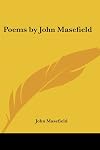
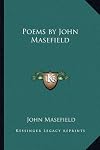
Poems
by John Masefield
On This Page
Description
Since functional MRI (fMRI) and the basic method of BOLD imaging were introduced in 1993 by Seiji Ogawa, fMRI has evolved into an invaluable clinical tool for routine brain imaging, and there have been substantial improvements in both the imaging technique itself and the associated statistical analysis. This book provides a state of the art overview of fMRI and its use in clinical practice. Experts in the field share their knowledge and explain how to overcome diverse potential technical show more barriers and problems. Starting from the very basics on the origin of the BOLD signal, the book covers technical issues, anatomical landmarks, the full range of clinical applications, methods of statistical analysis, and special issues in various clinical fields. Comparisons are made with other brain mapping techniques, such as DTI, PET, TMS, EEG, and MEG, and their combined use with fMRI is also discussed. Since the first edition, original chapters have been updated and new chapters added, covering both novel aspects of analysis and further important clinical applications. show lessTags
Recommendations



























Member Reviews
I've loved John Masefield, former Poet Laureate, ever since we studied his poems at school. Very English and with nice clear rhythm.
Ratings
Members
- Recently Added By
Lists

Best 20th Century Books as of 1924
100 works; 6 members
Author Information

181+ Works 4,024 Members
Once one of the most popular English poets of the century, Masefield has fallen into undeserved neglect since his death. He was born in a Victorian house with rural vistas, which he later recalled as "living in Paradise." In childhood, he had a series of intense, visionary experiences inspired by both nature and literature, which gave him a show more habitual sense of participation in a greater life. These had weakened by 1891, when he entered training for the merchant naval service. An officer on the White Star Line's Adriatic, he jumped ship in New York in 1895 and roamed across America. He returned to England two years later when a recovery of his intense childhood visions convinced him he could succeed as a writer. Masefield excelled more at narrative than at symbolism. His first book, "Salt Water Poems and Ballads" (1902), displayed the allegiance to outcasts and wanderers that marks his subject matter. The musicality of that volume derives partly from the strong early influence of W. B. Yeats. Increasingly, Masefield experimented with colloquial diction, particularly from the lower classes. His "The Everlasting Mercy" (1911) recounted the conversion of a rural scoundrel in language that astonished many readers. Highly prolific, he produced more than 20 volumes of fiction, 17 plays, and other prose work besides his major volumes of poetry. Masefield still appeals particularly to the common reader. He was appointed poet laureate in 1930. (Bowker Author Biography) show less
Classifications
Statistics
- Members
- 48
- Popularity
- 627,103
- Reviews
- 1
- Rating
- (4.25)
- Languages
- English
- Media
- Paper
- ISBNs
- 5
- ASINs
- 10