On This Page
Description
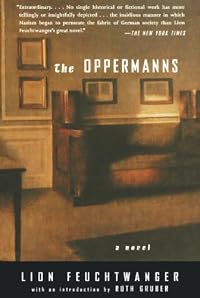
Written in real-time, as the Nazis consolidated their power over the winter of 1933, The Oppermanns captures the fall of Weimar Germany through the eyes of one bourgeois Jewish family, shocked and paralyzed by an ideology they cannot comprehend. In the foment of Weimar-era Berlin, the Oppermann brothers represent tradition and stability. One brother oversees the furniture chain founded by their grandfather, one is an eminent surgeon, and one a respected critic. They are rich, cultured, show more liberal, and public-spirited, proud inheritors of the German Enlightenment. They don't see Hitler as a threat. Then, to their horror, the Nazis come to power, and the Oppermanns and their children are faced with the terrible decision of whether to adapt-if they can-flee or try to fight. Written in 1933, nearly in real-time, The Oppermanns captures the day-to-day vertigo of watching a liberal democracy fall apart. As Joshua Cohen writes in his introduction to this new edition, it is "one of the last masterpieces of German-Jewish culture." Prescient and chilling, it has lost none of its power today. Introduction read by Joshua Cohen. show lessTags
Recommendations










































Member Reviews
This chilling novel tells of the advent of insidious discrimination, harassment, and oppression of Jews by the nascent Nazi regime. As the "nationalists" (Nazi's) took control in 1933, they started an immediate campaign against Jews in all facets of life in Germany: business, the arts, academia, etc. The Opperman brothers were prominent in Berlin. Martin managed the family's successful furniture business, Edgar was a highly respected surgeon, and Gustav was a figure on the literary scene. Martin's son, Berthold, was a student in secondary school whose talk on a legendary German hero was distorted by the new teacher who was a Nazi sympathsizer. The teacher's pressure on Berthold to apologize was so intense resulting in the boy's suicide show more rather than giving in. The Oppermans became the targets of a smear campaign that threatened their business and standing in the community. The brothers left the country to seek refuge. Gustav, learning of the abuse and torture of Jews and dissidents, returned under an assumed identity to join the resistence. He was arrested and sent to one of the new concentration camps where he was subjected to physical abuse. Ultimately released only after the intervention of high-ranking authorities, he returned to France as a broken shell of himself.
It is crucial to know that the novel was written in 1933. One is struck with the awareness that we know, as the author did not, how this turned out; how the fascist takeover destroyed the country and cost millions of lives in the most horrific ways imaginable. The book was recently republished and surely its description of the rapidity with which the Facists took control is intended to resonate with Americans who fear the dangers facing our own country today as right-wing zealots are exercising their new-found powers to dismantle our democratic insitution and pervert the rule of law. show less
It is crucial to know that the novel was written in 1933. One is struck with the awareness that we know, as the author did not, how this turned out; how the fascist takeover destroyed the country and cost millions of lives in the most horrific ways imaginable. The book was recently republished and surely its description of the rapidity with which the Facists took control is intended to resonate with Americans who fear the dangers facing our own country today as right-wing zealots are exercising their new-found powers to dismantle our democratic insitution and pervert the rule of law. show less
The Oppermanns is a beautifully written and touching novel that was included in my reading for a class in the University of Chicago Basic Program where we studied "Degenerate Art" during the Third Reich. Feuchtwanger's novel is a moving story of a Jewish families in 1930s Germany who are divided in their views about how to respond to both the actual physical and economic threats from the rising National Socialist movement. The family members represented the varying views of changes that were occurring in Germany of the nineteen-thirties with some taking a more benign view and others showing more concern by moving to Paris and elsewhere. As the book begins the Nazis were gaining more political control and the cultural and economic show more environment was beginning to change in Germany because of it. For the first time in its history, the Oppermann’s furniture business was forced to take on an approved Aryan partner in order to keep it running. This is a move that contributes to their eventually losing it altogether. The family must endure ever more personal tragedies as the worst becomes a reality. Those family members who departed from Germany were proven to be more prescient in their caution as the ones who stayed too long found not just upheaval in their lives but real danger from the increasing limits placed on Jewish families and other "undesirables".
Most of all this historical novel captured the cultural and political changes that made possible the burning of books and display of "degenerate art". As such I would recommend it to anyone interested in understanding the history of Germany in that era. show less
Most of all this historical novel captured the cultural and political changes that made possible the burning of books and display of "degenerate art". As such I would recommend it to anyone interested in understanding the history of Germany in that era. show less
Published in 1933, shortly after the National Socialist Party took power in Germany, this novel looks into the ensuing years to show its impact on the country’s German-Jewish population, as well as the destruction of the socialists seeking to preserve democracy in the country. It is eerie how Feuchtwanger, a Jew, was able to predict the destruction of not only Germany’s well-established Jewish population, but anyone who dared to question the Nazi party’s legitimacy. While the author failed to imagine the later ability of its military to overrun western Europe, he does show how such a nationalist party succeeded to overwhelm Germany’s fragile democracy, despite the fact that the majority of the population did not support its show more radical agenda.
The novel focuses on the Oppermanns, a family of German-Jewish extraction, who have for a century established themselves as a well respected merchant family. Witnessing the rise of the Nazis, at first they make fun of the rise of nationalism in the country, believing Germany to be so culturally advanced that it would never succumb to the thuggery which the party exposed. While portraying the effects of this rise on a number of various other Jews, the story ultimately concentrates on Gustav Oppermann, a fifty year old family member, a well known author who slowly begins to realize what the rise of the Nazi party will mean for his family as well anyone who does not subscribe to or fit into its beliefs.
After fleeing Germany to escape persecution following Hitler taking power, Gustav returns, hoping to encourage what he perceives as the majority’s opposition to the Nazi agenda. This results in his arrest and being sent to a concentration camp. The author presciently describes the horrors taking place in these camps to break the will of those who dare to oppose the party’s dominance. It serves as a red flag, showing what the Nazis’ rise means for the rest of western Europe, where neighboring countries continued to believe that Hitler did not intend to carry out the acts he exposed. Despite the fact that its prose at times seems overblown and strident, this novel served as one of the first warnings of a truth the rest of the world was much too slow to acknowledge. show less
The novel focuses on the Oppermanns, a family of German-Jewish extraction, who have for a century established themselves as a well respected merchant family. Witnessing the rise of the Nazis, at first they make fun of the rise of nationalism in the country, believing Germany to be so culturally advanced that it would never succumb to the thuggery which the party exposed. While portraying the effects of this rise on a number of various other Jews, the story ultimately concentrates on Gustav Oppermann, a fifty year old family member, a well known author who slowly begins to realize what the rise of the Nazi party will mean for his family as well anyone who does not subscribe to or fit into its beliefs.
After fleeing Germany to escape persecution following Hitler taking power, Gustav returns, hoping to encourage what he perceives as the majority’s opposition to the Nazi agenda. This results in his arrest and being sent to a concentration camp. The author presciently describes the horrors taking place in these camps to break the will of those who dare to oppose the party’s dominance. It serves as a red flag, showing what the Nazis’ rise means for the rest of western Europe, where neighboring countries continued to believe that Hitler did not intend to carry out the acts he exposed. Despite the fact that its prose at times seems overblown and strident, this novel served as one of the first warnings of a truth the rest of the world was much too slow to acknowledge. show less
It's ordinariness of the story that is so devastating. The heart of the book centers on what could have been a careless sort of person, but devastatingly, he was not altogether careless or unfeeling. The manner in which the attitudes and people collapse into depraved nazism is incredible in its very credibility. And, needless to say, very close to what we are currently experiencing. A frightening portent of our present.
ארבעה כוכבים, למרות שזה ספר גרוע. גרוע כי הוא כתוב רע. יותר מדי גיבורים. הדמויות צפויות. בנויות מקרטון. שלוש מילים ואתה יודע מה כל אחד יעשה ואיך. הספר נכתב יותר כתסריט לרדיו וכך הוא גם נקרא. למרות זאת ארבעה כוכבים כי זה ספר נבואי. הספר נכתב בשנת 1933 כשהנאצים רק עלו לשלטון. המחבר כמובן לא ידע מה יקרה, אבל למרות זאת הוא חוזה את העתיד הנוראי כלל לא רע. הוא גם ספר נבואי כי לקרוא אותו היום בדצמבר 2023 במדינת ישראל שלפי כל מה show more שנראה היום הולכת לקראת חורבנה ולקראת עתיד לא שונה בהרבה ממה שעברה גרמניה תחת השלטון הנאצי זה מחריד. גם הדילמות שעומדות בפני גיבורי הספר וההחלטות הלרוב מוטעות שהם לוקחים מזכירים מאוד את ההחלטות שכולנו בישראל עומדים בפניהן היום ואת ההחלטות המוטעות או לא שלקחנו וניקח. עורך הספר יהושוע כוהן, האיש שכתב את הספר הנתניהוז, הוא בוודאי אדם שיודע היטב על מה ועל מי הוא מדבר. show less
Una famiglia di ebrei agiati ed integrati nella società tedesca nella Berlino del '33 coinvolta nel marasma degli eventi dà modo a Feuchtwanger di descrivere e spiegare come sia potuto succedere che i cani nazi imperversassero causando la rovina della Germania. Quindi un romanzo in cui trovano spazio l'etica, la riflessione storica e sociologica ma non i sentimentalismi. Infatti l'autore elogia la resistenza fattiva, concreta, quella rete di connivenze con i nazi che hanno permesso di fuggire e sopravvivere ai perseguitati dai nazisti, mentre sminuisce l'importanza di chi, pur eroicamente, si è sacrificato, come il protagonista, agendo nobilmente sì, ma senza andare oltre al gesto simbolico.
Come tutte le narrazioni ambientate in show more quel periodo storico lascia l'amaro in bocca, ma lo fa dopo averti coinvolto, non soltanto emotivamente, per 381 pagine. Grazie per il consiglio, Primo ;-) show less
Come tutte le narrazioni ambientate in show more quel periodo storico lascia l'amaro in bocca, ma lo fa dopo averti coinvolto, non soltanto emotivamente, per 381 pagine. Grazie per il consiglio, Primo ;-) show less
Like watching a car-crash in slow motion . . . but knowing the outcome before it even begins. Written in 'real time': 1933--Hitler's ascension to power and the corresponding impact on Germans, be they Jewish or Christian.
Members
- Recently Added By
Lists

German Literature
514 works; 55 members

Jewish Books
367 works; 24 members

Books Read in 2023
5,547 works; 145 members

Books Read in 2022
5,164 works; 111 members

Llibres que he llegit el 2006
17 works; 1 member

Best Books of 1926-1935
403 works; 10 members

Persephone
148 works; 3 members
Author Information

117+ Works 3,193 Members
Lion Feuchtwanger, novelist and dramatist, was born in Munich, Germany, the son of a wealthy manufacturer. The rise of the Nazis drove him to France, and after the collapse of that country he escaped to Spain with great difficulty. He reached the United States in 1940. A major work is his trilogy on the Jewish historian: Josephus (1932), The Jew show more of Rome (1935), and Josephus and the Emperor (1942). He was best known in Germany as a dramatist, but his international success was due to his revival of the historical novel written with modern psychological understanding. (Bowker Author Biography) show less
Some Editions
Awards and Honors
Series

Belongs to Publisher Series
Work Relationships
Is contained in
Common Knowledge
- Canonical title
- The Oppermanns
- Original title
- Die Geschwister Oppenheim : Roman
- Alternate titles*
- De Oppenheims
- Original publication date
- 1933
- Important places*
- Berlijn, Duitsland
- First words
- He sits on the sofa in his hotel suite, his head hunched forward as if he is reading a book.
When Dr. Gustav Oppermann awoke on the sixteenth of November, which marked his fiftieth birthday, it was long before sunrise. That was annoying. -One - Last words
- (Click to show. Warning: May contain spoilers.)He breathed the pleasant, tempting odour of the oil, the thyme, and the frying fish that issued from the house.
- Original language
- German
- Canonical DDC/MDS
- 833.91
- Canonical LCC
- PT2611.E85
- Disambiguation notice*
- Eerder verschenen o.d.t.: De Oppenheims
*Some information comes from Common Knowledge in other languages. Click "Edit" for more information.
Classifications
- Genres
- General Fiction, Fiction and Literature, Historical Fiction
- DDC/MDS
- 833.91 — Literature & rhetoric German & related literatures German fiction 1900- 1900-1990
- LCC
- PT2611 .E85 — Language and Literature German, Dutch and Scandinavian literatures German literature Individual authors or works 1860/70-1960
- BISAC
Statistics
- Members
- 535
- Popularity
- 55,518
- Reviews
- 17
- Rating
- (4.17)
- Languages
- 10 — Czech, Dutch, English, German, Hebrew, Hungarian, Italian, Russian, Spanish, Swedish
- Media
- Paper, Audiobook, Ebook
- ISBNs
- 29
- ASINs
- 14