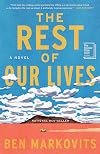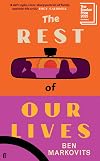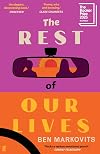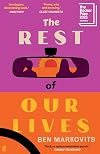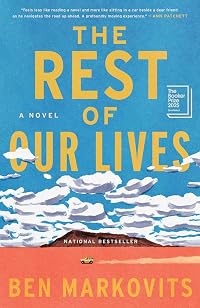
The Rest of Our Lives
by Benjamin Markovits
On This Page
Description
"When Tom Layward's wife had an affair twelve years ago, he resolved to leave her as soon as his youngest child left the nest. Now, while driving his college-bound daughter to Pittsburgh, he remembers his promise to himself. He is also on the run from his own health issues and a forced leave from work. So, rather than returning to his wife in Westchester, Tom keeps driving west with the vague plan of visiting people from his past--an old college friend, his ex-girlfriend, his brother, his show more son--en route, maybe, to California. He's moving toward a future he hasn't even envisioned yet while he considers his past and the choices he's made that have brought him to this particular present. Pitch-perfect, tender, and keenly observed, The Rest of Our Lives is a story about what to do when the rest of your life is only just the beginning of your story."-- show lessTags
Recommendations


Member Reviews
Tom Layward is a middle-aged law professor whose life is steadily unraveling. As we first meet him, Tom is planning to drive his daughter from their suburban New York home to college in Pennsylvania, all the while harboring a long-suppressed promise to himself to leave his wife Amy once their children are grown. Amy’s affair twelve years ago still casts a damaging shadow over their marriage, and Tom, now on enforced leave from his university and grappling with mysterious health issues, impetuously decides to keep driving west after dropping his daughter off at school. His journey becomes a meandering pilgrimage through his past—visiting his brother in Indiana, an old friend in Colorado, an ex-girlfriend in Nevada, his son in show more California, and ultimately his father’s grave. Along the way, Tom reflects on his marriage, his failures, and the slow erosion of his identity, all while navigating the emotional terrain of finding himself estranged from his family as he grows older.
That is the basic plot of The Rest of Our Lives, author Ben Markovits’ entry into the long-standing American tradition of road novels and quest narratives. However, unlike some in that genre where the journey itself is the point (Jack Kerouac’s On the Road, John Steinbeck’s Travels With Charley, Bill Bryson’s The Lost Continent), this novel is more introspective in nature as Tom hits the road as a means of finding himself, or at least rediscovering who he once was. In that sense, this work is more thematically connected to William Least Heat Moon’s Blue Highways or any of Richard Ford’s Bascombe novels (e.g., Independence Day). Tom’s trip is hardly heroic but more confessional in nature, more about reconciling mistakes and missed opportunities in the past than discovering what the future holds in store. This is a book that asks whether one can ever outrun the consequences of past choices and whether any journey—physical or spiritual—can fix those issues.
I would like nothing more to say that I found The Rest of Our Lives to be a compelling and satisfying reading experience, but that was simply not the case. To be sure, Markovits’ prose is sharp and insightful; this is a writer who has delved deeply into the mind and heart of his protagonist, if not most of the supporting characters. Unfortunately, though, Tom is an unlikeable person who seemingly cares about nothing—including his own welfare, strangely enough—which made it very difficult for me to connect with him at all. Beyond that, the underlying premise for the entire coast-to-coast quest was simply implausible to begin with: who really would bide his time for more than a decade to exact revenge on a spouse’s brief infidelity? (The notion that Tom made that decision for the sake of the children is disingenuous given how fractured his relationship is with each of them.) Further, the story is left unresolved, but not in a way that allows readers to figure things out for themselves. So, although well written and carefully crafted, this novel is not one that I can recommend without hesitation. show less
That is the basic plot of The Rest of Our Lives, author Ben Markovits’ entry into the long-standing American tradition of road novels and quest narratives. However, unlike some in that genre where the journey itself is the point (Jack Kerouac’s On the Road, John Steinbeck’s Travels With Charley, Bill Bryson’s The Lost Continent), this novel is more introspective in nature as Tom hits the road as a means of finding himself, or at least rediscovering who he once was. In that sense, this work is more thematically connected to William Least Heat Moon’s Blue Highways or any of Richard Ford’s Bascombe novels (e.g., Independence Day). Tom’s trip is hardly heroic but more confessional in nature, more about reconciling mistakes and missed opportunities in the past than discovering what the future holds in store. This is a book that asks whether one can ever outrun the consequences of past choices and whether any journey—physical or spiritual—can fix those issues.
I would like nothing more to say that I found The Rest of Our Lives to be a compelling and satisfying reading experience, but that was simply not the case. To be sure, Markovits’ prose is sharp and insightful; this is a writer who has delved deeply into the mind and heart of his protagonist, if not most of the supporting characters. Unfortunately, though, Tom is an unlikeable person who seemingly cares about nothing—including his own welfare, strangely enough—which made it very difficult for me to connect with him at all. Beyond that, the underlying premise for the entire coast-to-coast quest was simply implausible to begin with: who really would bide his time for more than a decade to exact revenge on a spouse’s brief infidelity? (The notion that Tom made that decision for the sake of the children is disingenuous given how fractured his relationship is with each of them.) Further, the story is left unresolved, but not in a way that allows readers to figure things out for themselves. So, although well written and carefully crafted, this novel is not one that I can recommend without hesitation. show less
Shortlisted for the Booker Prize 2025
3.5
"Is the idea of healing to get you back to the way you used to be or to turn you into something new?"
When Tom Layward learned that his wife Amy had an affair, he vowed to leave her after his youngest child left home for university. Twelve years later, suspended from his job as a law professor, he dropped his daughter off in Pittsburgh and kept driving west. Despite signs of poor health, Tom begins a road trip that links past and present, visiting his brother, an old girlfriend, a college buddy, and his son. By crafting the novel in the first person, Markovits provides access to Layward's inner, if somewhat muddled, world.
The Rest of Our Lives is low-key for an American road novel. Layward appears show more distant from the events of his life and views himself as blameless for everything that has gone wrong: his suspension from his job, his wife's infidelity, and his poor health. The trip becomes his mechanism for
regaining control without confronting his problems.
I liked the novel. It's short, moves quickly, and keeps the reader in the moment. Markovitz is a polished writer and is adept at blending humour with sorrow. Despite its strengths, I was surprised that it made the Booker shortlist as it doesn't break new ground in content, style, or structure. Its inclusion in the shortlist made me realize how little I understand the judges' criteria. Booker lists aside, I recommend The Rest of Our Lives. It's a great read. show less
3.5
"Is the idea of healing to get you back to the way you used to be or to turn you into something new?"
When Tom Layward learned that his wife Amy had an affair, he vowed to leave her after his youngest child left home for university. Twelve years later, suspended from his job as a law professor, he dropped his daughter off in Pittsburgh and kept driving west. Despite signs of poor health, Tom begins a road trip that links past and present, visiting his brother, an old girlfriend, a college buddy, and his son. By crafting the novel in the first person, Markovits provides access to Layward's inner, if somewhat muddled, world.
The Rest of Our Lives is low-key for an American road novel. Layward appears show more distant from the events of his life and views himself as blameless for everything that has gone wrong: his suspension from his job, his wife's infidelity, and his poor health. The trip becomes his mechanism for
regaining control without confronting his problems.
I liked the novel. It's short, moves quickly, and keeps the reader in the moment. Markovitz is a polished writer and is adept at blending humour with sorrow. Despite its strengths, I was surprised that it made the Booker shortlist as it doesn't break new ground in content, style, or structure. Its inclusion in the shortlist made me realize how little I understand the judges' criteria. Booker lists aside, I recommend The Rest of Our Lives. It's a great read. show less
My 10th from the Booker Prize longlist is an American roadway novel. Tom is dealing with, or not dealing with, male uncertainty. He is confronting his own promise - to leave his wife once his youngest child reaches 18 because she had an affair twelve years prior. (The title is a play on the marriage vows.) There is a lot of setup, then he takes his daughter from home in New York to school in Pittsburg, and keeps going west. What is he doing? He doesn't seem to know. He also never really thinks about what he's running away from or hiding from. He doesn't seem to be going anywhere. But he's a nice guy with some middle age health issues. And he's tall, and into basketball, comparing the accepted hopelessness of his marriage to being a show more Knicks fan.
This book benefits because Tom is a nice guy. Because he's really interested in the people he encounters, and they become complicated and sympathetic, sometimes endearing themselves. And because Markovitz can maintain the prose and literary trend for long stretches. There are few breaks in the book. Like a road trip, the prose carries on. But he's a nice distraction from the mostly unremarked on scenery.
But what makes this book work is somehow what Tom is not dealing with. I've kept thinking about this book. Initially I felt it didn't do enough, but slowly I came to realize how well it does what it intended. Recommended especially for those who need to zoom away from real life for a bit
2025
https://www.librarything.com/topic/372264#8949614 show less
This book benefits because Tom is a nice guy. Because he's really interested in the people he encounters, and they become complicated and sympathetic, sometimes endearing themselves. And because Markovitz can maintain the prose and literary trend for long stretches. There are few breaks in the book. Like a road trip, the prose carries on. But he's a nice distraction from the mostly unremarked on scenery.
But what makes this book work is somehow what Tom is not dealing with. I've kept thinking about this book. Initially I felt it didn't do enough, but slowly I came to realize how well it does what it intended. Recommended especially for those who need to zoom away from real life for a bit
2025
https://www.librarything.com/topic/372264#8949614 show less
One expects more from The Rest Of Our Lives, a Booker Prize shortlisted book: a richer, more sophisticated development of time, place, scene, character; however, there is a plot.
Tom Layward, a law professor whose political views are on the wrong side of the Third Reconstruction and who has been placed on leave for that reason, drops his final child off at Carnegie Mellon University in Pittsburgh. Things haven’t been good since his wife had an affair years ago and unwilling to break up his family at that time, he promised himself that once his daughter left for college, he would leave, too. Now, he continues driving west, without a clear plan.
Layward is a cipher on the page, really, until two very brief reflections in the final fifty show more pages of the book that jump out in technicolor.
First, he is a good basketball player and has retained his chops, buddies, and basketball connections. He enters a gym for a pick-up game and realizes that the sound of a basketball striking the boards makes him anxious and afraid. He has to prove himself against other men. Ok. Something raw there.
Second, when Lawyard finally undergoes medical tests that he’s been avoiding for exceedingly worrisome symptoms, he realizes he’s lost control of his body and its mindless physiology. He can no longer curve his long arc of history.
Without these two Eureka moments, there’s not much here. Is that intentional? Is that a reflection of the reserve baked into the character?
Which would you rather believe? Three and a half stars or Booker Prize shortlist? show less
Tom Layward, a law professor whose political views are on the wrong side of the Third Reconstruction and who has been placed on leave for that reason, drops his final child off at Carnegie Mellon University in Pittsburgh. Things haven’t been good since his wife had an affair years ago and unwilling to break up his family at that time, he promised himself that once his daughter left for college, he would leave, too. Now, he continues driving west, without a clear plan.
Layward is a cipher on the page, really, until two very brief reflections in the final fifty show more pages of the book that jump out in technicolor.
First, he is a good basketball player and has retained his chops, buddies, and basketball connections. He enters a gym for a pick-up game and realizes that the sound of a basketball striking the boards makes him anxious and afraid. He has to prove himself against other men. Ok. Something raw there.
Second, when Lawyard finally undergoes medical tests that he’s been avoiding for exceedingly worrisome symptoms, he realizes he’s lost control of his body and its mindless physiology. He can no longer curve his long arc of history.
Without these two Eureka moments, there’s not much here. Is that intentional? Is that a reflection of the reserve baked into the character?
Which would you rather believe? Three and a half stars or Booker Prize shortlist? show less
The Rest of Our Lives.
This was a very readable 1st person narrative, part road trip, part autobiography, and part midlife crisis. Our narrator Tom is a law professor whose wife had an affair a decade ago, but he dealt with it and wanted to be there for the kids. “If there’s something you can do to fix something, I try to do it. But in this case, I wasn’t sure what. She said, you don’t feel anything about anything. I said, everything I do I do for you and the kids. Nothing else matters to me. “
He wanted to have at least an average marriage for them, but he always had an internal thought that when he brought his youngest daughter to college, he would be free, and he would leave. And so early in the novel when he does drop his show more daughter off at college, he decides to just head out west. He first stops at a guy‘s house that he roomed with in college and then he visits his brother. From there he stopped to see his college girlfriend and then a college friend and legal client who had been in some scandal. Finally he finishes his journey at his son’s house who lives in California.
The author is trying to describe this moment in middle age when your kids leave and you’re not sure exactly what to do with your life. In an interview, Markovits describes how a personal illness that he developed became part of the book as well, and that too for a while is undiagnosed and worrisome to others who can’t believe his apathy towards the symptoms. I think the interview helped me better understand what the author was trying to do, or a period of time he was trying to capture. So in reality for the reader there’s not a lot that happens, but the atmosphere of this moment in time is well described.
I found the writing to be straightforward, humorous at times , and able to paint a picture of a man a bit untethered, but not willing to lose his family and a type of legacy that he hopes to have left them.
Lines:
Amy had highly developed guilt feelings, which were so strong she couldn’t help being mad at whoever she felt guilty toward. Which was often me.
You fall in love with somebody when you’re twenty-six, and you see them in all kinds of different lights and according to their potential, but after years and years of marriage and shared parenting and all the other shared decisions you have to make just to get through the days, you accumulate a lot of data about that person that after a while just seems… more or less accurate. If you continue to have illusions, that’s your fault. So if you stay married it’s because you’ve accepted that this is what they’re like, and what your life with them is like, and you stop expecting them to do or give you things you know perfectly well they’re unlikely to do or give you. It’s like being a Knicks fan.
When in fact what we obviously had, even when things smoothed over, was a C-minus marriage, which makes it pretty hard to score much higher than a B overall on the rest of your life.
It was about eighty degrees, just perfect coastal summer weather, the kind only rich people can afford.
whatever she wore, she still looked like a friendly cool camp counselor who you wouldn’t mind babysitting your five-year-old girl.
Michael had become one of those young people who decides that contact with their family is not a source of happiness, so you have to limit it to unavoidable occasions.
I had a sense of undigested emotional material, which is really just a disconnect between the totally normal passage of time you happen to be in and the totally normal passage of time that is about to follow, after which everything will be permanently different.
She was twenty-three and beginning to find out that certain guys, who weren’t obviously awful or unreliable, would consider her to be part of their experience of the world.
My idea was to drive around America in a beat-up car and stop at various towns, big and small, and play pickup at some local court, famous or not, and write about the people I met there.
If you ever want to feel your place in the scales of the universe, go into a Walmart Supercenter. It’s a universe that offers a lot of almost identical and not very attractive choices. show less
This was a very readable 1st person narrative, part road trip, part autobiography, and part midlife crisis. Our narrator Tom is a law professor whose wife had an affair a decade ago, but he dealt with it and wanted to be there for the kids. “If there’s something you can do to fix something, I try to do it. But in this case, I wasn’t sure what. She said, you don’t feel anything about anything. I said, everything I do I do for you and the kids. Nothing else matters to me. “
He wanted to have at least an average marriage for them, but he always had an internal thought that when he brought his youngest daughter to college, he would be free, and he would leave. And so early in the novel when he does drop his show more daughter off at college, he decides to just head out west. He first stops at a guy‘s house that he roomed with in college and then he visits his brother. From there he stopped to see his college girlfriend and then a college friend and legal client who had been in some scandal. Finally he finishes his journey at his son’s house who lives in California.
The author is trying to describe this moment in middle age when your kids leave and you’re not sure exactly what to do with your life. In an interview, Markovits describes how a personal illness that he developed became part of the book as well, and that too for a while is undiagnosed and worrisome to others who can’t believe his apathy towards the symptoms. I think the interview helped me better understand what the author was trying to do, or a period of time he was trying to capture. So in reality for the reader there’s not a lot that happens, but the atmosphere of this moment in time is well described.
I found the writing to be straightforward, humorous at times , and able to paint a picture of a man a bit untethered, but not willing to lose his family and a type of legacy that he hopes to have left them.
Lines:
Amy had highly developed guilt feelings, which were so strong she couldn’t help being mad at whoever she felt guilty toward. Which was often me.
You fall in love with somebody when you’re twenty-six, and you see them in all kinds of different lights and according to their potential, but after years and years of marriage and shared parenting and all the other shared decisions you have to make just to get through the days, you accumulate a lot of data about that person that after a while just seems… more or less accurate. If you continue to have illusions, that’s your fault. So if you stay married it’s because you’ve accepted that this is what they’re like, and what your life with them is like, and you stop expecting them to do or give you things you know perfectly well they’re unlikely to do or give you. It’s like being a Knicks fan.
When in fact what we obviously had, even when things smoothed over, was a C-minus marriage, which makes it pretty hard to score much higher than a B overall on the rest of your life.
It was about eighty degrees, just perfect coastal summer weather, the kind only rich people can afford.
whatever she wore, she still looked like a friendly cool camp counselor who you wouldn’t mind babysitting your five-year-old girl.
Michael had become one of those young people who decides that contact with their family is not a source of happiness, so you have to limit it to unavoidable occasions.
I had a sense of undigested emotional material, which is really just a disconnect between the totally normal passage of time you happen to be in and the totally normal passage of time that is about to follow, after which everything will be permanently different.
She was twenty-three and beginning to find out that certain guys, who weren’t obviously awful or unreliable, would consider her to be part of their experience of the world.
My idea was to drive around America in a beat-up car and stop at various towns, big and small, and play pickup at some local court, famous or not, and write about the people I met there.
If you ever want to feel your place in the scales of the universe, go into a Walmart Supercenter. It’s a universe that offers a lot of almost identical and not very attractive choices. show less
This is one of those books where afterwards I struggle to assimilate my thoughts for a review on the basis of not finding it a particularly thought-provoking read. If I want to be positive about it, words that spring to mind are 'enjoyable enough'. If my negative Nellie side comes to the fore, I'd say it was a bit bland and lukewarm. I guess what I'm trying to say is that I feel a bit ambivalent towards it.
Our male protagonist and narrator is in his mid-fifties, and the novel opens as he and his wife prepare to wave their youngest child off to college. He had found out his wife had had an affair some years before, and she is aware that he'd decided to put off any decisions about the future of their marriage until both kids have left show more home. Now the empty nest beckons, and after dropping his daughter off at college, our narrator finds himself on an impromptu road trip with no clear destination or outcome.
The opening of the book and its finale make up around a quarter of the novel, and those were my favourite parts. Whilst Tom is on his road trip in between these sections, the novel is mostly an introspection as he thinks back to various stages in his life; time with friends, a relationship with a previous girlfriend, meeting his wife, the affair. He stops off for a night or two with a number of these key people from his past as he traverses the country, but really there's no major storyline or plot twist attached to these encounters - they just bring a reality check to his memories. We always look in the rearview mirror with rose-tinted glasses on.
I wanted to really connect with this novel. I'm in a similar age-bracket, and my oldest is probably going to fly the nest later this year. It does force you to think about the next stage in your life (I think of it in thirds - life before kids, life with kids at home, life after kids have left home). Are you prepared for it? Is your marriage solid enough for this next stage without the distraction of the kids after 20 years? What does this next stage look like? There is a lot to unpack there, yet this novel never grabbed me by the heartstrings or had me chewing over thoughts long after I'd shut the cover. It felt like it needed an injection of drama somewhere, or a plot twist or two added in. There wasn't enough colour to his thoughts to pull me in.
Yet again, I have to roll my eyes at why this was considered strong enough to be Booker long-listed, but I've long given up on figuring out how they come to ease decisions.
3.5 stars - worth a read, but very forgettable. show less
Our male protagonist and narrator is in his mid-fifties, and the novel opens as he and his wife prepare to wave their youngest child off to college. He had found out his wife had had an affair some years before, and she is aware that he'd decided to put off any decisions about the future of their marriage until both kids have left show more home. Now the empty nest beckons, and after dropping his daughter off at college, our narrator finds himself on an impromptu road trip with no clear destination or outcome.
The opening of the book and its finale make up around a quarter of the novel, and those were my favourite parts. Whilst Tom is on his road trip in between these sections, the novel is mostly an introspection as he thinks back to various stages in his life; time with friends, a relationship with a previous girlfriend, meeting his wife, the affair. He stops off for a night or two with a number of these key people from his past as he traverses the country, but really there's no major storyline or plot twist attached to these encounters - they just bring a reality check to his memories. We always look in the rearview mirror with rose-tinted glasses on.
I wanted to really connect with this novel. I'm in a similar age-bracket, and my oldest is probably going to fly the nest later this year. It does force you to think about the next stage in your life (I think of it in thirds - life before kids, life with kids at home, life after kids have left home). Are you prepared for it? Is your marriage solid enough for this next stage without the distraction of the kids after 20 years? What does this next stage look like? There is a lot to unpack there, yet this novel never grabbed me by the heartstrings or had me chewing over thoughts long after I'd shut the cover. It felt like it needed an injection of drama somewhere, or a plot twist or two added in. There wasn't enough colour to his thoughts to pull me in.
Yet again, I have to roll my eyes at why this was considered strong enough to be Booker long-listed, but I've long given up on figuring out how they come to ease decisions.
3.5 stars - worth a read, but very forgettable. show less
This was very good, although I think the blurb is a little misleading - it makes it sound as if Tom's decision is entirely spontaneous and that he might simply drop out of his life, and this is not the case. The blurb also fails to flag the amount of basketball (a sport about which I know nothing and none of the vocabulary) contained in the story.
Having said all that, this held my interest throughout (it isn't very long), and Tom's sense of humour was appealing. I loved the ending.
Having said all that, this held my interest throughout (it isn't very long), and Tom's sense of humour was appealing. I loved the ending.
Members
- Recently Added By
Lists

2025 Booker Prize Longlist
13 works; 6 members

LoanStars | Adult List: December 2025
10 works; 1 member

To Read
140 works; 1 member

Books Read in 2026
1,943 works; 66 members

WBS - Book Club
71 works; 1 member
Author Information

15+ Works 971 Members
Benjamin Markovits was born in Palo Alto, California in 1973 and grew up in Texas, London and Berlin. He studied literature at Yale University and Oxford University. He teaches creative writing at Royal Holloway, University of London. He is a writer. His works includes The Syme Papers, Fathers and Daughters, Imposture, A Quiet Adjustment, Playing show more Days, and Childish Loves. His recent novel, You Don't Have to Live Like This, won the 2016 James Tait Black Prizes for fiction. (Bowker Author Biography) show less
Some Editions
Awards and Honors
Awards
Distinctions
Classifications
Statistics
- Members
- 343
- Popularity
- 92,267
- Reviews
- 18
- Rating
- (3.53)
- Languages
- English, Spanish
- Media
- Paper, Audiobook, Ebook
- ISBNs
- 13
- ASINs
- 3