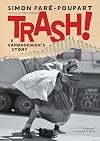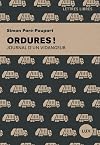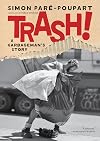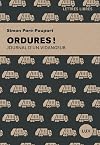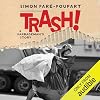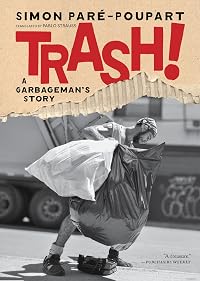
Trash!: A Garbageman's Story
by Simon Paré-Poupart
On This Page
Description
""L'univers du déchet s'est révélé à moi comme j'aimerais qu'il se révèle à vous dans ce livre. Par surprise. Un heureux hasard, car j'aime ce travail. En racontant mon histoire, je veux partager ma passion. Je veux sortir de l'oubli les vidangeurs. Je veux surtout que vous cessiez de croire que vos ordures disparaissent par magie, comme le propose très récente pub de 1-800-GOT-JUNK. Rien ne disparaît par magie. Laissons ces illusions aux enfants et rentrons dans le vrai monde. show more Beau et sale, comme le sont les vidangeurs." En lisant ce journal d'un vidangeur, vous ferez la découverte d'un monde dont vous ne soupçonniez pas l'existence. Un rassemblement d'excentriques et de personnages plus ou moins intégrés à la vie normale qui travaillent sur la ligne de crête entre ce que notre société considère propre et ce qu'elle juge sale. Qui sont ces athlètes qui courent nos rues chaque semaine derrière des camions, qu'il neige, qu'il pleuve ou qu'il fasse trop chaud? Quelle est leur vision du compostage, du recyclage, de la récupération? Qu'ont-ils à raconter sur une époque qui génère en abondance des ordures? Voilà autant de questions auxquelles répond ce récit captivant."-- show lessTags
Recommendations



























Member Reviews
“Trash!” offers an engaging look at an essential but largely invisible profession through the eyes of garbage collector Simon Paré-Poupart. Rather than focusing on waste itself, the book examines the people who collect it and the demanding realities of their work. The author vividly conveys the physical toll of the job, the camaraderie and quirks of his coworkers, and the unique challenges posed by Montreal's harsh winters, where snow, ice, and impossible parking situations can turn an ordinary route into an exhausting ordeal.
Beyond the day-to-day details, Paré-Poupart makes thoughtful observations about society's complicated relationship with its own refuse. He argues that most people give little thought to what happens after the show more trash leaves the curb—or to the workers who make modern urban life possible. His suggestions for improving waste collection and fostering greater public respect are sensible and often persuasive. Among them is his intriguing idea that professions should be valued for how indispensable they are to society.
The book's greatest strength lies in its ability to make readers appreciate a job that is both physically demanding and indispensable. It succeeds in revealing the skill, endurance, and resilience required to perform work that many of us rarely notice.
Its principal weakness, however, is the author's tone. Although Paré-Poupart repeatedly insists that he genuinely enjoys his profession, much of the narrative is dominated by extended complaints about difficult customers, management, and working conditions. While many of these frustrations are understandable, their frequency creates an impression that sits uneasily alongside his professed affection for the job. Even so, “Trash!” provides an illuminating and worthwhile glimpse into a profession that deserves far more recognition than it typically receives. show less
Beyond the day-to-day details, Paré-Poupart makes thoughtful observations about society's complicated relationship with its own refuse. He argues that most people give little thought to what happens after the show more trash leaves the curb—or to the workers who make modern urban life possible. His suggestions for improving waste collection and fostering greater public respect are sensible and often persuasive. Among them is his intriguing idea that professions should be valued for how indispensable they are to society.
The book's greatest strength lies in its ability to make readers appreciate a job that is both physically demanding and indispensable. It succeeds in revealing the skill, endurance, and resilience required to perform work that many of us rarely notice.
Its principal weakness, however, is the author's tone. Although Paré-Poupart repeatedly insists that he genuinely enjoys his profession, much of the narrative is dominated by extended complaints about difficult customers, management, and working conditions. While many of these frustrations are understandable, their frequency creates an impression that sits uneasily alongside his professed affection for the job. Even so, “Trash!” provides an illuminating and worthwhile glimpse into a profession that deserves far more recognition than it typically receives. show less
nonfiction - short memoir + thoughts from a Montreal garbageman (translated from Quebecois French).
this has a little bit about his life (working part time as a garbageman in the Montreal area while getting his bachelor's and master's degree), the grueling, physically-exhausting, superhuman work that goes into collecting trash year-round (heat, piles of snow, ice--in addition to the usual obstacles of cars and bags that often break open), and some descriptions of his fellow co-workers. It is a unique field where recently drug-rehabbed applicants can find equal footing, but also beyond essential, and a lot of people wouldn't be able to handle the physical demands.
He also talks about how some trash, recycling, and especially compost show more collection receptacles/systems could be designed a lot better (why not ask some garbage collectors what they think), how "recycling" really isn't magically disappearing our would-be trash in the way we all hope, and how we really need to rethink the whole consumerism-for-economic-prosperity lifestyle in favor of more sustainable practices. These are all valid points worthy of further discussion though it stops short of calling readers to action. show less
this has a little bit about his life (working part time as a garbageman in the Montreal area while getting his bachelor's and master's degree), the grueling, physically-exhausting, superhuman work that goes into collecting trash year-round (heat, piles of snow, ice--in addition to the usual obstacles of cars and bags that often break open), and some descriptions of his fellow co-workers. It is a unique field where recently drug-rehabbed applicants can find equal footing, but also beyond essential, and a lot of people wouldn't be able to handle the physical demands.
He also talks about how some trash, recycling, and especially compost show more collection receptacles/systems could be designed a lot better (why not ask some garbage collectors what they think), how "recycling" really isn't magically disappearing our would-be trash in the way we all hope, and how we really need to rethink the whole consumerism-for-economic-prosperity lifestyle in favor of more sustainable practices. These are all valid points worthy of further discussion though it stops short of calling readers to action. show less
Ratings
Members
- Recently Added By
Lists

Globe and Mail | Canadian Non-Fiction: June 27, 2026
10 works; 1 member
Author Information
1 Work 64 Members
Classifications
Statistics
- Members
- 64
- Popularity
- 486,822
- Reviews
- 2
- Rating
- (3.17)
- Languages
- English, French
- Media
- Paper, Ebook
- ISBNs
- 2
- ASINs
- 3