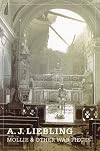
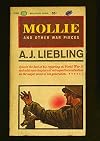
Mollie & Other War Pieces
by A. J. Liebling
On This Page
Description
A. J. Liebling's coverage of the Second World War for the New Yorker gives us a fresh and unexpected view of the war--stories told in the words of the soldiers, sailors, and airmen who fought it, the civilians who endured it, and the correspondents who covered it. The hero of the title story is a private in the Ninth Army division known as Mollie, short for Molotov, so called by his fellow G.I.s because of his radical views and Russian origins. Mollie was famous for his outlandish dress show more (long blonde hair, riding boots, feathered beret, field glasses, and red cape), his disregard for army discipline, his knack for acquiring prized souvenirs, his tales of being a Broadway big shot, and his absolute fearlessness in battle. Killed in combat on Good Friday, 1943, Mollie (real name: Karl Warner) was awarded the Silver Star posthumously. Intrigued by the legend and fascinated by the man behind it, Liebling searched out Mollie's old New York haunts and associates and found behind the layers of myth a cocky former busboy from Hell's Kitchen who loved the good life. Other stories take Liebling through air battles in Tunisia, across the channel with the D-Day invasion fleet, and through a liberated Paris celebrating de Gaulle and freedom. Liebling's war was a vast human-interest story, told with a heart for the feelings of the people involved and the deepest respect for those who played their parts with heroism, however small or ordinary the stage. show lessTags
Recommendations






















Member Reviews
Great writing for the New Yorker about WWII. Liebling leaves the reader with a real sense of place especially in the pieces on North Africa and the drive to liberate France. An unintentionally chilling piece about rebuilding France after the Normandy landings shows that those spendthrift nuts in DC should have known that Iraq wasn't going to be "just like France after WWII".
This is a collection of Liebling's WWII writings for The New Yorker, in which he covers parts of the war in North Africa, the D-Day Landings, and post-invasion France. Liebling has a very readable, intelligent style of writing and he's very interested in understanding and conveying the fears, joys, and personalities of the ordinary people who, in a time of war, experience and accomplish extraordinary things. The book really sucked me in and I can't wait to read more of his war-time reporting. Apparently he also wrote prolifically about boxing, food, and Paris; I'm not particularly interested in any of those things, but I have such confidence in Liebling's writing that I would recommend them sight unseen to anyone who does enjoy those show more topics. show less
A collection of war stories from the ETO written by A.J. Liebling, correspondent for the New Yorker. Liebling travels to various fronts of the war as well as riding an LCI (Landing Craft Infantry) to shore on D-Day. He is a very literate writer and specializes in writing about and analyzing ordinary and extraordinay people he meets along his way.
Ratings
Members
- Recently Added By
Author Information

34+ Works 2,429 Members
A. J. Liebling was an urbane and prolific journalist whose style, incorporating first-person narrative, street talk, and exuberant metaphor, became a model for the New Journalism of the 1960's and later. Although he came from a genteel New York family, he was fascinated by the irreverent underworld all his life and made it his special subject. show more After being expelled from Dartmouth College for refusing to attend chapel, Liebling graduated from Columbia University's Pulitzer School of Journalism in 1925 and then worked for various newspapers, including The New York Times, which fired him, and the New York World, before he found his metier at The New Yorker magazine in 1935. It was there that he developed his signature style and did his best work, writing about a wide range of subjects, from the city's characters to gastronomy to boxing to the London Blitz and the Normandy invasion. A born raconteur with a fertile imagination, Liebling carved out a territory between objective reporting and fiction, which so many other journalists have mined since. Yet he could also produce straight war reportage fine enough to merit receiving the Legion of Honor from a grateful France in 1952. Starting in 1945, Liebling wrote a widely admired column for The New Yorker called "The Wayward Pressman," in which he criticized American journalism's priorities and performance. This was probably the first such column in U.S. journalism. During the 1950s and 1960s, he also wrote book reviews for Esquire. Besides his massive newspaper and magazine output, Liebling wrote about 20 books. He was married three times, the last time to the writer Jean Stafford. (Bowker Author Biography) show less
Series
Belongs to Publisher Series
Work Relationships
Common Knowledge
- Canonical title
- Mollie & Other War Pieces
Classifications
Statistics
- Members
- 59
- Popularity
- 520,977
- Reviews
- 3
- Rating
- (3.83)
- Languages
- English
- Media
- Paper
- ISBNs
- 2
- ASINs
- 2