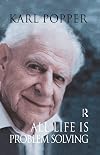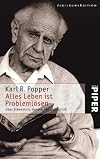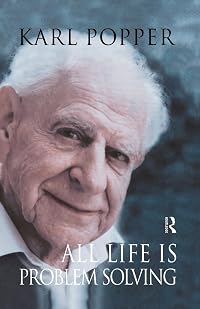
All Life is Problem Solving
by Karl R. Popper
On This Page
Description
'Never before has there been so many and such dreadful weapons in so many irresponsible hands.' - Karl Popper, from the Preface All Life is Problem Solving is a stimulating and provocative selection of Popper's writings on his main preoccupations during the last twenty-five years of his life. This collection illuminates Popper's process of working out key formulations in his theory of science, and indicates his view of the state of the world at the end of the Cold War and after the collapse show more of communism. show lessTags
Recommendations

























Member Reviews
"L'ottimismo è un dovere. Il futuro è decisamente aperto. Esso dipende da noi; da tutti noi. Dipende da quello che noi e molte altre persone facciamo e faremo; oggi, domani e dopodomani. E quello che facciamo e faremo dipende a sua volta dai nostri pensieri; e dai nostri desideri, dalle nostre speranze, dalle nostre paure! Dipende da come vediamo il mondo; e da come valutiamo le possibilità largamente disponibili del futuro. Ad agire sono soltanto gli individui: classi, partiti, sistemi e società sono soltanto nomina, stenogrammi per individui, gruppi di individui, loro pensieri e loro azioni. Quando dico che l'ottimismo è un dovere, questo non implica soltanto che il futuro è aperto, ma che noi tutti lo configuriamo attraverso show more quello che noi facciamo: noi tutti siamo corresponsabili di quello che sarà". show less
100 POPP 1
LA RESPONSABILIDAD DE VIVIR
«Partisano de la verdad... Utilitarista negativo... [para quien]
la disminución del dolor se antepone claramente al aumento
de la felicidad... Karl Popper se cuenta, junto con Sigmund
Freud y Ludwig Wittgenstein, entre los hijos de la burguesía
judía de Viena cuyos pensamientos han modificadoy
caracterizado el panorama intelectual de Europa en este
siglo.»
GÜNTHER PAZİG, Faz
«Extraer dos o tres pensamientos originales de este siglo
sangriento, pero de alguna manera pobre en producción de
ideas, presupone un alto grado de sensibilidad histórica en la
propia formación de una teoría. Y esto es válido, sin ningún
género de dudas, para un pensador de la magnitud de Karl
Popper.
OSKAR NEGT, Siddeutsche Zeiung
Lo show more más importante de la obra de Popper es el sesgo
eminentemente pragmático que emplea a la hora de
enfrentarse a la resolución de problemas.>
EBERHARDT DOWRING, Neue Zürcher Zeitung show less
«Partisano de la verdad... Utilitarista negativo... [para quien]
la disminución del dolor se antepone claramente al aumento
de la felicidad... Karl Popper se cuenta, junto con Sigmund
Freud y Ludwig Wittgenstein, entre los hijos de la burguesía
judía de Viena cuyos pensamientos han modificadoy
caracterizado el panorama intelectual de Europa en este
siglo.»
GÜNTHER PAZİG, Faz
«Extraer dos o tres pensamientos originales de este siglo
sangriento, pero de alguna manera pobre en producción de
ideas, presupone un alto grado de sensibilidad histórica en la
propia formación de una teoría. Y esto es válido, sin ningún
género de dudas, para un pensador de la magnitud de Karl
Popper.
OSKAR NEGT, Siddeutsche Zeiung
Lo show more más importante de la obra de Popper es el sesgo
eminentemente pragmático que emplea a la hora de
enfrentarse a la resolución de problemas.>
EBERHARDT DOWRING, Neue Zürcher Zeitung show less
Jul 29, 2018Spanish
Ratings
Members
- Recently Added By
Author Information

118+ Works 11,054 Members
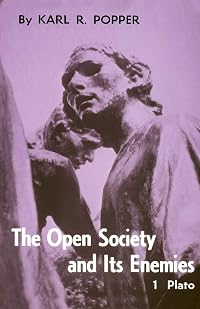
Although he writes widely in philosophy, Sir Karl Raimund Popper is best known for his thesis that an empirical statement is meaningless unless conditions can be specified that could show it to be false. He was born and educated in Vienna, where he was associated with, although not actually a member of, the Vienna Circle. Two years after the show more German publication of his Logic of Scientific Discovery (1935), he left Austria for New Zealand, where he was senior lecturer at the University of Canterbury. In 1945 he moved to England and began a distinguished career at the London School of Economics and Political Science. According to Popper, there is no "method of discovery" in science. His view holds that science advances by brilliant but unpredictable conjectures that then stand up well against attempts to refute them. This view was roundly criticized by more dogmatic positivists, on the one hand, and by Feyerabend and Kuhn, on the other. In 1945 he published The Open Society and Its Enemies, which condemns Plato, Georg Hegel, and Karl Marx as progenitors of totalitarianism and opponents of freedom. The scholarship that underpins this book remains controversial. Popper's later works continue his interest in philosophy of science and also develop themes in epistemology and philosophy of mind. He is particularly critical of historicism, which he regards as an attitude that fosters a deplorable tendency toward deterministic thinking in the social sciences. (Bowker Author Biography) show less
Some Editions
Classifications
Statistics
- Members
- 306
- Popularity
- 104,577
- Reviews
- 3
- Rating
- (3.78)
- Languages
- 9 — Czech, English, French, German, Greek, Italian, Portuguese, Spanish, Turkish
- Media
- Paper, Ebook
- ISBNs
- 21
- ASINs
- 3