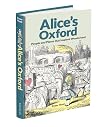
Alice's Oxford: People and Places that Inspired Wonderland
by Peter Hunt
On This Page
Description
"Alice's Adventures in Wonderland and Through the Looking-Glass are two of the most famous fantasies in world literature, and yet their roots are firmly in nineteenth century and the university city of Oxford, England. Oxford's, streets, colleges and buildings, the River Thames, and the villages on its banks, are imbued with literally hundreds of intricate connections to the books. Their author, Charles Dodgson, aka Lewis Carroll, spent most of his life as an academic at Christ Church, one show more of the largest and oldest of the Oxford colleges. His muse, Alice Liddell, who is the thinly-disguised Alice of the books, was the daughter of the Dean of Christ Church, and she lived there as she was growing up. The 'Alice' books began as stories told to Alice and her sisters, and Dodgson incorporated local people, places, and events that they would recognise. But as the books grew, he included a much wider range of satire and caricature, until Oxford itself became an eccentric Wonderland. This book, a guide and a history, explores the city, the colleges, and the river that Alice and Lewis Carroll knew and shared, in all their eccentric and entertaining glory"--Publisher's description. show lessTags
Member Reviews
It always amazes me the way fans seek any tie they find linking some work of creative fiction to the real world. I myself made a point of staying in The Village in Wales, where the Patrick McGoohan TV series The Prisoner was shot in the 1960s. Now here is a treatment of Alice in Wonderland and Through The Looking Glass, connecting the author Lewis Carroll and the real Alice by placing her in the real locations in Oxford that the books fictionalized. Pretty cool.
First of all, Alice did not look like the little blond girl of the books. She had dark, straight hair and bangs (at times). Lewis Carroll hired John Tenniel to do the illustrations for his book, but he did them remotely. Carroll would make sketches and send them to Tenniel, and show more Tenniel would make artwork and send them to Carroll. Somehow, and not without tensions, they made it work. It took a while before Tenniel finally agreed to illustrate the second book, if that’s and indicator.
Alice Liddell was the daughter of the dean at Christ Church, one of three daughters. In the 1800s, it was not uncommon for students to play with and accompany children on days off, for tours, and boat rides and picnics. And so the stuttering, stammering Charles Dodgson turned Alice Liddell into his muse, making up wild stories to fascinate her. It was this collection of stories that he edited into his two books on her adventures. The settings, it seems, were based on locations throughout Oxford and its innumerable colleges, where they both lived and explored. Oxford is filled with parks and gardens, walkways and imposing formal buildings, movie set ready for an Alice sci-fi adventure.
So like a Seinfeld walking tour of Manhattan, Peter Hunt’s Alice’s Oxford takes readers on a tour of Oxford and its environs, including up the river and down, where several more locations are relevant to the books. Readers will learn where some of the book’s characters (might have) come from (as in who they might have mocked), and learn that Alice’s Shop at 83 St. Aldate’s, is still there, right across the street from the school. It maintains its 1850s look and feel. It remains, says Hunt, the most direct connection to the books.
Hunt describes Alice’s environment as “the centre of a secure, confident, privileged and almost ludicrously talented world.” All the best minds were schooled in Oxford, which even in the mid 1800s could look back to 500 years of its own history. Dodgson and Liddell’s college alone educated 13 British prime ministers (all the other University of Cambridge schools combined claimed 17), as well as 14 archbishops. Dodgson arrived at the age of 19, and stayed until he was 65. Alice grew up, married, left Oxford at 27, had a suitably upper class life, and never shook (or even avoided) her connection to Lewis Carroll’s masterpieces about her. She seems to have lived a dream.
There’s lots of references to and drawings of all the favorites: the Queen of Hearts, the Mad Hatter, the Cheshire Cat, the White Rabbit as well as Alice, and Hunt explains how the locations match the various buildings and gardens of the Christ Church area of Oxford. The book is laid out nicely, with a Tenniel drawing and a relevant quotation from one or both of the books, followed by a real world description of where and why that might be.
It’s a fun, voyeuristic Hollywood-style see-the-stars-homes kind of thing, charmingly presented for 170 years’ worth of fans.
David Wineberg show less
First of all, Alice did not look like the little blond girl of the books. She had dark, straight hair and bangs (at times). Lewis Carroll hired John Tenniel to do the illustrations for his book, but he did them remotely. Carroll would make sketches and send them to Tenniel, and show more Tenniel would make artwork and send them to Carroll. Somehow, and not without tensions, they made it work. It took a while before Tenniel finally agreed to illustrate the second book, if that’s and indicator.
Alice Liddell was the daughter of the dean at Christ Church, one of three daughters. In the 1800s, it was not uncommon for students to play with and accompany children on days off, for tours, and boat rides and picnics. And so the stuttering, stammering Charles Dodgson turned Alice Liddell into his muse, making up wild stories to fascinate her. It was this collection of stories that he edited into his two books on her adventures. The settings, it seems, were based on locations throughout Oxford and its innumerable colleges, where they both lived and explored. Oxford is filled with parks and gardens, walkways and imposing formal buildings, movie set ready for an Alice sci-fi adventure.
So like a Seinfeld walking tour of Manhattan, Peter Hunt’s Alice’s Oxford takes readers on a tour of Oxford and its environs, including up the river and down, where several more locations are relevant to the books. Readers will learn where some of the book’s characters (might have) come from (as in who they might have mocked), and learn that Alice’s Shop at 83 St. Aldate’s, is still there, right across the street from the school. It maintains its 1850s look and feel. It remains, says Hunt, the most direct connection to the books.
Hunt describes Alice’s environment as “the centre of a secure, confident, privileged and almost ludicrously talented world.” All the best minds were schooled in Oxford, which even in the mid 1800s could look back to 500 years of its own history. Dodgson and Liddell’s college alone educated 13 British prime ministers (all the other University of Cambridge schools combined claimed 17), as well as 14 archbishops. Dodgson arrived at the age of 19, and stayed until he was 65. Alice grew up, married, left Oxford at 27, had a suitably upper class life, and never shook (or even avoided) her connection to Lewis Carroll’s masterpieces about her. She seems to have lived a dream.
There’s lots of references to and drawings of all the favorites: the Queen of Hearts, the Mad Hatter, the Cheshire Cat, the White Rabbit as well as Alice, and Hunt explains how the locations match the various buildings and gardens of the Christ Church area of Oxford. The book is laid out nicely, with a Tenniel drawing and a relevant quotation from one or both of the books, followed by a real world description of where and why that might be.
It’s a fun, voyeuristic Hollywood-style see-the-stars-homes kind of thing, charmingly presented for 170 years’ worth of fans.
David Wineberg show less
Members
- Recently Added By
Lists

On Books
70 works; 1 member
Author Information

Classifications
Statistics
- Members
- 9
- Popularity
- 2,309,214
- Reviews
- 1
- Rating
- (4.00)
- Languages
- English
- Media
- Paper
- ISBNs
- 1