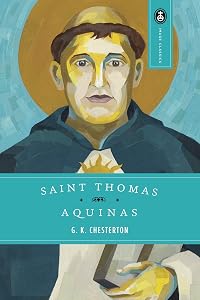
Saint Thomas Aquinas
by G. K. Chesterton, Larisa Čuhina (Author), Jānis Broks (Author), Staņislavs Ladusāns (Author), Pēteris Strods (Author)
On This Page
Description
Dubbed the "Dumb Ox" by his classmates for his shyness, Saint Thomas Aquinas proved to be possessed of the rarest brilliance, justifying the faith of his teacher, Albertus Magnus, and sparking a revolution in Christian thought. Chesterton's unsurpassed examination of Aquinas' thinking makes his philosophy accessible to listeners of any generation.Étienne Gilson, the twentieth century's foremost authority on Aquinas, has said of this work, "I consider it as being without possible exception show more the best book ever written on Saint Thomas. Nothing short of genius can account for such an achievement.". show lessTags
Recommendations




Member Reviews
This is a great little book. I grew up with a hazy view of the Fransiscans as having been true men of faith, while the over-intellectuality of the Dominicans (of which Aquinas was a member) led them to a distorted and drier faith. This book helps dispel that contrast, and in fact plays on the differences and similarities between Francis and Thomas a good deal.
The second chief merit of this book is in its ability to give the reader a more nuanced view of the late Middle Ages. Despite us now "knowing better" it is difficult to rid oneself of a simplistic picture of the philosophy and theology of this period, and indeed of Aquinas, as having been concerned with the old question of how many angels were able to fit on the head of a pin. show more Chesterton depicts an Aquinas whose philosophy was so much richer than that; and also, indeed, helps to undo some of the equally inaccurate prejudices against the Middles Ages and the Scholastics they are still kicking around from the early modern period.
The book suffers--unfortunately quite a good deal, and it gets worse as the book goes on--from Chesterton's polemicizing and stridency. He is at his worst when he is defending Aquinas' "common sense" philosophy from the heresies of modern philosophy, and pretty much all other philosophy in general. show less
The second chief merit of this book is in its ability to give the reader a more nuanced view of the late Middle Ages. Despite us now "knowing better" it is difficult to rid oneself of a simplistic picture of the philosophy and theology of this period, and indeed of Aquinas, as having been concerned with the old question of how many angels were able to fit on the head of a pin. show more Chesterton depicts an Aquinas whose philosophy was so much richer than that; and also, indeed, helps to undo some of the equally inaccurate prejudices against the Middles Ages and the Scholastics they are still kicking around from the early modern period.
The book suffers--unfortunately quite a good deal, and it gets worse as the book goes on--from Chesterton's polemicizing and stridency. He is at his worst when he is defending Aquinas' "common sense" philosophy from the heresies of modern philosophy, and pretty much all other philosophy in general. show less
G.K. Chesterton's biography of Aquinas is clearly open to criticism as more hagiography than biography. Allowing for that and taking into consideration the brevity of the work and the minimal sketch of the details of Aquinas' life, it is nevertheless an outstanding book that distills the essence of Aquinas' philosophy, theology and his resulting place of prominence among the Fathers of the Church.
Chesterton relates the familiar stories about Aquinas's personal history, some of which I could recall from grammar school days under the tutelage of Domincian nuns. There is the story of his family's opposition to his ambitions to join the order of St. Dominic by kidnapping him, imprisoning him and even engaging a prostitute to tempt him and show more corrupt him. (This part of the story was omitted by the nuns.)
Chesterton elaborates on the controversy over incorporating the philosophy of Aristotle into his theology and causing the eclipse of Neo-Platonism with what Chesterton calls an Aristotelian revolution. He chronicles Aquinas' controversies with Siger of Brabant who drew a line between two separate spheres of truth, the province of science and the province of Christianity which are ultimately unreconcilable. To the extent that any claims are made for truth in Christianity today, this is pretty much the modern view of the validity of the respective claims of science and faith. show less
Chesterton relates the familiar stories about Aquinas's personal history, some of which I could recall from grammar school days under the tutelage of Domincian nuns. There is the story of his family's opposition to his ambitions to join the order of St. Dominic by kidnapping him, imprisoning him and even engaging a prostitute to tempt him and show more corrupt him. (This part of the story was omitted by the nuns.)
Chesterton elaborates on the controversy over incorporating the philosophy of Aristotle into his theology and causing the eclipse of Neo-Platonism with what Chesterton calls an Aristotelian revolution. He chronicles Aquinas' controversies with Siger of Brabant who drew a line between two separate spheres of truth, the province of science and the province of Christianity which are ultimately unreconcilable. To the extent that any claims are made for truth in Christianity today, this is pretty much the modern view of the validity of the respective claims of science and faith. show less
Oh dear. This isn't really a book about Aquinas. It doesn't present much in the way of a biographical sketch, it doesn't delve into Aquinas' theology, and while the book mentions Aquinas quite a lot, it also discusses other significant figures from Christian history, notably St. Francis. This book reads more as a casual conversation in which a modern mind reflects on the influence of some Christians from long ago. It's really a book of modern musings, through which the thoughts and personality (of someone, I assume the author) shine from the page with much more force than the ideas of Aquinas. And I suppose that's okay, as long as you don't expect a biographical or even strictly historical work. If you want to sit down for a show more conversation with a modern author, you could do worse than Chesterton; he loved his faith, and he loved Christmas. He's exactly the sort of person I'd love to spend time with. Sadly, I could tell, with more and more clarity as the book unfolded, that Chesterton would NOT have wanted to spend time with me. There is a fair bit of anger in these pages—contempt even—for fellow Christians who are not Roman Catholic.
As for the book as a whole, it's difficult to understand without a thorough background in the history of the Church, and I suspect people who are already thoroughly grounded in Church history would have little cause to pick up this tome. Worse, the book rambles quite a bit, going here and there down little side-streets before eventually circling back to whatever the main point was. It seems very hap-hazard and disorganized, almost stream-of-consciousness. The best chapter, IMO, was the next-to-last, in which he explored in a mostly straightforward manner the ideas of being and permanence and change. The worst chapter, I think, is the last, because it here that he paints with such broad strokes that his book doesn't feel like history at all. It needs better grounding.
What a peculiar book! show less
As for the book as a whole, it's difficult to understand without a thorough background in the history of the Church, and I suspect people who are already thoroughly grounded in Church history would have little cause to pick up this tome. Worse, the book rambles quite a bit, going here and there down little side-streets before eventually circling back to whatever the main point was. It seems very hap-hazard and disorganized, almost stream-of-consciousness. The best chapter, IMO, was the next-to-last, in which he explored in a mostly straightforward manner the ideas of being and permanence and change. The worst chapter, I think, is the last, because it here that he paints with such broad strokes that his book doesn't feel like history at all. It needs better grounding.
What a peculiar book! show less
I must admit that I had high expectations of this book. G. K. Chesterton has a huge reputation as a writer. Since he was a devout Catholic, I expected an excellent book on Thomas. I was disappointed.
First, the author does not give a coherent narrative of Thomas' life. He makes many references to events and people of the 13th century (a good thing), but he expects the reader to already know about them. You will get a great deal more out of this book if you have already read an encyclopedia article on both him and the 13th century.
The book is really a hagiography of Thomas, a series of meditations about the man, his life and his thought. It is uncritically complimentary of Thomas, and only filled with praise of him, even or especially show more when noting his flaws.
The writing style, while entertaining, chases rabbits everywhere. The self-deprecating authorial voice is very loud and annoying. For a journalist and popular writer, he is remarkably unwilling to get to the point.
However, the chapters "The Approach to Thomism" and "The Permanent Philosophy" are worth reading, and I thought them to be very helpful on understanding what Thomas the Philosopher is all about. In the last chapter, sadly, Chesterton descends into partisan propaganda, railing (very unfairly, in my view) against Martin Luther as the very opposite of Aquinas; he even calls Luther a barbarian, evidence of his rhetorical intent. Thomas himself would have chided Chesterton for his incivility and unfairness.
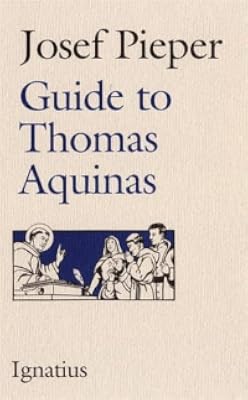
If you are looking (as I was) for an entry-level introduction to Aquinas, look elsewhere. Josef Pieper's "A Guide to Thomas Aquinas" would be a good place to start. show less
First, the author does not give a coherent narrative of Thomas' life. He makes many references to events and people of the 13th century (a good thing), but he expects the reader to already know about them. You will get a great deal more out of this book if you have already read an encyclopedia article on both him and the 13th century.
The book is really a hagiography of Thomas, a series of meditations about the man, his life and his thought. It is uncritically complimentary of Thomas, and only filled with praise of him, even or especially show more when noting his flaws.
The writing style, while entertaining, chases rabbits everywhere. The self-deprecating authorial voice is very loud and annoying. For a journalist and popular writer, he is remarkably unwilling to get to the point.
However, the chapters "The Approach to Thomism" and "The Permanent Philosophy" are worth reading, and I thought them to be very helpful on understanding what Thomas the Philosopher is all about. In the last chapter, sadly, Chesterton descends into partisan propaganda, railing (very unfairly, in my view) against Martin Luther as the very opposite of Aquinas; he even calls Luther a barbarian, evidence of his rhetorical intent. Thomas himself would have chided Chesterton for his incivility and unfairness.
If you are looking (as I was) for an entry-level introduction to Aquinas, look elsewhere. Josef Pieper's "A Guide to Thomas Aquinas" would be a good place to start. show less
G.K. Chesterton's brilliant sketch of the life and thought of Thomas Aquinas is as relevant today as when it was published in 1933. Then it earned the praise of such distinguished writers as Etienne Gilson, Jacques Martain, and Anton Pegis as the best book ever written on the great thirteenth-century Dominican. Today Chesterton's classic stands poised to reveal Thomas to a new generation.
Biografía del Doctor Angélico. Destaca por la calidad literaria y viveza de estilo, con anécdotas muy ilustrativas y agudos análisis sobre la importancia doctrinal y cultural de las obras de Santo Tomás. Obra de gran valor apologético. Muy útil.
This is not Chesterton at his best. I understand that any history of Aquinas he writes must needs be a polemical history, but here the polemi seizes control and pages fly by while the Author defends the Church against Albigensians, Henry II, modern prejudices, and Siger of Brabant. And all this is done at a level of abstraction which renders the debate unilluminating, at least to me. Eighty pages in, I quit. That said, even bad Chesterton is pretty good. "They say the road to hell is paved with good intentions. But that is precisely the one thing it cannot be paved with." (2.18.07)
Members
- Recently Added By
Lists

Saints and Blesseds
74 works; 4 members

Biografías eminentes
24 works; 1 member

Edad Media
33 works; 1 member

GreatBooks Worldview Academy Lists
133 works; 4 members

Ten Great Christian Biographies
11 works; 1 member

Recommendations by Peter Kreeft
45 works; 4 members
Author Information

799+ Works 59,714 Members
Gilbert Keith Chesterton was born in London, England, in 1874. He began his education at St Paul's School, and later went on to study art at the Slade School, and literature at University College in London. Chesterton wrote a great deal of poetry, as well as works of social and literary criticism. Among his most notable books are The Man Who Was show more Thursday, a metaphysical thriller, and The Everlasting Man, a history of humankind's spiritual progress. After Chesterton converted to Catholicism in 1922, he wrote mainly on religious topics. Chesterton is most known for creating the famous priest-detective character Father Brown, who first appeared in "The Innocence of Father Brown." Chesterton died in 1936 at the age of 62. (Bowker Author Biography) show less
All Editions
Some Editions
Awards and Honors
Series
Belongs to Publisher Series
Work Relationships
Common Knowledge
- Canonical title
- Saint Thomas Aquinas
- Original title
- St. Thomas Aquinas
- Original publication date
- 1933
- People/Characters
- Aquinas, Thomas, 1225-1274
- Dedication
- To Dorothy Collins without whose help the author would have been more than normally helpless
- Original language
- English
Classifications
- Genres
- Religion & Spirituality, Nonfiction, Biography & Memoir, Philosophy, History, General Nonfiction
- DDC/MDS
- 230.2092 — Religion Christianity Christianity Pre-reformation and Roman Catholic Biography Biography
- LCC
- BX4700 .T6 .C5 — Philosophy, Psychology and Religion Christian Denominations Christian Denominations Catholic Church Biography and portraits Individual Saints
- BISAC
Statistics
- Members
- 2,094
- Popularity
- 9,854
- Reviews
- 16
- Rating
- (4.02)
- Languages
- 12 — Czech, English, Estonian, French, Italian, Latvian, Polish, Portuguese, Slovenian, Spanish, Swedish, Turkish
- Media
- Paper, Audiobook, Ebook
- ISBNs
- 65
- UPCs
- 2
- ASINs
- 47
