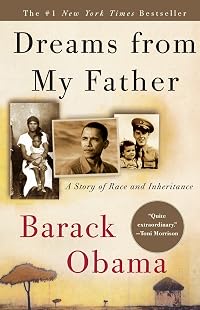
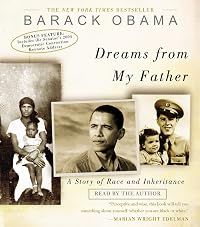
Dreams from My Father: A Story of Race and Inheritance, Revised Edition
by Barack Obama
On This Page
Description
In this lyrical, unsentimental, and compelling memoir, the son of a black African father and a white American mother searches for a workable meaning to his life as a black American. It begins in New York, where Barack Obama learns that his father, a figure he knows more as a myth than as a man has been killed in a car accident. This sudden death inspires an emotional odyssey, first to a small town in Kansas, from which he retraces the migration of his mother's family to Hawaii, and then to show more Kenya, where he meets the African side of his family, confronts the bitter truth of his father's life, and at last reconciles his divided inheritance. show lessTags
Recommendations





Member Reviews
In the summer of 2004, we had just returned to the U.S. after 4 years in England. Those years had been a time of change and turmoil in my home country. We were eager to reconnect with, and understand, the political landscape and the people who would shape the future. At the Democratic National Convention in August, a "young" (my age) politician named Barack Obama gave an inspired keynote address that left me both awestruck and hopeful. When I came across Obama's book at a library book sale recently, I thought it was time to learn more about the man behind the powerful rhetoric. First published in 1992, Dreams from my Father describes Obama's childhood, his early career as a community organizer, and his first visit to Kenya, his father's show more homeland.
In one respect, this book is about a search for identity, with Obama exploring his "uneasy status: a Westerner not entirely at home in the West, an African on his way to a land full of strangers." (p. 301) As part of this search, Obama gains an increasing awareness of race issues in American society:
- A friend of his grandfather's, as Obama was preparing to leave his home in Hawaii for college: "They'll give you a corner office and invite you to fancy dinners, and tell you you're a credit to your race. Until you want to actually start running things, and then they'll yank your chain and let you know that you may be a well-trained, well-paid nigger, but you're a nigger just the same." (p. 97).
- Describing a campaign by the Nation of Islam to sell branded products: "The the POWER campaign sputtered said something about the difficulty that faced any black business -- the barriers to entry, the lack of finance, the leg up that your competitors possessed after having kept you out of the game for over three hundred years." (p. 201)
- On those in Chicago who had marched for civil rights and yet, "...at some point had realized that power was unyielding and principles unstable, and that even after laws were passed and lynchings ceased, the closest thing to freedom would still involve escape, emotional if not physical, away from ourselves, away from what we knew, flight into the outer reaches of the white man's empire -- or closer into its bosom." (p. 277)
And then, we gain insight into Obama's ideals and his motivation for studying law after his visit to Kenya:
"The study of law can be disappointing at times, a matter of applying narrow rules and arcane procedure to an uncooperative reality ... But that's not all the law is. The law is also a memory; the law also records a long-running conversation, a nation arguing with its conscience. ... I hear the voices of Japanese families interned behind barbed wire; young Russian Jews cutting patterns in the Lower East Side sweatshops .... I hear the voices of people in Altgeld Gardens, and the voices of those who stand outside this country's borders ... all of them asking the very same questions that have come to shape my life ... What is our community, and how might that community be reconciled with our freedom? How far do our obligations reach? How do we transform mere power into justice, mere sentiment into love? The answers I find in law books don't always satisfy me ... And yet, in the conversation itself, in the joining of voices, I find myself modestly encouraged, believing that so long as the questions are still being asked, what binds us together might somehow, ultimately, prevail." (p. 437-438).
Obama keeps the "plot" moving along. Although many of the characters are not fully developed. I had to keep reminding myself this is a memoir, not a novel. And since this book was written long before Obama's run for the U.S. Presidency, it has a certain authenticity. I found it an extremely well-written and interesting portrait of an emerging political leader. It also offers insight into issues of race in America, and African American culture, and is a worthwhile read for this reason alone. show less
In one respect, this book is about a search for identity, with Obama exploring his "uneasy status: a Westerner not entirely at home in the West, an African on his way to a land full of strangers." (p. 301) As part of this search, Obama gains an increasing awareness of race issues in American society:
- A friend of his grandfather's, as Obama was preparing to leave his home in Hawaii for college: "They'll give you a corner office and invite you to fancy dinners, and tell you you're a credit to your race. Until you want to actually start running things, and then they'll yank your chain and let you know that you may be a well-trained, well-paid nigger, but you're a nigger just the same." (p. 97).
- Describing a campaign by the Nation of Islam to sell branded products: "The the POWER campaign sputtered said something about the difficulty that faced any black business -- the barriers to entry, the lack of finance, the leg up that your competitors possessed after having kept you out of the game for over three hundred years." (p. 201)
- On those in Chicago who had marched for civil rights and yet, "...at some point had realized that power was unyielding and principles unstable, and that even after laws were passed and lynchings ceased, the closest thing to freedom would still involve escape, emotional if not physical, away from ourselves, away from what we knew, flight into the outer reaches of the white man's empire -- or closer into its bosom." (p. 277)
And then, we gain insight into Obama's ideals and his motivation for studying law after his visit to Kenya:
"The study of law can be disappointing at times, a matter of applying narrow rules and arcane procedure to an uncooperative reality ... But that's not all the law is. The law is also a memory; the law also records a long-running conversation, a nation arguing with its conscience. ... I hear the voices of Japanese families interned behind barbed wire; young Russian Jews cutting patterns in the Lower East Side sweatshops .... I hear the voices of people in Altgeld Gardens, and the voices of those who stand outside this country's borders ... all of them asking the very same questions that have come to shape my life ... What is our community, and how might that community be reconciled with our freedom? How far do our obligations reach? How do we transform mere power into justice, mere sentiment into love? The answers I find in law books don't always satisfy me ... And yet, in the conversation itself, in the joining of voices, I find myself modestly encouraged, believing that so long as the questions are still being asked, what binds us together might somehow, ultimately, prevail." (p. 437-438).
Obama keeps the "plot" moving along. Although many of the characters are not fully developed. I had to keep reminding myself this is a memoir, not a novel. And since this book was written long before Obama's run for the U.S. Presidency, it has a certain authenticity. I found it an extremely well-written and interesting portrait of an emerging political leader. It also offers insight into issues of race in America, and African American culture, and is a worthwhile read for this reason alone. show less
This is not a book by a politician hoping to woo the public. I think that's why I couldn't put it down. Written long before his presidential candidacy began, Obama explores his identity and childhood here. His white grandparents from Kansas, his father from Nigeria, his upbringing in Hawaii and then Indonesia, and his first trip to Africa to meet his extended family is all included. It's less polished and more powerful because of that. There's a palpable struggle to find his footing in this world.
In this lyrical, unsentimental, and compelling memoir, the son of a black African father and a white American mother searches for a workable meaning to his life as a black American. It begins in New York, where Barack Obama learns that his father—a figure he knows more as a myth than as a man—has been killed in a car accident. This sudden death inspires an emotional odyssey—first to a small town in Kansas, from which he retraces the migration of his mother’s family to Hawaii, and then to Kenya, where he meets the African side of his family, confronts the bitter truth of his father’s life, and at last reconciles his divided inheritance
I was surprised at the excellent writing style, full of descriptions and dialogue which made it engaging, and reflections on his experiences which helped us see how they affected him. "There was always a community there if you dug deeply enough...There was poetry as well--a luminous world always present beneath the surface."(p.190-1)
Even though he has traveled and lived in many places, a good summary might be that "on this earth one place is not so different from another...one moment carries within it all that's gone on before." (p.437)
Covering Obama's early life, we can see the ways in which his experiences were not typical for most Black Americans (life in Indonesia and Hawaii) and the ways in which his inner doubts and questions show more might be typical for black men in America (his attempts to find his roots and to define himself). Even as he learns and begins to gain a sense of himself, "life was neither tidy nor static, and that ...hard choices would always remain." (p.377)
His writing gives us insight into what motivated him to run for office. One prescient phrase, quoting a poet mentor "you'll start believing what they tell you about equal opportunity and the American way...Until you want to actually start running things, and then they'll yank on your chain and let you know that you may be a well-trained, well-paid n..., but you're a n... just the same." (p.97).
And even in Kenya, meeting his father's family, there are still questions: "As if the map that might have once measured the direction and force of our love, the code that would unlock our blessings, had been lost long ago, buried with the ancestors beneath a silent earth." (p.331) Or this advice from his aunt: "You have to draw the line somewhere. If everyone is family, no one is family." (p.337) He shares a conversation with a Kenyan historian, about the changes due to European influence and trying to maintain an African identity, who admits to the personal bottom line of "I'm less interested in a daughter who's authentically African than one who is authentically herself." (p.435).
This would be a good book for any American to read even if Obama had never run for president. show less
Even though he has traveled and lived in many places, a good summary might be that "on this earth one place is not so different from another...one moment carries within it all that's gone on before." (p.437)
Covering Obama's early life, we can see the ways in which his experiences were not typical for most Black Americans (life in Indonesia and Hawaii) and the ways in which his inner doubts and questions show more might be typical for black men in America (his attempts to find his roots and to define himself). Even as he learns and begins to gain a sense of himself, "life was neither tidy nor static, and that ...hard choices would always remain." (p.377)
His writing gives us insight into what motivated him to run for office. One prescient phrase, quoting a poet mentor "you'll start believing what they tell you about equal opportunity and the American way...Until you want to actually start running things, and then they'll yank on your chain and let you know that you may be a well-trained, well-paid n..., but you're a n... just the same." (p.97).
And even in Kenya, meeting his father's family, there are still questions: "As if the map that might have once measured the direction and force of our love, the code that would unlock our blessings, had been lost long ago, buried with the ancestors beneath a silent earth." (p.331) Or this advice from his aunt: "You have to draw the line somewhere. If everyone is family, no one is family." (p.337) He shares a conversation with a Kenyan historian, about the changes due to European influence and trying to maintain an African identity, who admits to the personal bottom line of "I'm less interested in a daughter who's authentically African than one who is authentically herself." (p.435).
This would be a good book for any American to read even if Obama had never run for president. show less
Having read [A Promised Land] last year, this earlier book unveils so much more of the man's interior life, and struggles. The poised, self-assured politician started from a much more unstable place. His story resonates, though, because of its tentative progress, its sincere searching. The cynical reader will see a politician in the making, publishing a book for name recognition. But the more open-minded will find a man looking for his way in the world, looking for a philosophy to unify the scattered and painful bits of his past and the hopelessness he sees around him. I've read few autobiographical works as sincere as this one, and I never saw a politician - only a man struggling for meaning.
Highly recommended!!!!!
5 bones!!!!!
Highly recommended!!!!!
5 bones!!!!!
This book is both enlightening and frustrating. Let's start with the enlightening part. Obama is both visionary and inherently a good guy. He is able to pull together his life experiences in Hawaii, in Indonesia, in California, in Harlem, in Chicago and in Kenya and see the same thing everywhere. Good people dealing with the hand they have been dealt. With the yearnings, the rejections, the accomplishments and the striving of just daily life. I can see the commonalities now that Obama has put them in front of me. Rather than focus on the differences he points out the similarities. He genuinely seems at home wherever he is while always also maintaining a search for more. He fits in. He finds commonality and while critically examining the show more situation he avoids being judgmental. Well played. We learn a lot about where he came from and how his early experiences shaped his life. He spent a lot of time with his maternal grandparents. He was constantly dealing with the issues of both being black and not having a father present in his life. Much of this book is spent in his search to figure out who his father was. He built up many myths in the many hours he spent wondering about his father and his trip to Kenya both filled in lots of the blanks and simultaneously destroyed several myths he hoped to maintain.
Before getting to the frustrating parts we need to recognize how this book came about. This is not the book of a former president. It was written long before he assumed central stage. According to Obama publishers had approached him after he became the first black President of the Harvard Law Review. They felt his life story would make a saleable book and gave him an advance which may have been his first experience of having some money. My guess is he decided to treat it as an opportunity to look deeper into his roots. Much of the book is his very detailed recall of conversations with tons of people, what they were wearing, what they said, what they looked like, etc. I had to wonder if he was constantly making notes or had one fantastic memory. My guess is he wrote things down in a diary but he makes no mention of that, just my guess. One disturbing feature is the way the book ends abruptly; I wondered if an editor just gave up. Obama details at length an extended trip to Kenya and then announces to everyone in Chicago he's heading to law school at Harvard. I had not realized he was a community organizer before he went to law school. One thing that the Kenya trip reveals is the extensive Islamic family who opened their arms to him. It also makes clear the problems, both legal and inter-personal, that result from polygamy which characterized that family.
Now for the frustrating parts, and there are several. Obama is an eloquent orator and has a brilliant mind so my expectations were very high. He delivers in many way, see above, yet he disappoints in others. This book is in a sense his attempt to portray himself as just a black man dealing with life as he's been dealt it. I wanted more. He's exceptional and only seems to want to admit that he's been the benefactor of several gifts - he's more interested to come across as one of the guys. He's not. Get over it. He never seems to hear me. The biggest disappointment is the glaring holes. There is almost nothing about his mother. Yes the basic facts are there but I felt that Obama was respecting her wish to keep her out of this. We at least learn that her first name was actually Stanley because her father had wanted a son. There is virtually nothing about Columbia and Harvard. Surely they helped create him to some degree. It barely mentions that he becomes a civil rights lawyer after returning to Chicago from Harvard.
My hope is that the next book will help with what I was looking for. Stay tuned. Fingers crossed. show less
Before getting to the frustrating parts we need to recognize how this book came about. This is not the book of a former president. It was written long before he assumed central stage. According to Obama publishers had approached him after he became the first black President of the Harvard Law Review. They felt his life story would make a saleable book and gave him an advance which may have been his first experience of having some money. My guess is he decided to treat it as an opportunity to look deeper into his roots. Much of the book is his very detailed recall of conversations with tons of people, what they were wearing, what they said, what they looked like, etc. I had to wonder if he was constantly making notes or had one fantastic memory. My guess is he wrote things down in a diary but he makes no mention of that, just my guess. One disturbing feature is the way the book ends abruptly; I wondered if an editor just gave up. Obama details at length an extended trip to Kenya and then announces to everyone in Chicago he's heading to law school at Harvard. I had not realized he was a community organizer before he went to law school. One thing that the Kenya trip reveals is the extensive Islamic family who opened their arms to him. It also makes clear the problems, both legal and inter-personal, that result from polygamy which characterized that family.
Now for the frustrating parts, and there are several. Obama is an eloquent orator and has a brilliant mind so my expectations were very high. He delivers in many way, see above, yet he disappoints in others. This book is in a sense his attempt to portray himself as just a black man dealing with life as he's been dealt it. I wanted more. He's exceptional and only seems to want to admit that he's been the benefactor of several gifts - he's more interested to come across as one of the guys. He's not. Get over it. He never seems to hear me. The biggest disappointment is the glaring holes. There is almost nothing about his mother. Yes the basic facts are there but I felt that Obama was respecting her wish to keep her out of this. We at least learn that her first name was actually Stanley because her father had wanted a son. There is virtually nothing about Columbia and Harvard. Surely they helped create him to some degree. It barely mentions that he becomes a civil rights lawyer after returning to Chicago from Harvard.
My hope is that the next book will help with what I was looking for. Stay tuned. Fingers crossed. show less
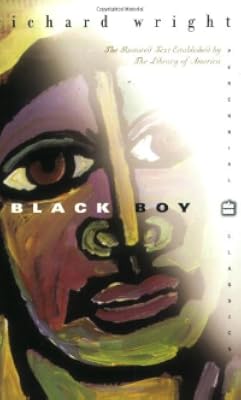
This book was not at all what I expected. I was imagining it would be filled with a lot of typical political speak, but was pleasantly surprised within the first few pages with the stark openness Obama presents. The book is achingly real and raw with the author's life, thoughts, feelings, hopes, dreams, disappointments - and also those of his family's. For a man who has launched his presidential campaign on the idea of hope, this book is not optimistic per say, but is at turns hopefully idealistic and bitterly cynical. For that, it is a more compelling read than many other non-fiction works. I was also surprised to find what a good writer Obama is (this is not a compliment I give to many, trust me!). His prose is perhaps sometimes a bit show more too sentimental, but I love the way it reads almost like poetry at these times (reminiscent of parts of Richard Wright's Black Boy). Nonetheless, I was hooked by his writing within the first pages when he juxtaposes the news of his father's death with the slightly earlier passing of a neighbor he saw all the time but didn't really know. Obama is skilled at moving back and forth in time within the narrative without losing the flow of the story and without the reader getting lost and confused about the timeline. He introduces a myriad of people, each grabbing hold of the reader's attention with their own personal story, unlike other books containing lots of characters who often become a mass of names the reader no longer can (or cares to) distinguish. The number of locales in the book give the reader a glimpse into many different worlds, where one might find as Obama says "one place is not so different from another ... [and] one moment carries within it all that's gone on before." show less
Members
- Recently Added By
Lists

LT picks: Blue Books
197 works; 39 members

100 Biographies & Memoirs to Read in a Lifetime
42 works; 18 members

You Couldn't Pay Me to Read That
25 works; 7 members

Recommend the 20 best books you've read in the last five years
2,168 works; 606 members

Black Authors
384 works; 32 members

Unread books
1,063 works; 84 members

wish list
61 works; 3 members

Presidential Autobiographies
37 works; 3 members

Books Featured on Readers' Review of the Diane Rehm Show
161 works; 8 members

100 Biographies and Memoirs to Read in a (Single) Lifetime
98 works; 12 members

KayStJ's to-read list
1,616 works; 11 members

Books Read in 2017
4,249 works; 130 members

Books Read in 2018
4,360 works; 110 members

KIB Non-Fiction Book Cloud
41 works; 1 member

2000s decade
85 works; 6 members

End of Your Life Book Club
134 works; 4 members

African American History Month
99 works; 2 members

SHOULD Read Books!
354 works; 9 members

Mustich's 1000 Books to Read Before You Die: A Life Changing List
1,001 works; 19 members

Reading Glasses Podcast
410 works; 3 members
You Couldn't Pay Me to Read That (Take 2)
203 works; 82 members
Author Information

171+ Works 31,262 Members
President Barack Obama was born in Honolulu, Hawaii on August 4, 1961. He graduated with a degree in political science from Columbia University in 1983. Before moving to Chicago in 1985, he worked at Business International Corporation and then at the New York Public Interest Research Group. In Chicago, he worked as a community organizer with show more low-income residents. He entered Harvard Law School in 1988, was elected editor of the Harvard Law Review in 1990, and graduated in 1991. After graduating law school, he returned to Chicago and became a civil rights lawyer. He also taught at the University of Chicago Law School from 1992 to 2004. In 1997, he was elected to the Illinois State Senate and served until 2004. In 2000, he made an unsuccessful bid for a seat in the U.S. House of Representatives. In 2005, he was elected to the U.S. Senate. In 2007, he announced his candidacy for the 2008 Democratic presidential nomination. On November 4, 2008, Obama defeated John McCain in the general election and became the first African-American to be elected President of the United States. He wrote Dreams from My Father: A Story of Race and Inheritance in 1995 and The Audacity of Hope: Thoughts on Reclaiming the American Dream in 2006. He won Best Spoken Word Album Grammy Awards in 2006 and 2008 for abridged audiobook versions of both books. He won the Nobel Peace Prize in 2009. His book Of Thee I Sing came out in 2010. (Bowker Author Biography) show less
Work Relationships
Is contained in
Is an expanded version of
Common Knowledge
- Canonical title
- Dreams from My Father: A Story of Race and Inheritance, Revised Edition
- People/Characters
- Barack Obama; Barack Obama Sr.; Gramps; Hussein Onyango Obama; Auma Obama; Roy Obama (show all 11); Toot; Ann Dunham; Lolo; Rev. Jeremiah Wright, Jr.; Harold Washington
- Disambiguation notice
- Originally published: New York : Times Books, c1995. Subsequently published in pbk. with preface and keynote address: New York: Three Rivers Press, 2004. This edition appears without keynote address
Classifications
- Genres
- Biography & Memoir, General Nonfiction, Nonfiction, History
- DDC/MDS
- 973.04960730092 — History & geography History of North America United States United States Ethnic And National Groups Other Groups African Americans African Americans
- LCC
- E185.97 .O23 .A3 — History of the United States United States Elements in the population Afro-Americans Biography. Genealogy
- BISAC
Statistics
- Members
- 7,106
- Popularity
- 1,652
- Reviews
- 126
- Rating
- (3.99)
- Languages
- English, Swedish
- Media
- Paper
- ISBNs
- 2
- ASINs
- 4