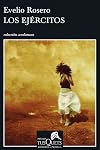
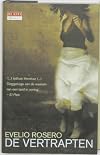
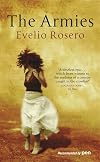
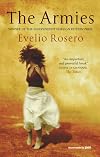
The Armies
by Evelio Rosero
On This Page
Description
Ismail, theprofesor, is a retired teacher in a small Colombian town where he passes the days pretending to pick oranges while spying on his neighbor Geraldina as she lies naked in the shade of a ceiba tree on a red floral quilt. The garden burns with sunlight; the macaws laugh sweetly. Otilia, Ismail's wife, is ashamed of his peeping and suggests that he pay a visit to Father Albornoz. Instead, Ismail wanders the town visiting old friends, plagued by a tangle of secret memories:Where have I show more existed these years? I answer myself: up on the wall, peering over. When the armies slowly arrive, theprofesor's reveries are gradually taken over by a living hell. His wife disappears and he must find her. We learn that not only gentle, grassy hillsides surround San José but landmines and coca fields. The reader is soon engulfed by the violence of Rosero's narrative that is touched not only with a deep sadness, but an extraordinary tenderness. show lessTags
Recommendations
















Member Reviews
Evelio Rosero (1958-) is an award winning author and journalist who was born in Bogotá, Colombia, where he currently resides. The Armies (Los ejércitos), his first novel to be translated into English, won the Tusquets International Novel Prize in 2006 and the Independent Foreign Fiction Prize in 2009.
Ismael is a 70 year old retired school teacher, who lives peacefully with his wife Otilia in a Colombian village. His days are spent picking oranges from the trees in his garden, while longingly admiring his neighbor as she sunbathes in the nude. Surrounding this peaceful village, however, are guerrillas who grow coca in the nearby hills, who occasionally threaten and kidnap individuals but do not have much of an impact on the town as a show more whole. Unfortunately for the villagers, the army decides to use the village as a front in the war against the guerrillas, and slowly but steadily the villagers are caught in the middle of these warring factions.
Ismael decides to take an early morning walk, and is detained by government soldiers. Otilia goes to look for him later that day, and Ismael goes to look for her after his release. However, there is fierce fighting on that day, and he cannot find her by day's end. His neighbor's husband and son are kidnapped, and a number of villagers are killed or injured. Over the next days, as the fighting intensifies and the villagers find themselves increasingly trapped, Ismael continues his search for Otilia, vowing to remain there until she returns to him.
No one in The Armies is entirely innocent or guilty: the captain of the army randomly shoots several civilians, accusing them of being guerrillas; the mayor and the local police abandon the villagers with little warning; journalists drop in for photo ops but are detached and uninterested in the villagers' plight; and the country's president denies the existence of the war, and claims that the deaths reported by the media were due to old age.
This was a beautifully written novel which captures the horrors of the Colombian civil war, without resorting to gruesome and repetitive depictions of violence. show less
Ismael is a 70 year old retired school teacher, who lives peacefully with his wife Otilia in a Colombian village. His days are spent picking oranges from the trees in his garden, while longingly admiring his neighbor as she sunbathes in the nude. Surrounding this peaceful village, however, are guerrillas who grow coca in the nearby hills, who occasionally threaten and kidnap individuals but do not have much of an impact on the town as a show more whole. Unfortunately for the villagers, the army decides to use the village as a front in the war against the guerrillas, and slowly but steadily the villagers are caught in the middle of these warring factions.
Ismael decides to take an early morning walk, and is detained by government soldiers. Otilia goes to look for him later that day, and Ismael goes to look for her after his release. However, there is fierce fighting on that day, and he cannot find her by day's end. His neighbor's husband and son are kidnapped, and a number of villagers are killed or injured. Over the next days, as the fighting intensifies and the villagers find themselves increasingly trapped, Ismael continues his search for Otilia, vowing to remain there until she returns to him.
No one in The Armies is entirely innocent or guilty: the captain of the army randomly shoots several civilians, accusing them of being guerrillas; the mayor and the local police abandon the villagers with little warning; journalists drop in for photo ops but are detached and uninterested in the villagers' plight; and the country's president denies the existence of the war, and claims that the deaths reported by the media were due to old age.
This was a beautifully written novel which captures the horrors of the Colombian civil war, without resorting to gruesome and repetitive depictions of violence. show less
A new Colombian author. You know how some books - say "Heart of Darkness," which I re-read recently - they're like haymakers, just huge bodyblows that knock you flat? This book is like a quick jab. Your head gets rocked back before you even realize you got punched. It's about a small mountain town in the pre-Uribe paramilitary days. It opens hazily, and it's hard to tell what's happening at first; it's like it opens in the immediate aftermath of a bomb blast, and for a while there's just smoke and noise, and it's only as things settle down that you realize who's hurt. Neat trick, and a very worthwhile book.
Astounding book that somehow entwines searing violence and touching love in a breathless, frenetic, stream-of-consciousness style. I was a bit puzzled at times in the book, as my background to Colombia is sketchy at best, but as a story, this book is in the class of Ammaniti's I Am Not Scared
(7.5) This story is narrated through the eyes of a retired professor living in a small south American village.
He entertains himself with small voyeurisms on the neighbour's attractive wife. Meanwhile minor incursions of rebels are occurring in the area and people are disappearing. When his wife disappears during an escalation of attacks, the professor's world falls apart as villagers disappear or flee for safety, leaving the town deserted.
For those of us blessed to live in democratic, relatively peaceful countries this is a timely reminder of how others live in these war torn countries.
He entertains himself with small voyeurisms on the neighbour's attractive wife. Meanwhile minor incursions of rebels are occurring in the area and people are disappearing. When his wife disappears during an escalation of attacks, the professor's world falls apart as villagers disappear or flee for safety, leaving the town deserted.
For those of us blessed to live in democratic, relatively peaceful countries this is a timely reminder of how others live in these war torn countries.
The wife of a retired teacher disappears during an attack on their home town by one of the rival factions in the country's civil strife. He stays, hoping for her return, whilst one by one his friends and neighbours are themselves kidnapped, killed or forced to flee. He cannot even bring himself to tell their daughter of his wife's disappearance. It is predictably harrowing, yet not entirely without hope. An unlikely page-turner, though don't expect a happy ending.
"The Armies" follows the life of elderly former school teacher Ismael and his wife Otilia and their life in a small remote Colombia village. The village is constantly under threat from both rebels and paramilitary forces, who attack the town and military garrison frequently. However, life for the couple seems relatively peaceful, with Ismael continuing his habits of picking oranges and observing his sunbathing neighbor's wife.
However, this life is shattered once Otilia disappears during an attack on the village, and soon life in the town crumbles, as Ismael struggles to find out what exactly happened to his wife.
However, this life is shattered once Otilia disappears during an attack on the village, and soon life in the town crumbles, as Ismael struggles to find out what exactly happened to his wife.
Een klein stadje in Colombia, de bejaarde onderwijzer Ismael lonkt over het tuinmuurtje naar zijn bloedmooie buurvrouw, maar de rust is bedrieglijk. Want in dit door een burgeroorlog verscheurde land loert het geweld om de hoek, sommige vrienden verdwijnen, andere dorpsbewoners blijken ontvoerd. En dan plots spoelt het geweld als een vloedgolf over het dorp, eens te meer . Leger en milities vechten er een bloedige strijd uit ; de vrouw van de onderwijzer is spoorloos . Hij gaat naar haar op zoek, maar verliest grip op de werkelijkheid...
Waarom zou ik dit boek lezen ?
De totale ontreddering van de hoofdonderwijzer die het allemaal niet meer kan vatten blijft je bij. Dat de auteur hiervoor putte uit de alledaagse werkelijkheid van zijn show more land maakt het des te schrijnender. Zo staat de ontreddering van zijn hoofdpersoon symbool voor de machteloosheid van de weerloze burgerbevolking Een universeel verhaal kortom, dat tot nadenken stemt.
Voor boekenzoeker ; zie
http://www.boekenzoeker.org/16+/overzicht.asp?BoomId=2&TakId=38&BladId=1... show less
Waarom zou ik dit boek lezen ?
De totale ontreddering van de hoofdonderwijzer die het allemaal niet meer kan vatten blijft je bij. Dat de auteur hiervoor putte uit de alledaagse werkelijkheid van zijn show more land maakt het des te schrijnender. Zo staat de ontreddering van zijn hoofdpersoon symbool voor de machteloosheid van de weerloze burgerbevolking Een universeel verhaal kortom, dat tot nadenken stemt.
Voor boekenzoeker ; zie
http://www.boekenzoeker.org/16+/overzicht.asp?BoomId=2&TakId=38&BladId=1... show less
Nov 11, 2009Dutch
Members
- Recently Added By
Author Information

36+ Works 610 Members
Awards and Honors
Awards
Common Knowledge
- Canonical title
- The Armies
- Original title
- Los ejércitos
- Original publication date
- 2007 (Spanish), 2008 (English) (Spanish | English)
- Important places
- Colombia
- Important events
- Colombian civil war
- Dedication
- For Sandra Páez
- First words
- And this is how it was: at the Brazilian's house the macaws laughed all the time; I heard them from the top of my garden wall, when I was up the ladder, picking my oranges, tossing them into the big palm-leaf basket; now and ... (show all)again I sensed the three cats behind me watching from high up in the almond trees. What were they telling me? Nothing, there was no understanding them. Further back, my wife fed the fish in the pond: this is how we grew old, she and I, the fish and the cats, but my wife and the fish, what were they telling me? Nothing, there was no understanding them.
- Last words
- (Click to show. Warning: May contain spoilers.)What am I going to tell them? My name? Another name? I shall tell them I am Jesus Christ. I shall tell them I am Simón Bolívar. I shall tell them I am called Nobody. I shall tell them I have no name and I shall laugh again; they will think I am mocking them and they will shoot: this is how it will be.
Classifications
- Genres
- Fiction and Literature, General Fiction
- DDC/MDS
- 863.64 — Literature & rhetoric Spanish Literature Spanish fiction 20th Century 1945-2000
- LCC
- PQ8180.28 .O7 .E5413 — Language and Literature French, Italian, Spanish and Portuguese literatures Spanish literature Provincial, local, colonial, etc. Spanish America
- BISAC
Statistics
- Members
- 238
- Popularity
- 137,230
- Reviews
- 10
- Rating
- (3.79)
- Languages
- 8 — Danish, Dutch, English, French, German, Italian, Portuguese, Spanish
- Media
- Paper, Ebook
- ISBNs
- 20
- ASINs
- 3