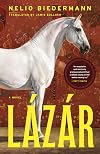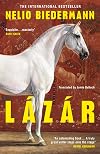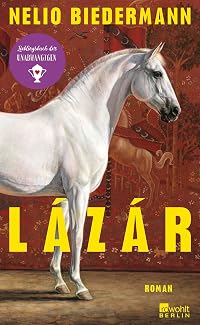
Lázár
by Nelio Biedermann
On This Page
Description
Alles beginnt, sogar das Ende, als Lajos von Lázár, das blonde Kind mit den wasserblauen Augen, zur Welt kommt. Seinem Vater, dem Baron, wird der Sohn nie geheuer sein, als ob er dessen Geheimnis ahnte. Mit Lajos’ Geburt im Waldschloss bricht auch das 20. Jahrhundert an, das das alte Leben der Barone Lázár im südlichen Ungarn für immer verändern wird. Der Untergang des Habsburgerreichs berührt erst nur ihre Traditionen, aber alle spüren das Beben der Zeit, die schöne Mária show more ebenso wie der geisterhafte Onkel Imre. Als Lajos in den 20er-Jahren sein Erbe antritt, scheint der alte Glanz noch einmal aufzublühen. Doch die Kinder Eva und Pista – der das Dunkle so liebt – müssen erleben, wie totalitäre Zeiten ihre wuchtigen Schatten werfen – und lernen, gegen sie zu bestehen. show lessTags
Recommendations



























Member Reviews
In this novel, Biedermann succeeds in balancing sweeping historical events with compelling personal stories. He understands that history matters most through the eyes of the people who witness it.
He follows the aristocratic Lázár family through the first half of the twentieth century as Hungary experiences one upheaval after another: the collapse of the Hapsburg Empire, two world wars, the Holocaust, Soviet occupation, and ultimately the Hungarian Revolution. These events provide the backdrop, but the novel really belongs to the family.
The characters are the book's greatest strength. Lajos, born under the shadow of uncertain parentage and childhood tragedy, anchors a family filled with complex, fully realized individuals. Eva and show more Pista, in particular, emerge as admirable and often heroic figures, though none of the characters are idealized. Biedermann gives each of them a rich emotional life, allowing their virtues and flaws to coexist naturally. By the end of the novel, I felt I had lived alongside them rather than simply read about them.
The settings are equally vivid. The family's country manor, bordering a dark and mysterious forest, evokes a world that is both beautiful and quietly haunted—a fitting symbol for an aristocratic way of life that is destined to disappear. Budapest is rendered with equal skill as it endures war, occupation, and political transformation.
Although the novel unfolds chronologically, the narrative never feels predictable. Its pages are filled with personal triumphs and tragedies: alcoholism, infidelity, suicide, mental illness, unfulfilled love, and sexual violence all become part of the family's saga. Remarkably, the novel moves through decades of history at a brisk pace without sacrificing emotional depth. Biedermann keeps the focus where it belongs—on the people whose lives are being reshaped by forces far beyond their control.
What stayed with me most was the novel's exploration of social change. Through the fortunes of a single family, Biedermann examines Hungary's passage from aristocratic privilege through the grim decades of communism and eventually toward democracy. Unfortunately, today the pendulum is still swinging right and left. Rather than presenting history as an abstract series of political events, Biedermann deftly shows how those changes can alter identities, relationships, and even the meaning of home itself.
This is an ambitious novel, but it never feels bloated or self-important. Its historical scope is impressive, yet its emotional center remains intimate and deeply human. By the final pages, I realized I wasn't simply interested in what happened to Hungary—I also cared about what happened to the Lázár family. For me, that's the hallmark of successful historical fiction. It transforms history from something we learn into something we feel. Because Lazar accomplishes that, I found it to be a rewarding and memorable read. show less
He follows the aristocratic Lázár family through the first half of the twentieth century as Hungary experiences one upheaval after another: the collapse of the Hapsburg Empire, two world wars, the Holocaust, Soviet occupation, and ultimately the Hungarian Revolution. These events provide the backdrop, but the novel really belongs to the family.
The characters are the book's greatest strength. Lajos, born under the shadow of uncertain parentage and childhood tragedy, anchors a family filled with complex, fully realized individuals. Eva and show more Pista, in particular, emerge as admirable and often heroic figures, though none of the characters are idealized. Biedermann gives each of them a rich emotional life, allowing their virtues and flaws to coexist naturally. By the end of the novel, I felt I had lived alongside them rather than simply read about them.
The settings are equally vivid. The family's country manor, bordering a dark and mysterious forest, evokes a world that is both beautiful and quietly haunted—a fitting symbol for an aristocratic way of life that is destined to disappear. Budapest is rendered with equal skill as it endures war, occupation, and political transformation.
Although the novel unfolds chronologically, the narrative never feels predictable. Its pages are filled with personal triumphs and tragedies: alcoholism, infidelity, suicide, mental illness, unfulfilled love, and sexual violence all become part of the family's saga. Remarkably, the novel moves through decades of history at a brisk pace without sacrificing emotional depth. Biedermann keeps the focus where it belongs—on the people whose lives are being reshaped by forces far beyond their control.
What stayed with me most was the novel's exploration of social change. Through the fortunes of a single family, Biedermann examines Hungary's passage from aristocratic privilege through the grim decades of communism and eventually toward democracy. Unfortunately, today the pendulum is still swinging right and left. Rather than presenting history as an abstract series of political events, Biedermann deftly shows how those changes can alter identities, relationships, and even the meaning of home itself.
This is an ambitious novel, but it never feels bloated or self-important. Its historical scope is impressive, yet its emotional center remains intimate and deeply human. By the final pages, I realized I wasn't simply interested in what happened to Hungary—I also cared about what happened to the Lázár family. For me, that's the hallmark of successful historical fiction. It transforms history from something we learn into something we feel. Because Lazar accomplishes that, I found it to be a rewarding and memorable read. show less
It all begins, even the end, when Lajos von Lázár, the blond child with water-blue eyes, is born. His father, the baron, will never feel comfortable with his son, as if he senses his secret. With Lajos' birth in the forest castle, the 20th century dawns, forever changing the old life of the Lázár barons in southern Hungary. The fall of the Habsburg Empire initially only affects their traditions, but everyone feels the tremors of the times, the beautiful Mária as well as the ghostly Uncle Imre. When Lajos comes into his inheritance in the 1920s, the old glory seems to blossom once more. But the children Eva and Pista – who loves the dark so much – must experience how totalitarian times cast their heavy shadows – and learn to show more resist them.
A novel like a world, the overwhelming saga of a family driven by love and longing for it, in the maelstrom of the 20th century. Captivating and touching, yet full of lightness, dreams and secrets that reflect the tragedy and beauty of existence. And – whether in the face of historical catastrophes or beautiful summer days – the eternal question of how to live.
I have mixed feelings about this book; on the one hand, it is highly commendable that a 22-year-old has written such a family history, historically accurate and with depth, but on the other hand, certain parts are, in my opinion, too long and others too short. A great deal of attention is given to the parts leading up to the outbreak of the Second World War. Among other things, I am not sure whether the “heirs” of this family are actually “real” heirs or “cuckoo children”. The period of the World War is covered relatively briefly, which is not too bad, as much is already known about it. What I found lacking was the period after the war until the great wave of Hungarian refugees in 1955. Probably not much was said about this in Biedermann's family, as in most refugee families I know personally. It must still be a dark chapter in Hungarian history that has not yet been properly addressed. show less
A novel like a world, the overwhelming saga of a family driven by love and longing for it, in the maelstrom of the 20th century. Captivating and touching, yet full of lightness, dreams and secrets that reflect the tragedy and beauty of existence. And – whether in the face of historical catastrophes or beautiful summer days – the eternal question of how to live.
I have mixed feelings about this book; on the one hand, it is highly commendable that a 22-year-old has written such a family history, historically accurate and with depth, but on the other hand, certain parts are, in my opinion, too long and others too short. A great deal of attention is given to the parts leading up to the outbreak of the Second World War. Among other things, I am not sure whether the “heirs” of this family are actually “real” heirs or “cuckoo children”. The period of the World War is covered relatively briefly, which is not too bad, as much is already known about it. What I found lacking was the period after the war until the great wave of Hungarian refugees in 1955. Probably not much was said about this in Biedermann's family, as in most refugee families I know personally. It must still be a dark chapter in Hungarian history that has not yet been properly addressed. show less
A fiatal svájci szerző debütáló regénye egy nagyszabású, gótikus elemekkel átszőtt családregény, amely a nemesi Lázár család felemelkedését és bukását követi nyomon a XX. századi Magyarország viharos évtizedeiben. A történet a századfordulón indít egy sötét erdő szélén álló vidéki kúriában, ahol megszületik a különös, áttetsző bőrű Lajos, majd három generáción keresztül mutatja be a főúri réteg széthullását a két világháború, a fasiszta diktatúra és a szovjet megszállás közepette. Bár a cselekményvezetés helyenként epizodikus és inkább hangulatközpontú, a mű komoly irodalmi értékkel bír, mivel egy teljesen külső, nyugat-európai generáció szemszögéből, show more erős atmoszférateremtéssel és intellektuális igénnyel nyúl a magyar történelem traumáihoz. show less
3.5 rounded fo 4 *
Set amongst the forests of Hungary, an aristocratic family faces the difficulties of war and revolution that threatens their wealth and social standing.
I often found this a bit difficult to follow, but as I kept reading I came to understand the author’s pattern of writing. I had no idea of what all Hungary had experienced after WWII. Under Stalin’s control, they were oppressed and wary of being arrested for years following the war.
It’s hard to imagine living in a place where your family and friends are arrested at any time and maybe you will be next. I’m glad I read this as it gave me a better understanding of Hungarian history.
Many thanks to NetGalley and S&S /Summit Books for allowing me to read an advance show more copy and give my honest review. show less
Set amongst the forests of Hungary, an aristocratic family faces the difficulties of war and revolution that threatens their wealth and social standing.
I often found this a bit difficult to follow, but as I kept reading I came to understand the author’s pattern of writing. I had no idea of what all Hungary had experienced after WWII. Under Stalin’s control, they were oppressed and wary of being arrested for years following the war.
It’s hard to imagine living in a place where your family and friends are arrested at any time and maybe you will be next. I’m glad I read this as it gave me a better understanding of Hungarian history.
Many thanks to NetGalley and S&S /Summit Books for allowing me to read an advance show more copy and give my honest review. show less
Manchmal denke ich wirklich, ich lebe auf einem anderen Planeten, denn mir gefällt das Buch Lázár von Nelio Biedermann nicht besonders. Also nicht, dass es mir gar nicht gefallen hätte, aber ich habe es gelesen und dachte am Ende nur: So what? In die Hymnen des Feuilletons kann ich jedenfalls nicht einstimmen.
Zunächst einmal finde auch ich es natürlich beachtlich, dass ein so junger Mann ein derart belesenes Buch mit 22 Jahren schreibt. Aber genau darin liegt für mich auch ein Problem. Ich habe in einem Interview mit ihm gelesen, dass er sich bei Thomas Mann abgeschaut hat, wie man Figuren mit körperlichen Merkmalen einführt. Aber was soll dann zum Beispiel die durchsichtige Haut? Das spielt später überhaupt keine Rolle show more mehr.
Das Buch ist letztlich eine Aneinanderreihung von Episoden. Die Figuren kommen einem nicht wirklich nahe. Wenn man die oft bemühten Vergleiche mit "Buddenbrooks" von Thomas Mann ("Der neue Zauberer!") und dem "Radetzkymarsch" von Joseph Roth zieht, wird doch der Unterschied offenkundig: Lázár ist auch vom Umfang her für die große Geschichte äußerst dünn; es entsteht kein wirklicher Tiefgang. Frauen sind zudem durchweg sehr armselig dargestellt, dazu kommen viel zu viel Vergewaltigung und eregierte Penisse.
Mich hat das Buch stellenweise befremdet, etwa dort, wo Motive und Formulierungen anderer Autoren übernommen werden. Ich kann wirklich nicht nachvollziehen, warum dieses Buch eine so einhellige Begeisterung hervorgerufen hat. Man kann es schon lesen, aber ich würde es weder empfehlen noch verschenken. show less
Zunächst einmal finde auch ich es natürlich beachtlich, dass ein so junger Mann ein derart belesenes Buch mit 22 Jahren schreibt. Aber genau darin liegt für mich auch ein Problem. Ich habe in einem Interview mit ihm gelesen, dass er sich bei Thomas Mann abgeschaut hat, wie man Figuren mit körperlichen Merkmalen einführt. Aber was soll dann zum Beispiel die durchsichtige Haut? Das spielt später überhaupt keine Rolle show more mehr.
Das Buch ist letztlich eine Aneinanderreihung von Episoden. Die Figuren kommen einem nicht wirklich nahe. Wenn man die oft bemühten Vergleiche mit "Buddenbrooks" von Thomas Mann ("Der neue Zauberer!") und dem "Radetzkymarsch" von Joseph Roth zieht, wird doch der Unterschied offenkundig: Lázár ist auch vom Umfang her für die große Geschichte äußerst dünn; es entsteht kein wirklicher Tiefgang. Frauen sind zudem durchweg sehr armselig dargestellt, dazu kommen viel zu viel Vergewaltigung und eregierte Penisse.
Mich hat das Buch stellenweise befremdet, etwa dort, wo Motive und Formulierungen anderer Autoren übernommen werden. Ich kann wirklich nicht nachvollziehen, warum dieses Buch eine so einhellige Begeisterung hervorgerufen hat. Man kann es schon lesen, aber ich würde es weder empfehlen noch verschenken. show less
Dec 17, 2025German
1
Ein Generationenroman über den eine ungarische Adelsfamilie vom Ende des 19. bis tief in die vom Sowjet-Sozialismus geprägte zweite Hälfte des 20. Jahrhunderts.
Als Hörbuch gehört. Zunächst ist es mir schwergefallen hineinzukommen, später bin ich der Erzählung doch mit Anteilnahme gefolgt - aber die Familiengeschichte ist nicht hängengeblieben, obwohl sie durchaus Substanz zu haben schien. Mh.
Angenehm gelesen von Max von Pufendorf
Als Hörbuch gehört. Zunächst ist es mir schwergefallen hineinzukommen, später bin ich der Erzählung doch mit Anteilnahme gefolgt - aber die Familiengeschichte ist nicht hängengeblieben, obwohl sie durchaus Substanz zu haben schien. Mh.
Angenehm gelesen von Max von Pufendorf
Nov 15, 2025German
Ratings
Members
- Recently Added By
Lists

Books Read in 2026
1,933 works; 66 members
Author Information

2 Works 199 Members
Awards and Honors
Awards
Notable Lists
Common Knowledge
- Canonical title
- Lázár
- Original publication date
- 2025-09-01
Classifications
Statistics
- Members
- 197
- Popularity
- 166,287
- Reviews
- 6
- Rating
- (3.72)
- Languages
- Dutch, English, German, Norwegian
- Media
- Paper, Audiobook, Ebook
- ISBNs
- 8
- ASINs
- 3