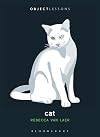
Cat
by Rebecca van Laer
On This Page
Description
"Unfolding in nine chapters to examine nine aspects of life with cats, Cat is both a memoir and a meditation on the things cat people admire in their pets: laziness and lawlessness. Touching on the age-old rivalry between cats and dogs, the stereotype of the 'crazy cat lady', the joy of cat memes, and the grief of pet loss, van Laer demonstrates that the cat/person relationship is free of the discipline and dependence required by parenting (and dog-parenting), creating a less hierarchical show more intimacy that offers a different model for love and family"-- Provided by publisher. show lessTags
Member Reviews
I’ve been aware of Bloomsbury’s Object Lessons series for years, but this is the first time I’ve actually read one of the titles. I have no idea how representative it is, but I can say that I was impressed. Van Laer is a fine writer who skillfully mixes memoir elements with information and reflection on domestic felines. For the latter two components, she draws on works by philosopher John Gray, evolutionary biologist Jonathan Losos (who has a particular interest in cats), and professor emerita of English Katherine M. Rogers—among others. Also included are the views of Jonathan Franzen (a passionate birder and advocate for songbird conservation) and some stories about Doris Lessing and the Czech writer Bohumil Hrabal, two cat show more lovers who dealt with explosive overpopulations of friendly cats. Believe me, those accounts are distressing to read.
I particularly enjoyed the commentary on John Gray’s Feline Philosophy in which he outlines what we humans can learn from these animals in order to experience less suffering and greater equanimity. Like van Laer, I’m skeptical about Gray’s basic assumption that cats are essentially happy. I’ve seen cats demonstrate behaviours comparable those of traumatized humans. (I’ve also seen them slowly learn to trust.) Some are very sensitive to raised voices, any sign of distress in the people they live with, and changes in routine. One of our cats displayed ongoing agitation when her close feline friend died.
It should be noted that this is not a book about cute, fluffy “fur babies”. The author goes the extra mile to counterbalance her love for these companion animals with hard facts about their impact on wildlife, their tendency to breed uncontrollably, and the need to set limits on them. She sharply observes: “If dogs are our servants, cats are our shadows. On ships, across continents, in cities and in suburbs, trash dumps and nature preserves, they have followed us and our refuse, continuing our work of domination. We have fragmented the natural world; they have hunted in the cracks we create.” And, she concludes, they are perhaps “not so much domesticated by humans as accessory to us—not in the sense of a purse, but of a crime.” She is firm in her view that we can’t allow cats to have litter after litter, eat whatever they want, and—in short—“take over the world”; however, she’s also realistic about humans who don’t demonstrate much interest in their own negative impacts on the environment, never mind conscientiously managing cats.
The relationship between humans and cats has always been a somewhat uneasy one. The author comments that on average, humans do not like felines as much as canines. It’s not easy for people to admit to a dislike of dogs, a social species generally regarded as loyal and friendly, but folks often make no bones about their distaste for cats. Cats don’t obey or love enough; they’re independent, and they challenge you with their stares. They’re also more likely than dogs to be surrendered to shelters when a family member develops an allergy to their fur, even though a yearlong study from the National Health and Nutrition Examination Survey showed that there are comparable levels of sensitization to cat and dog allergens within the US population.
It’s common knowledge that cats were domesticated in Egypt, where they were valued for their ability to provide rodent control and eventually made it into the pantheon of that ancient civilization; however, the author notes that there’s a fairly long history of humans hating them in the time since. In medieval Europe, they were associated with the Devil. Suspected of being witches’ familiars, they were often punished alongside persecuted women, even burned at the stake with them. Afterwards, their negative association with women continued. “The idea of the crazy cat lady,” the author writes, “is alive and well in certain circles—the belief that the worst possible fate is to fail to reproduce and end up surrounded by nonhuman creatures you love.”
Van Laer provides a few telling details about the role of cats in her difficult childhood. She spent her earliest years in the company of two cats—the elderly Anastasia and a young Siamese named Zoda—in a Manhattan apartment. The family then relocated to Georgia, with Zoda “shepherding” the introverted Rebecca through the upsetting transition from urban to rural living. It was hard for her to adjust to Southern culture in general, and to make friends or even speak at school in particular. Soon enough, her tense and chaotic family began to unravel. Her dad was often away on business, and Rebecca’s mother appears to have had difficulty managing the house and the children. When her parents actually were together, they were embroiled in their own problems.
Barely able to control themselves, they certainly didn’t attend to Rebecca and her brother or manage the “endless parade of cats” they’d taken in over the years. The animals had gone unneutered, unspayed, and largely uncared for. Van Laer describes the situation as hoarding, with all the attendant grief and horror. Some cats vanished, and one, Tigger, was killed, presumably by a local dog. Rebecca’s sorrow at his violent end was dismissed by her mother who felt that the children really just needed to understand that the death of pets was a part of life.
The van Laer parents ultimately divorced, by which time the author never wanted to see her mother again. She chose to move away and live with her dad. Until the divorce occurred, however, she had clearly relied on cats for the solace that had not been provided by her parents.
Perhaps unsurprisingly, van Laer later struggled with anxiety and low spirits as a graduate student. A variety of pharmaceuticals for anxiety and depression were prescribed, but they offered little help. It was only when the author adopted a cat that she began to experience a sense of wellbeing. She named him “Gus”—in memory of the “best” and most beloved of her childhood cats, Augustus, who had sadly vanished—and she vowed to make up for the neglect her earlier animal companions had endured. After a number of failed relationships, she found happiness with a sympathetic partner, Steven, an academic with a cat of his own.
A fair bit of the book tells about the couple’s experiences with their cats Gus and Toby: their move from an apartment to a house, the death of one of the cats in old age, the intense grief that ensued, and their adoption of Milton (a very affectionate tuxedo cat with feline immunodeficiency virus). Van Laer explains how their animal companions have shaped her and Steven’s lives, including the decisions about marriage and whether to have children. She challenges Pope Francis’s disparaging remarks about the selfishness of couples who choose not to have children and give their love to non-human companions. Her response is forceful and well worth reading.
I find it remarkable that so much information and food for thought has been fit into such a compact little book. In addition to what I’ve mentioned above, the author covers feline communication and the unique language each cat develops to communicate with his own humans. There’s also some passing commentary on the following: the shelter system; the controversy over whether cats are really the fine hunters they’re purported to be; cats as political symbols; where the legend of cats’ nine lives may have originated; the health issues of pedigree felines; and FIV—feline immunodeficiency virus.
For me, van Laer’s book was a terrific introduction to the Object Lessons series. Yes, there is sadness here, but there are moments of humour, too, and one is left with lots to think about.
Thank you to Net Galley and Bloomsbury for providing me with a digital advanced reader copy. show less
I particularly enjoyed the commentary on John Gray’s Feline Philosophy in which he outlines what we humans can learn from these animals in order to experience less suffering and greater equanimity. Like van Laer, I’m skeptical about Gray’s basic assumption that cats are essentially happy. I’ve seen cats demonstrate behaviours comparable those of traumatized humans. (I’ve also seen them slowly learn to trust.) Some are very sensitive to raised voices, any sign of distress in the people they live with, and changes in routine. One of our cats displayed ongoing agitation when her close feline friend died.
It should be noted that this is not a book about cute, fluffy “fur babies”. The author goes the extra mile to counterbalance her love for these companion animals with hard facts about their impact on wildlife, their tendency to breed uncontrollably, and the need to set limits on them. She sharply observes: “If dogs are our servants, cats are our shadows. On ships, across continents, in cities and in suburbs, trash dumps and nature preserves, they have followed us and our refuse, continuing our work of domination. We have fragmented the natural world; they have hunted in the cracks we create.” And, she concludes, they are perhaps “not so much domesticated by humans as accessory to us—not in the sense of a purse, but of a crime.” She is firm in her view that we can’t allow cats to have litter after litter, eat whatever they want, and—in short—“take over the world”; however, she’s also realistic about humans who don’t demonstrate much interest in their own negative impacts on the environment, never mind conscientiously managing cats.
The relationship between humans and cats has always been a somewhat uneasy one. The author comments that on average, humans do not like felines as much as canines. It’s not easy for people to admit to a dislike of dogs, a social species generally regarded as loyal and friendly, but folks often make no bones about their distaste for cats. Cats don’t obey or love enough; they’re independent, and they challenge you with their stares. They’re also more likely than dogs to be surrendered to shelters when a family member develops an allergy to their fur, even though a yearlong study from the National Health and Nutrition Examination Survey showed that there are comparable levels of sensitization to cat and dog allergens within the US population.
It’s common knowledge that cats were domesticated in Egypt, where they were valued for their ability to provide rodent control and eventually made it into the pantheon of that ancient civilization; however, the author notes that there’s a fairly long history of humans hating them in the time since. In medieval Europe, they were associated with the Devil. Suspected of being witches’ familiars, they were often punished alongside persecuted women, even burned at the stake with them. Afterwards, their negative association with women continued. “The idea of the crazy cat lady,” the author writes, “is alive and well in certain circles—the belief that the worst possible fate is to fail to reproduce and end up surrounded by nonhuman creatures you love.”
Van Laer provides a few telling details about the role of cats in her difficult childhood. She spent her earliest years in the company of two cats—the elderly Anastasia and a young Siamese named Zoda—in a Manhattan apartment. The family then relocated to Georgia, with Zoda “shepherding” the introverted Rebecca through the upsetting transition from urban to rural living. It was hard for her to adjust to Southern culture in general, and to make friends or even speak at school in particular. Soon enough, her tense and chaotic family began to unravel. Her dad was often away on business, and Rebecca’s mother appears to have had difficulty managing the house and the children. When her parents actually were together, they were embroiled in their own problems.
Barely able to control themselves, they certainly didn’t attend to Rebecca and her brother or manage the “endless parade of cats” they’d taken in over the years. The animals had gone unneutered, unspayed, and largely uncared for. Van Laer describes the situation as hoarding, with all the attendant grief and horror. Some cats vanished, and one, Tigger, was killed, presumably by a local dog. Rebecca’s sorrow at his violent end was dismissed by her mother who felt that the children really just needed to understand that the death of pets was a part of life.
The van Laer parents ultimately divorced, by which time the author never wanted to see her mother again. She chose to move away and live with her dad. Until the divorce occurred, however, she had clearly relied on cats for the solace that had not been provided by her parents.
Perhaps unsurprisingly, van Laer later struggled with anxiety and low spirits as a graduate student. A variety of pharmaceuticals for anxiety and depression were prescribed, but they offered little help. It was only when the author adopted a cat that she began to experience a sense of wellbeing. She named him “Gus”—in memory of the “best” and most beloved of her childhood cats, Augustus, who had sadly vanished—and she vowed to make up for the neglect her earlier animal companions had endured. After a number of failed relationships, she found happiness with a sympathetic partner, Steven, an academic with a cat of his own.
A fair bit of the book tells about the couple’s experiences with their cats Gus and Toby: their move from an apartment to a house, the death of one of the cats in old age, the intense grief that ensued, and their adoption of Milton (a very affectionate tuxedo cat with feline immunodeficiency virus). Van Laer explains how their animal companions have shaped her and Steven’s lives, including the decisions about marriage and whether to have children. She challenges Pope Francis’s disparaging remarks about the selfishness of couples who choose not to have children and give their love to non-human companions. Her response is forceful and well worth reading.
I find it remarkable that so much information and food for thought has been fit into such a compact little book. In addition to what I’ve mentioned above, the author covers feline communication and the unique language each cat develops to communicate with his own humans. There’s also some passing commentary on the following: the shelter system; the controversy over whether cats are really the fine hunters they’re purported to be; cats as political symbols; where the legend of cats’ nine lives may have originated; the health issues of pedigree felines; and FIV—feline immunodeficiency virus.
For me, van Laer’s book was a terrific introduction to the Object Lessons series. Yes, there is sadness here, but there are moments of humour, too, and one is left with lots to think about.
Thank you to Net Galley and Bloomsbury for providing me with a digital advanced reader copy. show less
I received an advance copy via NetGalley.
As an ardent cat lover, I immediately related to van Laer's close relationship with her cats Toby and Gus, and the many childhood cats that she also mentions in this ode to the felines in her life. Those stories are the strongest in the book: wherein she talks about her pet names for them, how they accompany her through the day (especially during Covid times), how they became a bonding element for her and partner Steven.
The didn't flow, for me, were nonfiction asides about cats across time and a sizable chunk at the end about why cats shouldn't take over the world. There are some profound moments of grief, too, but I felt those fit the narrative even though I was barely holding back sobs at one show more point (and if you read the book, you'll know the point). There should be a definite content warning on the book about cat death, but I also hope that doesn't deter cat-lovers from reading, because the short lives of cats in contrast to the human span is part of the cycle. show less
As an ardent cat lover, I immediately related to van Laer's close relationship with her cats Toby and Gus, and the many childhood cats that she also mentions in this ode to the felines in her life. Those stories are the strongest in the book: wherein she talks about her pet names for them, how they accompany her through the day (especially during Covid times), how they became a bonding element for her and partner Steven.
The didn't flow, for me, were nonfiction asides about cats across time and a sizable chunk at the end about why cats shouldn't take over the world. There are some profound moments of grief, too, but I felt those fit the narrative even though I was barely holding back sobs at one show more point (and if you read the book, you'll know the point). There should be a definite content warning on the book about cat death, but I also hope that doesn't deter cat-lovers from reading, because the short lives of cats in contrast to the human span is part of the cycle. show less
Members
- Recently Added By
Lists

Science: Zoology
107 works; 1 member
Author Information
1 Work 13 Members
Common Knowledge
- Dedication
- In memory of Helen van Laer
- First words
- We have just bought a house, and people keep asking if we plan to get a dog.
- Last words
- (Click to show. Warning: May contain spoilers.)Loving what I know I'll lose.
- Blurbers
- Chung, Gina; Hoke, Henry; Kolluri, Talia Lakshmi
Classifications
Statistics
- Members
- 13
- Popularity
- 1,772,816
- Reviews
- 2
- Rating
- (3.50)
- Languages
- English
- Media
- Paper
- ISBNs
- 2
- ASINs
- 1