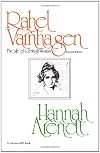
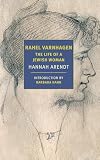
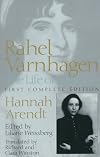
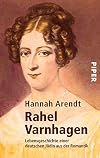
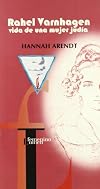
Rahel Varnhagen: The Life of a Jewish Woman
by Hannah Arendt 
305 Members (3.75)
On This Page
Description
"Rahel Varnhagen: The Life of a Jewish Woman was Hannah Arendt's first book, largely completed when she went into exile from Germany in 1933, though it would not be published until the 1950s. It is the biography of a remarkable, complicated, troubled, passionate woman, an important figure in German romanticism, the person who in a sense founded the Goethe cult that would become central to German cutural life in the nineteenth century, as well as someone who confronted and bore the burden of show more being both a woman in a man's world and an assimilated Jew in Germany with unusual determination. Rahel Levin Varnhagen, was, Hannah Arendt writes, "neither beautiful nor attractive... and possessed no talents with which to employ her extraordinary intelligence and passionate originality." Arendt sets out to tell the story of Rahel's life as Rahel might have told it and, in doing so, to reveal the way in which intellectual and social assimilation works out in one person's destiny. On her deathbed Rahel is reported to have said, "The thing which all my life seemed to me the greatest shame, which was the misery and misfortune of my life--having been born a Jewess--this I should on no account now wish to have missed." Only because she had remained both a Jew and a pariah, Hannah Arendt observes, "did she find a place in the history of European humanity.""-- show lessTags
Recommendations



























Member Recommendations
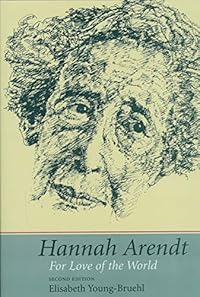
JuliaMaria Die Biografie von Rahel Varnhagen enthält viele autobiografische Züge von Hannah Arendt wie die Biografie von Elisabeth Young-Bruehl (u.a.) aufzeigt.
Member Reviews
Members
- Recently Added By
Author Information

260+ Works 26,146 Members
Born in Hanover, Germany, Hannah Arendt received her doctorate from Heidelberg University in 1928. A victim of naziism, she fled Germany in 1933 for France, where she helped with the resettlement of Jewish children in Palestine. In 1941, she emigrated to the United States. Ten years later she became an American citizen. Arendt held numerous show more positions in her new country---research director of the Conference on Jewish Relations, chief editor of Schocken Books, and executive director of Jewish Cultural Reconstruction in New York City. A visiting professor at several universities, including the University of California, Columbia, and the University of Chicago, and university professor on the graduate faculty of the New School for Social Research, in 1959 she became the first woman appointed to a full professorship at Princeton. She also won a number of grants and fellowships. In 1967 she received the Sigmund Freud Prize of the German Akademie fur Sprache und Dichtung for her fine scholarly writing. Arendt was well equipped to write her superb The Origins of Totalitarianism (1951) which David Riesman called "an achievement in historiography." In his view, "such an experience in understanding our times as this book provides is itself a social force not to be underestimated." Arendt's study of Adolf Eichmann at his trial---Eichmann in Jerusalem (1963)---part of which appeared originally in The New Yorker, was a painfully searching investigation into what made the Nazi persecutor tick. In it, she states that the trial of this Nazi illustrates the "banality of evil." In 1968, she published Men in Dark Times, which includes essays on Hermann Broch, Walter Benjamin, and Bertolt Brecht (see Vol. 2), as well as an interesting characterization of Pope John XXIII. (Bowker Author Biography) show less
Hannah Arendt has a Legacy Library. Legacy libraries are the personal libraries of famous readers, entered by LibraryThing members from the Legacy Libraries group.
Series
Belongs to Publisher Series
Common Knowledge
- Canonical title
- Rahel Varnhagen: The Life of a Jewish Woman
- Alternate titles
- Rahel Varnhagen: The Life of a Jewess
- Original publication date
- 1958
- People/Characters
- Rahel Varnhagen; Karl August Varnhagen von Ense
- Epigraph
- We tell you, tapping on our brows,
The story as it should be, --
As if the story of a house
Were told, or ever could be;
We'll have no kindly veil between
Her visions and those we have seen... (show all), --
As if we guessed what hers have been,
Or what they are or would be.
Meanwhile we do no harm, for they
That with a god have striven,
Not hearing much of what we say,
Take what the god has given;
Though like waves breaking it may be,
Or like a changed familiar tree,
Or like a stairway to the sea
Where down the blind are driven.
Edwin Arlington Robinson - Dedication
- Für Anne
Seit 1921
Classifications
- Genres
- Nonfiction, Biography & Memoir, History, General Nonfiction, Religion & Spirituality, Philosophy
- DDC/MDS
- 943.155004924 — History & geography History of Europe Central Europe: Germany, Austria, Switzerland, Czech, Poland, Hungary Northeastern Germany Brandenburg and Berlin Berlin Historical periods Modified standard subdivisions Ethnic and national groups
- LCC
- PT2546 .V22 .A913 — Language and Literature German, Dutch and Scandinavian literatures German literature Individual authors or works 1700-ca. 1860/70
- BISAC
Statistics
- Members
- 305
- Popularity
- 104,628
- Rating
- (3.75)
- Languages
- 6 — English, French, German, Hungarian, Italian, Portuguese
- Media
- Paper, Ebook
- ISBNs
- 21
- ASINs
- 3